
Xi-Kim Summit Reinforces Strategic Partnership in an Era of Renewed Geopolitical Division
The June 2026 Meeting and Its Place in Bilateral History The June 8 summit between North Korean leader Kim Jong Un and Chinese leader Xi Jinping at the Kumsusan State Guesthouse marked the second encounter between the two since Kim attended Beijing's military parade in September 2025. State media accounts from both capitals framed the gathering as a reaffirmation of ties tested
The June 2026 Meeting and Its Place in Bilateral History
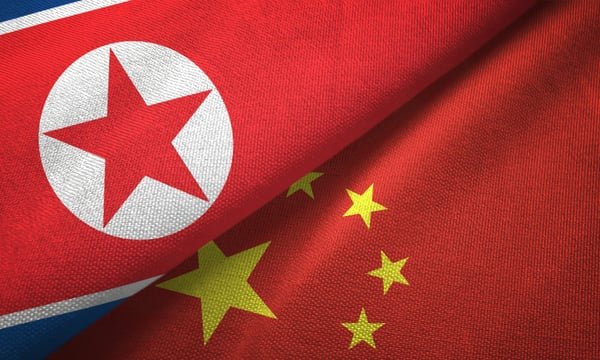
The June 8 summit between North Korean leader Kim Jong Un and Chinese leader Xi Jinping at the Kumsusan State Guesthouse marked the second encounter between the two since Kim attended Beijing's military parade in September 2025. State media accounts from both capitals framed the gathering as a reaffirmation of ties tested by decades of international change. Kim described the relationship as one that has consistently placed the two countries on the "right side of history," while Xi emphasized shared ideals and a "profound historical foundation." These statements echo earlier periods of alignment, particularly the post-1953 reconstruction era when Chinese assistance helped stabilize the northern half of the peninsula.
Unlike previous high-profile encounters that often preceded major diplomatic initiatives with Washington, the 2026 meeting occurred against a backdrop of stalled multilateral talks. The absence of any reference to denuclearization in the joint reporting signals that Beijing now treats Pyongyang's nuclear status as an established fact rather than a negotiable item. This shift carries direct consequences for inter-Korean relations, as Seoul continues to pursue peaceful unification under the Lee Jae-myung administration's stated policy framework.
Pyongyang's Explicit Endorsement of the One-China Principle
Kim Jong Un used the meeting to declare that support for Beijing's core interests under the one-China principle remains a top priority for his party and government. This public commitment comes at a moment when North Korea has already amended its constitution in 2023 to codify its nuclear status. By linking regime legitimacy to Chinese strategic concerns, Pyongyang seeks to lock in diplomatic cover against future sanctions proposals in the United Nations Security Council.
The move also reflects a calculated response to the intensification of U.S.-South Korea-Japan trilateral coordination. North Korean officials have interpreted expanded joint exercises and intelligence sharing as encirclement. In this environment, explicit alignment with China offers both material and normative reassurance. For Korean Peninsula watchers, the development revives memories of the 1961 Sino-North Korean mutual aid treaty, though the current relationship rests more on transactional security guarantees than formal alliance language.
Beijing's Silence on Denuclearization and Its Strategic Calculus
Chinese state media accounts omitted any mention of denuclearization, an omission that stands in contrast to earlier joint statements that routinely included the phrase. Xi instead called for enhanced exchanges in diplomacy, law enforcement, and military affairs without specifying timelines or modalities. The Chinese Foreign Ministry has yet to elaborate on what military cooperation might entail, leaving analysts to infer that Beijing will not support additional sanctions on future North Korean missile or nuclear activities.
This posture suggests that Chinese policymakers now view a nuclear-armed North Korea as a buffer that contributes to regime stability rather than a source of regional instability. Such stability, in Beijing's reading, reduces the risk of sudden collapse scenarios that could bring U.S. forces closer to the Yalu River. The calculation carries implications for South Korean defense planning, particularly as Seoul weighs investments in its own conventional strike capabilities and missile defense architecture.
Emerging Coalitions and the Shadow of a New Bipolar Order
The summit forms part of a broader pattern in which China has hosted both Russian President Vladimir Putin and Kim Jong Un in quick succession following Xi's meeting with U.S. President Donald Trump. North Korea's public support for Russia's military operations in Ukraine has further cemented the perception of a China-Russia-North Korea alignment arrayed against U.S. influence. On the other side, the U.S.-South Korea-Japan framework continues to deepen operational integration, including real-time missile warning data sharing.
These parallel structures evoke Cold War-era divisions, yet important differences remain. Economic interdependence between China and South Korea persists despite political friction, and Korean chaebol continue to navigate supply-chain exposure to both Chinese markets and U.S. export controls. Educational and cultural exchanges across the 38th parallel have also survived earlier periods of tension, offering limited channels for Track II dialogue even as official diplomacy stalls.
Seoul's Monitoring Posture and the Limits of Peaceful Unification Policy
South Korea's Unification Ministry announced that it would closely monitor subsequent developments in China-North Korea military exchanges. The Lee Jae-myung administration's continued emphasis on peaceful unification now confronts a regional environment in which one permanent member of the Security Council appears prepared to accept North Korea's nuclear status as a permanent feature. This reality narrows the diplomatic space for confidence-building measures that previously relied on coordinated pressure from Beijing.
Domestic political debates in Seoul increasingly focus on whether existing deterrence postures remain sufficient or whether additional investments in long-range precision strike systems are required. At the same time, provincial governments along the demilitarized zone continue to plan for potential economic cooperation zones, illustrating the persistent gap between national security strategy and local economic aspirations.
Implications for Future U.S.-North Korea Engagement
The U.S. State Department reiterated its commitment to complete denuclearization and openness to dialogue without preconditions. Yet Xi's apparent willingness to shield Pyongyang from additional sanctions reduces the leverage available to any renewed top-down diplomatic initiative from Washington. Historical precedent suggests that North Korean leaders have used periods of Chinese diplomatic cover to accelerate weapons development rather than to enter negotiations from a position of weakness.
For scholars of Korean affairs, the June 2026 summit underscores how external great-power alignments continue to shape the peninsula's security dilemma. Absent a fundamental shift in Beijing's assessment of its own core interests, prospects for coordinated international pressure on denuclearization appear diminished. South Korean policymakers must therefore calibrate expectations for near-term breakthroughs while preparing for a prolonged period of managed tension along the peninsula's dividing line.
By Prof. David Park, Staff WriterThis article was produced with AI-assisted research and editorial support. Reporting is based on sources cited in the article.
What's Your Reaction?
 Like
0
Like
0
 Dislike
0
Dislike
0
 Love
0
Love
0
 Funny
0
Funny
0
 Wow
0
Wow
0
 Sad
0
Sad
0
 Angry
0
Angry
0

East Asia/Technology Correspondent at Global1.News. Seoul-based voice covering Korean politics, technology, business, and culture. Analyzes how technology and geopolitics intersect across East Asia.














Comments (0)