
RTRI's Research Drive: Shinkansen Safety, SCMaglev Progress, and AI-Powered Maintenance for Japan's Railways
Japan's Railway Technical Research Institute (RTRI) continues to drive advancements in high-speed rail technology, superconducting maglev development, and infrastructure monitoring systems that underpin one of the world's most reliable railway networks. A new episode of NHK WORLD-JAPAN's Japan Railway Journal, titled "Railway Technical Research Institute: Leading the Way," offe
Japan's Railway Technical Research Institute (RTRI) continues to drive advancements in high-speed rail technology, superconducting maglev development, and infrastructure monitoring systems that underpin one of the world's most reliable railway networks. A new episode of NHK WORLD-JAPAN's Japan Railway Journal, titled "Railway Technical Research Institute: Leading the Way," offers an in-depth look at the institute's wide-ranging research portfolio and its impact on Japan's rail sector.
RTRI's Research Drive: Shinkansen Safety, SCMaglev Progress, and AI-Powered Maintenance for Japan's Railways
Tokyo, Japan — The Railway Technical Research Institute, headquartered in Kokubunji, Tokyo, serves as Japan's primary center for railway research and development. Established in 1986 following the privatization of Japanese National Railways, RTRI inherited and expanded the former national research division, focusing on practical applications for the newly formed JR Group companies. Today, the institute supports both major operators — JR East, JR Central, JR West, JR Hokkaido, JR Kyushu, JR Shikoku, and JR Freight — and smaller regional lines through targeted technological advancements developed across its laboratories and test facilities.
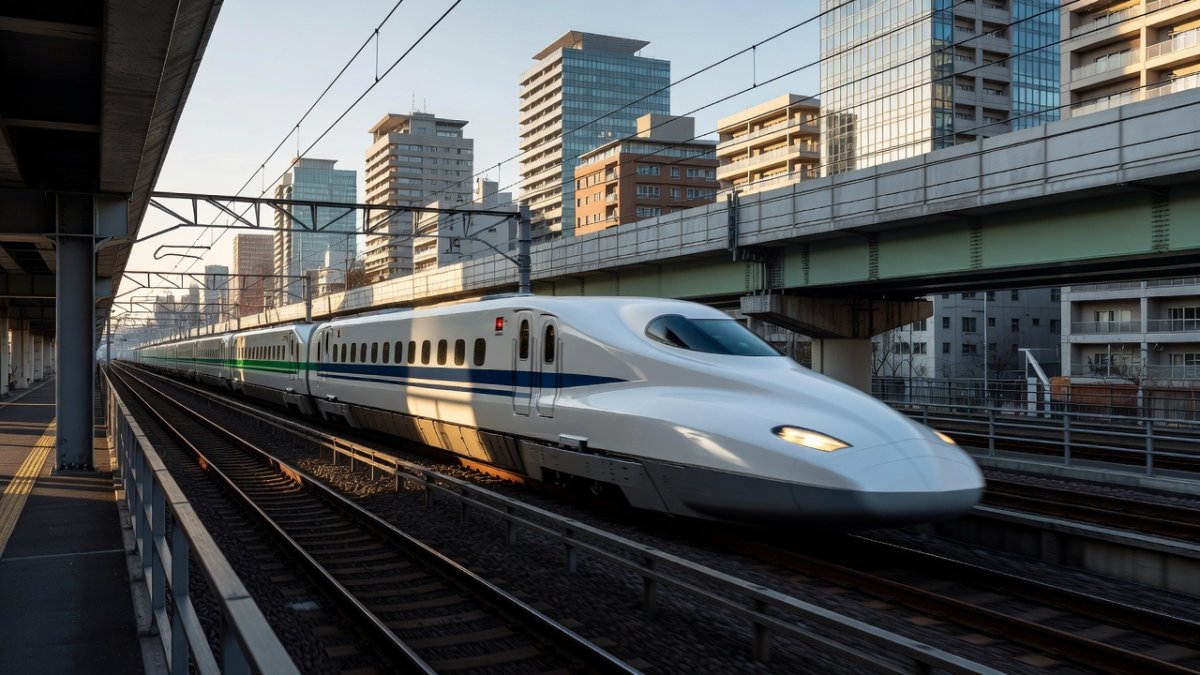
SCMaglev and the Chuo Shinkansen Project
RTRI operates the Yamanashi Maglev Test Line, where its SCMaglev superconducting magnetic levitation system achieved a world-record speed of 603 km/h. This technology forms the foundation of the Chuo Shinkansen line currently under construction between Tokyo and Nagoya, targeting an opening around 2034, with a planned extension to Osaka. JR Central leads the commercial deployment while RTRI continues core technology refinement, including aerodynamic studies and noise-reduction research needed for sustained high-speed operation at over 500 km/h.
The Chuo Shinkansen is expected to reduce travel time between Tokyo and Nagoya from approximately 1 hour 40 minutes to roughly 40 minutes when operational. The project has faced delays linked to environmental assessments in Shizuoka Prefecture concerning potential ecological impact on the Oi River. RTRI continues to conduct research aimed at addressing these concerns while advancing the fundamental maglev technology.
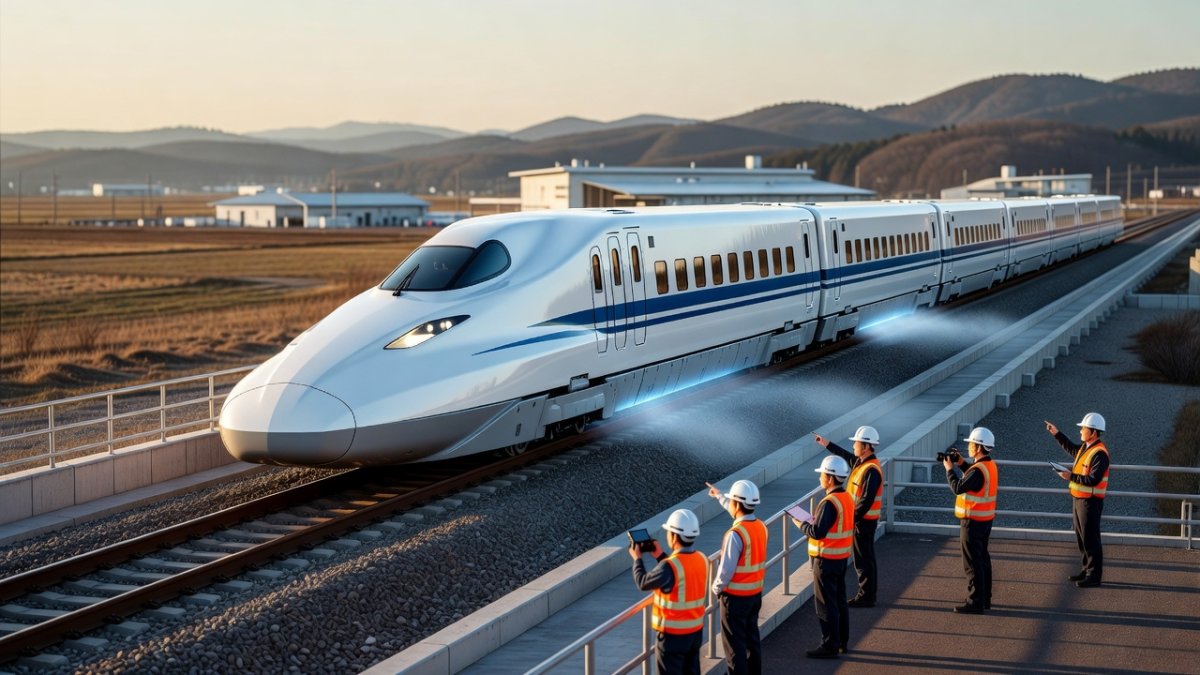
Earthquake Early Warning and Infrastructure Monitoring
RTRI developed the Distributed Acoustic Sensing (DAS) system that integrates with Japan's nationwide earthquake early warning network. The system uses optical sensing technology to improve detection immediacy and hypocenter determination accuracy. During the 2011 Great East Japan Earthquake, RTRI's early warning technology triggered automatic braking of Shinkansen trains, contributing to the network's remarkable safety record: zero passenger fatalities from operational accidents since the Tokaido Shinkansen began service in 1964.
Beyond earthquake detection, the institute has deployed AI-based track defect detection systems that analyze visual and acoustic data from inspection trains. Drone-assisted bridge inspection programs now examine elevated structures on both Shinkansen and conventional lines, addressing maintenance challenges posed by Japan's aging infrastructure and labor shortages in rural areas where population decline has reduced available maintenance staff.
Sustainability and Green Transformation Alignment
RTRI's current five-year research strategy, covering 2025 through 2030, emphasizes the creation of sustainable railway systems. Core themes include greater energy efficiency, reduced environmental impact through lighter train designs and regenerative braking systems, and adaptation to demographic challenges through increased automation of inspection and maintenance tasks.
These efforts align with Japan's Green Transformation (GX) policy framework promoted by METI and MLIT. Railway electrification already gives the sector a lower carbon footprint than road or air transport, but RTRI's research on aerodynamic drag reduction and next-generation propulsion aims to further reduce energy consumption per passenger-kilometer. Noise abatement studies also support compliance with stricter environmental standards along rail corridors in urban areas.
Aerodynamic Research for Higher Operating Speeds
The institute conducts extensive wind tunnel testing to study aerodynamic phenomena affecting high-speed trains. Research efforts focus on reducing air resistance at speeds above 300 km/h and mitigating issues such as tunnel boom — the pressure wave generated when a train enters a tunnel at high speed. These studies are documented in the peer-reviewed Quarterly Report of RTRI, which publishes findings from ongoing experiments and field trials.
Kiyoshi Nagakura, RTRI's director and head of the Environmental Engineering Division, has previously outlined progress in understanding how aerodynamic forces affect both train stability and infrastructure wear, informing design improvements for future Shinkansen and maglev vehicles.
Implications for Japanese Industry and the Asia Pacific Region
Advances originating at RTRI influence rolling stock design, track maintenance scheduling, and disaster preparedness protocols used by operators nationwide. Regional railways benefit from scaled-down versions of inspection technologies originally developed for Shinkansen use. The institute also collaborates with international partners on specific research initiatives, sharing Japan's expertise in high-speed rail safety and efficiency.
RTRI's work contributes to Japan's competitive position in global rail technology exports, with Japanese railway systems being evaluated or deployed in markets including India, the United States (Texas Central), Taiwan, and Southeast Asia. The combination of maglev progress, AI-powered monitoring systems, and earthquake early warning capabilities positions Japan's rail technology sector to address both domestic needs and international demand.
What to Watch For
The Chuo Shinkansen's construction timeline remains a key benchmark, with environmental reviews in Shizuoka expected to produce decisions that affect the project's completion date. RTRI's 2025-2030 strategy deliverables, including next-generation inspection robots and energy efficiency targets, are scheduled for phased implementation through the JR companies. Continued collaboration between RTRI, railway operators, and government ministries under the Society 5.0 framework will determine how quickly these technologies reach operational deployment across Japan's network.
The institute's annual conference, the 38th of which was held in late 2025 with the theme "Sophistication of Core R&D Technologies — Creating Sustainable Railway Systems," provides a regular venue for announcing research milestones. The next conference will likely offer further details on RTRI's progress in superconducting maglev, AI inspection, and sustainability initiatives.
By Kenji Tanaka, Staff Writer
This article was produced with AI-assisted research and editorial support. Reporting is based on sources cited in the article.
What's Your Reaction?
 Like
0
Like
0
 Dislike
0
Dislike
0
 Love
0
Love
0
 Funny
0
Funny
0
 Wow
0
Wow
0
 Sad
0
Sad
0
 Angry
0
Angry
0

Japan Correspondent at Global1.News. Tokyo-based voice covering Japanese politics, technology, economy, and culture. Tracks the intersection of tradition and innovation in one of the world's most dynamic societies.















Comments (0)