
WHO 2021: 1.5 Million Deaths from Unsafe Food — India in the Danger Zone
The World Health Organization released updated estimates on 4 June 2026 covering 42 major foodborne hazards across 194 countries from 2000 to 2021. In 2021 alone, unsafe food caused 866 million illnesses and 1.5 million deaths worldwide. Children under five, who represent only 9% of the global population, accounted for nearly one-third of all cases. Young children faced almost
The World Health Organization released updated estimates on 4 June 2026 covering 42 major foodborne hazards across 194 countries from 2000 to 2021. In 2021 alone, unsafe food caused 866 million illnesses and 1.5 million deaths worldwide. Children under five, who represent only 9% of the global population, accounted for nearly one-third of all cases. Young children faced almost three times the risk of illness compared with older children and adults. Diarrhoeal diseases formed the largest share of these illnesses and proved especially lethal for young children in low-resource settings.
WHO 2021 Data: 1.5 Million Deaths from Unsafe Food — India in the Danger Zone
New Delhi, India – June 5, 2026 — The new WHO estimates represent the most comprehensive assessment of foodborne disease ever conducted, and the data confirms what public health experts in India have long suspected: the country's food safety challenges are far more severe than previously documented. With South-East Asia accounting for a disproportionate share of the global burden, India's 1.4 billion citizens, particularly its children, face systemic risks that demand urgent policy intervention.
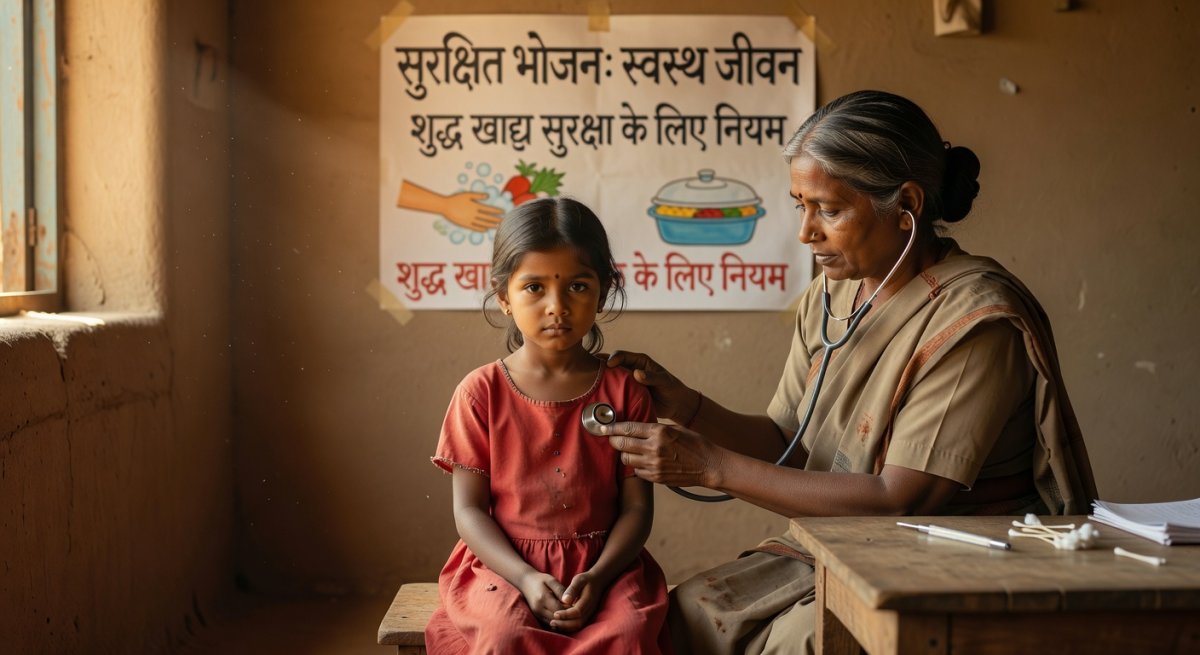
Global Scale of Foodborne Disease Revealed by WHO
The World Health Organization released updated estimates on 4 June 2026 covering 42 major foodborne hazards across 194 countries from 2000 to 2021. In 2021 alone, unsafe food caused 866 million illnesses and 1.5 million deaths worldwide. Children under five, who represent only 9% of the global population, accounted for nearly one-third of all cases. Young children faced almost three times the risk of illness compared with older children and adults. Diarrhoeal diseases formed the largest share of these illnesses and proved especially lethal for young children in low-resource settings such as rural India.
Chemical Contaminants Drive Majority of Deaths
Chemical contaminants were responsible for 73% of all deaths linked to contaminated food in 2021. Inorganic arsenic alone accounted for 42% of food-related deaths, while lead exposure contributed 31%. These substances damage developing brains and produce lifelong neurological problems. The WHO data highlight how lead and methylmercury exposure through food chains creates permanent cognitive deficits that affect educational attainment and lifetime earnings, particularly in regions with weak regulatory oversight. In India, the Indian Council of Medical Research (ICMR) has documented elevated heavy metal levels in rice, vegetables, and groundwater across multiple states, confirming that these risks are not theoretical.
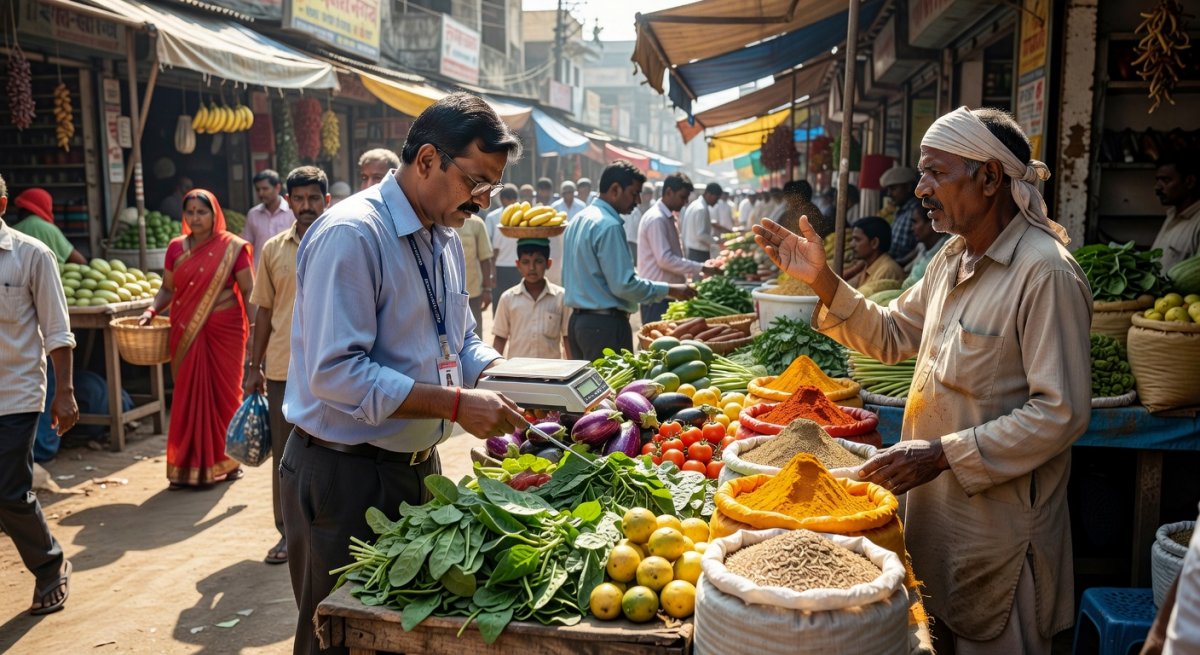
South-East Asia and Africa Bear Disproportionate Burden
Africa and South-East Asia together accounted for nearly three-quarters of all foodborne illnesses and about 60% of food-related deaths globally. India, as part of the WHO South-East Asia region, faces the same structural challenges that amplify these figures. Poor sanitation, contaminated water used in food production, and widespread street vending in cities such as Delhi, Mumbai, and Bengaluru create multiple contamination points. Rural districts in states like Bihar and Uttar Pradesh experience even higher exposure because of limited cold-chain infrastructure and weak enforcement of existing FSSAI regulations.
Economic Losses and Productivity Impact on India
Unsafe food resulted in approximately US$310 billion in lost productivity globally in 2021, rising to US$647 billion when adjusted for cost-of-living differences. India loses millions of productive workdays annually to foodborne illness. The Ministry of Health and Family Welfare and FSSAI must now quantify these national losses more precisely, because the burden falls heavily on daily-wage workers and small farmers who lack social safety nets. ICMR studies on mycotoxin contamination and heavy metal exposure in Indian food chains already document measurable productivity drags in agriculture-heavy states such as Punjab, Haryana, and Andhra Pradesh.
India's Regulatory and Environmental Challenges
FSSAI remains the primary regulator, yet repeated incidents of heavy metals in spices, pesticide residues in vegetables, and industrial waste affecting groundwater continue to surface. Climate change and environmental pollution from agricultural runoff and industrial effluents further threaten food safety across the Gangetic plains and industrial corridors of Tamil Nadu and Maharashtra. Unregulated food vendors in metropolitan areas add another layer of risk that current enforcement mechanisms struggle to address systematically. The WHO report's finding that chemical contaminants caused 73% of food-related deaths underscores the inadequacy of current testing and monitoring infrastructure in India's food supply chains.
Policy Implications for Indian Healthcare and Education
The WHO findings carry direct consequences for India's healthcare framework and education system. Lifelong neurological damage from chemical contaminants reduces learning outcomes and future workforce productivity. The Ministry of Health and Family Welfare must integrate food safety surveillance more tightly with existing ICMR monitoring programmes. Strengthened standards for heavy metals, expanded laboratory capacity in district hospitals, and targeted interventions for children under five in high-burden states would deliver measurable returns in both health and economic terms. Dr Tedros Adhanom Ghebreyesus, WHO Director-General, summarised the challenge succinctly: "Food safety is not an abstract issue, it touches every meal, every family, every day."
The Bottom Line
The 2021 WHO data provide Indian policymakers with an evidence base that can no longer be ignored. With 866 million global illnesses and 1.5 million deaths, and South-East Asia accounting for a disproportionate share, India must accelerate FSSAI enforcement, expand ICMR-led surveillance of chemical contaminants in the food chain, and invest in district-level laboratory capacity. The cognitive and economic damage from lifelong exposure to arsenic, lead, and other contaminants is preventable — but only if the regulatory machinery matches the scale of the threat. For India's 1.4 billion citizens, and especially for the 158 million children under five, food safety is not a technical footnote. It is a public health emergency in slow motion.
— By Dr. Raj Patel, Staff Writer
This article was produced with AI-assisted research and editorial support. Reporting is based on sources cited in the article.
What's Your Reaction?
 Like
0
Like
0
 Dislike
0
Dislike
0
 Love
0
Love
0
 Funny
0
Funny
0
 Wow
0
Wow
0
 Sad
0
Sad
0
 Angry
0
Angry
0

India/South Asia Correspondent at Global1.News. Analytical voice with a background in science and health journalism. Based in New Delhi, covering Indian politics, education, healthcare, technology, and policy. Breaks down complex data into clear, actionable reporting.















Comments (0)