
Venezuela's Twin Earthquakes: A Disaster Resilience Wake-Up Call for Latin America
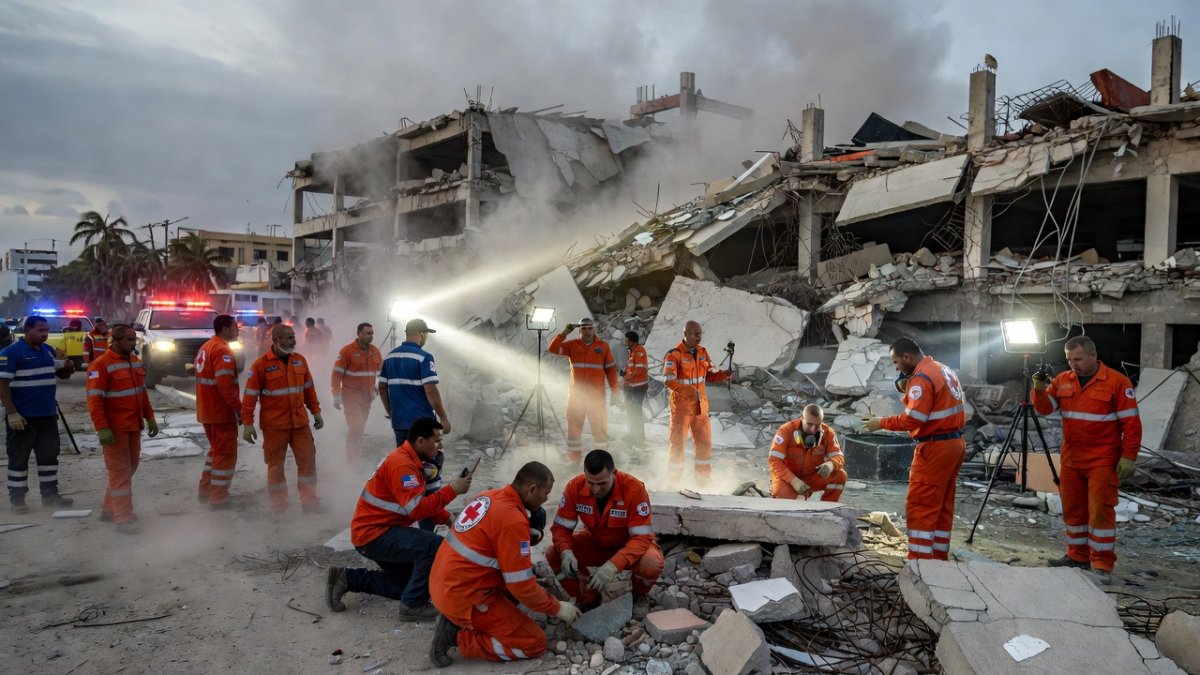
The Scale of the Disaster The twin earthquakes that struck Venezuela on June 24, 2026, delivered a catastrophic blow to the country's northern coastal region, exposing deep vulnerabilities in urban infrastructure across Latin America. At least 2,595 people were confirmed dead as of July 2, with the United Nations reporting 50,000 individuals missing in the immediate aftermath.
The Scale of the Disaster
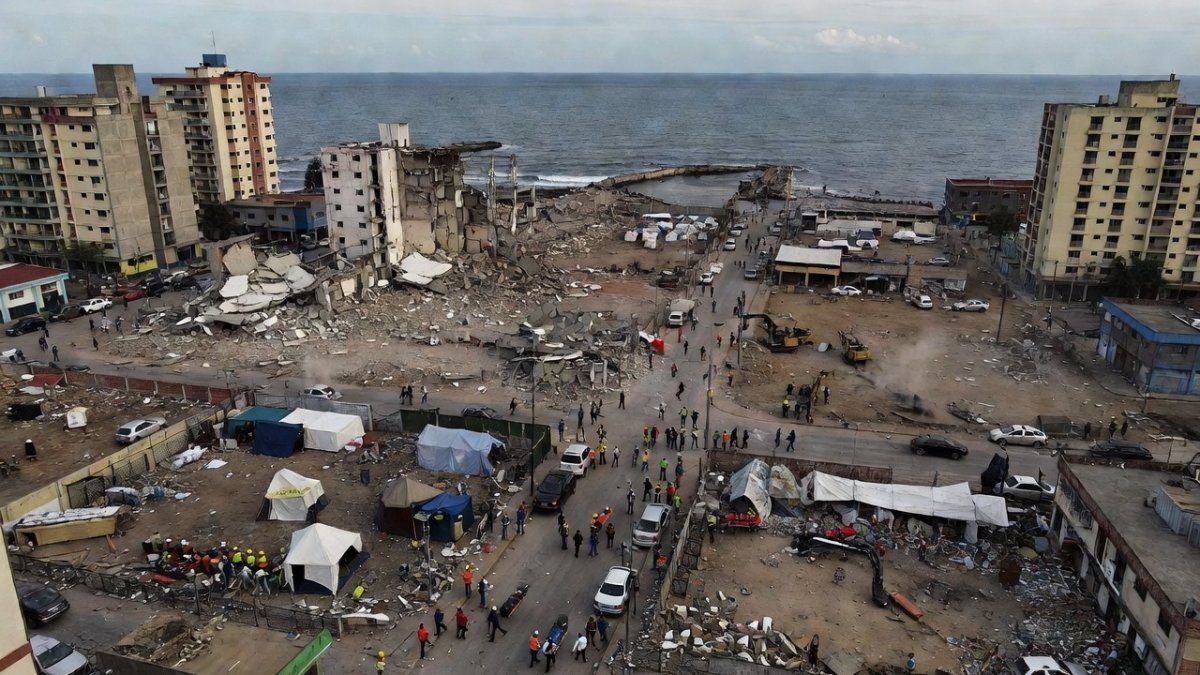
The twin earthquakes that struck Venezuela on June 24, 2026, delivered a catastrophic blow to the country's northern coastal region, exposing deep vulnerabilities in urban infrastructure across Latin America. At least 2,595 people were confirmed dead as of July 2, with the United Nations reporting 50,000 individuals missing in the immediate aftermath. The coastal urban center of La Guaira suffered some of the most intense destruction, where densely packed residential buildings and commercial structures crumbled under the seismic force. Acting President Delcy Rodríguez described the event as a natural tragedy on a scale the nation never imagined, while rejecting criticism of the government's response by noting that thousands of officials had been deployed to affected areas.
Compounding the crisis, a US deportation flight designated Flight 164 had landed with more than 140 Venezuelans just hours before the quakes struck, leaving many of those returnees among the missing. Abelardo Rincón, a 23-year-old from Georgia who arrived on that flight, became one such case as his grandfather searched through more than 200 bodies at Caracas morgues in a desperate effort to locate him. The United Nations began procuring 10,000 body bags to manage the scale of fatalities, underscoring the overwhelming logistical demands placed on local authorities. These figures reflect patterns seen throughout Latin America, where rapid urbanization has concentrated populations in seismically active zones without adequate safeguards.
From a climate and disaster resilience perspective, the Venezuela earthquakes highlight how underprepared infrastructure amplifies human suffering during extreme events. Coastal cities like La Guaira, built along fault lines with limited enforcement of modern building standards, face compounded risks as climate change intensifies storms and sea-level pressures on already fragile foundations. The death toll and missing persons count reveal not only the immediate power of the quakes but also systemic gaps in early warning systems and evacuation planning that persist across the region.
Stories of Survival Against the Odds
Hernán Gil, a security guard, emerged as a symbol of improbable endurance after being rescued eight days after the June 24 earthquakes. Trapped beneath 140 tonnes of rubble in a collapsed parking lot at the Galerias Playa Grande mall in Catia La Mar, Gil survived inside a small concrete booth that formed a protective shell around him. Rescuers provided him with water and an IV drip during the prolonged extraction, though access ducts collapsed multiple times and complicated the operation. Costa Rican paramedic Allan Madrigal first heard Gil's cries for help and initially doubted his own ears amid the chaos of shifting debris.
Marco Antonio Franco from the Mexican Red Cross later described Gil as a cheerful man who specifically requested flavored hydration drinks once initial contact was established. The rescue involved coordinated efforts that sustained Gil through the ordeal, demonstrating how individual survival often hinges on both structural luck and persistent human intervention. In La Guaira, two-year-old Kleiber Moran was pulled from the ruins of his home after six days by Jordanian rescuers, then reunited with his 23-year-old aunt Andreína Sarmiento, who pledged to care for him with a mother's warmth.
These accounts illustrate the human capacity for resilience amid widespread devastation, yet they also expose the limits of relying on chance in regions where building practices have not kept pace with seismic realities. Across Latin America, similar stories from past disasters in Chile and Mexico show that survival rates improve dramatically when communities invest in reinforced structures and community-level training. The Venezuela cases underscore the urgent need for climate-adaptive infrastructure that accounts for both tectonic activity and the increasing frequency of compound disasters driven by environmental change.
Infrastructure Vulnerability - Why Building Collapses Were So Catastrophic
The catastrophic scale of building collapses in Venezuela stems directly from longstanding deficiencies in construction standards and enforcement, a challenge replicated across much of Latin America. In La Guaira and Catia La Mar, older commercial and residential structures failed to withstand the twin earthquakes, burying residents and workers under tons of unreinforced concrete. Rapid urbanization has pushed populations into coastal zones where soil conditions amplify ground shaking, yet many municipalities lack updated seismic codes or the resources to retrofit existing buildings. This pattern mirrors vulnerabilities in cities from Lima to Mexico City, where informal settlements and aging infrastructure create deadly traps during seismic events.
Climate change adds another layer of risk by altering rainfall patterns and increasing coastal erosion that undermines foundations already stressed by poor engineering. Venezuela's situation reveals how economic pressures have delayed investments in resilient design, leaving parking structures and malls like Galerias Playa Grande susceptible to total failure. International assessments of Latin American building practices consistently identify weak regulatory oversight as a primary driver of high casualty rates in earthquakes, rather than the magnitude of the events themselves.
Without systematic upgrades to incorporate climate-adaptive features such as flexible foundations and elevated designs in flood-prone areas, future disasters will continue to exact similar tolls. The Venezuela earthquakes serve as a stark reminder that infrastructure decisions made decades ago now determine who lives and who dies when the ground shifts. Regional cooperation on updated codes could mitigate these risks, but implementation remains uneven due to varying national capacities and political priorities.
Cross-Border Rescue Networks in Action
International rescue teams from Chile, Costa Rica, Jordan, the United Kingdom, Mexico, Portugal, El Salvador, and the United States converged on Venezuela following the June 24 earthquakes, forming a multinational effort that proved essential in locating survivors. In Catia La Mar, this collaboration enabled the extraction of Hernán Gil after eight days, with personnel from Venezuela, Chile, Costa Rica, El Salvador, Mexico, Portugal, and the United States working together to navigate unstable rubble. Jordanian teams achieved a notable success in La Guaira by rescuing two-year-old Kleiber Moran after six days, highlighting specialized skills brought from distant partners.
Costa Rican paramedic Allan Madrigal's decision to investigate faint sounds led directly to Gil's location, while Mexican Red Cross member Marco Antonio Franco managed aspects of his care during the operation. Access ducts repeatedly collapsed during these efforts, requiring teams to adapt quickly under hazardous conditions. Such cross-border coordination reflects growing recognition across Latin America that no single nation possesses sufficient search-and-rescue capacity for major urban disasters.
These networks build on prior experiences from earthquakes in Chile and Mexico, where shared protocols and equipment exchanges have saved lives. Yet the Venezuela response also reveals gaps in sustained regional investment for training and prepositioned resources. As climate-driven disasters increase in frequency, strengthening these alliances becomes critical for reducing response times and improving outcomes in vulnerable coastal cities throughout the hemisphere.
Latin American Lessons in Disaster Preparedness
The Venezuela earthquakes offer critical lessons for Latin America on integrating seismic preparedness with climate resilience strategies. Building code enforcement remains inconsistent across the region, allowing substandard construction to persist in high-risk zones like La Guaira. Governments must prioritize retrofitting programs and stricter regulations for new developments, drawing from successful models in Chile where mandatory standards have dramatically lowered collapse rates during major quakes. Urban planning that accounts for population density and soil stability can prevent the concentration of vulnerable structures in coastal urban centers.
Search-and-rescue capacity requires ongoing cross-border agreements that facilitate rapid deployment of specialized teams, as demonstrated by the multinational effort in Venezuela. Climate-adaptive infrastructure, including elevated roadways and reinforced public facilities, addresses both earthquake and weather-related threats that increasingly overlap in the region. Agencies such as Brazil's IBAMA and Colombia's Ministry of Environment have begun incorporating disaster risk into environmental assessments, providing templates for Venezuela and neighboring countries to follow.
Public education campaigns on evacuation procedures and household reinforcement techniques further strengthen community-level resilience. The human cost in Venezuela underscores that preparedness investments yield measurable returns in lives preserved, yet funding shortfalls continue to hinder progress. Regional forums must elevate these issues to ensure that future seismic events encounter better-prepared societies rather than repeating patterns of widespread destruction.
The Human Toll and the Road to Recovery
The human toll from the June 24 earthquakes extends far beyond the confirmed 2,595 deaths, with 50,000 people still missing according to United Nations figures and families like that of Abelardo Rincón enduring prolonged uncertainty. Acting President Delcy Rodríguez emphasized the unprecedented nature of the tragedy while highlighting the deployment of thousands of officials, yet the presence of recently deported individuals among the missing added layers of complexity to identification efforts. In La Guaira, survivors such as Andreína Sarmiento face the immediate challenge of rebuilding family structures amid widespread loss.
Recovery will demand sustained international support for debris removal, temporary housing, and psychological services, particularly in coastal areas where economic activity has ground to a halt. Latin American patterns show that long-term rebuilding often stalls without dedicated funding for climate-resilient reconstruction that incorporates updated seismic standards. The experiences of rescued individuals like Hernán Gil and Kleiber Moran provide glimmers of hope, yet they also illustrate how individual survival stories must translate into systemic change.
Investments in adaptive infrastructure across the region can reduce future vulnerabilities, but political will and cross-national coordination remain essential. Venezuela's ordeal reinforces the interconnected nature of disaster risk in Latin America, where shared geological threats and urbanization pressures require collective responses. The path forward lies in translating these lessons into concrete policies that protect communities before the next seismic event occurs.
By Elena Vasquez, Staff WriterThis article was produced with AI-assisted research and editorial support. Reporting is based on sources cited in the article.
What's Your Reaction?
 Like
0
Like
0
 Dislike
0
Dislike
0
 Love
0
Love
0
 Funny
0
Funny
0
 Wow
0
Wow
0
 Sad
0
Sad
0
 Angry
0
Angry
0

Latin America Correspondent at Global1.News. Based in Mexico City, covering politics, economics, energy, and culture across the region. Brings an on-the-ground perspective to stories spanning from the Rio Grande to Patagonia.












Comments (0)