
Amazon Fires Plummet 80 Percent as 2025 Brings Historic Relief to Brazil's Rainforest
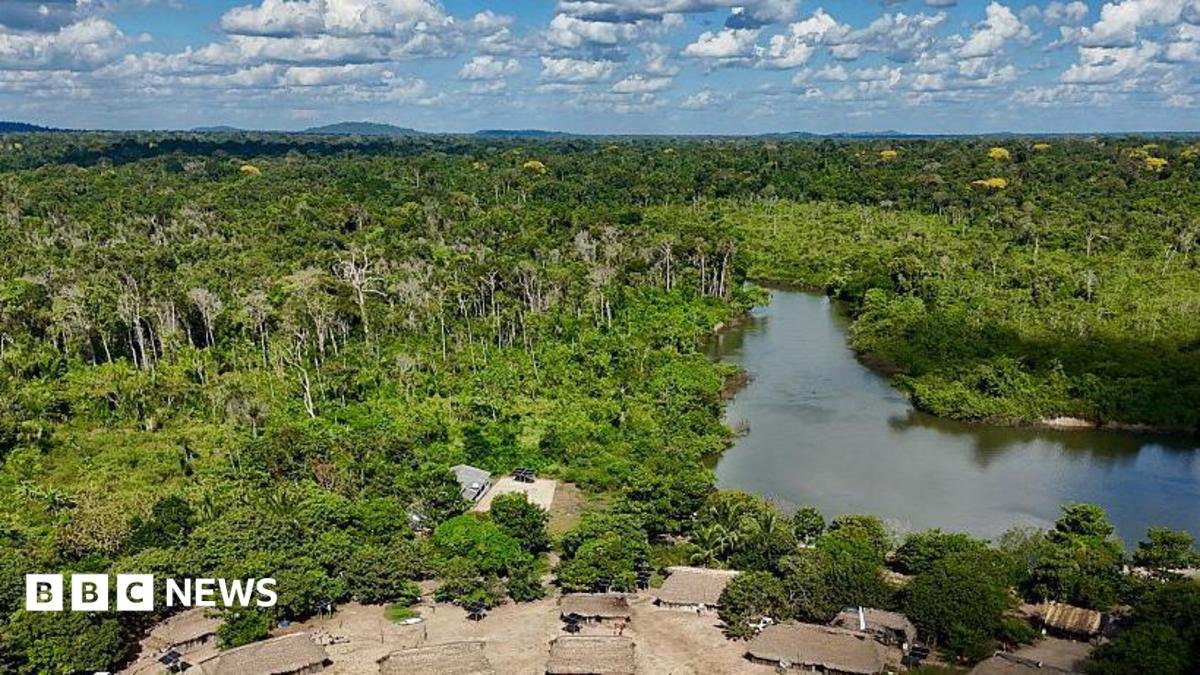
The Amazon rainforest saw burned areas plunge in 2025 as MapBiomas recorded 3.1 million hectares burned — the smallest area since records began in 1985 and an 80 percent drop from the 15.8 million hectares in 2024. Researchers caution the decline driven by La Niña and renewed enforcement does not yet confirm an established trend, as President Lula balances conservation promises against oil exploration plans.
Amazon Fires Plummet 80 Percent as 2025 Brings Historic Relief to Brazil's Rainforest
Brasília, Brazil — Article continues...
MapBiomas Data Reveals Sharp Drop in Burned Areas
MapBiomas documented 3.1 million hectares burned in Brazil's Amazon during 2025. This figure stands in stark contrast to the 15.8 million hectares recorded in 2024, which marked a record high. The 2025 total represents the smallest burned area since MapBiomas began tracking data in 1985. Nationwide, Brazil saw 12.7 million hectares burned in 2025 compared with 30 million hectares the previous year.
These numbers reflect a 31 percent decline from the historical average across the Amazon region. The reduction occurred amid ongoing pressures from both climate patterns and human activities. MapBiomas analysts noted that the 2024 fires were driven by climate extremes combined with human activity, according to data from Copernicus. The 2007 record of 30.7 million hectares burned nationwide provides further context for the scale of recent fluctuations.
IPAM Researcher Offers Cautious Assessment
Vera Arruda of IPAM and MapBiomas described the 31 percent drop as positive news. She emphasized that the improvement does not yet allow conclusions about an established trend. Her analysis highlights the need for sustained monitoring through agencies like IBAMA and continued data collection by MapBiomas. Arruda's statement underscores the difference between one year's relief and long-term protection of the forest.
IPAM researchers continue to track how enforcement actions and weather conditions interact in states across the Amazon basin. The organization's work connects directly to efforts by Brazilian government agencies to curb illegal burning. Without consistent policies, the gains seen in 2025 could reverse quickly under different conditions.
Lula's Re-election Bid and Amazon Policy Balance
President Lula is running for re-election in October 2026, with protection of the Amazon forming a central campaign pledge. He promised zero deforestation on his first day in office in January 2023. This commitment built on earlier promises to reverse damage from previous administrations. At the same time, Lula has faced criticism for approving oil exploration at the mouth of the Amazon River.
The tension between conservation goals and energy development reflects broader challenges in Brasília. Lula's administration must navigate economic pressures while maintaining international credibility on climate issues. Voters in Amazonian states will weigh these trade-offs as the election approaches. The 2025 burned area decline offers one data point in that political calculation.
President Lula's return has undeniably slowed the fires, yet the Foz do Amazonas oil exploration saga reveals the tightrope he walks between development and preservation. IBAMA has repeatedly delayed Petrobras' drilling permits, citing risks to coral reefs and marine biodiversity at the river's mouth. Environmental groups like Greenpeace and the Climate Observatory argue that even exploratory wells threaten the entire ecosystem, accusing the government of prioritizing short-term revenue over long-term climate stability.
This tension directly tests Lula's international credibility ahead of COP30 in Belém. While he reactivated the Amazon Fund and pledged zero deforestation, approving Petrobras plans would hand critics in Europe and the United States ammunition to question Brazil's leadership. The contradiction is stark: a president celebrated for restoring enforcement now faces accusations that economic pressures from state oil interests could erode hard-won gains.
La Niña Influence and El Niño Warnings
La Niña cooling patterns contributed to reduced fire activity in 2025. These weather conditions helped limit the spread of fires compared with the extreme dry periods of 2024. MapBiomas has warned that a return of El Niño could extend the dry season and increase fire risk in coming years. Such shifts would test Brazil's enforcement capacity across the vast Amazon region.
Climate variability adds uncertainty to any single year's progress. Researchers at IPAM stress that policy measures must account for these natural cycles. The Amazon's vulnerability to both human activity and shifting weather patterns remains a core concern for scientists monitoring the forest.
MapBiomas data shows that the current La Niña pattern, combined with lingering El Niño effects, has extended the dry season across the Amazon basin, creating conditions where even reduced human activity can spark widespread burning. The Pantanal and Cerrado have also recorded sharp drops in fire incidents this year, suggesting that regional climate dynamics are amplifying conservation successes rather than masking failures.
Scientists warn that the Amazon is approaching a tipping point where repeated droughts could push large sections toward savanna conversion. South America's broader climate picture, with shifting rainfall patterns affecting Bolivia and Peru, underscores that Brazil's fire reductions are fragile victories dependent on both policy and atmospheric luck.
Policy Contrasts Between Lula and Bolsonaro Periods
During the Bolsonaro era, deforestation rates rose by 75 percent compared with prior levels. Lula's return to office brought renewed focus on enforcement through IBAMA and international partnerships. The 2025 data shows improvement from the 2024 peak, yet the long-term trajectory depends on continued action. Bolsonaro's approach emphasized development over strict conservation, leading to measurable increases in cleared land.
Lula's zero deforestation pledge aimed to reverse that direction. Implementation has included stronger monitoring and legal actions against illegal operators. The contrast between the two administrations illustrates how presidential priorities shape outcomes on the ground in states like Pará and Amazonas. Sustained results will require consistent application of these policies beyond any single year.
During Bolsonaro's term, deforestation surged 75 percent, fueled by agribusiness expansion and mining interests that viewed the forest as an obstacle to profit. Enforcement at IBAMA was deliberately starved of funding and political support, allowing illegal loggers and cattle ranchers to operate with near impunity. International pressure mounted as the European Union threatened to block trade deals unless Brazil demonstrated credible forest protection.
Lula's reactivation of the Amazon Fund with renewed commitments from Norway and Germany has begun reversing that damage, restoring monitoring capacity and cross-border cooperation. Yet the legacy of weakened institutions remains visible in persistent hotspots, reminding observers that policy reversals require sustained funding and political will rather than rhetoric alone.
Amazon's Global Climate Role and Regional Lessons
The Amazon absorbs vast amounts of carbon dioxide and supports millions of species found nowhere else. Reductions in burned area directly affect the forest's capacity to regulate global climate patterns. Brazil's performance influences carbon accounting for the entire Latin American region. Neighboring countries monitor developments in the Brazilian Amazon as they shape their own environmental strategies.
MapBiomas data provides a benchmark that other nations can reference when assessing their forest protection efforts. The 2025 decline offers a case study in how weather and policy interact. For Latin America as a whole, Brazil's approach to balancing economic needs with conservation remains a reference point. Continued vigilance through organizations like IPAM will determine whether this year's numbers mark the start of a new pattern or an isolated improvement.
Neighboring countries face parallel pressures: Colombia struggles with coca-driven clearing, Peru contends with illegal mining, Bolivia and Venezuela grapple with weak enforcement. Brazil's policy shifts under Lula carry outsized influence, setting the tone for regional environmental diplomacy through the Amazon Cooperation Treaty Organization.
ACTO has gained renewed relevance as a platform for shared satellite monitoring and joint enforcement. MapBiomas' transparent, publicly available data has become essential for international climate reporting, allowing accurate tracking of progress toward global targets and exposing any backsliding before it becomes irreversible.
By Elena Vasquez, Staff WriterThis article was produced with AI-assisted research and editorial support. Reporting is based on sources cited in the article.
What's Your Reaction?
 Like
0
Like
0
 Dislike
0
Dislike
0
 Love
0
Love
0
 Funny
0
Funny
0
 Wow
0
Wow
0
 Sad
0
Sad
0
 Angry
0
Angry
0

Latin America Correspondent at Global1.News. Based in Mexico City, covering politics, economics, energy, and culture across the region. Brings an on-the-ground perspective to stories spanning from the Rio Grande to Patagonia.












Comments (0)