
Narathiwat Checkpoint Assault Raises Concerns Over Deep South Security and Peace Efforts
In the quiet evening hours along the Malaysian border in Narathiwat province, six to ten black-clad attackers struck the Buketa Sami checkpoint in Ra-ngae district on July 22, 2026, killing five paramilitary rangers and wounding five to six civilians including a young boy with assault rifles and pip.
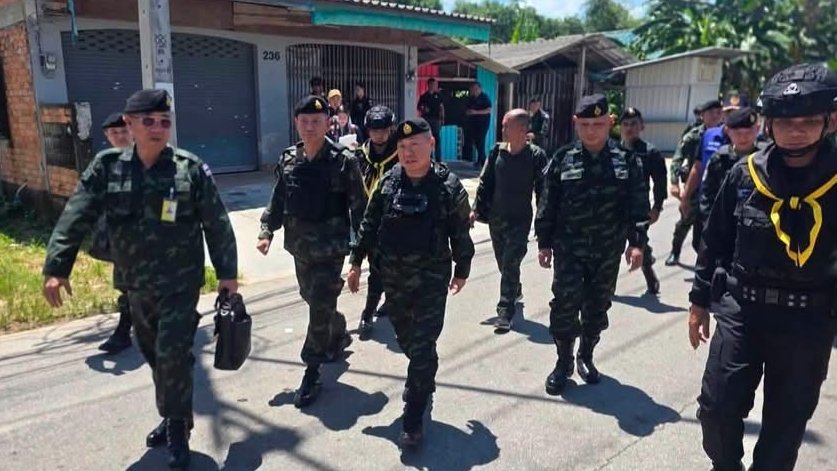
In the quiet evening hours along the Malaysian border in Narathiwat province, six to ten black-clad attackers struck the Buketa Sami checkpoint in Ra-ngae district on July 22, 2026, killing five paramilitary rangers and wounding five to six civilians including a young boy with assault rifles and pipe bombs. This swift assault on a routine security post near the Malaysian border echoes the deep south's long history of violence that has claimed over 7,000 lives since 2004. As Army Chief of Staff Gen. Chaipruk Duangprapat arrived the next day to inspect the site, the incident underscored how such events ripple through families in Ra-ngae and beyond.
Narathiwat Checkpoint Assault Raises Concerns Over Deep South Security and Peace Efforts
Bangkok, Thailand — Article continues with details on the Buketa Sami checkpoint attack in Ra-ngae district of Narathiwat province on July 22, 2026, where six to ten black-clad attackers arrived in a pickup truck and used assault rifles plus pipe bombs against Thai paramilitary rangers and local civilians.
The Attack at Buketa Sami Checkpoint
On Wednesday evening, July 22, 2026, between six and ten attackers dressed in black arrived at the Buketa Sami checkpoint in Ra-ngae district of Narathiwat province aboard a pickup truck. They opened fire with assault rifles and threw pipe bombs at the security post before fleeing the scene. The checkpoint serves as a routine security point along routes connecting Ra-ngae to nearby districts in the deep south near the Malaysian border.
Thai readers in Bangkok and the Isaan region know these checkpoints well from news reports over the years. The attack unfolded quickly, leaving the site scattered with spent cartridges and bomb fragments that Royal Thai Army investigators later collected. No group has claimed responsibility for the assault that targeted both paramilitary personnel and passing civilians.
Ra-ngae district, nestled close to the Malaysian border, has long been part of the daily rhythms of life for local communities in Narathiwat. Checkpoints like Buketa Sami serve as points of passage for commuters and families. The Wednesday evening attack unfolded with sudden force as the pickup truck brought the assailants who struck swiftly before disappearing — a pattern that echoes the challenges faced in these border areas.
Casualties Among Rangers and Local Civilians
Five Thai paramilitary rangers lost their lives in the attack at Buketa Sami while five to six civilians also suffered wounds, including a young boy who was among those injured. Medical teams transported the wounded to the hospital in Ra-ngae district for treatment on Wednesday evening.
These casualties add to the long record of violence that has touched families across Narathiwat, Yala, and Pattani. Local communities in Ra-ngae rely on the checkpoint for daily movement, and the presence of a child among the wounded highlights how such incidents reach into ordinary households rather than remaining confined to security forces alone. With over 7,000 deaths since 2004, the human cost touches education and economic activities that sustain villages across Narathiwat and neighboring provinces.
Communities in Ra-ngae feel the weight of these events where a young boy among the wounded reminds families of the personal toll on daily life. The checkpoint serves commuters who rely on safe passage for work and school, yet the psychological strain lingers as parents weigh risks for their children amid the deep south's challenges.
Army Chief of Staff Visits Narathiwat
Army Chief of Staff Gen. Chaipruk Duangprapat, who also serves as secretary-general of the Internal Security Operations Command (ISOC), traveled to Narathiwat on Thursday to inspect the Buketa Sami site. He examined physical evidence at the checkpoint and met with local security units operating under the Royal Thai Army and Royal Thai Police.
Gen. Chaipruk stated that authorities will pursue the attackers no matter which country helps them. This direct reference to possible cross-border support signals heightened concern within ISOC about external networks that could sustain operations in the deep south provinces, particularly those that may operate from Malaysia. The statement reflects the broader role of ISOC in coordinating security across the deep south provinces of Narathiwat, Yala, Pattani, and parts of Songkhla.
The Broader Pattern of Insurgency in the Deep South
The deep south region, which includes Narathiwat, Yala, Pattani, and parts of Songkhla, has experienced a separatist insurgency that dates back decades. Since 2004, more than 7,000 people have died in the conflict, affecting Thai Buddhist and Malay Muslim communities alike in towns such as Ra-ngae and surrounding districts.
This latest incident followed a car bomb that exploded outside a police station in Muang district of Narathiwat on Tuesday night. Since the first car bombing recorded in 2005, security agencies have documented 68 such attacks across the region. The Royal Thai Army maintains checkpoints like Buketa Sami as part of ongoing efforts to control movement and gather intelligence in these provinces. Such incidents test the coordination between Thai security agencies and regional partners as ASEAN nations watch closely for signs of renewed dialogue that could ease tensions along shared borders.
Stalled Peace Talks and New Negotiator Appointment
Peace talks between the Thai government and the Barisan Revolusi Nasional (BRN) have stalled in recent months. Thailand appointed Thanut Suvarnananda as the new lead negotiator to restart the process, a move aimed at bringing both sides back to the table amid continued violence in Narathiwat and neighboring provinces.
Thanut Suvarnananda's appointment brings fresh hope to stalled peace talks with the BRN, building on Malaysia's longstanding role as facilitator in efforts to bring calm to the region. Renewed discussions could open pathways for addressing the roots of unrest, offering communities in the deep south a chance to focus on rebuilding rather than enduring further losses. ASEAN's interest in Thai stability underscores how peace here supports wider regional harmony.
For readers across ASEAN, the situation in southern Thailand carries implications for regional stability. Cross-border references in official statements raise questions about how neighboring countries might influence or contain militant networks that operate near the Malaysian border. History shows that dialogue has paused before, yet the appointment signals a gentle push toward continuity in negotiations that involve key stakeholders from Thailand and Malaysia.
Impact on Thai Communities and the Road Ahead
Residents in Ra-ngae and nearby areas of Narathiwat face ongoing disruptions to travel and commerce because of heightened security measures following the Buketa Sami attack. Families in the deep south, like those in other parts of Thailand, worry about the safety of children and the ability to maintain normal routines amid repeated incidents.
The vow by Gen. Chaipruk to pursue attackers regardless of external support reflects the Royal Thai Army's determination to protect communities in Narathiwat, Yala, and Pattani. This approach connects directly to national security priorities that affect citizens from Bangkok to the Isaan region, where stability in the south influences overall confidence in government efforts to resolve long-standing conflicts through both security operations and renewed dialogue.
For residents in Narathiwat, such steps hold the promise of safer roads and thriving local economies where children can return to classrooms and markets bustle once more. The road ahead remains delicate, but these efforts reflect a shared commitment to healing the wounds of the insurgency that touches education and economic activities sustaining villages across the region.
By Ann Srisawat, Staff Writer
This article was produced with AI-assisted research and editorial support. Reporting is based on sources cited in the article.
What's Your Reaction?
 Like
0
Like
0
 Dislike
0
Dislike
0
 Love
0
Love
0
 Funny
0
Funny
0
 Wow
0
Wow
0
 Sad
0
Sad
0
 Angry
0
Angry
0

Southeast Asia Correspondent at Global1.News. Based in Bangkok, covering Thai and Southeast Asian politics, economy, technology, and culture. Deep regional perspective on one of the world's most dynamic regions.













Comments (0)