
Bogotá Water Crisis: Drought, Rationing, and El Niño Threaten Colombia's Capital
In the bustling neighborhoods of Bogotá, families like the Rodríguez clan in Suba now wake each morning unsure if their taps will yield enough for cooking, bathing, or even flushing toilets as another El Niño cycle tightens its grip on the Andes. Mothers ration buckets of stored water from the previous night’s supply, while children learn to skip showers, their routines upended
In the bustling neighborhoods of Bogotá, families like the Rodríguez clan in Suba now wake each morning unsure if their taps will yield enough for cooking, bathing, or even flushing toilets as another El Niño cycle tightens its grip on the Andes. Mothers ration buckets of stored water from the previous night’s supply, while children learn to skip showers, their routines upended by the looming threat of renewed shortages in a city of eight million. The uncertainty hangs heavy, echoing the 2024 crisis that forced 24-hour cuts and now threatens to return with even greater force.
Bogotá Water Crisis: Drought, Rationing, and El Niño Threaten Colombia's Capital
Bogotá, Colombia – July 3, 2026 — As IDEAM confirms El Niño’s early 2026 onset with a 96% probability of peak impacts between November 2026 and February 2027, Bogotá confronts a renewed drought emergency that could eclipse the record 2024-2025 crisis when Chingaza reservoirs fell to just 17%. The metro area’s 8 million residents depend on the Chingaza system for over 70% of their water, yet current levels sit at 54.14% in late May 2026—still above the guide curve by more than 30 million cubic meters—while Chuza reservoir hovers between 27.6% and 40%. Inflows at the Chuza tributary have plummeted to 0.22 cubic meters per second against a historical March average of 6 cubic meters per second, signaling the dry season’s severity. Mayor Carlos Fernando Galán and Acueducto de Bogotá, led by gerente Natasha Avendaño, are racing to implement lessons from the prior rationing that ended only in April 2025 after sustained rains.
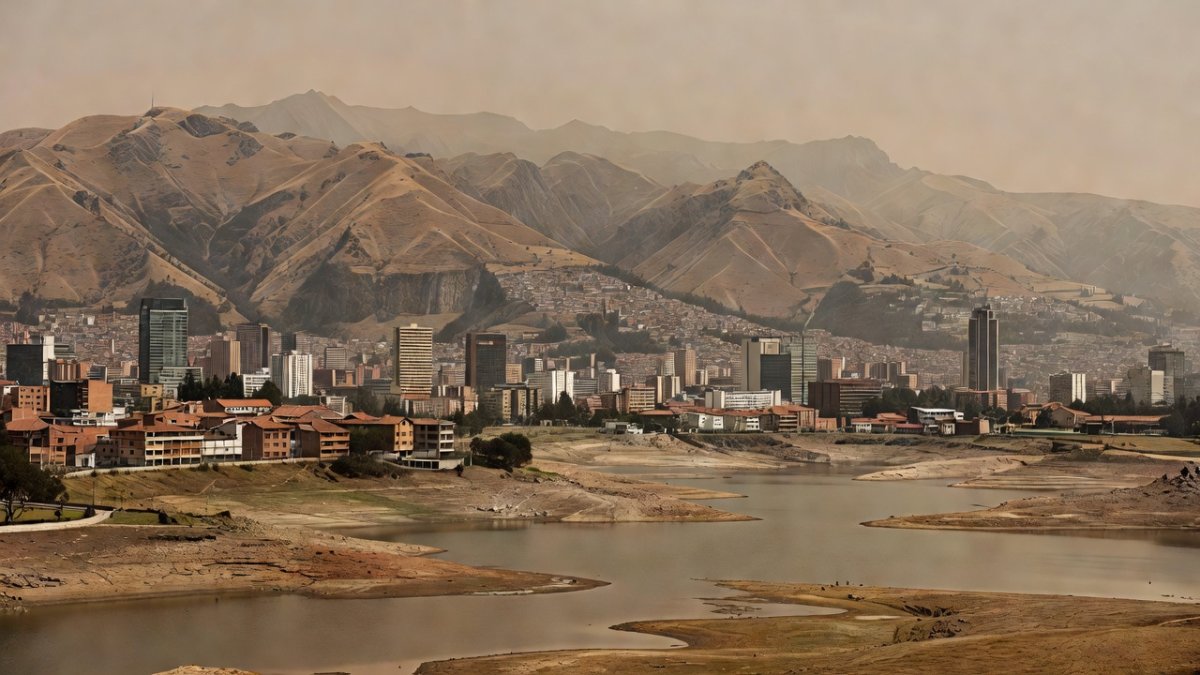
Bogotá's Fragile Lifeline: The Chingaza System
Bogotá sits at 2,600 meters elevation in the Andes, where the Chingaza system functions as the capital’s primary water artery, delivering more than 70% of daily supply to roughly eight million residents across the metro area. In late May 2026 the overall Chingaza reservoir stood at 54.14%, more than 30 million cubic meters above the operational guide curve, yet this buffer masks deeper vulnerabilities within individual components. The Chuza reservoir, a critical Chingaza element, fluctuated between 27.6% and 40% during May and June 2026, reflecting uneven recharge across the watershed. Most alarming, inflows at the Chuza tributary registered only 0.22 cubic meters per second in March 2026 compared with the historical average of 6 cubic meters per second, a collapse driven by prolonged dryness. These figures underscore how even modest shortfalls can cascade through a system already stressed by climate variability. The Al Jazeera English video “Colombia drought: Bogota implements water rationing as reservoirs dwindle” captured similar scenes of dwindling reserves, reminding viewers that Bogotá’s high-altitude location amplifies sensitivity to rainfall deficits. Without diversified sources, any further drop risks repeating the 17% nadir recorded during the 2024-2025 emergency. Acueducto de Bogotá continues monitoring these metrics daily, aware that the city’s elevation and Andean topography leave little margin for error when páramo recharge falters.
From Rationing to Recovery: 2024-2025 Crisis
The 2024-2025 drought pushed Chingaza to its lowest recorded level of 17%, surpassing the severity of the 1995 crisis and triggering the longest water rationing period in modern Bogotá history. From April 2024 through April 2025, Mayor Carlos Fernando Galán authorized 24-hour rotating cuts that cycled through city zones every nine to ten days, managed operationally by Acueducto de Bogotá under gerente Natasha Avendaño. Households adapted by storing water in bathtubs and barrels, while businesses curtailed operations to comply with restrictions. The campaign “#ConElAguaNoSeJuega” mobilized residents through social media and neighborhood brigades, emphasizing collective responsibility. Rationing finally ended in April 2025 only after sustained rains replenished reservoirs, allowing the utility to lift restrictions gradually. Yet the episode exposed chronic non-revenue water losses hovering near 35%, a persistent criticism that diverts millions of cubic meters before they reach taps. Gerente Avendaño used the crisis to accelerate infrastructure audits, identifying leaks and illegal connections that compounded scarcity. Families still recount the psychological toll of uncertain supply, while environmental groups highlighted how the 17% low point revealed systemic over-reliance on a single watershed. These hard-won lessons now shape preparations for the next dry season, with officials determined to avoid repeating the 2024 ordeal.
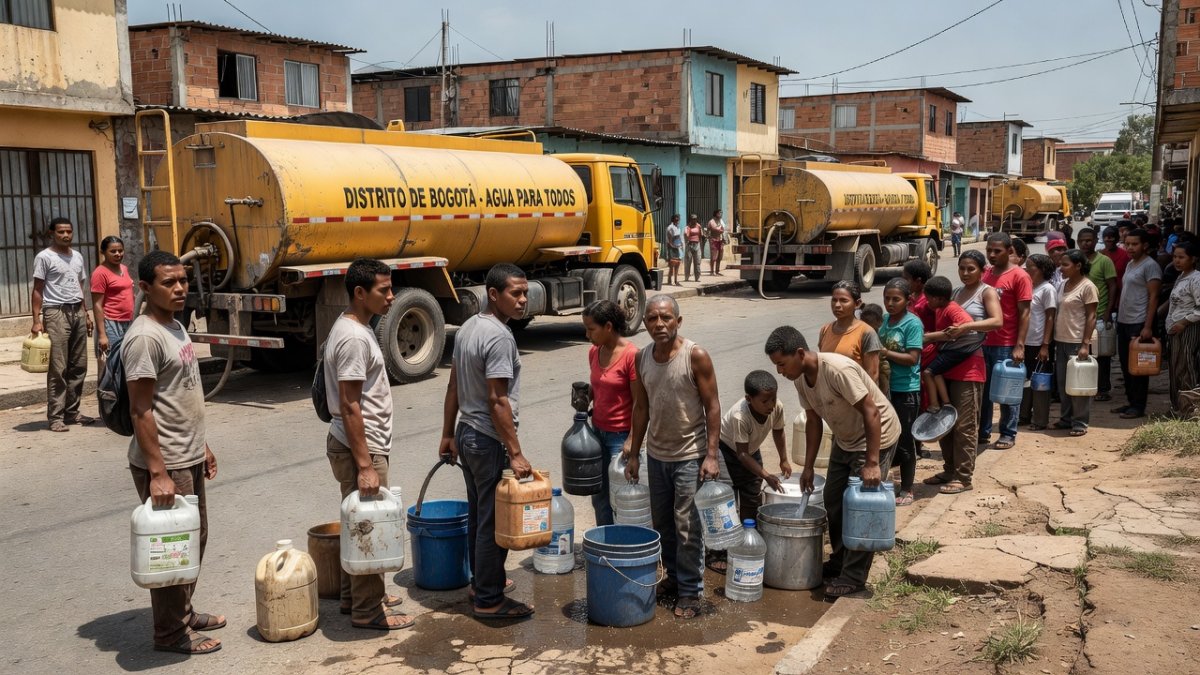
El Niño Returns: IDEAM's Dire Forecast
Colombia’s meteorological agency IDEAM has declared El Niño conditions established since early 2026, forecasting a 96% probability that peak drought impacts will strike between November 2026 and February 2027. The agency assigns a 63% chance that this event will reach strong to very strong intensity, potentially the most severe since 1950. Under such scenarios, rainfall reductions of 50% to 80% below historical averages are expected across vulnerable Andean and Amazonian zones that feed Bogotá’s reservoirs. These projections align with broader El Niño impacts already visible: increased wildfire risk, hydroelectric strain, and accelerated water shortages. The 2024-2025 episode demonstrated how quickly Chingaza levels can plummet when inflows collapse, and current tributary readings of 0.22 cubic meters per second foreshadow similar stress. IDEAM’s models incorporate Amazon deforestation and Orinoco basin dryness, both of which disrupt regional moisture transport and reduce orographic rainfall over the Eastern Cordillera. For Bogotá at 2,600 meters, even moderate deficits translate into rapid reservoir drawdowns. Officials therefore treat the 96% probability figure not as abstract statistics but as a call to preemptive action, urging residents to internalize the “#ConElAguaNoSeJuega” message before restrictions return.
Infrastructure Overhaul: $150 Million in Lessons Learned
Responding to the 2024-2025 crisis, Acueducto de Bogotá launched a roughly $600 billion COP (approximately US$150 million) modernization program designed to diversify supply and reduce vulnerability. Key projects include expanding the Tibitoc plant to a capacity of 10.5 cubic meters per second and upgrading the Wiesner plant from 14 to 21 cubic meters per second. The Río Blanco captation project is scheduled to come online in the second half of 2026, adding another independent source. Gerente Natasha Avendaño has prioritized these works alongside efforts to curb the 35% non-revenue water losses that plagued prior operations. Mayor Carlos Fernando Galán framed the investment as essential insurance against the 63% probability of a strong El Niño, noting that infrastructure alone cannot substitute for conservation. The program also incorporates real-time monitoring upgrades at Chingaza and Chuza reservoirs to provide earlier warnings when inflows drop below the 6 cubic meters per second historical benchmark. While critics argue that loss reduction should have preceded new construction, utility data show measurable progress in leak detection since rationing ended in April 2025. These upgrades represent a direct translation of crisis lessons into concrete capacity, aiming to buffer the 8 million residents against the 50-80% rainfall shortfalls projected for late 2026.
Páramos Under Pressure: Climate Change and Bogotá's Watershed
The páramo ecosystem within Chingaza National Park serves as Bogotá’s natural water regulator, capturing moisture and releasing it steadily into the Chingaza and Chuza reservoirs that supply over 70% of the city’s needs. Yet Amazon deforestation and increasing dryness across the Orinoco basin are altering rainfall patterns that sustain these high-altitude wetlands. IDEAM’s forecast of 50-80% rainfall reductions during a strong El Niño underscores how fragile this balance has become. The 2024-2025 drought, which drove Chingaza to 17%, exposed the limits of relying on a single páramo-dominated watershed without parallel protections. Conservationists emphasize that preserving these ecosystems is as critical as the $600 billion COP infrastructure program now underway. Mayor Galán’s administration has paired plant expansions at Tibitoc and Wiesner with renewed enforcement against encroachment in protected zones. Residents participating in the “#ConElAguaNoSeJuega” campaign learn that every liter saved reduces pressure on the páramo during the projected November 2026–February 2027 peak. Without such integrated stewardship, the 96% probability of severe El Niño impacts could overwhelm even upgraded treatment capacity, threatening both water quantity and quality for Bogotá’s eight million inhabitants.
What This Means for Latin America
Bogotá’s water predicament mirrors challenges confronting capitals across Latin America as El Niño intensifies and climate change reshapes Andean and Amazonian hydrology. Cities from Quito to La Paz share similar dependence on high-elevation watersheds vulnerable to the same 50-80% rainfall deficits now forecast for Colombia. The 63% chance of a strong El Niño through early 2027 raises the specter of synchronized shortages that could strain regional energy grids reliant on hydropower. Bogotá’s experience with 24-hour rationing cycles and the subsequent $150 million investment offers a replicable template: combine immediate conservation messaging such as “#ConElAguaNoSeJuega” with targeted infrastructure like the Tibitoc and Wiesner upgrades. Non-revenue losses near 35% remain a continental problem that diverts resources before they reach residents. By documenting how the 2024-2025 crisis at 17% reservoir levels prompted diversification through the Río Blanco project, Bogotá provides data-driven evidence for peers preparing for the November–February peak. Coordinated páramo protection across borders could further stabilize flows, turning isolated municipal responses into a hemispheric strategy for Andean water security.
The Bottom Line — A Race Against the Dry Season
With IDEAM’s 96% probability of peak El Niño impacts looming between November 2026 and February 2027, Bogotá must accelerate every measure already in motion. The Chingaza system’s current 54.14% level and Chuza inflows of 0.22 cubic meters per second serve as early warnings that cannot be ignored. Mayor Galán, Acueducto de Bogotá, and gerente Natasha Avendaño have positioned the Tibitoc expansion, Wiesner upgrade, and Río Blanco captation—totaling roughly $600 billion COP—as the backbone of resilience. Yet success also hinges on sustaining the behavioral shifts cultivated during the 2024-2025 rationing and protecting the páramo ecosystems that regulate the entire watershed. If non-revenue losses remain near 35%, even new infrastructure will fall short. The 63% chance of strong El Niño intensity demands that the “#ConElAguaNoSeJuega” ethos become permanent culture rather than crisis response. For eight million residents, the race against the dry season is not merely technical but existential, requiring disciplined execution of every lesson learned since the reservoirs last hit 17%.
By Elena Vasquez, Staff Writer
**Keywords:** Bogotá water crisis, Colombia drought, Chingaza reservoir, El Niño 2026, IDEAM, water rationing, climate change Colombia, páramo ecosystem, Carlos Fernando Galán, Acueducto de Bogotá, Andean water securityThis article was produced with AI-assisted research and editorial support. Reporting is based on sources cited in the article.
What's Your Reaction?
 Like
0
Like
0
 Dislike
0
Dislike
0
 Love
0
Love
0
 Funny
0
Funny
0
 Wow
0
Wow
0
 Sad
0
Sad
0
 Angry
0
Angry
0

Latin America Correspondent at Global1.News. Based in Mexico City, covering politics, economics, energy, and culture across the region. Brings an on-the-ground perspective to stories spanning from the Rio Grande to Patagonia.














Comments (0)