
Quadcopter Targeting of Gaza Children Exposed: Brown University Report Details Precision Strikes and Civilian Harm
A new report from Brown University's Costs of War Project has documented in meticulous detail how Israeli quadcopter operations are systematically endangering Gaza's children. This video article examines a detailed Brown University study exposing patterns of precision targeting that raise profound questions under international law. The human cost, documented through medical records and survivor accounts, cannot be ignored. Quadcopter Targeting of Gaza Children Exposed: Brown
A new report from Brown University's Costs of War Project has documented in meticulous detail how Israeli quadcopter operations are systematically endangering Gaza's children. This video article examines a detailed Brown University study exposing patterns of precision targeting that raise profound questions under international law. The human cost, documented through medical records and survivor accounts, cannot be ignored.
Quadcopter Targeting of Gaza Children Exposed: Brown University Report Details Precision Strikes and Civilian Harm
Gaza City, Occupied Palestinian Territories — July 24, 2026 — In a recent Middle East Eye report titled "Israel's targeting of children using quadcopters in Gaza - report | MEE Live," published July 23, 2026, the focus turns to a June 17, 2026 study from Brown University's Costs of War Project. The analysis examines Israeli government quadcopter operations in Gaza and their documented effects on civilians, particularly children. Authors Dr. Mimi Syed, an emergency medicine physician who served in Gaza, Wes J. Bryant, a former Pentagon targeting chief, Charles O. Blaha, a 32-year State Department veteran, and Stephanie Savell, the project's director, detail how these small aerial devices have been deployed in ways that raise urgent questions about precision, accountability, and civilian protection under international law.
Documented Patterns in Child Casualties
The Costs of War report examines 18 documented cases of child deaths and injuries from gunshots in Gaza during August and September 2024. Witnesses in 90 percent of those cases attributed the wounds to quadcopter fire. The injuries followed a consistent pattern: single small-caliber rounds striking the head, neck, chest, or abdomen. Such precision in targeting suggests deliberate selection rather than indiscriminate fire, according to the authors' review of medical records and survivor accounts. These findings align with earlier reporting from the BBC in November 2024, which cited Prof. Nizam Mamode, a retired UK surgeon who worked at Nasser Hospital, describing how drones appeared to "pick off civilians — children" after initial bombings.
The report includes radiological images and forensic sketches of five specific cases, as documented by Dr. Syed at al-Aqsa Hospital and Nasser Hospital, providing medical evidence of wounds consistent with quadcopter-fired munitions. These images show the distinctive pattern of small-caliber rounds producing precise entry wounds, differing significantly from the fragmentation patterns typical of artillery or aerial bombing. The forensic documentation represents one of the first systematic efforts to connect specific wound profiles to quadcopter deployment in an active conflict zone.
Medical Evidence and Survivor Testimony
Prof. Mamode testified before UK MPs that drones fired pellets causing extensive internal damage. He described operating on a three-year-old child whose injuries required complex intervention. "The bullets that the drones fire are these small cuboid pellets and I fished a number of those out of the abdomen of small children," Mamode told the International Development Committee. "I think the youngest I operated on was a three-year-old." He described how the pellets would "bounce around" inside the body, causing multiple injuries from a single entry point.
Dr. Mimi Syed's firsthand observations from Gaza hospitals reinforce these accounts, noting the distinctive wound profiles that differ from typical artillery or rifle fire. Palestinian families in affected areas have recounted similar incidents, where children playing near homes or walking in groups were struck without warning. These testimonies connect directly to the daily reality of displacement and restricted movement under occupation, where even routine activities carry lethal risk. The consistent pattern across multiple testimonies and time periods suggests a systematic practice rather than isolated incidents.
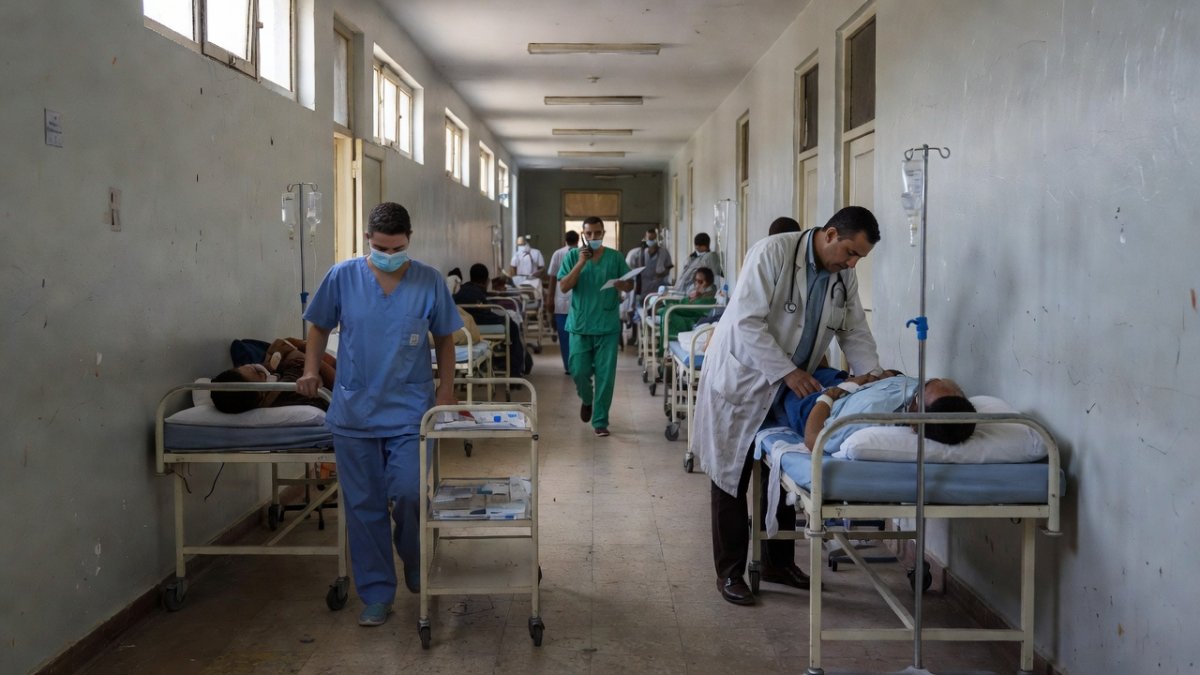
Scale of Child Deaths Since October 2023
More than 18,500 Palestinian children have been killed in Gaza since October 2023, according to Washington Post data, while Save the Children places the figure above 21,000 as of May 2026. The Costs of War report places quadcopter incidents within this broader toll, noting that a June 2026 UN report also alleged deliberate targeting of children in the besieged enclave. Palestinian communities have long documented how military tactics evolve to maintain control over territory and population movement. The quadcopter method adds a layer of persistent aerial surveillance that extends the reach of operations into civilian spaces previously considered safer after initial strikes.
These figures contribute to over 40,000 total Palestinian deaths in Gaza since October 2023. Children represent a disproportionate share of the casualties, reflecting the densely populated urban environment and what human rights organizations describe as a failure to distinguish between military targets and civilian life. The UN report published in June 2026 cited multiple incidents involving child casualties and raised concerns under the framework of the Convention on the Rights of the Child, to which Israel is a signatory.
Israeli Position and Questions of Accountability
The Israeli army has flatly rejected claims that it deliberately targets civilians or children. Official statements maintain that operations focus on military objectives. The Costs of War authors emphasize the absence of transparent investigations into individual incidents, leaving families without recourse or acknowledgment. This gap between stated policy and documented outcomes mirrors longstanding concerns raised by Palestinian human rights organizations about the application of international humanitarian law in Gaza. Without independent verification mechanisms, the pattern of single-precision wounds remains difficult to reconcile with claims of proportionate response.
The Rome Statute, which governs the International Criminal Court, defines "intentionally directing attacks against the civilian population" as a war crime. Although Israel is not a signatory to the court, the Palestinian Territories are signatories to the Rome Statute, which gives the ICC jurisdiction over crimes committed in Gaza. The Costs of War report implicitly raises the question of whether quadcopter tactics constitute such a violation under international humanitarian law.
Human Impact on Palestinian Daily Life
Quadcopter presence alters the texture of everyday existence in Gaza. Parents describe keeping children indoors for extended periods, limiting access to play, education, and fresh air. Economic activities such as street vending or family visits become calculated risks. These restrictions compound the effects of blockade and repeated displacement, eroding the social fabric that sustains communities under prolonged conflict. The report notes that such tactics can normalize surveillance and targeted force in ways that reshape civilian behavior over time.
Broader Implications for International Standards
The Costs of War Project warns that quadcopter tactics could serve as a template for other militaries seeking low-cost, persistent aerial engagement. This development carries direct consequences for the enforcement of the Geneva Conventions and the protection of children in armed conflict. The principle of distinction, enshrined in Additional Protocol I to the Geneva Conventions, requires parties to conflict to separate civilian populations from military objectives at all times. UN Security Council Resolution 1261, adopted in 1999, specifically addresses the protection of children in armed conflict and calls on all parties to comply with international humanitarian law.
The United States, as Israel's largest arms supplier, faces particular questions about its role in conflicts where American-provided technologies may be implicated in civilian harm. The Costs of War report calls for a review of US policy on arms transfers to Israel, urging greater transparency and accountability measures. Palestinian advocates have long argued that accountability mechanisms must address emerging technologies before they become standard practice. The report's call for greater transparency underscores the need for states to document and review the human cost of each deployment, rather than treating civilian harm as an unavoidable byproduct.
Without international action, the tactics documented in Gaza may indeed become the new normal — a template that other militaries adapt to their own conflicts. For Palestinian families living under this reality, the quadcopter is not a technological innovation but an instrument of daily terror, hovering above playgrounds, schools, and homes, ready to strike at any moment.
By Fatima Al-Rashid, Staff Writer
This article was produced with AI-assisted research and editorial support. Reporting is based on sources cited in the article.
What's Your Reaction?
 Like
0
Like
0
 Dislike
0
Dislike
0
 Love
0
Love
0
 Funny
0
Funny
0
 Wow
0
Wow
0
 Sad
0
Sad
0
 Angry
0
Angry
0

Gulf/MENA Correspondent at Global1.News. Based in Doha, covering Gulf politics, energy markets, diplomacy, and development across the Middle East and North Africa. Tracks the economic transformation of the Gulf states.













Comments (0)