
Venezuela Earthquakes Kill 920 Amid Infrastructure Crisis
The dual quakes and immediate destruction On Wednesday, two powerful earthquakes struck Venezuela within seconds of each other, with the first registering magnitude 7.2 in Yaracuy state west of Caracas at a depth of 22km. Less than a minute later, a magnitude 7.5 quake hit nearby at about 10km depth, marking one of the strongest events to affect the country in a century. The co
The dual quakes and immediate destruction
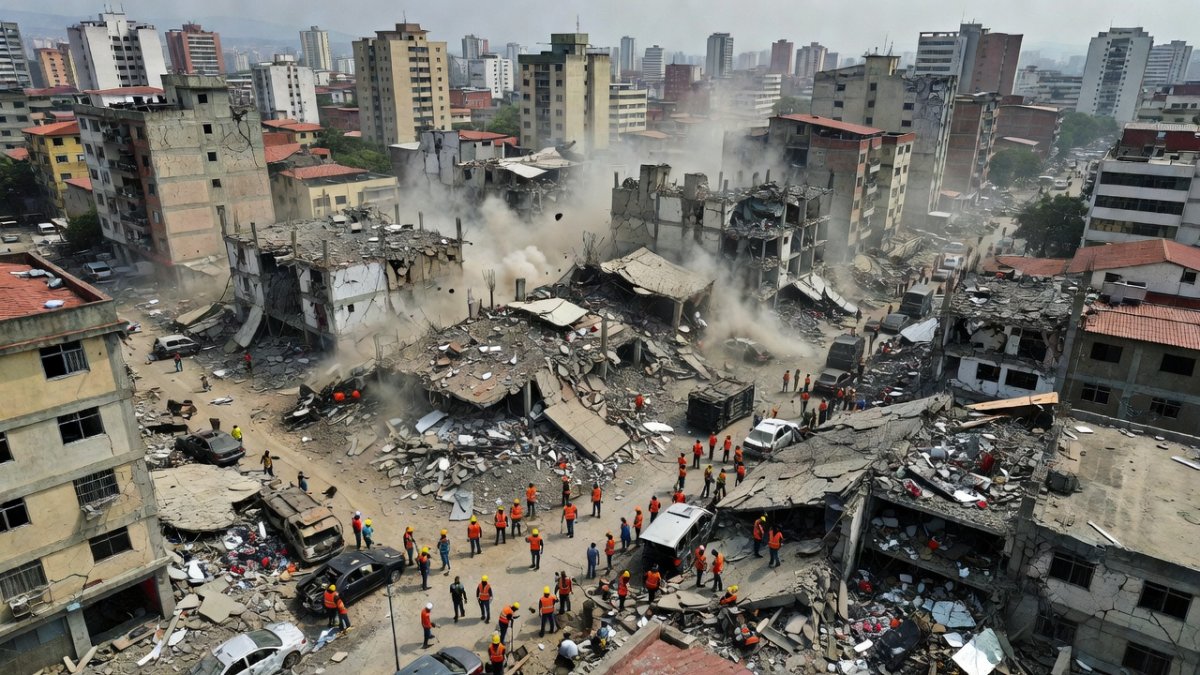
On Wednesday, two powerful earthquakes struck Venezuela within seconds of each other, with the first registering magnitude 7.2 in Yaracuy state west of Caracas at a depth of 22km. Less than a minute later, a magnitude 7.5 quake hit nearby at about 10km depth, marking one of the strongest events to affect the country in a century. The combined force left more than 900 people dead, 3,360 injured and 172 still believed trapped beneath rubble, according to initial assessments from rescue operations.
Acting President Delcy Rodriguez declared a state of emergency as reports confirmed hundreds of buildings destroyed, including 13 hospitals and 25 shopping centres. Interior Minister Diosdado Cabello noted that multiple states were affected, including La Guaira, Aragua, Carabobo, Falcon and Yaracuy. The timing during a national holiday complicated immediate response efforts across the region.
USGS data indicated a 44% chance the death toll could reach 10,000 and a 30% chance it could climb to 100,000, underscoring the scale of potential loss. A total of 214 aftershocks have been recorded since the initial events, keeping residents on edge and hindering early recovery work in affected zones.
The quakes occurred less than six months after Nicolas Maduro was seized by US forces, leaving Delcy Rodriguez to govern amid ongoing political transition. This context added layers of complexity to coordination between national authorities and incoming international teams responding to the widespread structural failures.
Rescuers search through rubble in Caracas following the twin earthquakes that struck on Wednesday. (Global 1 News)
Hardest-hit regions: La Guaira and Caracas districts
The La Guaira region north of the capital suffered the most severe impact, with 243 people rescued from collapsed structures in the initial days. Footage from the area showed a 10-storey hotel reduced to rubble, highlighting how older construction in coastal zones proved especially susceptible to the shaking. Rescue operations there focused on densely populated neighbourhoods where buildings toppled onto narrow streets.
In Caracas, the districts of Los Palos Grandes and Altamira experienced the worst destruction, echoing the damage pattern seen during the 1967 earthquake that killed 200 people. These neighbourhoods, known for mid-rise residential and commercial buildings, saw entire blocks compromised, with walls cracking and foundations shifting under the dual seismic events.
Tremors were felt more than 1,000km away in the Colombian capital of Bogota, demonstrating the regional reach of the quakes. Areas such as Caraballeda and La Guaira became focal points for BBC reporters documenting the scene, where debris fields stretched across multiple blocks and access remained restricted for days.
Local infrastructure in these zones, already strained by prior economic pressures, faced compounded challenges as power outages and water disruptions followed the main shocks. The concentration of damage in La Guaira and Caracas districts revealed how urban density amplified casualties in Venezuela's most populated corridor.
Infrastructure vulnerability across Latin America
Many buildings in the affected areas were constructed from reinforced brick masonry and adobe blocks, materials that performed poorly under intense seismic stress. The shortage of cement, triggered by the collapse of the state-owned cement industry following nationalisation under Chavez, meant essential repairs had not been carried out in the years leading up to the disaster. This left structures across Venezuela particularly exposed when the quakes struck.
The pattern of vulnerability extends beyond Venezuela to other parts of Latin America, where similar building practices and maintenance gaps persist in cities from Bogota to Caracas. In La Guaira and Yaracuy, the combination of older masonry construction and limited access to modern reinforcement materials created conditions that turned moderate shaking into catastrophic collapses.
Economic constraints have long delayed upgrades to critical facilities such as hospitals and schools throughout the region. Doctor Pedro Javier Fernandez noted that all hospitals lacked supplies even before the disaster, a situation rooted in broader supply chain issues that left medical infrastructure unable to withstand or respond effectively to the emergency.
USGS assessments highlighted how these material and maintenance shortfalls turned an already seismic-prone zone into a high-risk environment. The events in Venezuela serve as a stark reminder for neighbouring countries to address comparable weaknesses in their own urban building stock before similar events occur.
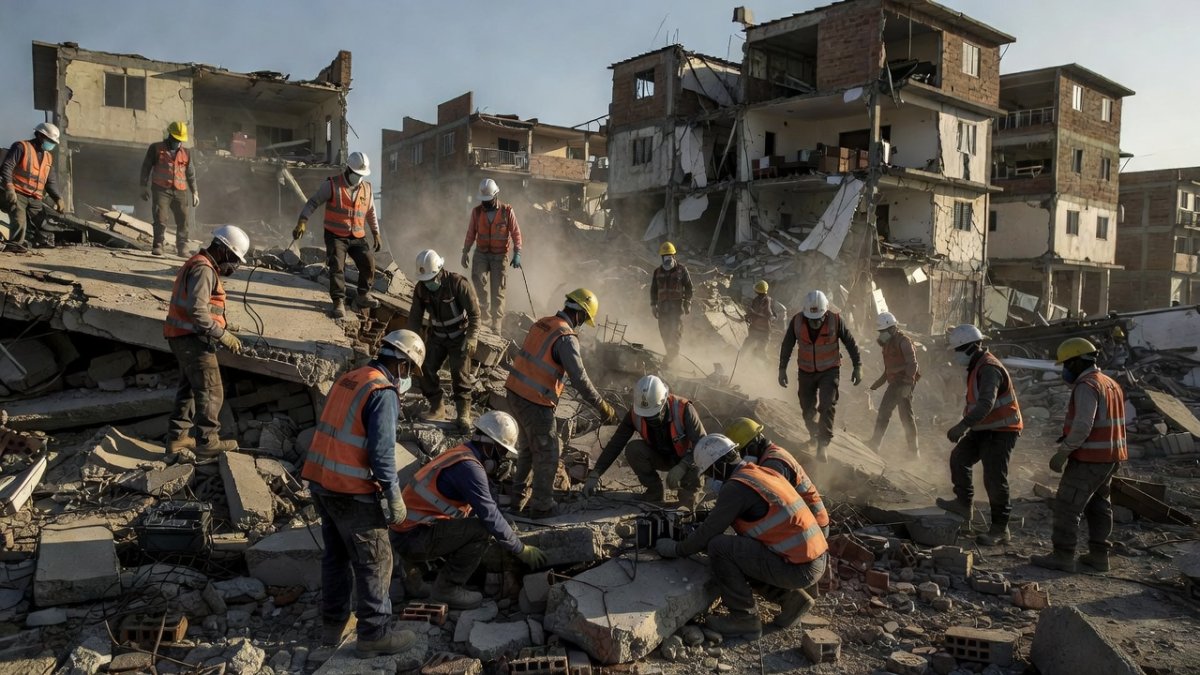
International search and rescue teams from multiple countries deployed to La Guaira, the hardest-hit region. (Global 1 News)
International rescue response
UN humanitarian chief Tom Fletcher reported that almost 2,000 international rescue workers, including 111 dogs, formed part of the coordinated response, with 39 search and rescue teams deployed across the hardest-hit zones. Teams arrived from the UK, where 14 fire services led by Merseyside Fire and Rescue joined efforts, alongside personnel from the US, Netherlands, Mexico and Switzerland.
The United States announced the deployment of warships, transport planes and $150m in aid to support operations in La Guaira and surrounding areas. Acting President Delcy Rodriguez coordinated with these incoming teams while managing the state of emergency declared immediately after the quakes.
Norwegian Refugee Council secretary general Jan Egeland described the damage as horrific, emphasising the need for sustained international presence beyond the initial search phase. The arrival of specialised units helped locate survivors in collapsed structures, though ongoing aftershocks continued to pose risks to both rescuers and remaining residents.
Coordination challenges arose as teams navigated damaged roads and limited local resources, yet the scale of the multinational effort marked one of the largest responses to a seismic event in the region in recent years. Focus remained on extracting those still trapped while establishing temporary medical points to treat the injured.
Survivor accounts and human toll
Veronica from Caracas described the moment the ground shook violently, stating she thought she was going to die as her building was completely destroyed and walls cracked around her. Her account reflects the terror experienced by thousands who found themselves without shelter in the immediate aftermath.
Leander Perez from Santa Rosalia parish spent the night on the pavement after his home became unsafe, joining many others who sought open spaces away from unstable structures. Juan Ortiz, a medical student, confirmed one friend had died and another remained under rubble, illustrating the personal losses mounting across affected communities.
Among the fatalities were one Portuguese national and two Brazilian citizens, while three Spanish nationals were also killed and 99 remained unaccounted for. Additionally, 56 Portuguese citizens were reported missing, adding an international dimension to the human cost in Caracas and La Guaira districts.
The overall toll of 920 confirmed dead and 3,360 injured continues to rise as rescue teams work through debris. These individual stories underscore the widespread disruption to daily life, with families separated and communities left to cope with both physical injuries and emotional trauma in the days following the quakes.
Regional implications and recovery challenges
US President Donald Trump referred to the devastating number of deaths on Truth Social, highlighting international attention on Venezuela's recovery needs. The replacement of military officials with civilian experts in the housing and electricity ministries by Acting President Delcy Rodriguez signals an attempt to streamline reconstruction planning amid the crisis.
Recovery will require addressing the pre-existing cement shortages and rebuilding hospitals and other critical facilities destroyed in the quakes. The events have exposed how infrastructure weaknesses across Latin America, from Caracas to Bogota, can turn natural disasters into prolonged humanitarian emergencies.
With 172 people still believed trapped and aftershocks continuing, search operations face ongoing difficulties in La Guaira and Yaracuy. Long-term challenges include restoring basic services and ensuring that future construction incorporates stronger seismic standards to protect vulnerable urban populations.
The disaster serves as a warning for the broader region about the need for proactive investment in resilient infrastructure. Neighbouring countries are likely to review their own building codes and maintenance practices in light of the widespread destruction witnessed in Venezuela this week.
Source: BBC News By Elena Vasquez, Staff WriterThis article was produced with AI-assisted research and editorial support. Reporting is based on sources cited in the article.
What's Your Reaction?
 Like
0
Like
0
 Dislike
0
Dislike
0
 Love
0
Love
0
 Funny
0
Funny
0
 Wow
0
Wow
0
 Sad
0
Sad
0
 Angry
0
Angry
0

Latin America Correspondent at Global1.News. Based in Mexico City, covering politics, economics, energy, and culture across the region. Brings an on-the-ground perspective to stories spanning from the Rio Grande to Patagonia.














Comments (0)