
Venezuela Doublet Quake Sparks Health Crisis 2026
A magnitude 7.2 earthquake followed 39 seconds later by a magnitude 7.5 shockwave turned Caracas and the Venezuelan coast into a disaster zone on June 24, 2026, killing more than 1,450 people and overwhelming a healthcare system already in chronic crisis. As aftershocks continue and frustration mounts over the government's delayed response, the doublet earthquake has exposed ho
A magnitude 7.2 earthquake followed 39 seconds later by a magnitude 7.5 shockwave turned Caracas and the Venezuelan coast into a disaster zone on June 24, 2026, killing more than 1,450 people and overwhelming a healthcare system already in chronic crisis. As aftershocks continue and frustration mounts over the government's delayed response, the doublet earthquake has exposed how fragile health infrastructure magnifies natural disaster mortality across Latin America.
Venezuela's Doublet Earthquake: Over 1,450 Dead as Health System Collapses and Frustration Mounts Over Rescue Delays
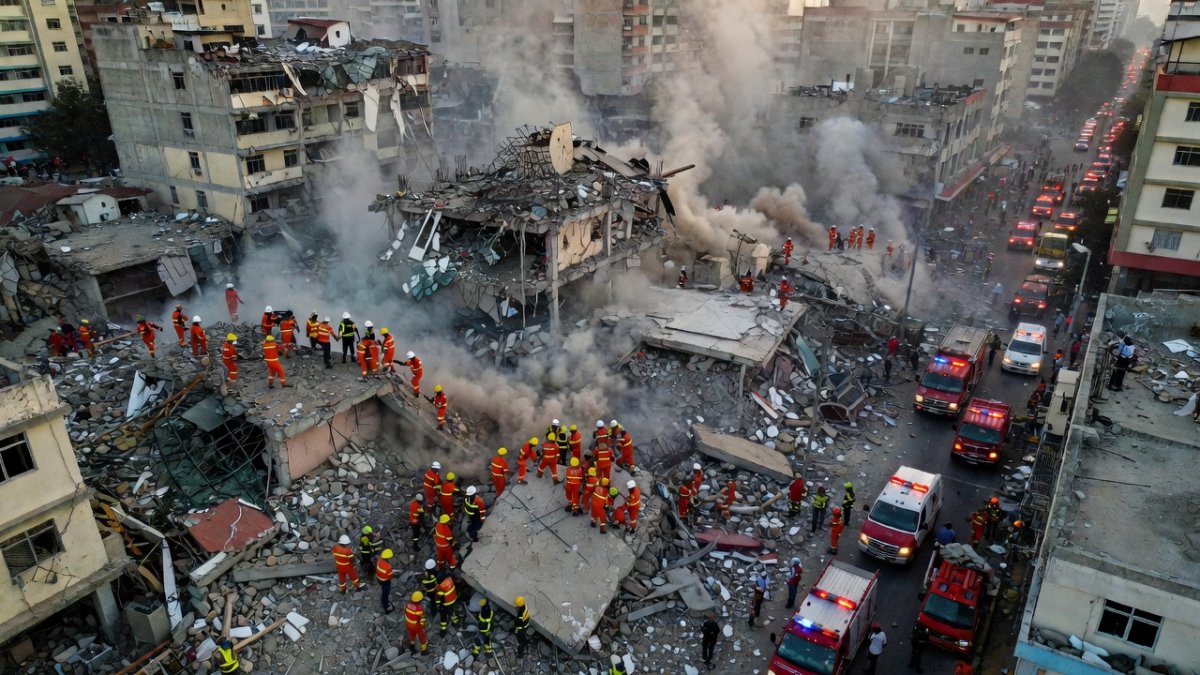
Caracas, Venezuela – June 29, 2026 —
The Night the Earth Moved
The twin shocks originated roughly 170 kilometers from Caracas, sending violent Mercalli VII+ intensities through densely populated urban corridors. Within minutes, 189 buildings suffered total collapse while another 585 experienced partial failure, affecting 2,501 structures that included hospitals, schools, and critical bridges. The Simón Bolívar International Airport sustained significant damage, severing immediate aerial evacuation routes. Aftershocks measuring 4.8 to 5.0 continued through June 29, preventing safe re-entry into damaged facilities and compounding the trauma for survivors already displaced.
Al Jazeera correspondents Noris Soto and Teresa Bo reported from Caracas that the 68,900 people initially listed as missing created an unprecedented identification burden on forensic services. Power failures knocked out refrigeration in multiple morgues, including one facility designed for only two bodies that suddenly held nearly thirty corpses. These conditions transformed an acute seismic event into a prolonged sanitary emergency with risks of disease transmission in tropical heat.
A Health System Under Siege
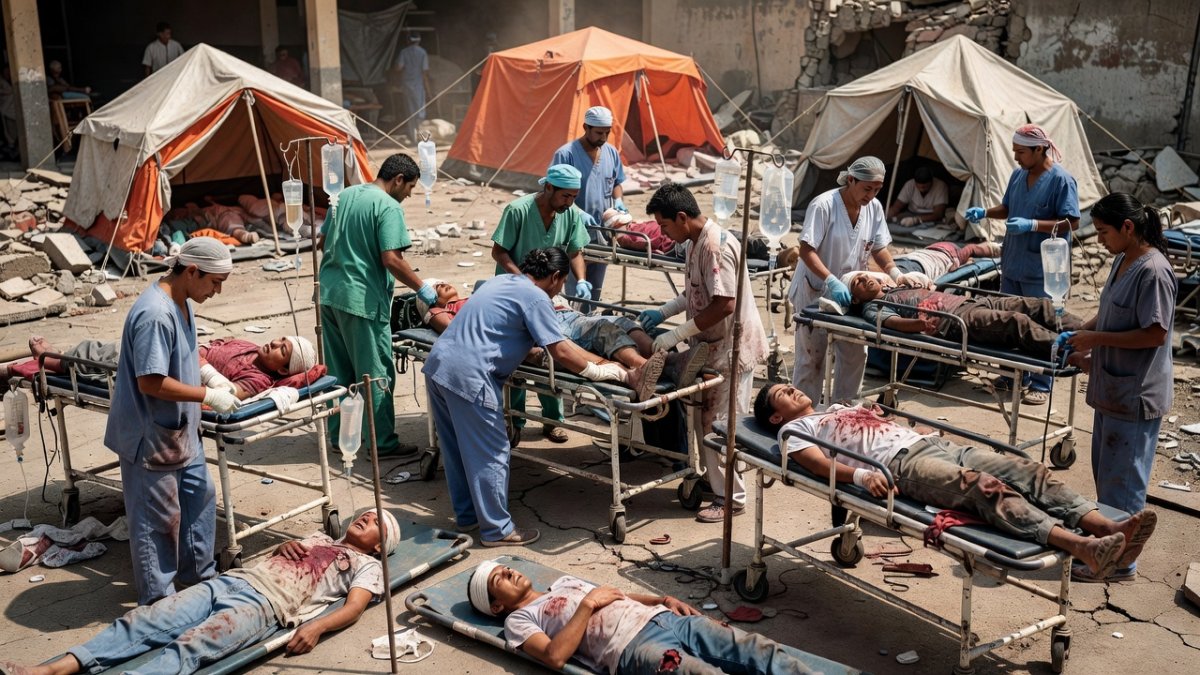
Venezuela’s chronically underfunded healthcare network faced immediate overload. The Pérez Carreño hospital alone received approximately 700 injured patients through its emergency entrances in the first days. With a pre-existing 60 percent deficit in operating rooms and patients routinely required to supply their own medications and sutures, the sudden influx overwhelmed every remaining functional space. Staff treated victims outdoors on gurneys, suspending intravenous lines from tree branches when interior corridors became inaccessible.
At least twenty health centers experienced Mercalli VII+ shaking, damaging diagnostic equipment and surgical suites. The Pan American Health Organization emphasized that the critical early hours were lost because low staffing levels and structural damage prevented rapid triage. Without adequate isolation wards or functioning sterilization units, secondary infections emerged as a secondary wave of morbidity layered atop trauma injuries. The national health system, already strained by years of economic contraction, lacked surge capacity for even a fraction of the 3,150 documented casualties.
The Rescue That Never Came
Government authorities declared a national state of emergency, yet families reported waiting 36 to 72 hours before organized rescue teams reached collapsed neighborhoods. Vice President Delcy Rodríguez coordinated international brigades while Information Minister Jorge Rodríguez issued official updates, but bureaucratic permit requirements and road closures repeatedly blocked volunteer access. Residents in Caracas and La Guaira dug through rubble with bare hands, searching for trapped relatives while aftershocks threatened further collapses.
Public frustration intensified as private clinics and eight activated public hospitals in Greater Caracas proved insufficient. The 77,000 impacted families faced not only loss of homes but also the collapse of local clinics that normally provided primary care. This delay converted potentially survivable injuries into fatalities and left thousands without access to pain management, antibiotics, or basic wound care during the most time-sensitive window.
Communities Filling the Gap
Local volunteers and diaspora networks mobilized faster than official channels. Starlink terminals restored communications in isolated pockets, allowing families to coordinate search efforts and request specific medical supplies. Community kitchens and makeshift first-aid posts emerged in parks and plazas, staffed by nurses who had lost their own homes yet continued working without pay or rest.
These grassroots responses highlighted the resilience of Venezuelan civil society amid institutional failure. However, the absence of coordinated epidemiological surveillance meant that outbreaks of diarrheal disease and respiratory infections went unreported in the initial 72 hours. The human cost extended beyond the official death toll as untreated chronic conditions such as diabetes and hypertension worsened without access to daily medications.
International Aid Arrives
More than 1,600 foreign rescuers from Mexico’s Topos brigade, Qatar, Chile, Colombia, Spain, China, Portugal, and India eventually reached affected zones. Cuban medical brigades reinforced local staff at field hospitals, providing much-needed surgical capacity. The Pan American Health Organization deployed rapid assessment teams to evaluate water and sanitation risks that could trigger cholera or leptospirosis outbreaks in the coming weeks.
Despite these arrivals, coordination remained fragmented. Roadblocks and permit delays slowed the distribution of tents, generators, and trauma kits. The arrival of international expertise could not fully compensate for the initial 48-hour vacuum in which preventable deaths occurred. Venezuela’s pre-existing humanitarian context amplified every logistical failure into a multiplier of human suffering.
Aftershocks and the Road Ahead
Continuing seismic activity through late June kept hospitals on constant alert, forcing repeated evacuations of patients from buildings showing new cracks. Reconstruction estimates suggest years will pass before the 2,501 damaged structures regain functionality. The $6.7 billion preliminary loss figure does not capture long-term mental health burdens or the economic displacement of 77,000 families now reliant on emergency shelter.
Public health experts warn that without immediate investment in resilient infrastructure, future seismic events will repeat this cascade of hospital failures. The Venezuelan experience offers a stark case study in how chronic underinvestment converts a natural hazard into a prolonged humanitarian and epidemiological disaster.
The Bottom Line — A Warning for Latin America
The June 24 doublet earthquake exposed the lethal intersection of geological risk and fragile health systems across the region. With 1,450 confirmed fatalities and thousands more injured, Venezuela’s crisis demonstrates that earthquake preparedness must prioritize hospital retrofitting and emergency supply stockpiles rather than reactive declarations alone. Neighboring countries with similar seismic exposure and strained public finances now confront an urgent mandate to strengthen their own health infrastructure before the next fault slips.
As climate journalist reporting from Latin America, I see this tragedy as part of a broader pattern where environmental shocks collide with social vulnerabilities. The images of patients treated under trees and morgues losing refrigeration will remain indelible reminders that resilient health systems are not optional luxuries but essential shields against cascading disasters. Venezuela’s ongoing aftershocks serve as both literal tremors and metaphorical warnings for the entire continent.
By Elena Vasquez, Staff Writer Keywords: Venezuela earthquake 2026, doublet quake, public health crisis, Caracas hospitals, government response, PAHO, Cuban medical brigades, seismic aftershocks, Yaracuy fault, disaster medicine, Latin America health systems, emergency response delays, building collapses, international aid VenezuelaThis article was produced with AI-assisted research and editorial support. Reporting is based on sources cited in the article.
What's Your Reaction?
 Like
0
Like
0
 Dislike
0
Dislike
0
 Love
0
Love
0
 Funny
0
Funny
0
 Wow
0
Wow
0
 Sad
0
Sad
0
 Angry
0
Angry
0

Latin America Correspondent at Global1.News. Based in Mexico City, covering politics, economics, energy, and culture across the region. Brings an on-the-ground perspective to stories spanning from the Rio Grande to Patagonia.












Comments (0)