
India Higher Education Hits 4.5 Crore in New AISHE Report
India's higher education landscape is undergoing a profound transformation, with record enrolments signalling both remarkable progress and persistent challenges in access, gender equity and research capacity. The latest AISHE 2023-24 data reveals STEM crossing a historic threshold while women maintain their majority status for the seventh consecutive year, yet stark regional and disciplinary gaps remain.
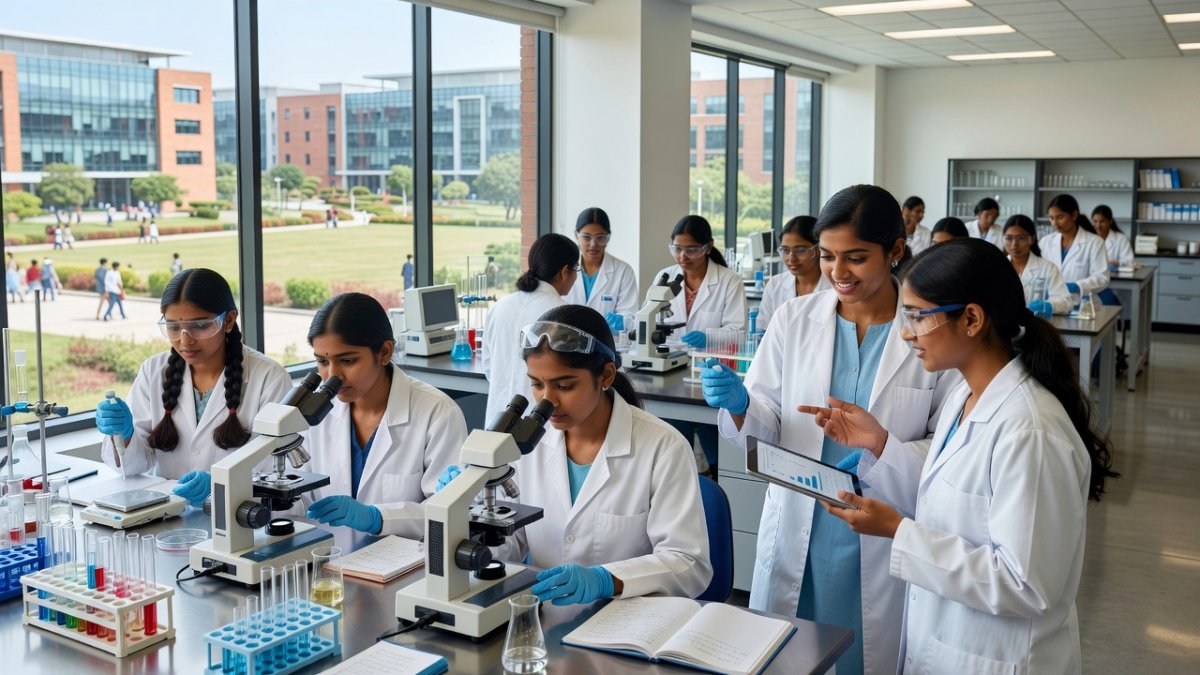
India Higher Education Hits 4.5 Crore Students in AISHE 2023-24
New Delhi, India – July 19, 2026 — The All India Survey on Higher Education (AISHE) 2023-24, released by the Ministry of Education, records STEM enrolment at 1.02 crore students, the first time the figure has exceeded one crore. This marks a rise from 91.5 lakh in 2014-15 and reflects sustained policy focus on science and technology education under the National Education Policy 2020.
A Historic Milestone in Numbers
Total higher education enrolment stands at 4.50 crore, an increase of 1.08 crore since 2014-15. The survey covers 59,553 institutions, including 1,278 universities, 46,468 colleges and 11,787 standalone institutions. Uttar Pradesh leads all states in absolute enrolment numbers. These figures demonstrate expanded access across the country, with particular gains in states that have invested in new colleges and polytechnics. India’s National Education Policy (NEP) 2020 sets an ambitious 50% gross enrolment ratio (GER) target by 2035, up from the current 27.3% in higher education.
Women Outnumber Men — For the Seventh Year
Female enrolment has reached 2.24 crore, a 42 percent increase since 2014-15. Women now constitute the majority of students for the seventh consecutive year. The Gross Enrolment Ratio shows females at 31.2 percent and males at 28.9 percent, widening the gap to 2.3 percentage points. ST female enrolment has more than doubled with a 101.8 percent rise, while SC female enrolment has grown 66.9 percent. These trends indicate that targeted scholarships and hostel schemes in states such as Bihar and Rajasthan are producing measurable results.
STEM: One Crore and Counting
STEM enrolment of 1.02 crore represents a decisive shift toward technical fields. Pure Science accounts for 54.6 lakh students in total, while Engineering and Technology together enrol 46.33 lakh. The overall female share in STEM has reached 44 percent. This expansion aligns with UGC guidelines that encourage multidisciplinary STEM programmes and supports India’s target of increasing research output under NEP 2020. Recent enrolment surges, particularly in STEM, directly support the 50% GER goal by expanding access through multidisciplinary institutions and flexible credit frameworks.
Science: Where Women Lead
In pure Science, women comprise 54.6 percent of enrolment and outnumber men at both undergraduate and postgraduate levels. At the UG level, 45.68 lakh students are enrolled, with females at 53.4 percent. At the PG level, women make up 61.4 percent of Science students. Science programmes attract significantly higher female participation—55% of BSc and MSc seats in 2021–22—owing to relatively lower laboratory intensity in early years and stronger alignment with teaching careers. Regional patterns show pronounced variation: Kerala and Tamil Nadu report female science shares exceeding 62%, whereas Rajasthan and Madhya Pradesh remain below 40%.
Engineering: The Persistent Gender Gap
Engineering and Technology programmes still show only about 31 percent female enrolment. The contrast with pure Science highlights persistent barriers such as limited laboratory access in smaller towns and societal perceptions that steer girls away from core engineering branches. States like Tamil Nadu and Maharashtra have introduced women-only engineering colleges, yet national parity remains distant. Post-supernumerary quota implementations at IITs and NITs since 2018, female enrolment in these premier institutes rose from 8% to 19% by 2023. Emerging fields like AI/ML mirror the broader trend: women account for only 29% of AI-related postgraduate seats.
The 31% female enrolment in engineering masks sharp institutional variation. Tamil Nadu’s government women-only colleges—Government College of Engineering, Salem and the newly sanctioned Tiruchirappalli Women’s Engineering College—now account for 9,200 female seats, lifting the state’s female engineering share to 42%. Kerala’s model, anchored by the 35% supernumerary quota at NIT Calicut and the all-women programmes at Rajiv Gandhi Institute of Technology, Kottayam, has sustained 38% female enrolment since 2019.
Four national schemes target the pipeline. Vigyan Jyoti, expanded in 2021 to 200 districts, has mentored 18,500 Class XI–XII girls; 62% of 2022 cohort opted for JEE preparation. The WISE-KIRAN fellowship supports 1,240 women postgraduates annually with ₹35,000 monthly stipends. GATI, piloted at 30 institutions including IIT Kanpur and NIT Rourkela, mandates gender audits and has already increased female faculty hires by 11% at participating IITs. The new “Women in Engineering” scholarship under AICTE offers full tuition waivers to 5,000 additional girls from 2023–24.
Exclusion carries measurable costs. A 2022 NITI Aayog–Brookings study estimated that raising female engineering participation to 40% would add ₹12.7 lakh crore to GDP by 2030 through higher productivity in manufacturing and digital services. Malaysia’s 45% female engineering enrolment, achieved via 30% quotas and mandatory industry internships, and Saudi Arabia’s 37% share, driven by Vision 2030 scholarships at KAUST and KFUPM, illustrate that targeted quotas plus corporate placement guarantees can shift enrolment within a single decade. India’s next step is to link Vigyan Jyoti and GATI funding to placement outcomes at the 23 IITs and 31 NITs, converting access into sustained workforce participation.
The PhD Surge: 47% Jump in Research Enrolment
PhD enrolment rose nearly 47 percent in a single year, climbing from 2,33,422 to 3,43,559 students. This sharp increase signals stronger research capacity across IITs, NITs and IISc. Women now constitute 47.5% of PhD scholars, up from 39% a decade ago. India’s research output of 1.3 lakh Scopus-indexed papers in 2022, ranking third globally, has not translated into proportional innovation metrics, with patent filings by Indian residents at just 23,000 in 2021–22 versus China’s 1.5 million.
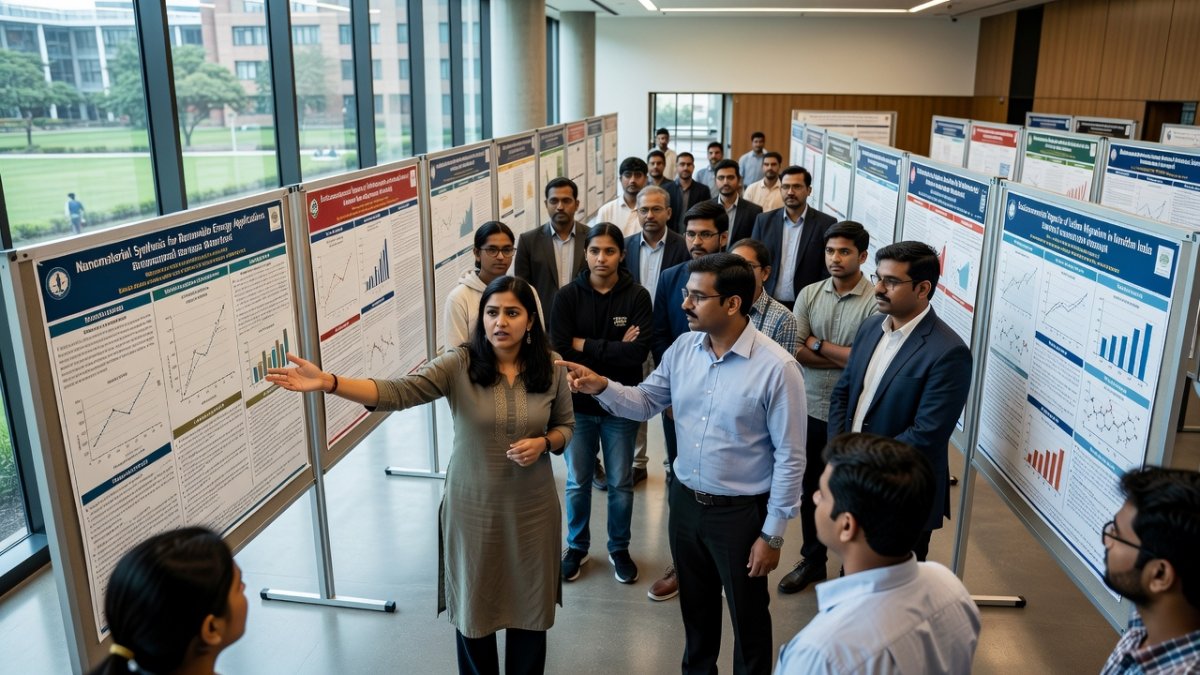
The 47.2% PhD enrolment spike between 2016–17 and 2021–22 is concentrated in a handful of institutions. IIT Bombay recorded a 68% rise in doctoral admissions, reaching 2,847 scholars by 2022–23, while IIT Madras and IIT Delhi posted 61% and 54% increases respectively, driven by new interdisciplinary centres in AI, climate science and semiconductors. Among NITs, NIT Trichy and NIT Surathkal each added over 400 PhD seats after receiving additional SERB funding. IISc Bangalore, already at capacity, grew 29% through its new UG–PhD integrated track.
Three central schemes explain most of the growth. The Prime Minister’s Research Fellowship (PMRF), launched in 2018, now supports 3,081 scholars with stipends up to ₹70,000 monthly; 42% of 2022 awardees joined IITs. The INSPIRE PhD fellowship has disbursed ₹1,200 crore since 2018, while SERB’s Core Research Grant and MATRICS schemes together funded 4,872 projects in 2021–22. These incentives have raised the share of NET-qualified entrants from 31% to 47%.
Yet India’s 1.3 lakh Scopus papers in 2022 yielded only 23,000 resident patent filings, compared with China’s 1.5 million. The missing link is technology-transfer infrastructure. Only 23 of 23 IITs and IISc maintain fully operational Technology Transfer Offices; IIT Delhi’s Foundation for Innovation and Technology Transfer licensed just 47 technologies last year. To close the gap, the National IPR Policy 2016 must be paired with mandatory Technology Readiness Level assessments and a ₹2,000-crore National Research Commercialisation Fund.
Private-sector partnerships are beginning to fill this void. TCS Research has embedded 180 scientists across five IITs under five-year MoUs, while Reliance New Energy and IIT Madras have co-created the 100,000 sq ft Energy Lab that has filed 14 joint patents since 2021. Scaling such models to 50 institutions could convert 15–20% of academic publications into licensable IP within five years.
Teachers, Institutions and Policy Implications
The teaching workforce totals 17.32 lakh, with 55.1 percent male and 44.9 percent female faculty. Institutional expansion to 59,553 entities has improved geographic access, yet faculty shortages persist in newer universities in eastern and northeastern India. The University Grants Commission’s 2021–22 regulations promoting four-year undergraduate programmes have already boosted lateral mobility, with over 1,200 universities adopting these structures. Budget allocations underscore persistent underfunding: the 2023–24 Union Budget earmarked ₹1.28 lakh crore for education, with higher education receiving only 0.68% of GDP. Tamil Nadu and Kerala report GERs above 45%, while Bihar and Uttar Pradesh lag below 20%. Sustained growth in STEM and PhD numbers will strengthen India’s economic competitiveness, but requires continued investment in laboratory equipment, industry-linked curricula and gender-sensitive campus infrastructure.
Outlook for Inclusive Growth
The AISHE 2023-24 data directly informs NEP 2020 implementation and upcoming UGC regulations on flexible degree structures. The widening GER gap between women and men points to the need for state-specific interventions in Uttar Pradesh, Bihar and Madhya Pradesh. For Indian students, these trends translate into greater choice and improved employability in high-value sectors. Women’s rising presence in science and research promises a more diverse innovation ecosystem that can drive inclusive economic growth over the next decade. — By Dr. Raj Patel, Staff Writer
This article was produced with AI-assisted research and editorial support. Reporting is based on sources cited in the article.
What's Your Reaction?
 Like
0
Like
0
 Dislike
0
Dislike
0
 Love
0
Love
0
 Funny
0
Funny
0
 Wow
0
Wow
0
 Sad
0
Sad
0
 Angry
0
Angry
0

India/South Asia Correspondent at Global1.News. Analytical voice with a background in science and health journalism. Based in New Delhi, covering Indian politics, education, healthcare, technology, and policy. Breaks down complex data into clear, actionable reporting.















Comments (0)