
War at the Strait: US and Iran Trade Strikes as Ceasefire Talks Stall
US Strikes Qeshm Island as Iran Missiles Rain on Gulf Allies The Strait of Hormuz just became a live-fire combat zone. On June 2 and 3, 2026, the US military launched precision self-defense strikes on Iran's Qeshm Island, destroying an Iranian military ground control station that coordinated drone and missile operations in the region, according to US Central Command. Iran retal
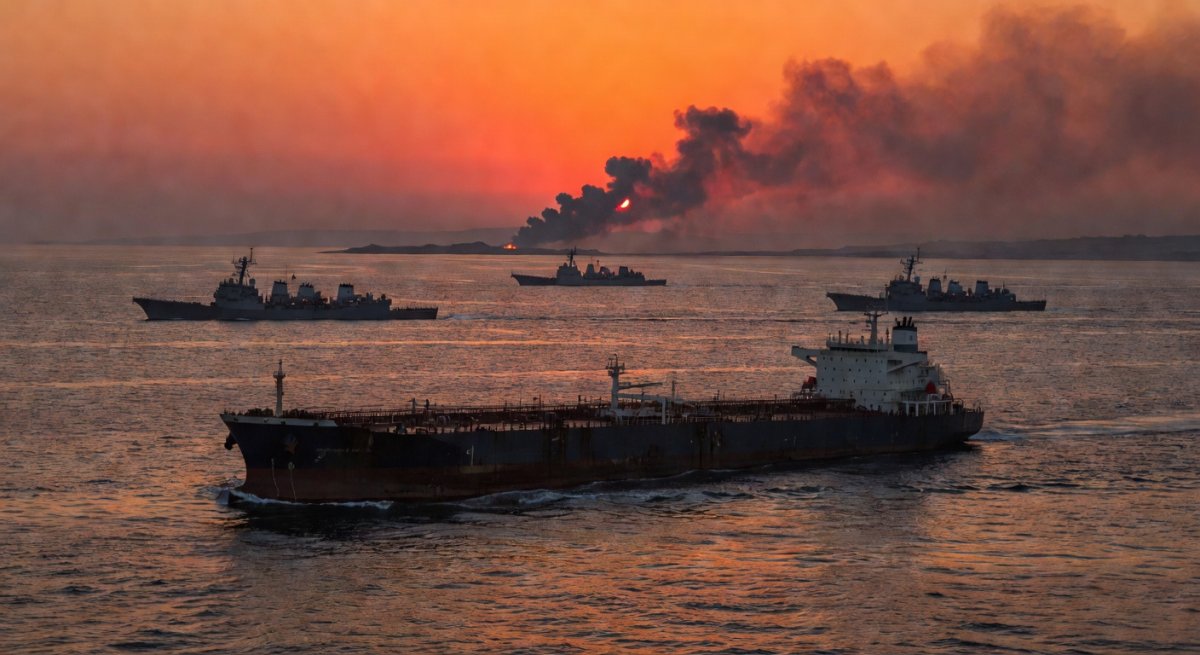
US Strikes Qeshm Island as Iran Missiles Rain on Gulf Allies
The Strait of Hormuz just became a live-fire combat zone. On June 2 and 3, 2026, the US military launched precision self-defense strikes on Iran's Qeshm Island, destroying an Iranian military ground control station that coordinated drone and missile operations in the region, according to US Central Command. Iran retaliated within hours, firing ballistic missiles at Kuwait and Bahrain — two of America's closest Gulf allies with significant US military presence on their soil.
Here is what Centcom confirmed in its official statement. Two Iranian missiles aimed at Kuwait fell short or broke apart mid-flight, causing no reported damage or casualties. Three missiles targeting Bahrain were intercepted and destroyed by combined US and Bahraini air defense systems before they could reach any populated area — a demonstration of the layered missile defense architecture that the US has built across the Gulf over decades. The US also shot down three Iranian attack drones that were heading toward civilian mariners transiting international waters, according to Centcom, which said the drones were launched by Iran toward civilian mariners that were rightfully transiting regional waters.
The Islamic Revolutionary Guard Corps responded with a carefully worded warning: disrupting the security of the Strait of Hormuz will carry a heavy price for the aggressive US military. The IRGC framed the American strikes as unprovoked aggression while vowing continued resistance to the blockade and military operations in the region. This is the strongest direct exchange between American and Iranian forces in weeks, and it comes while diplomats are supposed to be negotiating a ceasefire to end months of open warfare.
Naval Blockade Tightens as US Disables Oil Tanker
Washington's naval blockade of the Strait of Hormuz, which began on April 13, 2026, just escalated dramatically. Centcom confirmed that US forces disabled the Botswana-flagged M/T Lexie, an unladen oil tanker sailing toward Iran, by firing a Hellfire missile into its engine room after the crew ignored repeated warnings from US naval forces over a full 24-hour period. Centcom released footage of the precision strike, showing the moment the missile struck the vessel and disabled its propulsion systems.
The Lexie is now dead in the water — one of six commercial vessels that have been disabled since the blockade began. But the bigger number, the one that tells the real story, is this: 122 commercial vessels have been forced to turn around or redirect their routes since April 13, according to Centcom data. The Strait of Hormuz carries roughly 21 percent of the world's petroleum — about 17 million barrels per day, according to the US Energy Information Administration. Every single redirected tanker adds to global shipping costs and delays. Every disabled vessel tightens the pressure on Iran's oil export revenue. This is a coordinated campaign of economic warfare layered on top of kinetic military strikes, and by every metric available, it is tightening by the week.
Diplomatic Front Collapses as Ceasefire Talks Stall
While missiles flew across the Gulf and tankers burned in the Strait, ceasefire negotiations collapsed. Talks that were supposed to be de-escalating the conflict stalled over the weekend, with both sides trading public blame instead of concessions. Iran's foreign ministry spokesman Esmail Baghaei told reporters that Washington is constantly changing its views and putting forward new or contradictory demands — accusing the US of shifting its negotiating position every time negotiators approached a workable framework for de-escalation.
CBS News, the BBC's US news partner, reported that President Trump personally requested edits to the draft peace agreement in a meeting with senior aides. The specific changes involved US control of the Strait of Hormuz and the removal of highly enriched uranium from Iran's stockpiles — plus a framework to reopen negotiations on Iran's nuclear program entirely. That aligns precisely with what Baghaei described: shifting goalposts that keep the peace deal just out of reach. Iran's leadership has repeatedly said its nuclear program is not up for negotiation, creating a fundamental impasse that no amount of tactical editing can resolve.
The partial ceasefire between Israel and Hezbollah, announced by Trump on June 1, is already showing signs of fragility. Israel continues striking targets in southern Lebanon, and the Israeli military issued a fresh evacuation order for Nabatieh town on June 2. Hezbollah says it attacked Israeli forces in southern Lebanese towns with drones, missiles, and shells. A truce that cannot hold for 48 hours is not a ceasefire — it is a pause without a plan.
Rubio's First Congressional Testimony Since the War Began
Secretary of State Marco Rubio appeared before Congress on June 2 for the first time since the war started, and his testimony laid out the administration's position in terms that left little room for ambiguity. Rubio declared that the war is over. He tied any sanctions relief strictly to Iran's nuclear program — condition-based, he called it, meaning Iran must verifiably limit enrichment before sanctions relief can proceed. Right now, everything that has been discussed with them, Rubio told lawmakers, is that any sanctions relief is condition-based, which means it has to be in return for the reason why those sanctions were put in place in the first place, which is their nuclear program.
In a tense exchange with a senator who questioned the US strategy for actually ending the conflict, Rubio stood firm: the war is over. President Trump, meanwhile, publicly told critics to sit back and relax, claiming that Iran really wants to make a deal, and it will be a good one for the USA. But the facts on the ground contradict the optimism. If the war is over, missiles would not be landing near US bases in Kuwait and Bahrain. If Iran really wants a deal, talks would not be stalled. The gap between official Washington rhetoric and military reality in the Gulf is widening with every exchange.
Philippines Launches Strategic Oil Reserve After Price Shock
The ripple effects of this conflict are reaching far beyond the Middle East. The Philippines — a country thousands of miles from the Strait of Hormuz — just announced concrete plans for a strategic oil reserve. Energy Secretary Sharon Garin confirmed on June 1 that the war between Iran and the United States has fundamentally shifted the government's approach to energy security after decades of relying on private sector stockpiles. We have talked about this for decades across many administrations, Garin said at a press conference, but the current administration is determined to start it.
The economic impact on the Philippines has been severe. The Department of Energy reported diesel prices falling by P9.26 per liter, gasoline dropping by P4.76 per liter, and kerosene declining by P10.86 per liter — bringing prices closer to pre-war levels after the sharp spike triggered by the US-Iran conflict in March. The reserve plan calls for an initial stockpile of 500,000 barrels at an estimated cost of P5 billion, funded through the Philippine National Oil Company and the Maharlika Investment Corp, the country's sovereign wealth fund. Stockpiling will protect us from supply shocks, Garin said. If the Strait of Hormuz closes, at least we have reserves here. We have a buffer. The plan marks a major policy shift for a government that had deliberately stayed out of the oil business for decades.
Wider Regional Toll: Lebanon's War and the Fragile Truce
To fully understand the US-Iran escalation, you have to understand the wider war that has engulfed the region since March 2025. The conflict traces back to March 2, 2025, when an Israeli strike killed Iran's supreme leader. Hezbollah responded by launching rockets into Israel, and Lebanon was pulled into a multi-front war. The Lebanese health ministry reports at least 3,468 people killed since the conflict began. Over one million people have been displaced, according to the UN. On the Israeli side, officials report 25 soldiers and 4 civilians killed on both sides of the border.
The attacks on medical infrastructure have been staggering by any measure. The Lebanese health ministry documented 128 paramedics and healthcare workers killed and 159 attacks on ambulances and medical facilities in just three months. On June 1, an Israeli strike hit buildings next to Jabal Amel hospital in the city of Tyre, killing four people and injuring 127, including 39 hospital staff. The hospital's director, Dr. Wael Mroueh, told the BBC that the attack came without warning and that there was no military target in the vicinity. Inside the hospital, corridors were littered with broken glass and collapsed ceiling panels. A row of incubators stood cracked by the blast force. Four hours earlier, a baby named Fares had been born in the maternity ward.
The partial truce announced by Trump on June 1 was supposed to halt the Lebanon front, but it has not held. The Israeli military issued a fresh evacuation order for Nabatieh on June 2, warning residents it was compelled to act forcefully against Hezbollah because of the group's violation of the ceasefire agreement. A truce that lasts less than 48 hours is not a ceasefire. It is a pause without a plan, and the people paying the price are the ones caught in the middle.
What Comes Next
Track official Centcom releases and global crude benchmarks daily — the next missile exchange or tanker incident will move markets within hours. Monitor Philippine energy announcements as a signal of how governments are preparing for the possibility that this conflict becomes the new normal. Demand transparency from your elected leaders on what the US exit strategy actually looks like in a conflict the administration claims is over but clearly is not. Support verified humanitarian organizations providing aid to Lebanon's overwhelmed medical system. The Strait of Hormuz does not belong to one side or the other. It belongs to the global economy. Right now it is being held hostage by two powers trading fire while talks sit frozen. Preparation beats reaction every time, and the time to prepare is now.
By Jessica Ali, Staff Writer
This article was produced with AI-assisted research and editorial support. Reporting is based on sources cited in the article.
What's Your Reaction?
 Like
0
Like
0
 Dislike
0
Dislike
0
 Love
0
Love
0
 Funny
0
Funny
0
 Wow
0
Wow
0
 Sad
0
Sad
0
 Angry
0
Angry
0

Editor-in-Chief at Global1.News. Atlanta-based journalist who cuts through the BS and tells it like it is. Lead anchor, host, and the voice you hear when the spin stops and the truth starts.












Comments (0)