
US-Iran MoU: Vance Keeps Sanctions Chokehold on Iran
The strategic landscape of the Middle East shifted fundamentally on June 15, 2026, when United States President Donald Trump, Vice President JD Vance, and Iranian Parliament Speaker Mohammad Bagher Ghalibaf signed a Memorandum of Understanding that opened a 60-day window for a final peace agreement. But just three days later, Vance made clear in a 47-minute White House press br
The strategic landscape of the Middle East shifted fundamentally on June 15, 2026, when United States President Donald Trump, Vice President JD Vance, and Iranian Parliament Speaker Mohammad Bagher Ghalibaf signed a Memorandum of Understanding that opened a 60-day window for a final peace agreement. But just three days later, Vance made clear in a 47-minute White House press briefing that Washington’s economic pressure campaign against Tehran remains in full force — sending a distinct signal to Gulf capitals, European allies, and Israeli officials watching the deal’s contours take shape.
US-Iran MoU: Vance Keeps Sanctions Chokehold on Iran as 60-Day Countdown Begins
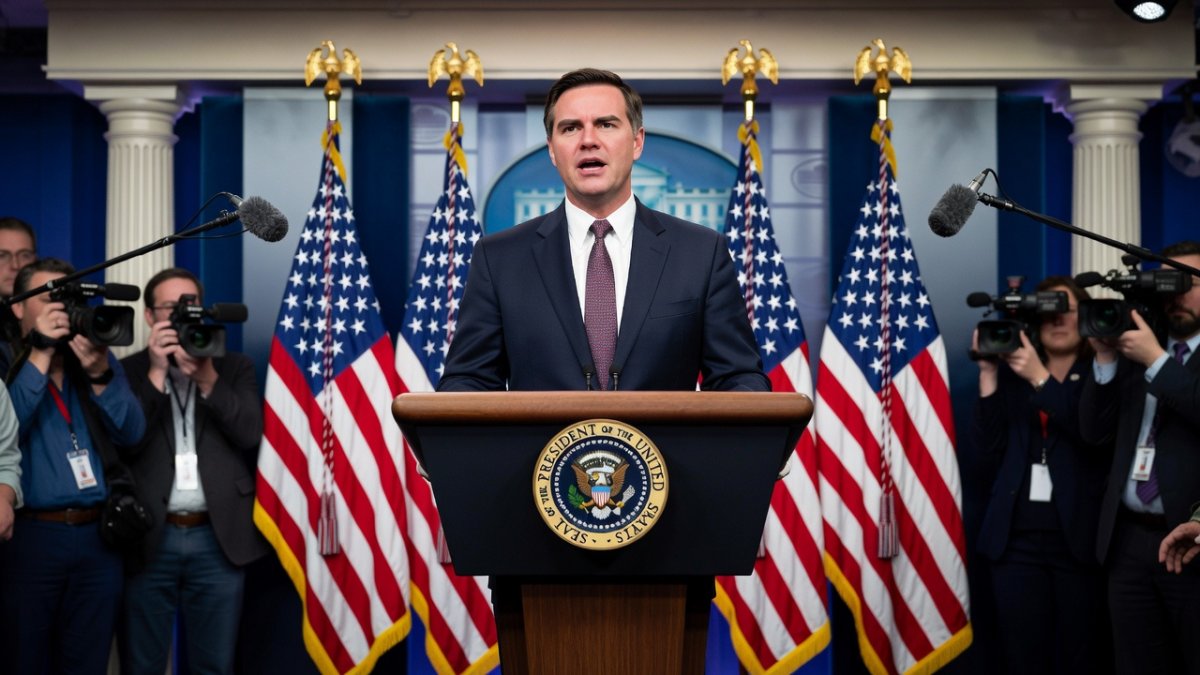
Washington, D.C. – June 18, 2026 — US Vice President JD Vance used a June 18 press briefing to make clear that the United States will not release its “economic chokehold” on Iran until Tehran meets specific conditions laid out in the Memorandum of Understanding signed three days earlier. Speaking for 47 minutes in the Brady Briefing Room at the White House, Vance framed the MoU as a tool of coercive leverage rather than a détente, insisting that sanctions relief will only follow verifiable Iranian compliance on uranium stockpiles, proxy networks, and regional behavior.
The MoU Framework: What Was Signed and What It Unlocks
The June 15 agreement, signed in Washington by President Trump, Vice President Vance, and Iranian Parliament Speaker Mohammad Bagher Ghalibaf, triggered a 60-day period to reach a final peace deal, with the deadline falling around August 17, 2026. The accord immediately lifted the US naval blockade of Iranian ports — a measure imposed during Operation Epic Fury that began on February 28, 2026 — and allowed 12.5 million barrels of oil to transit the Strait of Hormuz within days of signing. US Central Command confirmed that Navy ships remain deployed in the area to monitor compliance, and Vance noted that the blockade could be reimposed within hours if Iran violates the terms. The MoU also includes a framework for a US$300 billion reconstruction fund for Iran, financed by regional partners rather than the United States Treasury, though no Gulf state has formally committed capital.
Vance’s Conditions: Uranium, Proxies, and Verified Compliance
Throughout his June 18 briefing, Vance repeatedly stressed that Iran will receive no money, sanctions relief, or other economic benefits until it fulfills three specific obligations. First, Iran must destroy its stockpile of enriched uranium — a commitment that cuts to the heart of the nuclear dimension of the conflict. Second, Tehran must cease funding proxy groups across the region, including Hezbollah in Lebanon and Shia militias in Iraq and Syria. Third, Vance demanded a broader change in Iranian regional behavior, though he left the precise metrics of that evaluation to future negotiations. “We won’t release our economic chokehold on Iran,” Vance stated bluntly when asked whether the deal represented a softening of US posture. The administration’s position reflects the calculation that Iran’s economy is in “freefall” with “sky-high inflation,” giving Washington maximum leverage.
Ghalibaf’s Countermove: Hormuz Transit Fees
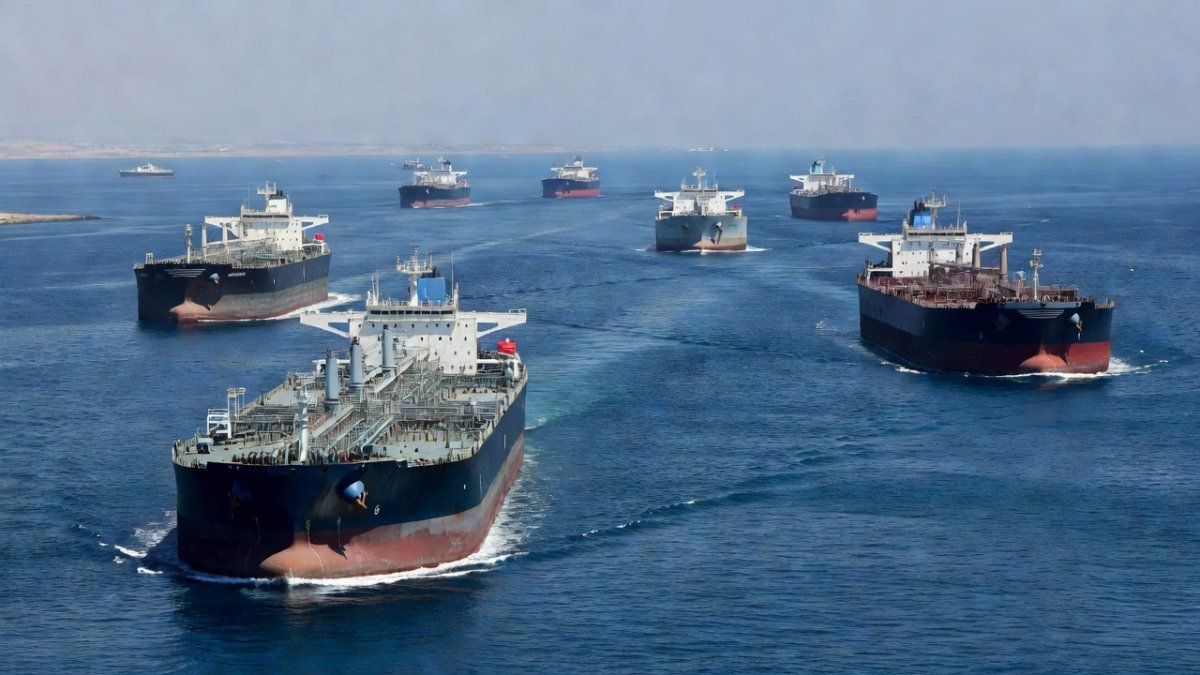
Within hours of Vance’s briefing, Ghalibaf issued a counter-statement from Tehran announcing that Iran will charge ships transiting the Strait of Hormuz after an initial 60-day fee-free window stipulated in the MoU. This move directly challenges Vance’s insistence that international waterways should remain toll-free and tests the US commitment to freedom of navigation. The fee structure could generate significant revenue for the Iranian government — an estimated US$2-3 billion annually if applied to the roughly 20 million barrels per day of oil and LNG that pass through the strait — but risks escalating tensions before the 60-day negotiating window closes. Oxford Economics has projected an initial surge in Hormuz traffic as stuck vessels exit the waterway, but analysts caution that the fee regime could deter long-term shipping confidence.
Israeli Opposition and Vance’s Pushback
Israeli government officials immediately criticized the MoU, expressing concern that the framework grants Iran legitimacy without requiring immediate concessions. Vance responded forcefully, telling Israeli leaders that they “have to defend this peace process” and warned that “the problem for Israel is not Donald J Trump.” He added that any Israeli who believes the US president is Israel’s biggest problem “needs to wake up and smell the reality of the situation.” Vance also addressed Hezbollah, stating the US expects the group to stop firing at Israel and that Israel “are not going to be going wild in Lebanon.” He called for a regional framework to cut off financing to Hezbollah and for the Lebanese government to police southern Lebanon, reducing both Iranian proxy influence and Israeli military operations on Lebanese soil.
Domestic and International Reactions
On the domestic front, Vance faced questions from Republican critics who questioned the wisdom of any agreement with Tehran. He urged them to “have a little bit of faith in the president of the United States,” calling the suggestion that Trump would sign a bad deal “preposterous.” Vance highlighted that US gasoline prices had fallen below US$4 per gallon for the first time since Operation Epic Fury began — a tangible economic win for American consumers. European leaders, largely sidelined during the negotiations but relieved at the reopening of the Strait of Hormuz and the corresponding reduction in energy market volatility, expressed cautious optimism. Kuwait’s Foreign Minister Sheikh Jarrah Jaber Al-Ahmad Al-Sabah stated Kuwait hopes to contribute to “enhancing stability in the region, ensuring the security and freedom of navigation in the strait of Hormuz.” Pakistan confirmed the MoU had entered force and pledged support for the next phase of technical-level tracks.
Iran’s Internal Politics: Khamenei’s Wary Endorsement
Supreme Leader Ali Khamenei, through a written message delivered by his son Mojtaba Khamenei, stated that he initially disagreed with the deal but allowed it to proceed after receiving assurances from Iranian negotiators. This qualified endorsement reveals the delicate internal calculus in Tehran. The regime’s priority remains economic relief and the restoration of port access, but hardliners view the MoU as a concession to American pressure. The 60-day period gives both sides room to test each other’s resolve: Iran will seek to extract maximum economic benefit while preserving its nuclear infrastructure and proxy networks, while the US will demand verifiable steps toward disarmament and behavioral change before releasing sanctions.
Strategic Calculus: What Each Side Wants
Washington’s strategy centers on maintaining maximum coercive leverage while offering a credible off-ramp. The US Navy’s continued presence near Hormuz signals that the blockade option remains on the table. Iran’s strategy, by contrast, focuses on survival — securing sanctions relief and port revenue while resisting structural dismantlement of its nuclear and proxy assets. For Gulf states, the calculus is more ambiguous: they benefit from reduced oil price volatility and the resumption of Hormuz traffic, but contributing to the US$300 billion reconstruction fund requires certainty that Iran will not use recovered revenues to reassert regional dominance. Saudi Arabia’s Vision 2030 and the UAE’s economic diversification plans both depend on stable energy markets, making a sustainable Hormuz reopening a direct national interest.
Regional Implications: A Fragile Window
The 60-day negotiating window represents both an opportunity and a risk. If the parties reach a final agreement, second-order effects could include accelerated Arab-Israeli normalization, reduced Hezbollah operational capacity, and diminished space for Iranian proxy activity across Iraq, Syria, and Yemen. If talks collapse, the United States retains the ability to reimpose the naval blockade within hours, and Iran’s announcement of Hormuz transit fees suggests Tehran is already preparing a fallback position that monetizes its geographic leverage. For global energy markets, Gulf sovereign wealth funds, and the millions of civilians across the Middle East who have endured months of conflict-driven economic dislocation, the next 60 days will determine whether the MoU becomes a genuine settlement or merely a ceasefire in an ongoing strategic confrontation.
By Malik Hassan, Staff Writer
This article was produced with AI-assisted research and editorial support. Reporting is based on sources cited in the article.
What's Your Reaction?
 Like
0
Like
0
 Dislike
0
Dislike
0
 Love
0
Love
0
 Funny
0
Funny
0
 Wow
0
Wow
0
 Sad
0
Sad
0
 Angry
0
Angry
0

Middle East Correspondent at Global1.News. Based in Beirut, covering politics, conflict, energy, and society across the Middle East. Brings context and depth to a region often reduced to headlines.












Comments (0)