
The Memory Security Dilemma and East Asia's Enduring Interpretive Divide
A Japanese MSDF destroyer’s transit through the Taiwan Strait on the anniversary of the Shimonoseki Treaty has once again exposed how deeply embedded historical memories continue to dictate strategic perceptions across East Asia, turning routine maritime movements into contested symbols of unresolved pasts.
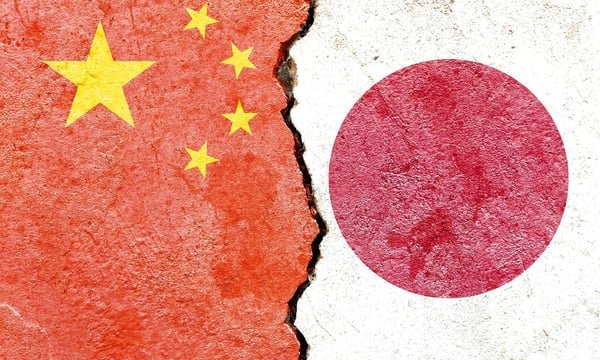
A Japanese MSDF destroyer’s transit through the Taiwan Strait on the anniversary of the Shimonoseki Treaty has once again exposed how deeply embedded historical memories continue to dictate strategic perceptions across East Asia, turning routine maritime movements into contested symbols of unresolved pasts. This episode crystallizes the memory security dilemma, in which divergent national interpretations—shaped by China’s state-driven remembrance apparatus, Japan’s selective historical framing, and Korea’s emphasis on unaddressed grievances such as comfort women, forced labor, and Dokdo—generate mistrust that traditional security frameworks alone cannot explain. The resulting interpretive divide now risks transforming everyday naval operations into catalysts for heightened regional instability.
Seoul, South Korea — Article continues below.
The April 2026 Transit and Its Symbolic Resonance
In April 2026 a Murakami-class Japanese Maritime Self-Defense Force destroyer passed through the Taiwan Strait on the anniversary of the 1895 Treaty of Shimonoseki. Chinese observers immediately linked the date to the Treaty that concluded the First Sino-Japanese War and that remains central to narratives of national humiliation. Japanese officials gave no public sign that the timing was chosen deliberately, yet the episode illustrated how routine operational decisions can acquire layered meanings once filtered through historical memory. The incident did not alter the pattern of such transits, which have increased since 2025, but it underscored the gap between intended action and perceived symbolism.
The Memory Security Dilemma in IR Theory
Robert Jervis’s foundational work on misperception demonstrates how decision-makers rely on historical analogies when information about an adversary’s intentions is incomplete, a mechanism that the memory security dilemma extends by emphasizing institutionalized calendar-based triggers rather than idiosyncratic individual biases. Whereas Jervis focused on cognitive processes within single states, the memory security dilemma highlights structural asymmetries in how states maintain and activate historical narratives through curricula, state media, and commemorative rituals. Alastair Iain Johnston’s analysis of Chinese strategic culture shows that enduring historical lessons about humiliation and encirclement shape contemporary threat assessments; the same logic applies to Korean strategic culture, where narratives of Japanese imperialism remain salient. The memory security dilemma therefore differs from the classic security dilemma not in the uncertainty of capabilities but in the uncertainty of meaning, with historical dates serving as focal points that convert ambiguous actions into presumed continuations of past aggression.
South Korea occupies a distinctive position within this theoretical framework because it confronts a double memory dilemma. In relations with Japan, colonial-era grievances dominate interpretive filters, while interactions with North Korea activate memories of the Korean War and subsequent provocations such as the 2010 sinking of the ROKS Cheonan. Seoul must therefore calibrate responses to both Tokyo’s defense policies and Pyongyang’s military signaling through two separate yet overlapping historical templates. This dual burden complicates trilateral coordination with the United States and Japan, as Washington’s emphasis on current threat assessments often collides with Seoul’s need to manage domestic memory sensitivities on multiple fronts simultaneously.
The memory security dilemma arises when states interpret one another's behavior primarily through historical narratives rather than through contemporaneous evidence of intent. Unlike the classic security dilemma, which centers on uncertainty about capabilities, this variant stems from uncertainty about meaning. Policymakers and publics fill interpretive gaps with analogies drawn from past conflicts, turning coincidence into strategy and routine movements into signals of enduring hostility. In East Asia the mechanism is reinforced by asymmetric institutional attention to specific dates, producing systematic amplification of mistrust between China and Japan.
China's Institutional Memory Apparatus versus Japan's Different Structure
Chinese state media, school curricula, and commemorative practices keep dates such as 17 April 1895, 18 September 1931, and 7 July 1937 politically salient. The official injunction to "never forget national humiliation" ensures these anniversaries function as active reference points for evaluating present-day actions. Japanese public education and official discourse, by contrast, do not assign comparable weight to the same calendar markers. When the Noda administration confirmed plans to nationalize the Senkaku/Diaoyu Islands on 7 July 2012, the date's resonance in China went unrecognized in Tokyo; the announcement had been prepared the previous day, yet its timing reinforced Chinese perceptions of deliberate provocation. This structural asymmetry means Chinese analysts routinely apply historical templates while Japanese planners often proceed without equivalent sensitivity to those templates.
Korea-Japan Historical Memory Dynamics
The 1965 Basic Treaty between South Korea and Japan normalized diplomatic relations but deliberately deferred contentious historical issues, leaving compensation for colonial-era forced labor and other grievances unresolved in the eyes of Korean victims and their advocates. Subsequent decades revealed the treaty’s limits when South Korea’s 2018 Supreme Court rulings ordered Japanese firms such as Nippon Steel and Mitsubishi Heavy Industries to compensate plaintiffs for wartime labor, prompting Tokyo to impose export controls on semiconductor materials in July 2019. Korean officials explicitly tied the timing of these restrictions to the anniversary of the 7 July 1937 Marco Polo Bridge Incident, framing the measures as a recurrence of Japanese economic coercion and thereby activating the same memory templates that the memory security dilemma predicts. The 2015 comfort women agreement, which sought a final resolution through a Japanese apology and a one-billion-yen fund, collapsed after the Moon administration cited insufficient victim consultation and the absence of legal responsibility, illustrating how domestic memory politics can override diplomatic settlements reached at the executive level.
The Dokdo/Takeshima dispute further exemplifies this dynamic, with Seoul maintaining continuous administrative control since 1954 while Tokyo periodically reaffirms its territorial claim through diplomatic notes and educational materials. South Korean public reaction intensifies around 22 February, Japan’s Takeshima Day, and 15 August, Korea’s Liberation Day, dates that Japanese planners often treat as routine. These asymmetries produce rapid escalation when Japanese defense white papers mention the islets or when Korean coast guard vessels confront Japanese survey ships. The cumulative effect is a bilateral relationship in which routine policy announcements are filtered through a dense historical lens in Seoul, while Tokyo frequently underestimates the resonance of those same dates, widening the interpretive gap that the memory security dilemma describes.
Implications for South Korea within the Trilateral Framework
South Korea experiences parallel dynamics in its bilateral relationship with Japan. Dates such as 1 March and 15 August carry deep significance in Seoul, yet they register unevenly in Tokyo. Colonial-era disputes over the comfort women system and sovereignty over Dokdo/Takeshima continue to shape public and official reactions to Japanese policy statements. Within the U.S.-ROK-Japan trilateral, these memory-driven frictions complicate coordination on regional security issues. Washington tends to view alliance management through the lens of current capabilities and threat assessments, while Seoul must calibrate responses that account for domestic historical sensitivities that Tokyo may not fully anticipate. The resulting interpretive gaps can slow joint planning and erode the credibility of reassurance measures.
Maritime Security Implications
The 2025 Operation Sindoor between India and Pakistan, which featured rapid naval deployments and information operations framed around historical territorial grievances, prompted East Asian planners to reassess how memory-laden signaling could accelerate maritime crises. Japanese Maritime Self-Defense Force transits through the Taiwan Strait increased from four in 2024 to eleven in 2025, with several occurring on or near anniversaries such as 17 April, the date of the 1895 Treaty of Shimonoseki. Chinese state media routinely linked these passages to earlier Japanese expansionism, while South Korean observers monitored the same movements for implications regarding the East China Sea and the Northern Limit Line. Seoul’s own maritime concerns in the Yellow Sea center on Chinese fishing militia and survey activities that Korean analysts sometimes interpret through the lens of historical tributary hierarchies, even when Beijing presents the operations as routine resource management.
South Korea maintains a position of semantic balancing on Taiwan Strait stability, publicly endorsing freedom of navigation without endorsing specific U.S. or Japanese operational patterns. ROK defense white papers emphasize the strait’s importance to global supply chains yet avoid explicit alignment with Japanese transit schedules, reflecting Seoul’s calculation that overt support could activate Japanese historical memory concerns in Beijing and simultaneously inflame domestic sensitivities regarding alliance entanglement. This calibrated stance reduces immediate escalation risks but leaves unresolved the underlying interpretive asymmetry that allows routine Japanese or U.S. naval movements to acquire layered meanings in Korean and Chinese strategic assessments.
When defense planning in Tokyo does not incorporate the historical weight attached to particular dates in Beijing or Seoul, operational choices risk unintended escalation. Chinese and Korean analysts, operating within denser memory frameworks, are more likely to read strategic intent into actions that Japanese counterparts regard as routine. Over time this pattern widens the distance between stated intentions and perceived motives, raising the probability that minor incidents acquire outsized political consequences. The effect is most pronounced in maritime domains where freedom-of-navigation operations and surveillance activities already generate friction.
Policy Recommendations for South Korea
Seoul can leverage its dual identity as a U.S. treaty ally and a state with unresolved historical grievances by proposing a trilateral historical reconciliation framework modeled on the 2005–2010 Japan-China-Korea Joint History Research Committee. Such an initiative would institutionalize pre-notification protocols for defense activities scheduled near sensitive dates, drawing on the 2018 ROK Ministry of National Defense white paper’s emphasis on “preventive diplomacy through enhanced communication channels.” Incorporating historical sensitivity training into ROK military education, similar to modules already used in the Joint Chiefs of Staff curriculum on Northeast Asian threat perceptions, would equip planners to anticipate how Japanese operational calendars may resonate in Beijing and Seoul. This training could reference specific cases such as the 2012 Senkaku nationalization timing to illustrate the costs of unrecognized memory triggers.
South Korea should also advocate for expanded defense hotlines that include provisions for rapid consultation when activities coincide with anniversaries such as 1 March or 15 August. By positioning itself as the interlocutor most attuned to both Japanese and Chinese memory structures, Seoul can strengthen its role within the trilateral framework while mitigating the double memory dilemma it faces. These measures do not require resolution of underlying territorial or compensation disputes but can narrow the window during which routine maritime or diplomatic actions are converted into presumed strategic challenges.
Pathways toward Reduced Misinterpretation
Track-two dialogues among Chinese, Japanese, and Korean scholars and former officials can surface unrecognized sensitivities before they affect policy calendars. Joint historical research initiatives modeled on earlier trilateral committees offer one mechanism for clarifying divergent narratives without requiring political consensus on interpretation. Expanded defense hotlines and pre-notification protocols for sensitive dates could limit the scope for rapid escalation following historically charged events. These steps do not eliminate the underlying asymmetry in memory structures, yet they can narrow the window during which ambiguity is converted into presumed hostility. South Korea's position at the intersection of these dynamics gives Seoul a distinctive interest in institutionalizing such communication channels within the trilateral setting.
By Prof. David Park, Staff WriterThis article was produced with AI-assisted research and editorial support. Reporting is based on sources cited in the article.
What's Your Reaction?
 Like
0
Like
0
 Dislike
0
Dislike
0
 Love
0
Love
0
 Funny
0
Funny
0
 Wow
0
Wow
0
 Sad
0
Sad
0
 Angry
0
Angry
0

East Asia/Technology Correspondent at Global1.News. Seoul-based voice covering Korean politics, technology, business, and culture. Analyzes how technology and geopolitics intersect across East Asia.













Comments (0)