
US Helicopter Downing Ignites Fresh Hormuz Crisis as CENTCOM Strikes Iranian Targets
The downing of a US AH-64 Apache helicopter by an Iranian drone near the Strait of Hormuz has sharply intensified the nearly 100-day conflict between the United States, Israel, and Iran, exposing fragile energy chokepoints and testing the limits of regional deterrence at a moment when global oil supplies already face sustained pressure from OPEC+ output decisions. US Helicopter
The downing of a US AH-64 Apache helicopter by an Iranian drone near the Strait of Hormuz has sharply intensified the nearly 100-day conflict between the United States, Israel, and Iran, exposing fragile energy chokepoints and testing the limits of regional deterrence at a moment when global oil supplies already face sustained pressure from OPEC+ output decisions.
US Helicopter Downing Ignites Fresh Hormuz Crisis as CENTCOM Strikes Iranian Targets
Beirut, Lebanon – June 10, 2026 — The June 8-9 incident involving an American AH-64 Apache helicopter struck by an Iranian drone off Oman’s coast has triggered a rapid cycle of American precision strikes and Iranian retaliation that now threatens to expand the ongoing war across multiple Gulf theaters. Both crew members were rescued within two hours and remain in stable condition, yet the event has already produced three waves of US airstrikes and Iranian missile barrages against at least 24 targets. With the Strait of Hormuz under blockade since April 13 and US-Israel operations against Iran underway since February 28, the latest exchanges mark a dangerous acceleration that regional capitals are watching with growing alarm.
The Trigger Incident and Immediate US Response
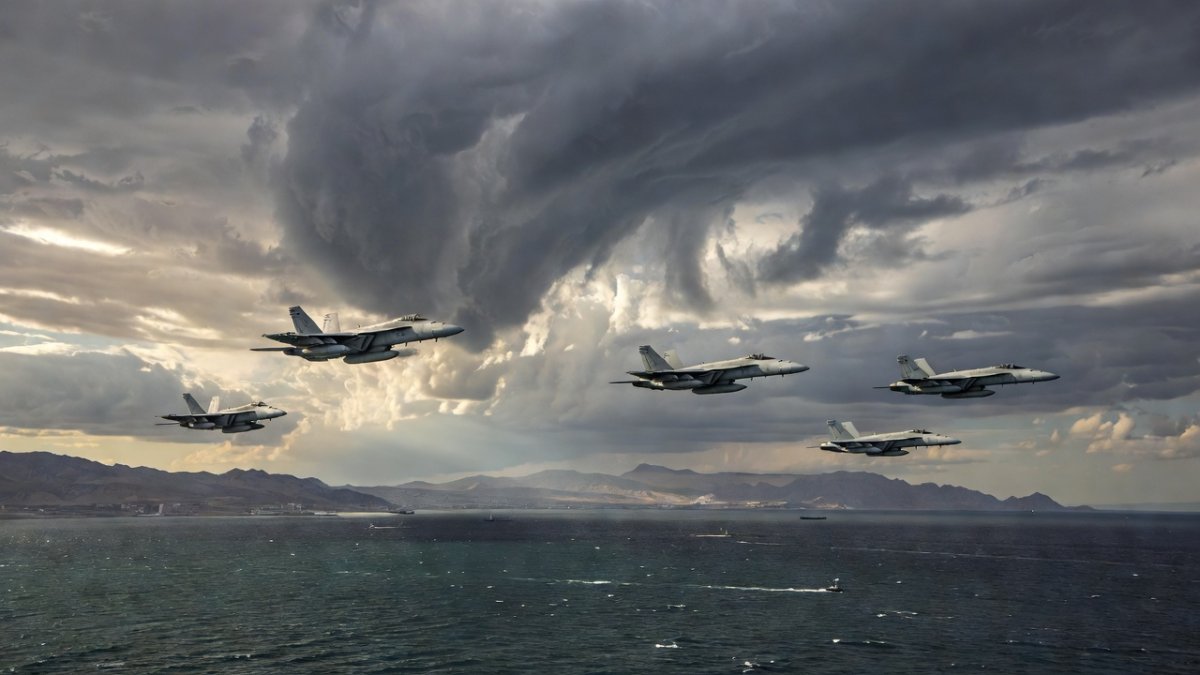
On June 8-9, an Iranian drone struck the US AH-64 Apache near the Strait of Hormuz, prompting President Trump to declare that the United States “must, of necessity, respond.” Within hours, CENTCOM initiated three successive waves of precision strikes using Air Force and Navy aircraft against Iranian air defense systems, ground control stations, and surveillance radar installations clustered near the strait. These targets were chosen to degrade Iran’s ability to monitor and interdict maritime traffic in one of the world’s most critical energy corridors. The rapid tempo of the American operation reflected both the perceived need to restore deterrence and the operational reality of an already active theater where US forces have been engaged since late February.
Trump’s statement signaled a willingness to escalate kinetically while leaving diplomatic channels nominally open. The incident occurred against the backdrop of a US-imposed blockade of Iranian ports that began in April 2026, further tightening economic pressure on Tehran. Iranian officials immediately framed the helicopter strike as a defensive measure within sovereign waters, setting the stage for the IRGC’s subsequent retaliation across multiple countries.
CENTCOM’s Operational Scope and Strike Execution
CENTCOM’s three-wave campaign focused on degrading Iran’s integrated air defense network and command-and-control nodes around the Strait of Hormuz. By targeting radar sites and ground control facilities, US planners sought to create temporary corridors for maritime traffic and reduce the immediate threat to naval assets. The involvement of both Air Force and Navy jets underscored the joint nature of the operation and the high priority assigned to protecting the energy lifeline that carries roughly one-fifth of global oil trade.
These strikes occurred while Iran continued to allow limited IAEA access to the Bushehr nuclear plant yet stonewalled on questions surrounding its enriched uranium stockpile. The combination of military action and nuclear opacity has heightened concerns in Washington and Jerusalem that Tehran may be accelerating sensitive activities under the cover of the broader conflict. CENTCOM’s choice of targets avoided population centers but signaled a readiness to strike deeper if Iranian forces continue to target US assets or those of its partners.
Iran’s Retaliation and Qaani’s “Security Belt” Declaration
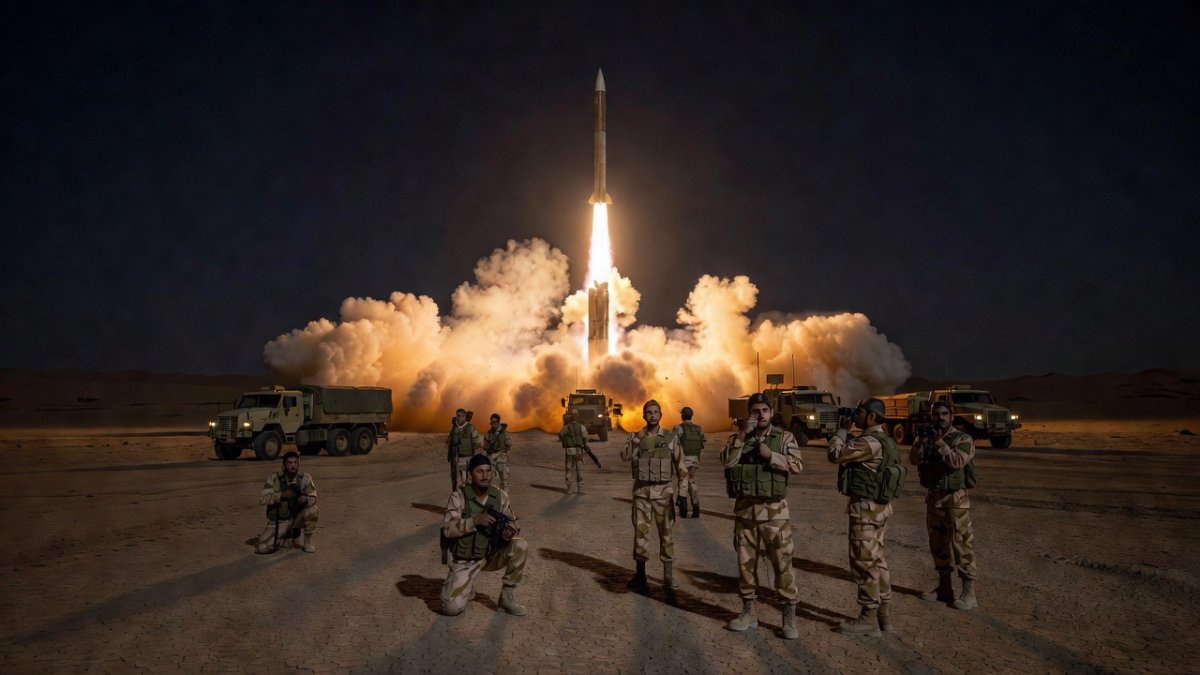
The IRGC responded swiftly on June 9-10 with drone and missile strikes against the US Fifth Fleet headquarters in Manama, Bahrain; Al Azraq air base in Jordan, where Jordanian forces intercepted five incoming missiles; Ali Al Salem Air Base in Kuwait; and 21 additional Gulf targets. IRGC Quds Force commander Esmaeil Qaani declared the establishment of a new “security belt of the Resistance” stretching from the Strait of Hormuz through the Persian Gulf to the Bab el-Mandeb and Red Sea. This rhetorical and operational framing positions Iran as the central node in a wider axis capable of disrupting shipping lanes across two critical maritime chokepoints simultaneously.
Iranian Foreign Ministry spokesperson Esmaeil Baghaei reinforced the message by stating that Iran’s armed forces “will not hesitate to defend the country.” The breadth of the retaliatory strikes, spanning Bahrain, Jordan, and Kuwait, demonstrated Tehran’s capacity to project force beyond its immediate borders and to pressure US partners directly. Jordan’s successful interception highlighted the defensive capabilities of some Gulf states, yet the sheer number of targets struck illustrated the scale of Iranian planning and the difficulty of achieving complete protection across dispersed facilities.
Energy Markets, OPEC+ Calculations, and Gulf State Vulnerabilities
Oil markets reacted sharply to the renewed fighting, with prices exhibiting extreme volatility as traders assessed the risk of prolonged closure of the Strait of Hormuz. OPEC+ has already implemented four consecutive output hikes in an attempt to stabilize supply, yet the latest military exchanges have undermined those efforts. Gulf producers now face the dual challenge of protecting their own infrastructure while navigating the political fallout of hosting US forces that have become direct targets.
Kuwait and Bahrain, both struck in the Iranian barrage, must weigh the security guarantees provided by Washington against the immediate costs of hosting American bases. Jordan’s interception of five missiles demonstrated both resolve and the limits of its air defense capacity under sustained pressure. These calculations are further complicated by the fact that any escalation risks drawing additional regional actors into the conflict, potentially widening the theater beyond the current 100-day war.
Israel’s Position and Growing US-Israel Divergence
Former Israeli Defense Intelligence representative Danny Citrinowicz captured the prevailing view in Jerusalem when he stated that “every agreement with Iran is a BAD DEAL for Israel.” Israeli officials have consistently advocated a more aggressive posture toward Tehran’s nuclear program and regional proxies, creating visible friction with Washington over the pace and scope of military operations. While the United States has pursued a combination of strikes and diplomatic signaling, Israel has pressed for deeper degradation of Iranian capabilities.
Vice President Vance’s recent comments that the United States is “very close” to an Iran deal that could materialize “next week or could also take months” further highlighted the gap between American and Israeli timelines. Jerusalem fears that any negotiated pause would allow Iran to reconstitute its defenses and advance its nuclear activities, while Washington appears more willing to explore off-ramps even amid active hostilities. These differences risk complicating joint planning at a moment when coordination remains essential.
Great Power Dynamics and Diplomatic Maneuvering
China expressed “deep concern” and urged both sides to avoid further escalation, reflecting Beijing’s interest in stable energy flows through the Strait of Hormuz. Russia has maintained a lower public profile but continues to benefit from higher oil prices and the distraction of Western attention away from Ukraine. Both powers have avoided direct involvement while positioning themselves to shape any eventual diplomatic outcome.
The April 2026 US blockade of Iranian ports and the limited IAEA visits to Bushehr have created a complex diplomatic environment in which technical nuclear questions remain entangled with military operations. China’s call for restraint carries particular weight given its status as a major purchaser of Iranian oil, yet its influence has so far proven insufficient to halt the current cycle of strikes and counter-strikes.
Regional Implications and Strategic Outlook
The establishment of Qaani’s “security belt” concept signals Iran’s intent to maintain pressure across multiple maritime domains, raising the prospect of sustained disruption to shipping between the Persian Gulf and the Red Sea. For Gulf Arab states, the immediate priority is hardening defenses and managing domestic political fallout from hosting US forces now under direct attack. The nearly 100-day mark of the conflict suggests that neither side has achieved decisive advantage, increasing the risk of miscalculation.
Looking ahead, the interplay between military operations, nuclear opacity, and great-power diplomacy will determine whether the current escalation can be contained or whether it expands into a broader regional war. The United States retains significant strike capacity, yet Iranian retaliation has demonstrated both reach and willingness to absorb costs. Israel’s preference for more decisive action continues to diverge from Washington’s apparent openness to negotiated pauses. Energy markets will remain the most immediate barometer of risk, with OPEC+ output decisions now overshadowed by the possibility of prolonged Hormuz closure. Regional capitals from Riyadh to Muscat are recalibrating their hedging strategies as the conflict enters its fourth month with no clear resolution in sight.
By Malik Hassan, Staff Writer
This article was produced with AI-assisted research and editorial support. Reporting is based on sources cited in the article.
What's Your Reaction?
 Like
0
Like
0
 Dislike
0
Dislike
0
 Love
0
Love
0
 Funny
0
Funny
0
 Wow
0
Wow
0
 Sad
0
Sad
0
 Angry
0
Angry
0

Middle East Correspondent at Global1.News. Based in Beirut, covering politics, conflict, energy, and society across the Middle East. Brings context and depth to a region often reduced to headlines.














Comments (0)