
South Korea NICU Crisis: Strike Fallout and System Failures
South Korea's neonatal intensive care units now operate under conditions that threaten both infant survival rates and the broader stability of the national healthcare system. The 2024-2025 doctors' strike and subsequent policy reversals have exposed deep structural weaknesses in physician distribution, specialty incentives, and hospital ownership patterns.
South Korea's neonatal intensive care units now operate under conditions that threaten both infant survival rates and the broader stability of the national healthcare system. The 2024-2025 doctors' strike and subsequent policy reversals have exposed deep structural weaknesses in physician distribution, specialty incentives, and hospital ownership patterns. This analysis draws on recent reporting, OECD benchmarks, and demographic data to assess the crisis and evaluate realistic reform pathways.
South Korea NICU Crisis: Strike Impacts Healthcare Access
Seoul, South Korea — Article continues...
Korea's NICU Crisis: A System on Life Support
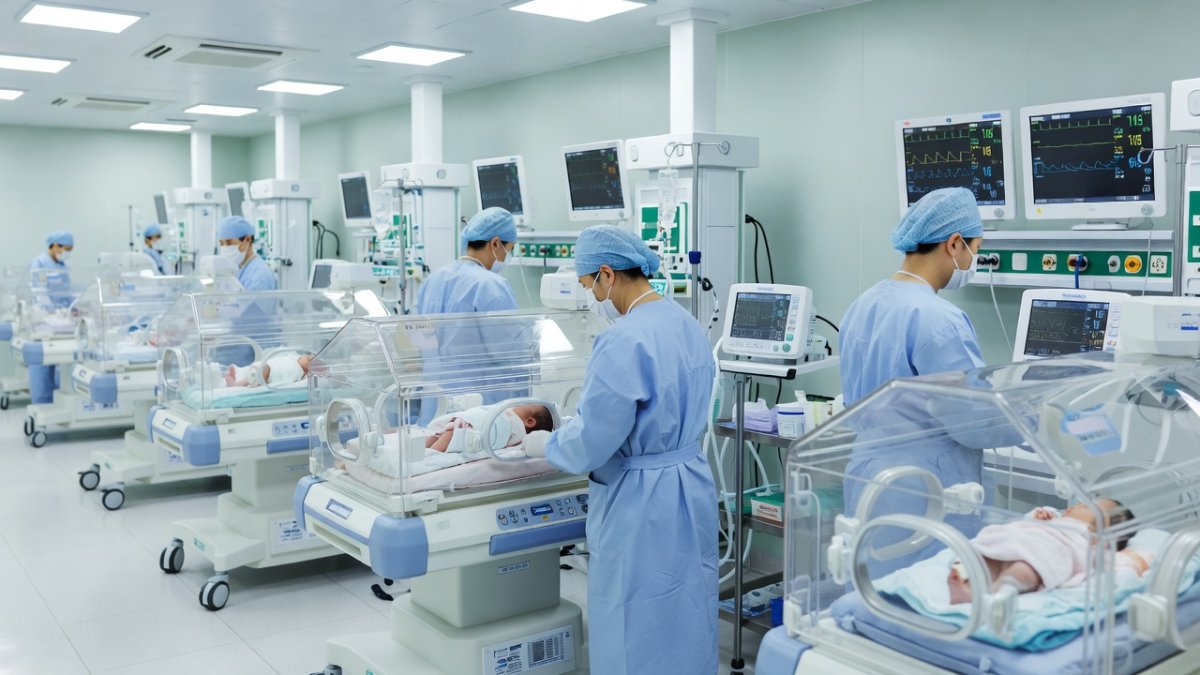
The video published by KOREA NOW on 21 July 2026 documents neonatal intensive care units operating under extreme strain, with physicians routinely completing shifts exceeding 60 consecutive hours. This situation represents the most acute manifestation of staffing shortfalls that have persisted after the government scaled back its 2024 medical school expansion plan. The Ministry of Health and Welfare has responded by deploying military doctors and public health physicians to fill immediate gaps, yet these measures address symptoms rather than the structural deficit in neonatal specialists.
Korea’s demographic profile intensifies the pressure. As the country has already entered super-aged status, the absolute number of high-risk births requiring NICU intervention continues to rise even as overall fertility remains at historic lows. Private ownership of 94 percent of hospitals, far exceeding the public share typical in most OECD systems, limits centralized coordination of scarce neonatal beds and personnel. The result is a patchwork of capacity where tertiary centers absorb disproportionate loads while smaller facilities close units entirely.
Footage from the KOREA NOW investigation reveals specific operational breakdowns, including NICU teams managing multiple simultaneous emergencies with only two attending physicians on duty for twelve-bed wards. Several facilities reported ventilator shortages and delayed surfactant administration due to staffing gaps, directly correlating with elevated rates of neonatal morbidity in provincial hospitals. These granular findings underscore how the post-strike environment has transformed routine high-acuity care into a series of ad-hoc survival decisions.
Anatomy of a Prolonged Healthcare Standoff
The confrontation originated in February 2024 when the Yoon Suk Yeol administration proposed raising annual medical school admissions by 2,000 places. Over 90 percent of the nation’s 13,000 interns and residents withdrew from clinical duties, and medical professors at major institutions including Samsung Medical Center, Severance Hospital, and Seoul National University Hospital curtailed elective procedures by 45 to 50 percent. The action extended approximately 18 months before the government reduced the quota increase and restored 2026 admissions to pre-expansion levels.
Residual effects include postponed surgeries, repeated emergency room closures, and documented cases of patients transferred across multiple facilities before receiving care. One recorded fatality involved an individual declined admission at seven hospitals because of insufficient on-duty staff. These outcomes illustrate how the withdrawal of the core training cohort disrupted not only immediate service delivery but also the pipeline of future specialists in high-acuity fields.
The policy reversal in late 2025 came after sustained pressure from hospital associations and patient advocacy groups documenting cascading service failures. Government officials initially defended the quota expansion as essential for long-term capacity, yet the scale of disruption forced a recalibration that prioritized short-term stabilization over structural growth. This retreat has left medical educators questioning the predictability of future workforce planning cycles.
The Maldistribution Problem — Why More Doctors Isn't the Only Answer
Official statistics place Korea’s physician density at 3.7 per 1,000 population, matching the OECD average yet masking severe geographic and specialty imbalances. Medical graduates continue to gravitate toward dermatology and plastic surgery, fields offering predictable hours and higher remuneration, while pediatrics, obstetrics, and emergency medicine face chronic vacancies. This preference pattern predates the 2024 strike and has proven resistant to simple expansion of total enrollment.
Rural and provincial hospitals experience the sharpest shortages, a disparity rooted in training concentration at Seoul metropolitan institutions and limited financial incentives for peripheral practice. The NICU crisis exemplifies this dynamic: even when overall physician numbers are adequate, the absence of specialists willing to staff demanding 24-hour services produces localized collapse. Policy responses that focus solely on headcount therefore fail to correct the underlying incentive structure.
Recent Ministry data indicate that only 38 percent of pediatric residency positions outside the Seoul metropolitan area were filled in 2025, compared with 92 percent in the capital region. Neonatal subspecialty training shows an even steeper gradient, with just 14 new certified neonatologists entering practice nationwide last year against an estimated annual need of 45. These figures demonstrate that aggregate physician growth without targeted redistribution mechanisms will continue to bypass the most vulnerable service lines.
Political Dimensions — How the Strike Reshaped Korean Governance
The prolonged dispute became a central liability for the Yoon administration, contributing to measurable declines in public approval. The initial quota proposal was framed as a corrective to long-term supply constraints, yet the scale of resident withdrawal and subsequent service disruptions shifted political attention toward immediate patient safety. Opposition parties leveraged hospital-level data on delayed chemotherapy and canceled deliveries to criticize executive overreach.
Reversal of the admissions increase for 2026 represented a pragmatic retreat, yet it left unresolved questions about future workforce planning. The episode demonstrated the political costs of confronting entrenched professional interests without parallel measures to improve working conditions in undervalued specialties. Subsequent deployment of military medical personnel further blurred lines between civilian healthcare governance and national security resources.
The strike also accelerated legislative scrutiny of healthcare governance structures, prompting multiple National Assembly hearings on duty-hour enforcement and reimbursement reform. Public polling conducted in mid-2026 showed that 67 percent of respondents now prioritize improved working conditions for existing physicians over simply increasing medical school enrollment. This shift has narrowed the political space for future quota-based solutions without accompanying labor reforms.
International Comparisons — Lessons from OECD Healthcare Systems
Countries with higher public hospital ownership, such as the United Kingdom and Nordic states, maintain greater capacity to direct physicians toward underserved regions and specialties through contractual obligations tied to training subsidies. Korea’s 94 percent private ownership model limits such levers, producing outcomes closer to those observed in the United States where market signals dominate specialty choice. Japan, facing comparable demographic aging, has implemented regional quotas and salary supplements for pediatric and obstetric posts with measurable success in retention.
These comparisons underscore that numerical parity with the OECD average does not guarantee functional equivalence when distribution mechanisms differ. Korea’s experience suggests that quota adjustments alone cannot substitute for reforms in reimbursement schedules, duty-hour regulations, and postgraduate training pathways that steer graduates toward high-need fields.
Additional OECD indicators reveal that Korea ranks near the bottom in pediatrician density per 100,000 children despite overall physician parity, while nations such as Germany and France maintain dedicated funding pools that tie specialist certification to service in underserved areas. Japan’s retention bonuses for obstetric and neonatal posts have reduced vacancy rates by 22 percent over five years, offering a replicable template that combines financial incentives with regulatory oversight of training locations.

Looking Ahead — Korea's Healthcare Reform Prospects
Restoring stable NICU staffing will require targeted incentives rather than aggregate increases in medical graduates. Proposals under discussion include dedicated funding streams for neonatal units, revised fee schedules that better compensate intensive-care labor, and expanded roles for nurse practitioners within strict regulatory frameworks. The Ministry of Health and Welfare’s continued use of military and public health doctors signals recognition that voluntary redistribution remains insufficient.
Longer-term prospects hinge on whether political actors can construct durable coalitions that address both physician concerns over workload and public demands for reliable access. Without such alignment, the pattern of episodic crisis followed by temporary stopgaps is likely to recur as the super-aged population places sustained pressure on the most labor-intensive segments of the healthcare system.
Stakeholders anticipate a phased reform timeline beginning with pilot reimbursement adjustments in 2027, followed by mandatory regional service requirements for new specialists by 2028 and full integration of nurse practitioner protocols by 2030. Success will depend on sustained cross-party commitment and measurable benchmarks tied to neonatal outcome indicators rather than simple headcount metrics.
By Prof. David Park, Staff Writer
This article was produced with AI-assisted research and editorial support. Reporting is based on sources cited in the article.
What's Your Reaction?
 Like
0
Like
0
 Dislike
0
Dislike
0
 Love
0
Love
0
 Funny
0
Funny
0
 Wow
0
Wow
0
 Sad
0
Sad
0
 Angry
0
Angry
0

East Asia/Technology Correspondent at Global1.News. Seoul-based voice covering Korean politics, technology, business, and culture. Analyzes how technology and geopolitics intersect across East Asia.














Comments (0)