
Ukraine Expands Deep Strikes Across Russia's Interior
In the shadow of escalating conflict, Ukraine has intensified its campaign of long-range strikes deep into Russian territory, targeting energy infrastructure, defense factories, and industrial sites far from the front lines. These operations, once limited in scope to border areas, now reach across vast distances exceeding 1,700 kilometers, challenging Moscow's defensive capabil
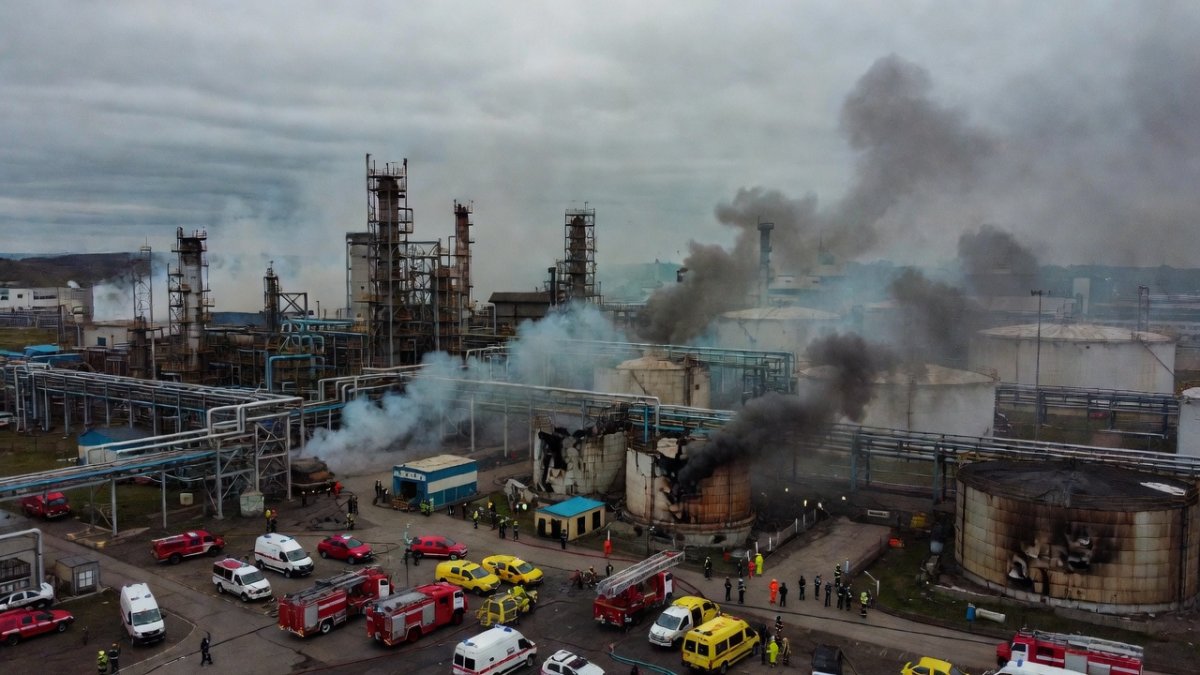
In the shadow of escalating conflict, Ukraine has intensified its campaign of long-range strikes deep into Russian territory, targeting energy infrastructure, defense factories, and industrial sites far from the front lines. These operations, once limited in scope to border areas, now reach across vast distances exceeding 1,700 kilometers, challenging Moscow's defensive capabilities and economic stability through the systematic use of long-range drones and cruise missiles. With data from ACLED showing a marked increase in such attacks — doubling year-over-year and on pace for 800 incidents by the end of 2026 — the strategy appears designed to impose cumulative costs on Russia's war effort while exposing vulnerabilities in its vast interior, from the Baltic ports to the Ural Mountains. Observers note the psychological and material impact as strikes proliferate into previously secure regions, forcing the Kremlin to redirect air defense assets and confront the reality of a protracted war of attrition.
Russia's Interior Under Siege: Inside Ukraine's Expanding Deep-Strike Campaign
Moscow, Russia — Ukraine's deep-strike operations have transformed the geography of the war, extending beyond traditional battle zones into Russia's heartland and economic lifelines. Over the past year these attacks have doubled according to ACLED data analyzed by The Economist, with projections reaching 800 strikes by the end of 2026. At least 60 Russian regions have now experienced such incidents since the full-scale invasion began, per Novaya Gazeta Europe reporting. The campaign focuses on oil facilities, drone component plants, and semiconductor production critical to Russian missiles, creating sustained pressure on Moscow's resources and morale while demonstrating Kyiv's growing ability to project power asymmetrically against a numerically superior adversary.
The Expanding Geography of Deep Strikes
Analysis of open-source data reveals that Ukraine's deep strikes have expanded dramatically, covering at least 60 Russian regions since the war's outset in February 2022. ACLED figures show these operations have doubled over the past year, with projections indicating as many as 800 strikes by the close of 2026. This growth reflects improved Ukrainian capabilities in long-range drones and missiles, allowing hits on targets once considered out of reach in Russia's interior. The pattern underscores a deliberate shift toward disrupting Russia's rear areas and supply chains essential for sustaining military operations.
Complex attacks often involve multiple vectors that complicate accurate counting, leading analysts to believe official tallies underrepresent the true scale. Samuel Bendett of CNA observes that these strikes are "bringing the war home in a way that it hasn't been brought home before," highlighting their novelty in reaching civilian and industrial zones deep inside Russia, far beyond the range of earlier systems. Russian air defense units, stretched thin across many regions, have struggled to intercept the swarms.
The expansion carries profound implications for the war's trajectory, compelling Russia to divert air defense assets from frontline duties to protect interior economic nodes. By connecting these strikes to a broader attrition strategy, Kyiv aims to erode Moscow's ability to sustain prolonged mobilization, potentially accelerating strategic recalibrations.
Kapotnya: The Assault on Moscow's Energy Core
Last week Moscow endured its largest drone attack to date when Ukrainian systems struck the Kapotnya refinery complex in the southeast of the capital. Four oil storage tanks were destroyed in the assault, which also affected surrounding infrastructure including pipelines linking to the Moscow Ring Road. The New York Times analysis suggested that Russian air defenses may have inadvertently contributed to the damage through debris or misdirected fire from Pantsir systems stationed nearby. This incident marked a significant escalation, demonstrating Ukraine's ability to penetrate defenses around the capital itself.
Ukrainian sources claimed responsibility for targeting the facility, noting its role in supplying fuel to the Moscow region. The strike near a major shopping center amplified local concerns about safety and the expanding reach of the conflict. Such attacks carry broader implications for Russia's energy distribution network and public confidence in air protection systems.
Strategically, the Kapotnya hit signals Ukraine's intent to target refining capacity near political centers, forcing the Kremlin to prioritize capital defenses over peripheral regions.
Ust-Luga and the Northwest Export Lifeline
In March, repeated strikes on the Ust-Luga port complex in Leningrad Oblast destroyed half a dozen storage tanks at a facility handling 700,000 barrels per day of oil exports. The damage disrupted loading operations and forced temporary halts in shipments. No repairs had commenced as of June, leaving the site partially inoperable and highlighting logistical challenges in restoring critical export capacity under ongoing threat.
The port serves as a vital northwest gateway for Russian crude, and sustained disruption affects both revenue streams and global supply dynamics. Broader port operations have faced ripple effects, including delays and rerouting that compound economic strain from the conflict.
These strikes on Ust-Luga illustrate Kyiv's focus on export chokepoints, potentially reducing Russian oil revenues further over time.
Cheboksary: Targeting Drone Component Production
Mid-June strikes using flamingo missiles hit a plant in Cheboksary, Chuvashia, responsible for manufacturing drone components for the Russian military. Satellite imagery confirmed the main building had collapsed following the impact, with visible remnants of anti-drone netting that had covered the structure. The attack demonstrated precision in selecting facilities tied directly to Russia's unmanned aerial vehicle output.
The presence of protective netting indicated prior awareness of aerial threats, yet the strike succeeded in neutralizing key production space used for drone assembly. This development carries significance for Russia's ability to sustain drone campaigns, as component manufacturing faces increasing vulnerability to long-range interdiction.
By degrading Cheboksary's role in the supply chain, Ukraine advances its strategy of preempting Russian drone barrages, potentially altering the balance of unmanned systems dominance.
Voronezh: Precision Missiles Against Defense Industry
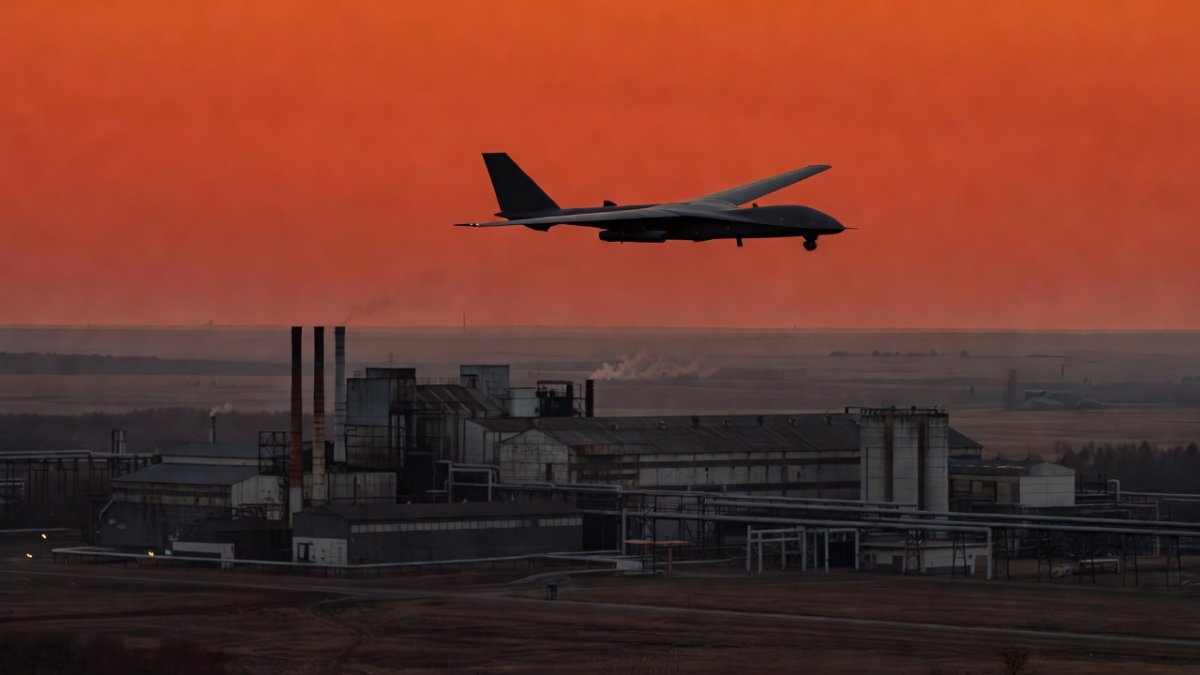
On June 22 a cruise missile strike targeted the Voronezh Semiconductor Device Plant, killing five people and wounding dozens according to regional Governor Alexander Gusev. The facility produces microelectronics essential for Russian military missiles, making it a high-value node in the defense supply chain. Damage assessments pointed to direct hits on production areas critical for ongoing weapons programs.
Local authorities confirmed the casualties while emphasizing efforts to restore operations. The plant's role in supplying specialized components underscores how such strikes aim to degrade Russia's missile manufacturing capacity over time.
This precision operation against Voronezh highlights Ukraine's evolving targeting doctrine, which seeks to constrain Russian missile stockpiles.
Reaching the Urals: Yekaterinburg, Chelyabinsk and Perm
April saw strikes reach the Urals region more than 1,700 kilometers from the front, including a chemical plant in Perm and oil facilities that face regular targeting. In Yekaterinburg a high-rise building caught fire amid drone activity, while Chelyabinsk reported drones intercepted near a metallurgical plant. These incidents illustrate the expanding operational envelope of Ukrainian systems.
The Yekaterinburg blaze carried particular symbolic weight as flames engulfed a residential structure in a major city of 1.5 million. Such events challenge perceptions of safety in Russia's industrial heartland and signal the conflict's penetration into previously insulated areas.
Extending strikes to the Urals forces Russia to disperse air defenses across its core industrial base, potentially weakening cohesion on the eastern front.
Economic Toll: Oil Production and Markets Under Strain
Russia's oil production has now declined for a sixth consecutive month amid repeated infrastructure strikes, contributing to gasoline shortages in front-line regions such as Belgorod and Rostov. The federal budget faces a 2.1 trillion ruble revenue shortfall, with the overall deficit exceeding 6 trillion rubles, according to Finance Ministry data released in June. These figures reflect the cumulative effect of disrupted exports and higher wartime expenditures.
The MOEX index fell 4.42 percent to close at 2,313, marking its lowest level since March 2023 and extending a 15-week losing streak. The Central Bank responded by cutting rates 25 basis points while signaling hawkish policy that points to prolonged elevated borrowing costs for businesses and consumers.
Persistent economic pressure from these strikes may compel the Kremlin to prioritize domestic stability over battlefield gains, potentially shifting the war's trajectory toward de-escalation talks if budget shortfalls constrain new mobilization waves.
Analysis and Implications
President Putin has stated that the strikes seek "to create a split in Russian society, sow confusion and inflict economic damage," acknowledging their intent to erode domestic cohesion. Kremlin efforts at narrative control face mounting difficulty as evidence of attacks spreads through independent channels and local reports. Societal divisions risk widening if energy shortages and industrial disruptions persist.
These developments suggest the war's trajectory may hinge on Russia's capacity to absorb and adapt to interior strikes while maintaining offensive momentum. Sustained pressure on economic and defense nodes could accelerate negotiations or force strategic recalibrations in Moscow.
Ultimately, Ukraine's deep-strike campaign represents a calculated bid to impose asymmetric costs that could redefine the conflict's endgame, compelling Russia to confront vulnerabilities across its entire territory rather than solely along the front line.
By Irina Volkov, Staff Writer
This article was produced with AI-assisted research and editorial support. Reporting is based on sources cited in the article.
What's Your Reaction?
 Like
0
Like
0
 Dislike
0
Dislike
0
 Love
0
Love
0
 Funny
0
Funny
0
 Wow
0
Wow
0
 Sad
0
Sad
0
 Angry
0
Angry
0

Russia/Eastern Europe Correspondent at Global1.News. Covering Russian politics, energy, security, and the shifting dynamics of the post-Soviet space. Provides clear-eyed analysis on one of the world's most opaque regions.














Comments (0)