
Turkey-TRNC Joint Drill Boosts Eastern Mediterranean Security
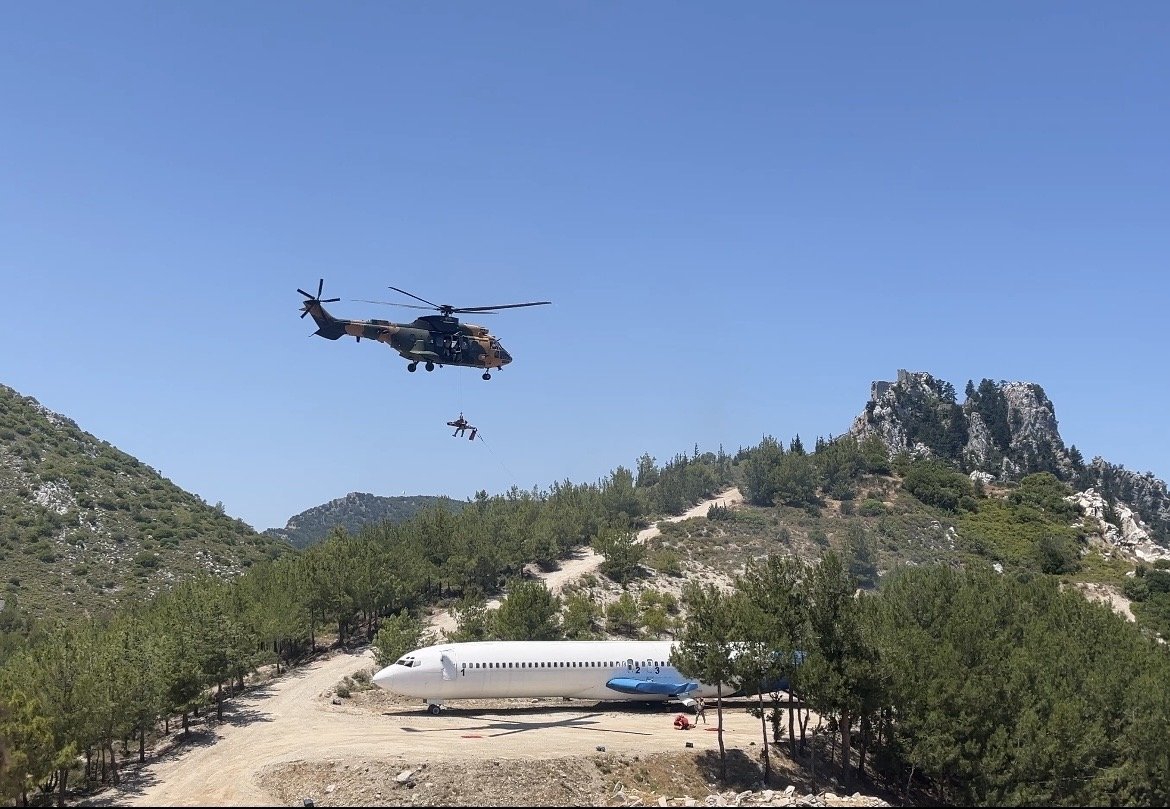
Türkiye, TRNC test joint emergency response in major rescue drill Exercise Details and Operational Execution The land phase of the Martyr Ensign Caner Gönyeli 2026 Search and Rescue Invitation Exercise concluded successfully on 23 June 2026 in the Beşparmak Mountains near Girne. Turkish and TRNC units simulated the crash of a passenger aircraft flying from İzmir Adnan Menderes
Exercise Details and Operational Execution
The land phase of the Martyr Ensign Caner Gönyeli 2026 Search and Rescue Invitation Exercise concluded successfully on 23 June 2026 in the Beşparmak Mountains near Girne. Turkish and TRNC units simulated the crash of a passenger aircraft flying from İzmir Adnan Menderes Airport to Ercan Airport. The scenario activated coordination centers in both capitals and deployed helicopters, fixed-wing aircraft, unmanned aerial vehicles, and ground teams from the Turkish Ministry of National Defense, Ministry of Interior, and TRNC Security Forces Command.
Strategic Importance of Turkish-TRNC Military Ties
This annual drill, running since 2002, underscores Ankara’s sustained commitment to the TRNC’s security apparatus. Türkiye supplied six aircraft, one vessel, and one search-and-rescue team from the Defense Ministry, plus additional assets from the Interior Ministry. The TRNC contributed five teams along with its own aircraft and vessels. Such interoperability strengthens command-and-control links that extend beyond emergency response into broader defense planning, reinforcing Turkey’s role as the sole security guarantor for the north of Cyprus.
Eastern Mediterranean Geopolitical Context
The exercise occurs against persistent maritime boundary disputes involving the Republic of Cyprus, Greece, and several EU member states. Natural gas discoveries have intensified competition over exclusive economic zones. By demonstrating rapid response capabilities around Ercan and the northern coastline, Türkiye signals its readiness to protect both civilian aviation corridors and potential energy infrastructure in waters it claims. The drill’s timing highlights Ankara’s determination to maintain operational presence without direct confrontation.
Technology Integration and Modern Capabilities
Drone-supported reconnaissance proved decisive when two additional simulated casualties were located near a cliff and in forested terrain. UAVs from both countries shortened search times and improved situational awareness for helicopter crews performing fast-rope insertions. These capabilities reflect wider Turkish investment in unmanned systems that also support operations in Syria, Iraq, and Libya, extending the same technological edge to the Eastern Mediterranean theater.
Regional Security Implications and Second-Order Effects
Enhanced Turkish-TRNC coordination carries implications for energy markets and alliance patterns. Stable search-and-rescue coverage around northern Cyprus reduces perceived risks for future hydrocarbon projects that Ankara might support. At the same time, the exercise serves as a quiet reminder to Athens and Brussels that Turkey retains the ability to project power and manage crises in the region. This dynamic influences calculations in Gulf capitals watching Eastern Mediterranean gas flows and their potential impact on global LNG pricing.
Outlook for Maritime Phase and Broader Cooperation
With the land phase complete, participating units moved to the maritime segment on 24 June 2026. Continued joint operations at sea will test vessel coordination and medical evacuation procedures under more complex conditions. Over time, these repeated exercises consolidate institutional habits that could prove valuable if larger-scale incidents arise, whether from aviation accidents or offshore energy incidents. For both Ankara and Lefkoşa, the Martyr Ensign Caner Gönyeli series remains a practical instrument of influence and preparedness in a contested maritime space. By Malik Hassan, Staff Writer
This article was produced with AI-assisted research and editorial support. Reporting is based on sources cited in the article.
What's Your Reaction?
 Like
0
Like
0
 Dislike
0
Dislike
0
 Love
0
Love
0
 Funny
0
Funny
0
 Wow
0
Wow
0
 Sad
0
Sad
0
 Angry
0
Angry
0
Middle East Correspondent at Global1.News. Based in Beirut, covering politics, conflict, energy, and society across the Middle East. Brings context and depth to a region often reduced to headlines.












Comments (0)