
Turkish Envoy Outlines Frigate Offer at Bangkok Embassy
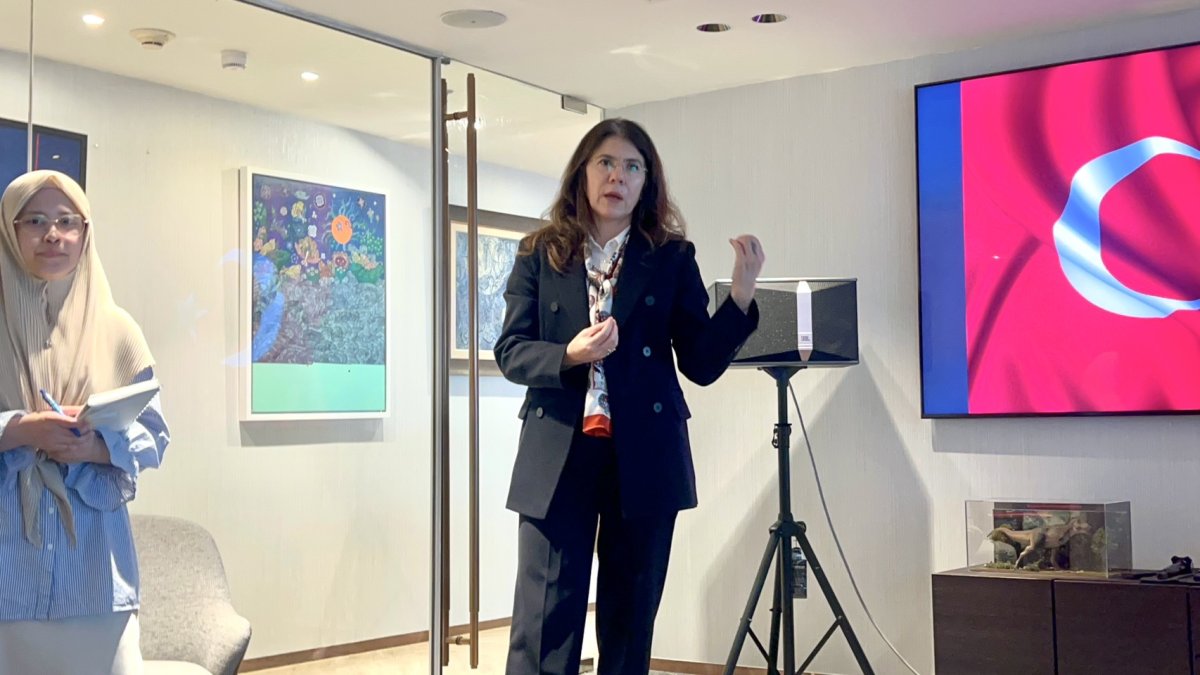
Turkish Envoy Outlines Frigate Offer at Bangkok Embassy Ambassador Jülide Kayihan spoke this week at the Turkish Embassy on Sathorn Road about Türkiye's interest in supplying frigates to the Royal Thai Navy. She stated that the proposal stands as one option among others under consideration and carries no element of pressure on Thai officials. The ambassador stressed that Türkiy
Turkish Envoy Outlines Frigate Offer at Bangkok Embassy
Ambassador Jülide Kayihan spoke this week at the Turkish Embassy on Sathorn Road about Türkiye's interest in supplying frigates to the Royal Thai Navy. She stated that the proposal stands as one option among others under consideration and carries no element of pressure on Thai officials. The ambassador stressed that Türkiye fully respects whatever decision emerges from Thailand's internal evaluation process.
During the meeting, Kayihan highlighted the capabilities of Turkish shipbuilders while underscoring that Bangkok retains complete freedom to select equipment from any supplier. She avoided any direct comparison with competing offers and instead focused on the technical merits of the Turkish designs. This approach reflects a deliberate effort to present information without attempting to influence the outcome.
The embassy setting on Sathorn Road provided a formal backdrop for the discussion, where Kayihan addressed questions from Thai defense analysts. She reiterated that the Turkish side seeks only to inform the Royal Thai Navy about available platforms. No timelines or ultimatums accompanied the presentation, leaving the evaluation timeline entirely in Thai hands.
State-Owned Builders Detail Construction and Technology Packages
ASFAT, the Turkish state-owned defense enterprise, proposes to construct frigates inside Thailand with complete technology transfer included in the package. The offer also encompasses a full ship design license that would allow Thai yards to produce additional vessels without ongoing foreign assistance. Offset investment commitments form another core element designed to channel funds into local supporting industries.
TAIS Shipyards has already demonstrated the I-Class frigate in active service with the Turkish Navy, where the vessel performs multi-role missions including air defense and surface warfare. Indonesia recently placed an order for two I-Class frigates, marking the first export success for this design. These contracts provide concrete examples of the platform's production readiness and operational track record.
The combination of ASFAT's construction model and TAIS's proven hull allows potential buyers to examine both the manufacturing process and the finished product. Full documentation on systems integration accompanies the license offer, covering everything from propulsion to combat management software. Thai evaluators can therefore review detailed specifications rather than conceptual drawings alone.
Royal Thai Navy Advances Frigate Acquisition Planning
The Royal Thai Navy currently evaluates multiple proposals as part of its ongoing frigate program aimed at modernizing surface combatants. This effort addresses the need to maintain presence across operational areas in the Gulf of Thailand and the Andaman Sea. Existing hulls require replacement as maintenance costs rise and newer sensor suites become standard across regional fleets.
Chonburi and Rayong shipyards stand positioned to participate in any domestic construction phase should Thailand select a partner offering local assembly. These facilities already handle repair and refit work for smaller vessels, providing a foundation for scaling up to frigate-sized projects. Workforce experience gained through prior programs could accelerate the learning curve for new builds.
Evaluation criteria include not only platform performance but also long-term sustainment and the ability to incorporate future upgrades. The navy has requested detailed cost breakdowns and delivery schedules from all bidders, including Türkiye. Decisions will ultimately rest on how well each proposal aligns with fleet-wide standardization goals already in progress.
Offset Commitments Target Domestic Manufacturing Growth
Offset investment linked to any Turkish frigate contract would direct capital toward Thai component suppliers and training centers. Such arrangements typically require a percentage of contract value to remain in-country through joint ventures or direct infrastructure support. Local firms could gain exposure to precision welding, radar integration, and propulsion system assembly techniques.
Ministry of Defence guidelines already mandate minimum local content percentages for major acquisitions, pushing foreign suppliers to partner with Thai companies. Worker training programs would accompany technology transfer, focusing on skills needed for both initial construction and subsequent maintenance cycles. These initiatives aim to reduce reliance on overseas technical teams over time.
Skilled employment opportunities would extend beyond shipyard floors into supply chain companies producing cabling, piping, and electronic sub-assemblies. Past offset projects in Thailand have shown measurable increases in domestic capability when contracts include structured knowledge-sharing clauses. The Turkish proposal explicitly references these mechanisms as part of its overall package.
Turkish Defense Relationships Extend Across Southeast Asia
Türkiye has steadily expanded defense cooperation with Indonesia and Malaysia through equipment sales and joint training initiatives. These ties demonstrate Ankara's ability to navigate diverse procurement environments while meeting NATO-standard requirements for interoperability. Regional navies gain access to systems compatible with alliance data links and communication protocols.
Maritime security concerns shared among ASEAN members create openings for suppliers offering proven platforms at competitive terms. Trade route protection in the Strait of Malacca and surrounding waters benefits from vessels equipped with modern surveillance and engagement suites. Turkish frigates carry sensor and weapon fits already tested in multinational exercises.
Interoperability with NATO-standard equipment allows potential integration into broader information-sharing networks should Thailand pursue such arrangements in the future. The I-Class design incorporates open architecture features that facilitate later additions of indigenous Thai systems. This flexibility addresses long-term fleet evolution without locking operators into single-vendor solutions.
Thailand and Türkiye Strengthen Broader Economic Links
Bilateral trade between Thailand and Türkiye spans automotive parts, textiles, and agricultural products, creating a foundation that defense discussions can build upon. Regular diplomatic exchanges at the ambassadorial level have maintained steady communication channels even during periods of limited military sales. The Sathorn Road embassy serves as the primary point of contact for coordinating these multifaceted relations.
Turkish defense industry participation in Thai programs could complement existing commercial flows by introducing new areas of technical collaboration. Past visits by Thai procurement teams to Turkish facilities have already familiarized officials with production standards and quality control processes. These contacts reduce information gaps that sometimes slow complex acquisition decisions.
Both governments continue to explore additional avenues for cooperation outside the defense sector, including infrastructure and renewable energy projects. The current frigate dialogue occurs within this wider context of expanding ties rather than as an isolated transaction. Embassy staff on Sathorn Road facilitate the necessary follow-up meetings between industry representatives and Thai agencies.
Technology Transfer Supports Long-Term Naval Autonomy
Full tech transfer under the ASFAT proposal would equip Thai engineers with the knowledge required to construct subsequent frigates independently after the initial batch. This capability extends to performing structural modifications or sensor upgrades without returning to the original designer for approvals. Local teams could adapt the baseline I-Class configuration to meet specific operational preferences identified during evaluation.
Workforce development forms a central pillar of the offer, with Turkish instructors scheduled to conduct extended courses at partner shipyards. These programs cover everything from hull fabrication sequences to combat system software maintenance. Over successive projects, accumulated expertise would position Thailand to support its own fleet and potentially assist neighboring navies.
Export potential arises once domestic yards master the licensed design and establish reliable production quality. Thailand could then market upgraded variants to other regional operators seeking NATO-compatible vessels built under flexible licensing terms. The combination of proven Turkish engineering and growing Thai industrial capacity creates a pathway toward greater self-reliance in surface combatant construction.
By Ann Srisawat, Staff WriterThis article was produced with AI-assisted research and editorial support. Reporting is based on sources cited in the article.
What's Your Reaction?
 Like
0
Like
0
 Dislike
0
Dislike
0
 Love
0
Love
0
 Funny
0
Funny
0
 Wow
0
Wow
0
 Sad
0
Sad
0
 Angry
0
Angry
0

Southeast Asia Correspondent at Global1.News. Based in Bangkok, covering Thai and Southeast Asian politics, economy, technology, and culture. Deep regional perspective on one of the world's most dynamic regions.














Comments (0)