
US Strikes Iran for Ninth Night as Strait of Hormuz Crisis Deepens — Another Service Member Killed, Oil Prices Surge
The US has launched a ninth consecutive night of airstrikes against Iran, expanding the conflict after another American service member was killed. Iran has retaliated with missile attacks on Jordan and Bahrain, while the Strait of Hormuz crisis has sent oil prices above $86 a barrel and brought t...
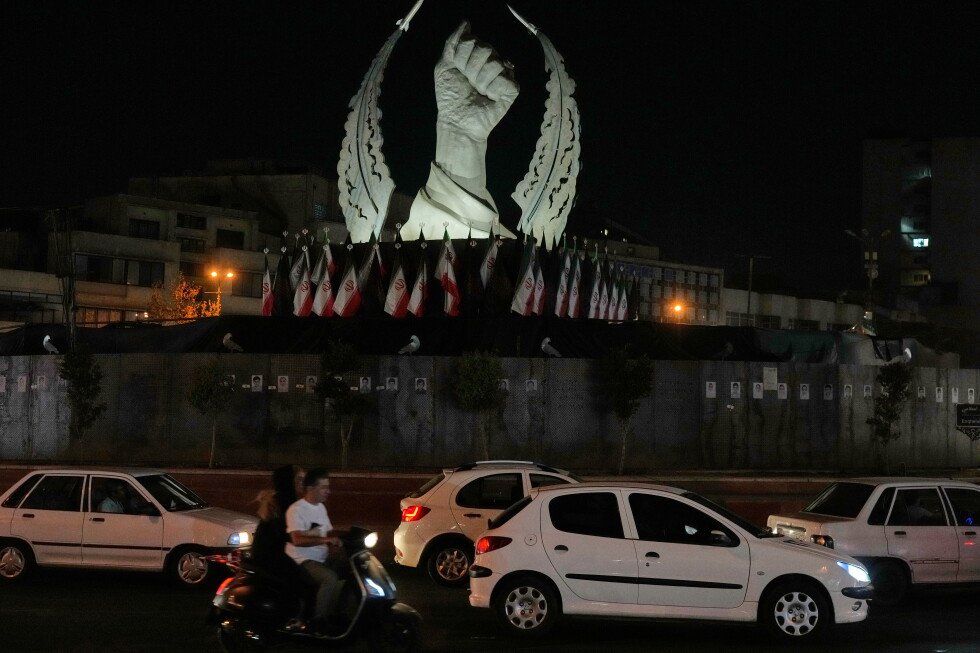
The United States has launched its ninth consecutive night of airstrikes against Iran, dramatically expanding the conflict as Tehran retaliates with missile attacks on Bahrain, Jordan, and commercial shipping in the Strait of Hormuz. The escalation — which began in earnest on July 9 when fighting erupted over control of the strategic waterway — has now drawn in regional mediators and sent global oil prices soaring, with tanker traffic in the Strait grinding to a near-standstill.
President Donald Trump confirmed the intensified bombing campaign Sunday evening as he returned to Washington, D.C., after attending the 2026 FIFA World Cup final in New Jersey, telling reporters the strikes were carried out "in honor of the, probably three, it's probably three great patriots" — referring to two US soldiers killed in Jordan last week by Iranian missiles and a third service member killed in northern Iraq on Saturday.
"We feel very badly," Trump said when asked about the mounting American casualties, adding that those killed in action were fighting to ensure "Iran cannot have a nuclear weapon." The president's remarks underscored a grim reality: despite the administration's repeated insistence that there would be "no boots on the ground" in Iran, American service members continue to die in the expanding theater of operations.
A Ninth Night of Fire: What CENTCOM Hit
The US military's Central Command announced early Monday that it had completed the ninth wave of attacks against Iran at 2:00 a.m. GMT, describing the operation in unusually precise detail. The strikes "targeted Iranian military command centers, air defense and coastal surveillance sites, maritime capabilities, missile and drone launch sites, and communications networks to further diminish Iran's ability to attack commercial vessels and civilian mariners transiting the Strait of Hormuz," CENTCOM said in a statement.
The Associated Press reported that the latest round of airstrikes struck an area near Tabriz, a northwestern Iranian city roughly 520 kilometers from Tehran, with Iran's state-run IRNA news agency reporting at least one civilian killed in the attack. The US military did not confirm specific targets in that region.
Iran's semiofficial Tasnim News Agency reported that US strikes also hit the town of Khormoj in southwestern Iran, quoting a local official. Meanwhile, Iran's Mehr News Agency claimed an MQ-9 Reaper drone was intercepted and shot down over Eslamabad-e Gharb in western Iran's Kermanshah province by an advanced air defense system operated by the IRGC aerospace force — a significant claim given the MQ-9 is one of the US military's most capable surveillance and strike platforms.
Iran Strikes Back: Missiles at Jordan, Bahrain Under Threat
Iran's Islamic Revolutionary Guard Corps announced Monday that it had launched ballistic missiles targeting US C-17 transport planes and P-8 maritime patrol aircraft at Aqaba Airport in Jordan, claiming in a statement carried by state-controlled IRIB broadcaster that several US aircraft were "heavily damaged." The IRGC also said it destroyed 20 hangars housing US forces at the Muwaffaq Salti Air Base in Azraq, Jordan.
Jordan's armed forces confirmed Monday evening that they had shot down three Iranian missiles, adding that there had been no material damage or casualties from the intercepted projectiles. But the attack on a US ally — Jordan hosts thousands of American troops and is a key staging ground for US operations in the region — signals a significant widening of the conflict's geographic scope.
The US embassy in Bahrain issued an urgent warning Monday, saying it had information suggesting Iran may seek to target unspecified locations in central Manama, the capital. The embassy urged Americans to "remain vigilant, follow instructions from local authorities, and immediately seek shelter if warning sirens sound or explosions are heard." Bahrain hosts the US Navy's Fifth Fleet, making it a high-value target in Tehran's strategic calculus.
The Strait of Hormuz: Global Commerce Hangs in the Balance
The battle for control of the Strait of Hormuz — the narrow chokepoint through which roughly 20% of the world's oil passes daily — has become the central flashpoint of the US-Iran war. Since fighting erupted there on July 9, effectively unraveling an interim peace deal signed just last month, shipping traffic has slowed to a crawl.
The IRGC claimed Sunday that two oil tankers "exploded" and were halted in the southern Strait of Hormuz late Sunday evening, according to Tasnim News Agency. The IRGC stated the vessels were attempting to transit the waterway under what it described as "US coercion" and issued a stark warning: "This passage is unsafe for the transport of chemical fertiliser or even a single drop of oil and gas." The corridor, the IRGC declared, would remain unsafe as long as US military operations in the region continue.
Bloomberg reported Monday that Iranian attacks on tankers and escalating US strikes have brought traffic in the Strait to a near-standstill, with two vessels controlled by one of the industry's boldest shipowners directly hit. The United Kingdom Maritime Trade Operations agency reported a vessel about eight nautical miles northwest of Kumzar, Oman, had caught fire, though the cause remained unverified. The British military also said a separate ship was attacked off the coast of the United Arab Emirates.
Another American Life Lost: The Human Cost Escalates
A US service member was killed in northern Iraq on Saturday during the controlled detonation of unexploded ordnance from a downed Iranian drone, CENTCOM announced. The death marks the third American fatality in the conflict within a week, following two US soldiers killed in Jordan when Iranian missiles struck a US base there.
President Trump acknowledged Sunday that more American casualties are likely. Asked whether he expected to attend more dignified transfers of fallen service members, Trump replied, "I'm sure. I hate to… but it's a part of war." The comment, while candid, is unlikely to comfort a nation watching its military death toll rise in a conflict the administration has repeatedly characterized as limited in scope.
The New York Times reported Monday that the expansion of US strikes on Iran has led to a corresponding increase in retaliatory attacks across the Gulf, with Iran-backed Houthi forces in Yemen also expanding the conflict by imposing a Red Sea blockade on Saudi ships — a move that adds new pressure on already volatile energy markets.
Oil Markets in Turmoil: $86 a Barrel and Climbing
Global oil prices have surged past $86 a barrel as the Strait of Hormuz crisis deepens, with analysts warning that a sustained blockade could push prices above $100 for the first time since 2022. The price spike represents a roughly 15% increase since fighting erupted on July 9, with each night of airstrikes driving fresh uncertainty into markets.
The economic ripple effects extend well beyond the pump. Insurance premiums for vessels transiting the Persian Gulf have skyrocketed, with some shipping companies refusing to send crews through the Strait at all. The combination of tanker attacks, military operations, and Iran's explicit threat to keep the corridor "unsafe" has effectively created a war-risk zone in one of the world's most vital maritime arteries.
For American consumers, the timing could not be worse. With inflation still above the Federal Reserve's 2% target and the summer driving season in full swing, a sustained oil price spike threatens to reignite the inflationary pressures that policymakers have spent the last two years trying to contain. The economic cost of this war is no longer theoretical — it is being calculated in real time at every gas station from Atlanta to Anchorage.
Diplomacy on the Margins: Can Mediators Pull Off a Miracle?
Even as the bombs fall, diplomatic backchannels are humming. Iran's Interior Minister traveled to Pakistan on Monday for talks with a key mediator in the conflict, while Bloomberg reported that mediators are stepping in with a proposal to return to the US-Iran positions of pre-July 9 as a first step toward de-escalation.
Iranian Foreign Minister Abbas Araghchi laid out Tehran's negotiating position in stark terms in an interview with state media Monday. "The end of the war is possible either through absolute military victory or through negotiations," Araghchi told IRNA. "The right time to negotiate is precisely when you have achieved a reliable field and strategic achievement on the military front." He added that "the most critical decision in crisis management was identifying the precise moment to halt hostilities and begin negotiations."
Secretary of State Marco Rubio, meanwhile, signaled that the US remains "open to diplomacy," even as the ninth night of bombing made clear that Washington believes military pressure is the most effective path to a favorable negotiating position. The contradiction — bombing while talking — is as old as conflict itself, but in this case, the stakes are uniquely high. With the Strait of Hormuz effectively contested, oil prices spiking, and American service members dying, the window for a diplomatic off-ramp is narrowing by the day.
The Bigger Picture: A Peace Deal Unraveled in Days
Perhaps the most staggering aspect of the current escalation is how quickly it unraveled a hard-won interim peace deal signed just last month. That agreement, which had raised hopes of a durable end to hostilities that began on February 28, 2026 — when US-Israeli airstrikes killed several Iranian officials, including Supreme Leader Ali Khamenei — collapsed within days of the July 9 fighting over the Strait of Hormuz.
The speed of the deal's collapse raises uncomfortable questions about the durability of any negotiated settlement with Tehran, particularly one negotiated under the shadow of active military operations. If a deal signed weeks ago cannot hold for a month, what confidence can markets, allies, or the American public have in the next one?
Iran's IRGC has also escalated its rhetorical posture, claiming credit for attacks on Jordan and warning that the Strait would remain contested as long as US forces operate in the region. Iran-backed Houthi forces in Yemen have joined the fray with a Red Sea blockade on Saudi vessels, effectively opening a second front in the maritime war. The conflict that began as a targeted strike operation is metastasizing into a broader regional war with no clear endpoint.
The São Paulo Precedent: What History Tells Us
As the world watches the Strait of Hormuz crisis unfold, historians and strategists are looking to historical parallels. The prolonged nature of this conflict — now approaching its fifth month since the initial February 28 strikes — increasingly resembles the kind of attrition warfare that characterized the Iran-Iraq War of the 1980s, which saw tanker wars in the very same waterway and eventually drew in the US Navy under the Reagan administration.
What's different this time is the pace of escalation. Ninth consecutive nights of airstrikes, retaliatory missile attacks on US allies, a contested strategic waterway, and a rising American death toll — this is not a conflict that is de-escalating. If anything, the trajectory suggests a conflict that is expanding in both geographic scope and intensity. The question is not whether there will be a diplomatic breakthrough, but whether one can arrive before the region tips into a full-scale war that no one — not Washington, not Tehran, not the global economy — can afford.
By Jessica Ali, Staff Writer
This article was produced with AI-assisted research and editorial support. Reporting is based on sources cited in the article.
What's Your Reaction?
 Like
0
Like
0
 Dislike
0
Dislike
0
 Love
0
Love
0
 Funny
0
Funny
0
 Wow
0
Wow
0
 Sad
0
Sad
0
 Angry
0
Angry
0

Editor-in-Chief at Global1.News. Atlanta-based journalist who cuts through the BS and tells it like it is. Lead anchor, host, and the voice you hear when the spin stops and the truth starts.













Comments (0)