
Drone Strike Halts Kazakh Oil Exports at Black Sea Terminal
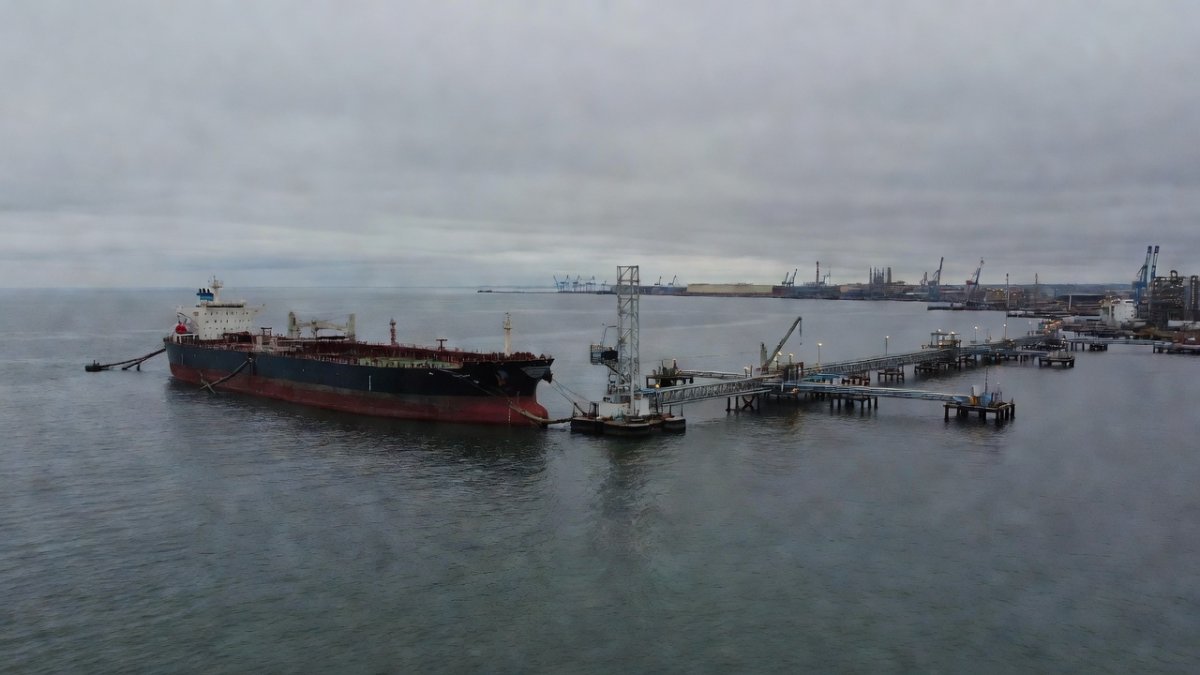
Drone strike on tanker NELSA at CPC Black Sea terminal halts Kazakh crude exports. No casualties or spill reported, but loading suspended indefinitely after second attack on the 1.2M bpd pipeline. Europe faces supply risk as conflict-linked drones target vital energy infrastructure.
Drone Strike Halts Kazakh Oil Exports at Black Sea Terminal
In a world already teetering on energy instability, a single drone strike has the power to send shockwaves through global oil markets, threatening to spike prices, deepen Europe's dependence on volatile supplies, and escalate a widening conflict that now directly targets critical energy chokepoints with no easy fixes in sight.
Atlanta, GA — A drone just slammed into an oil tanker loading Kazakh crude at the Black Sea, and the fallout is already rippling straight into European refineries that thought they had a safe alternative to Middle East barrels. This is not some distant sideshow. This is the CPC terminal near Novorossiysk getting hit again, and the 1.2 million barrels per day that flow through that 1,511 km pipeline are now on pause. Folks, pay attention—this is how supply shocks start.
The attack on the NELSA at Single Point Mooring-1 was precise and ugly. The drone struck the starboard stern, sparked fires on deck and in compartments, and forced CPC to shut down loading operations indefinitely. No one died. No oil spilled into the sea. But the message landed loud and clear: the terminal is vulnerable, and whoever is flying these drones knows exactly where to aim.
CPC called it a terrorist attack without hesitation. The terminal handles more than two-thirds of Kazakhstan’s crude exports plus Russian Caspian oil, making it a strategic chokepoint that Europe has leaned on harder since other routes tightened.
The Attack Details
Here’s the thing: this was the second incident at the facility in recent months. The NELSA was sitting at SPM-1 when the drone arrived. The strike hit the stern, triggered the fires, and left the vessel damaged but not sinking. CPC’s statement was blunt—no casualties, no spill, operations suspended. That last part matters most. When a terminal built to move 1.2 million barrels a day goes dark, the clock starts ticking on downstream supply.
The incident underscores how even limited damage to a single vessel can cascade into broader operational paralysis at a facility designed for continuous high-volume throughput. Security protocols are now under urgent review as operators assess whether additional protective measures can prevent further precision strikes.
Energy Security Implications
Europe has quietly counted on CPC crude as a non-Middle East option. Now that reliability is in question. The pipeline moves Kazakh and Russian Caspian barrels that refiners prefer for their quality. Losing even part of that flow forces buyers to scramble for replacements, and replacements cost more and take longer. This is not theoretical. This is the second hit on the same terminal, and markets hate uncertainty more than anything.
Germany's refining sector, already strained by the loss of Russian pipeline crude, faces fresh pressure as CPC volumes represent a critical alternative feedstock for facilities like the PCK refinery in Schwedt. Without steady inflows from the Black Sea terminal, operators may need to source more expensive spot cargoes or increase runs at domestic facilities that rely on Mediterranean imports, pushing up operational costs. Italy's ISAB refinery in Sicily and several plants along the Adriatic have historically processed Kazakh grades for their high-quality yields, meaning any extended outage forces a scramble for substitute barrels that could tighten regional balances.
Turkey's refineries, including those operated by Tupras, also depend on CPC crude arriving via the Black Sea for blending into diesel and jet fuel destined for both domestic and export markets. A prolonged halt at Novorossiysk would ripple into higher import needs from the Middle East or West Africa, adding freight costs and delivery delays. On global markets, the sudden tightening of roughly 1.2 million barrels per day of supply has already begun lifting gasoline and diesel crack spreads, with European pump prices likely to climb within weeks as traders price in the uncertainty.
Kazakhstan's Dilemma
Astana is watching the situation closely and has every reason to be nervous. CPC exports are the backbone of Kazakhstan’s oil revenue. When loading stops, money stops. The country already faces the reality that its main export route runs through a terminal that has now been struck twice. Diversifying away from that route is not quick or cheap. Kazakhstan is stuck between geography and geopolitics, and the drone just made the trap tighter.
Astana's position remains precarious as it navigates between Moscow's influence over the CPC pipeline infrastructure and Western demands for reliable non-Russian energy supplies. While Kazakhstan has sought to diversify its export options, the reality is that most alternative pathways require Russian cooperation or cross contested territories, limiting true independence. The Tengiz oil field expansion, which promises significant new volumes, now risks being bottlenecked by the same vulnerabilities exposed at the Black Sea terminal.
The Baku-Tbilisi-Ceyhan pipeline offers one theoretical workaround, yet capacity constraints and the need for additional infrastructure investments make it an incomplete solution for absorbing CPC-scale flows. Relations with Moscow further complicate matters, as any move to reduce reliance on Russian-controlled routes risks diplomatic friction and potential retaliation on other energy or transit issues. This balancing act leaves Kazakh officials with few levers to protect export revenues without alienating key partners on either side.
Russia-Ukraine Conflict Angle
Earlier drone attacks have already targeted the same terminal. The pattern is obvious. The Russia-Ukraine conflict keeps expanding its reach into energy infrastructure, and the Black Sea has become a live testing ground. CPC is not Russian-owned, but the terminal sits on Russian territory and moves Russian-origin barrels alongside Kazakh ones. Attackers are treating the entire complex as fair game. That blurs lines and raises the risk that one more strike could pull in bigger players.
The Black Sea has evolved into a high-stakes transit corridor where commercial energy infrastructure now sits squarely in the crosshairs of the broader conflict. Ukrainian drone strikes have demonstrated growing reach and precision, allowing Kyiv to target Russian-linked assets far from the front lines and disrupt Moscow's ability to monetize Caspian crude flows. This latest incident fits a pattern of attacks aimed at degrading Russia's energy export capabilities and the economic leverage they provide.
Russia itself depends on the CPC system as a tool of pipeline diplomacy with Kazakhstan, using shared infrastructure to maintain influence over Astana's energy decisions. By striking the terminal, attackers aim to sever that linkage and force both countries to confront the fragility of their joint export arrangements. The escalation underscores how the war has expanded beyond traditional battlefields into the physical networks that sustain oil revenues for Russia and its partners.
Impact on Global Oil Markets
The 1.2 million barrels per day that normally move through CPC represent a meaningful chunk of non-OPEC supply. When that volume gets idled, traders start repricing everything else. European refiners that switched to CPC crude to avoid heavier sour grades now face a sudden gap. The market reaction will not be instant panic, but it will be steady upward pressure on alternative crudes and on freight rates for tankers that have to reroute. Second incidents create first-order fear.
Brent crude prices reacted immediately to news of the strike, climbing several dollars per barrel as traders factored in the loss of reliable non-OPEC supply. The market's swift repricing reflects concerns that even temporary disruptions at CPC could tighten global balances at a time when inventories remain relatively low. OPEC+ members, already managing production quotas, now face added pressure to decide whether to release additional barrels or maintain discipline amid the uncertainty.
Saudi Arabia and the UAE possess spare capacity that could theoretically offset some lost volumes, yet logistical and political hurdles make rapid compensation unlikely in the near term. Resumption timelines remain unclear, with security assessments and repair work potentially stretching into weeks or months. Markets will continue to monitor developments closely, with any further incidents likely to sustain elevated volatility in both crude and refined product prices.
What Comes Next
CPC says loading is suspended indefinitely. That means weeks, not days, before any restart. Kazakhstan will push for faster repairs and better protection. Buyers will quietly line up alternative cargoes. And the drones? They are not going away. The terminal is too valuable and too exposed. The only question is whether the next strike hits another tanker, the mooring itself, or something even more critical. Folks, this story is not over. It is just getting started.
By Jessica Ali, Staff Writer
SUMMARY: Drone strike on tanker NELSA at CPC Black Sea terminal halts Kazakh crude exports. No casualties or spill reported, but loading suspended indefinitely after second attack on the 1.2M bpd pipeline. Europe faces supply risk as conflict-linked drones target vital energy infrastructure.This article was produced with AI-assisted research and editorial support. Reporting is based on sources cited in the article.
What's Your Reaction?
 Like
0
Like
0
 Dislike
0
Dislike
0
 Love
0
Love
0
 Funny
0
Funny
0
 Wow
0
Wow
0
 Sad
0
Sad
0
 Angry
0
Angry
0

Editor-in-Chief at Global1.News. Atlanta-based journalist who cuts through the BS and tells it like it is. Lead anchor, host, and the voice you hear when the spin stops and the truth starts.











Comments (0)