
Trump's Section 301 Tariffs: ASEAN and Korea's Economy
ASEAN and Trump's Section 301 Tariffs: Reshaping Southeast Asian Integration and Korea's Export Economy The Office of the United States Trade Representative launched a Section 301 investigation in March 2026, formally framed around forced labor concerns in Southeast Asian manufacturing. The probe targets production processes in Thailand, Vietnam, and the Philippines with propos
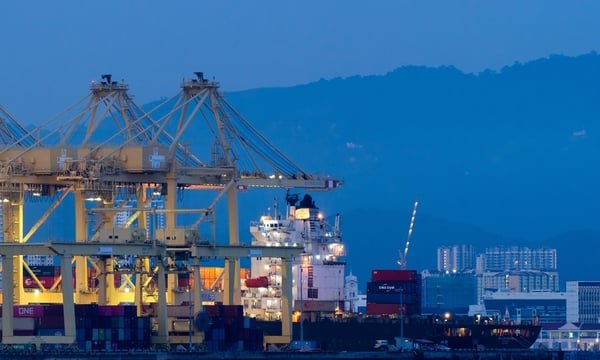
The Office of the United States Trade Representative launched a Section 301 investigation in March 2026, formally framed around forced labor concerns in Southeast Asian manufacturing. The probe targets production processes in Thailand, Vietnam, and the Philippines with proposed tariffs of 12.5 percent, while Malaysia and Cambodia face 10 percent duties. These measures are being phased in gradually rather than imposed immediately, allowing affected governments time to demonstrate compliance through new administrative mechanisms. Malaysia pledged to introduce a nationwide forced labor screening system within two years of its 2025 reciprocal trade agreement entering into force, while Cambodia undertook parallel commitments focused on enhanced factory inspections and documentation requirements. U.S. Trade Representative Jamieson Greer has emphasized that enforcement will rest on these bilateral pledges rather than multilateral agreements, extending the timeline for trade negotiations between Washington and individual ASEAN capitals.
The Evolution of U.S. Section 301 Authority and Its Application to ASEAN
Section 301 of the Trade Act of 1974 has long served as a unilateral instrument for addressing perceived unfair foreign trade practices, evolving from its origins in intellectual property disputes to encompass labor standards and supply chain governance. In the current context, the March 2026 investigation reflects a continuation of this trajectory, now directed at Southeast Asian manufacturing hubs where Korean firms maintain extensive production networks. The phased rollout of tariffs, rather than abrupt imposition, mirrors earlier applications against China, granting ASEAN governments structured windows to enact reforms. This approach underscores Washington's preference for bilateral leverage over multilateral frameworks, compelling individual capitals to negotiate compliance roadmaps independently.
Historical precedents demonstrate that Section 301 actions often catalyze domestic policy shifts within targeted economies, yet they simultaneously strain regional cohesion. For ASEAN, whose integration rests on consensus-driven mechanisms such as the ASEAN Economic Community, differentiated tariff schedules risk fragmenting collective bargaining power. Korea's longstanding role as a major investor in the region amplifies these dynamics, as chaebol supply chains traverse multiple ASEAN jurisdictions now subject to varying duty levels. The investigation's emphasis on forced labor screening systems further aligns with broader U.S. efforts to embed labor provisions into trade enforcement, extending timelines for full implementation across Thailand, Vietnam, and the Philippines.
Phased Implementation and Bilateral Compliance Mechanisms in Affected ASEAN States
The gradual phasing of the proposed tariffs allows Thailand, Vietnam, and the Philippines to develop administrative responses before full duties apply. Malaysia's commitment to a nationwide forced labor screening system, tied to its 2025 reciprocal trade agreement entering into force, illustrates how bilateral pledges shape enforcement calendars. Cambodia's parallel focus on factory inspections and documentation requirements similarly extends negotiation periods with U.S. authorities. These mechanisms prioritize verifiable progress over immediate penalties, reflecting U.S. Trade Representative Jamieson Greer's stated reliance on country-specific undertakings rather than ASEAN-wide accords.
Such bilateralism challenges ASEAN's institutional preference for unified external engagement. As compliance deadlines approach, member states must balance domestic regulatory capacity with the need to preserve intra-regional trade flows. Korean enterprises operating across these borders face heightened documentation burdens, prompting internal audits of subcontractor practices. The extended timelines embedded in these pledges provide breathing room for capacity building, yet they also prolong uncertainty for export-oriented industries reliant on stable market access to the United States.
Implications for ASEAN's Regional Economic Integration Efforts
ASEAN's integration agenda, anchored in successive master plans for the ASEAN Economic Community, encounters new friction from differentiated tariff exposures. The 12.5 percent duties facing Thailand, Vietnam, and the Philippines contrast with the 10 percent rates for Malaysia and Cambodia, potentially distorting investment patterns within the region. Korean firms, which have leveraged ASEAN's cumulative rules of origin under existing free trade agreements, must now navigate uneven cost structures that complicate cross-border production sharing. This fragmentation risks undermining the seamless supply chains that have underpinned Southeast Asian manufacturing growth over the past two decades.
Moreover, the bilateral character of compliance negotiations weakens ASEAN's collective voice in trade diplomacy. Historical efforts to present unified positions in dialogues with major partners, including through the ASEAN+3 framework, face dilution when individual members pursue separate administrative reforms. Korea's strategic interest in stable ASEAN integration stems from its reliance on the region both as an export destination and as a production base, making any erosion of regional cohesion a direct concern for Seoul's economic planners.
Korea's Export Economy and Chaebol Responses to Tariff Pressures
Korean chaebol have expanded operations across ASEAN to diversify away from direct exposure to U.S.-China trade tensions, yet the Section 301 measures now introduce fresh vulnerabilities. Facilities in Vietnam and Thailand, central to electronics and automotive assembly, confront the higher 12.5 percent tariff tier, necessitating rapid adjustments in sourcing and compliance protocols. These firms are already conducting internal reviews of labor practices to align with emerging screening requirements, thereby preserving preferential access to the U.S. market once duties are fully phased in.
The measures also intersect with Korea's broader export strategy, which depends on seamless integration between domestic innovation hubs and overseas manufacturing nodes. Chaebol such as Samsung and Hyundai have historically utilized ASEAN locations to optimize costs while meeting rules-of-origin thresholds under Korea's free trade agreements. Heightened scrutiny of forced labor documentation compels these enterprises to invest in traceability systems, increasing operational overhead but potentially strengthening long-term resilience against future trade enforcement actions.
Korea-ASEAN Trade Relations Under Heightened U.S. Scrutiny
Korea-ASEAN trade relations, governed by the 2007 Framework Agreement and subsequent agreements, now operate under the shadow of U.S. tariff actions that indirectly affect Korean-origin components routed through Southeast Asia. The phased implementation schedule provides Korean investors time to adapt, yet it also highlights the limits of existing bilateral arrangements in shielding supply chains from extraterritorial enforcement. As Malaysia and Cambodia advance their screening systems in line with reciprocal trade agreements entering into force, Korean firms gain clearer compliance pathways but must still reconcile differing national standards.
Academic analyses of Korea's FTA strategy emphasize its multi-track approach, balancing deep agreements with major partners against broader regional pacts. The current Section 301 episode tests this architecture by introducing labor governance as a de facto condition for market access. Korean policymakers are therefore exploring ways to embed stronger labor cooperation clauses into future ASEAN dialogues, aiming to preempt similar unilateral actions while reinforcing the mutual benefits of existing trade frameworks.
Strategic Adjustments in Korea's Free Trade Agreement Framework
Korea's FTA network, encompassing agreements with ASEAN, the United States, and the European Union, requires recalibration in response to labor-linked tariff threats. The emphasis on bilateral pledges rather than multilateral solutions encourages Seoul to pursue supplementary protocols that clarify labor standards within existing Korea-ASEAN arrangements. Such adjustments would help Korean exporters maintain cumulative origin benefits even as individual ASEAN members implement new inspection regimes.
Historical experience with the Korea-U.S. FTA demonstrates that labor provisions can be incorporated without derailing commercial flows when accompanied by capacity-building support. Korean authorities are therefore positioning technical assistance programs for ASEAN partners as a complementary strategy, aligning with the extended timelines granted under the Section 301 process. This proactive stance seeks to convert potential disruptions into opportunities for deeper regulatory alignment across the region.
Long-Term Prospects for Southeast Asian Manufacturing and Korean Investment
Over the longer term, the Section 301 measures may accelerate the upgrading of labor governance standards across ASEAN, creating a more rules-based environment attractive to Korean investors seeking stable operating conditions. The phased introduction of tariffs, coupled with concrete commitments on screening systems and factory inspections, establishes benchmarks that could eventually support higher-value manufacturing relocation from Korea. Yet persistent differentiation among member states risks entrenching a two-tier ASEAN, complicating efforts to deepen economic community objectives.
Korean enterprises will likely continue expanding ASEAN footprints, provided compliance mechanisms prove workable within the bilateral frameworks now taking shape. The interplay between U.S. enforcement calendars and Korea's FTA strategy will determine whether Southeast Asia remains a reliable platform for Korean exports or becomes a source of renewed trade friction. Ultimately, the success of these adjustments hinges on sustained dialogue between Washington, ASEAN capitals, and Seoul to ensure that labor reforms reinforce rather than fragment regional integration. By Prof. David Park, Staff Writer
This article was produced with AI-assisted research and editorial support. Reporting is based on sources cited in the article.
What's Your Reaction?
 Like
0
Like
0
 Dislike
0
Dislike
0
 Love
0
Love
0
 Funny
0
Funny
0
 Wow
0
Wow
0
 Sad
0
Sad
0
 Angry
0
Angry
0

East Asia/Technology Correspondent at Global1.News. Seoul-based voice covering Korean politics, technology, business, and culture. Analyzes how technology and geopolitics intersect across East Asia.












Comments (0)