
US Launches 10th Night of Strikes on Iran as Hormuz War Intensifies
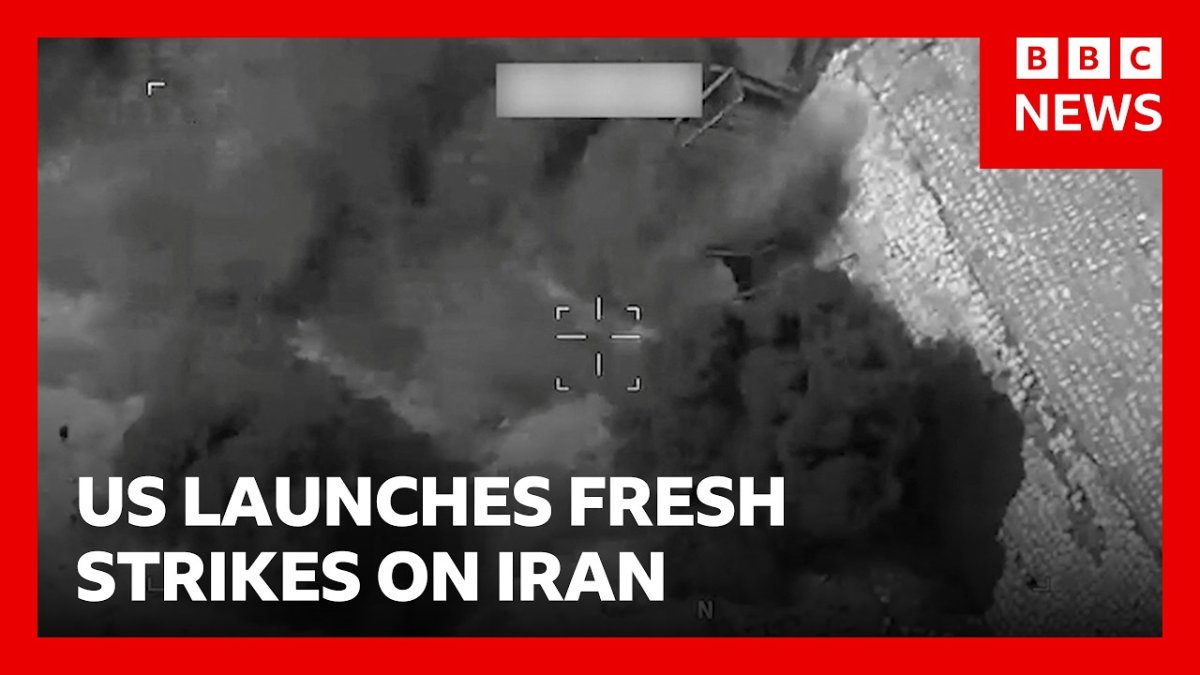
In a recent BBC News report, the US military confirmed it had launched another wave of strikes against Iran, marking the tenth consecutive night of American bombardment targeting Iranian military capabilities in the Strait of Hormuz and beyond.
In a recent BBC News report, the US military confirmed it had launched another wave of strikes against Iran, marking the tenth consecutive night of American bombardment targeting Iranian military capabilities in the Strait of Hormuz and beyond. President Donald Trump vowed retaliation for three US soldiers killed in Iranian strikes over the weekend, as Iran declared it was now fighting a "full-scale war" with the United States.
US Launches 10th Night of Strikes on Iran as Hormuz War Intensifies
London – 21 July 2026 — The United States military launched its tenth consecutive night of airstrikes against Iran on Tuesday, targeting what Pentagon officials described as "military command centres, maritime capabilities, missile and drone launch sites, and air defence systems." The campaign, now entering its third week since the ceasefire collapsed on 8 July, has drawn Iran into direct retaliatory strikes against Gulf state infrastructure and commercial shipping in the Strait of Hormuz, escalating what President Masoud Pezeshkian has termed a "full-scale war" between Tehran and Washington.
The 10th Night — What Was Hit
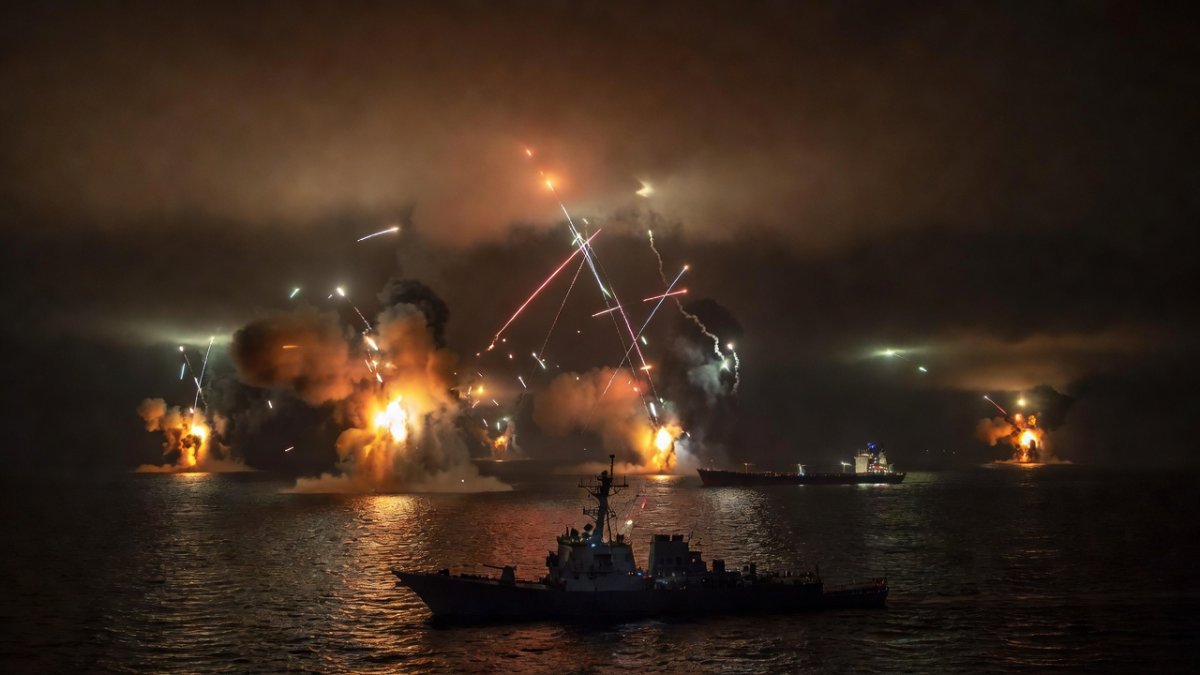
US Central Command confirmed that the latest wave of strikes targeted Iranian military command centres, maritime capabilities, missile and drone launch sites, and air defence systems across multiple provinces. Officials stated the operation formed part of a sustained effort to degrade Iran's ability to project force through the Strait of Hormuz. The intensity of the campaign marks an unprecedented level of continuous US action in the region.
Explosions were reported near Tabriz in north-west Iran, where state media indicated one person was killed and several others wounded. Additional strikes hit Gulf ports including Bandar Mahshahr and Bandar Imam Khomeini, as well as south-eastern facilities at Chabahar and Konarak. President Donald Trump stated earlier that Iran had been hit "very hard" the previous night in honour of three US soldiers killed in recent Iranian strikes.
This tenth consecutive night of operations represents a sustained campaign of unprecedented intensity. Centcom emphasised that targets were selected to limit Iranian maritime and missile threats while avoiding broader civilian infrastructure. Iranian officials condemned the attacks as aggression against sovereign territory.
The tenth night campaign extended across a wide geographic arc, striking facilities from the north-western interior near Tabriz through key Gulf ports such as Bandar Mahshahr and Bandar Imam Khomeini to south-eastern sites at Chabahar and Konarak. This broad distribution of targets underscores an effort to disrupt Iranian maritime projection capabilities along multiple axes simultaneously, complicating any rapid reconstitution of forces in the Strait of Hormuz region while maintaining pressure on dispersed command and air defence nodes.
Iran's Retaliation — Oil Tankers and Gulf Assets
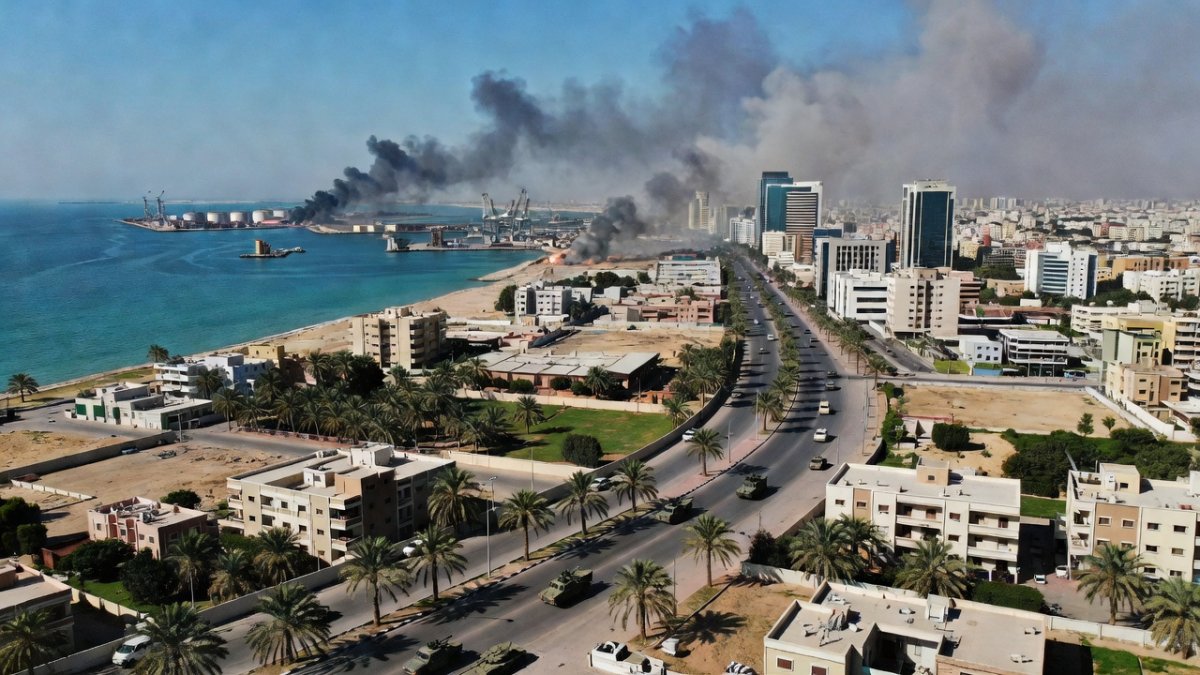
Iran struck two oil tankers in the Strait of Hormuz using what it described as the strait's "unsafe and hazardous southern route." Iranian state media IRNA reported that rescue teams were picking up crews from the vessels. The UK Maritime Trade Operations confirmed that a tanker had been struck by an unknown projectile, after which the crew abandoned the vessel and took to a lifeboat.
The Islamic Revolutionary Guard Corps claimed to have targeted an Amazon data centre in Bahrain with cruise missiles, stating it had "attacked and destroyed central data infrastructure of Amazon in Bahrain." Kuwait reported that Iran hit several power and water desalination plants. Jordan intercepted five drones and shot down three missiles late on Monday, while Bahrain said drones had targeted air navigation systems though traffic remained unaffected.
These actions reflect Iran's strategy of responding across multiple fronts. Gulf states have increased defensive measures while urging de-escalation through intermediaries. The spread of strikes to Bahrain, Kuwait and Jordan has widened the geographic scope of the conflict.
The IRGC approach emphasised simultaneous pressure on several Gulf states through coordinated strikes on energy infrastructure, commercial shipping lanes and data facilities in Bahrain, Kuwait and Jordan. This multi-front pattern appears designed to stretch defensive resources, raise operational costs for regional actors and signal that escalation will carry consequences beyond Iranian territory alone, thereby complicating unified responses from Gulf partners.
The Toll on Shipping and Energy Flows
Kpler data showed that six fuel tankers and cargo ships crossed the Strait of Hormuz on Monday, down from eight on 19 July. Maritime traffic has declined noticeably as operators reassess risks. All but one of the crossings on 20 July used the northern route near Iran.
Two of the vessels had previously been US-sanctioned for links to Iran. Centcom insists that commercial vessels continue to pass through the strait despite the hostilities. The waterway carries about 20 per cent of global oil supply, raising concerns over potential disruptions to energy markets.
Analysts note that sustained reductions in traffic could affect prices and supply chains worldwide. Shipping companies are monitoring developments closely while Gulf states coordinate on security measures.
Reduced transits through the Strait of Hormuz are already feeding into higher insurance premiums for vessels and crews operating in the region, while spot oil prices have begun to reflect tighter supply expectations. Shipping firms face mounting daily costs from rerouting decisions and security surcharges, with analysts warning that prolonged uncertainty could translate into broader inflationary pressures on global energy markets and downstream industries reliant on stable Gulf crude flows.
Over the past week the strategic importance of the Hormuz chokepoint has been underscored by mounting global oil price volatility as even modest drops in daily transits ripple through futures markets. Shipping insurance premiums have climbed steadily, adding several hundred thousand dollars per voyage and prompting some operators to seek alternative routes despite higher fuel costs. These pressures highlight how sustained disruptions at this narrow passage could amplify supply shocks far beyond the Gulf region.
Diplomatic Backchannels and Mediation Efforts
Tehran says diplomatic messages continue to be exchanged via intermediaries despite the collapse of the ceasefire. Iranian Interior Minister Eskandar Momeni arrived in Islamabad for talks with Pakistani leadership, including Interior Minister Mohsin Naqvi. Bloomberg reported that mediators from Pakistan and Oman are proposing terms for a possible truce.
President Donald Trump stated in the Oval Office that Iran wants to "desperately meet" but added that the United States has "no interest" until they are ready to meet in a meaningful way. Pakistan has emerged as a key mediator in the US-Iran conflict. The previous ceasefire collapsed on 8 July after Iran allegedly struck commercial ships in the Hormuz area.
These backchannel efforts continue amid ongoing military exchanges. Both sides have signalled limited openness to talks while maintaining their core positions.
Nuclear Concerns — Mount Kolang Gaz La
President Donald Trump threatened to "heavily" strike Mount Kolang Gaz La, also known as Pickaxe Mountain, following reports that Iran may have moved nuclear centrifuges to the area. He qualified the statement by noting that such action "doesn't mean anything unless they have the [nuclear] material." This marks a new dimension in the conflict involving direct threats to nuclear infrastructure.
The International Atomic Energy Agency has expressed ongoing concerns about Iranian nuclear programme enrichment levels. Iranian officials have rejected claims of weaponisation efforts and described the mountain site as a defensive location. The threat introduces additional risks to an already volatile situation.
Regional powers are watching developments at the site closely. Any escalation involving nuclear facilities could draw wider international involvement.
Analysis — A Full-Scale War With No Off-Ramp
President Masoud Pezeshkian's declaration of a "full-scale war" represents the first time an Iranian president has used this language in the current conflict. The deaths of three US soldiers, identified as Pte Isabella Gonzales, 19, of Texas, and Lt Tyler James Feehan, 25, of Hawaii, with the remains of a third also recovered, have hardened US resolve. The conflict has expanded to involve multiple Gulf states including Bahrain, Kuwait, Jordan and Qatar.
Maritime traffic through the Strait of Hormuz continues to decline, placing 20 per cent of global oil supply at risk. Mediation efforts by Pakistan and Oman have yet to produce a clear diplomatic off-ramp. The conflict, which began on 28 February 2026, is now nearly five months old.
The Trump administration has shown no appetite for a ceasefire without meaningful Iranian concessions. Both sides remain entrenched, with military operations continuing alongside limited diplomatic contacts. The absence of an immediate exit path raises the prospect of further escalation in the weeks ahead.
With both sides locked into sustained operations and mediation efforts yielding little visible progress, the trajectory points toward continued attrition rather than swift de-escalation. The widening involvement of Gulf states and the persistent risk to energy transit routes suggest that any resolution will require addressing deeper strategic grievances, raising the possibility of prolonged instability with ripple effects across global markets and security alignments.
This campaign marks the most sustained US bombing effort in the Middle East since the Iraq War, now stretching into its third consecutive week of nightly strikes. The tempo has placed notable strain on air and naval assets, prompting questions about long-term readiness should additional contingencies arise elsewhere. Logistics planners are monitoring munitions stocks and crew rotation cycles closely as the operation continues without a clear endpoint.
By Irina Volkov, Staff Writer
This article was produced with AI-assisted research and editorial support. Reporting is based on sources cited in the article.
What's Your Reaction?
 Like
0
Like
0
 Dislike
0
Dislike
0
 Love
0
Love
0
 Funny
0
Funny
0
 Wow
0
Wow
0
 Sad
0
Sad
0
 Angry
0
Angry
0

Russia/Eastern Europe Correspondent at Global1.News. Covering Russian politics, energy, security, and the shifting dynamics of the post-Soviet space. Provides clear-eyed analysis on one of the world's most opaque regions.















Comments (0)