
China-Russia Aircraft Incursion Challenges Seoul-Tokyo...
**Keywords:** KADIZ, China Russia joint patrols, South Korea Japan security, GSOMIA, trilateral exercises, Northeast Asia security, ROK Air Force, East China Sea ADIZ, Seoul Tokyo relations, 2026 military incursion, Asan Institute analysis, US-ROK-Japan alliance The Reported Incursion The June 29 2026 report details Chinese H-6 bombers and Su-35 fighters alongside Russian Tu-95
The Reported Incursion
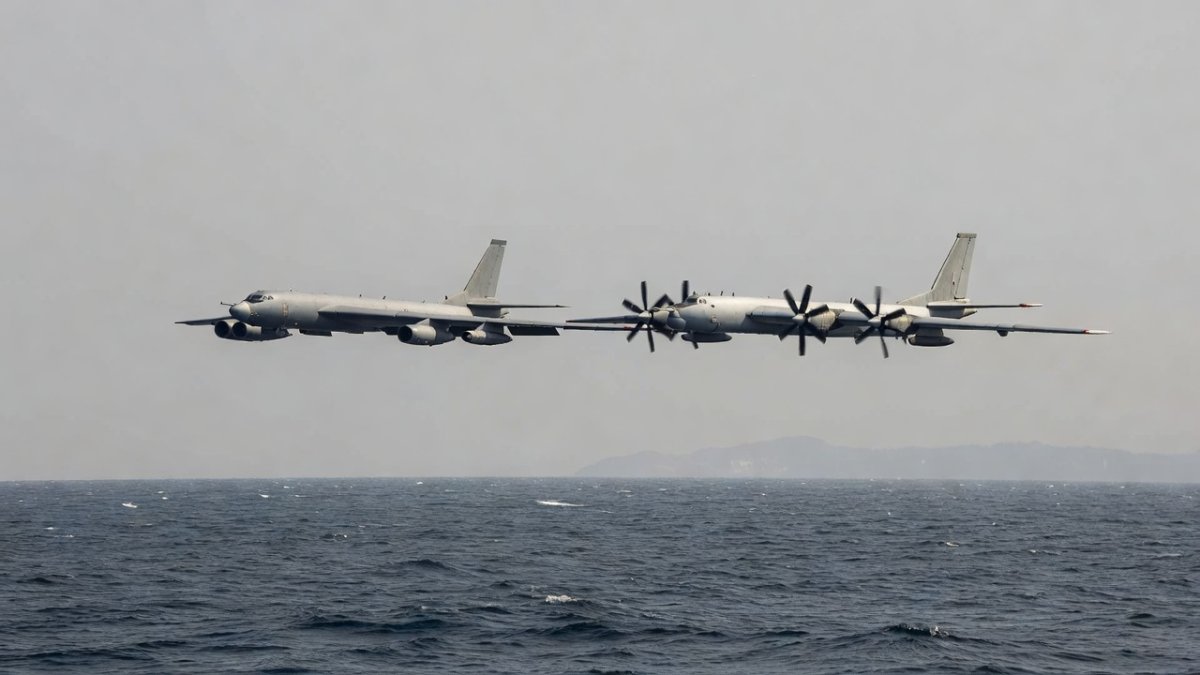
The June 29 2026 report details Chinese H-6 bombers and Su-35 fighters alongside Russian Tu-95 bombers entering the Korea Air Defense Identification Zone without advance notification to South Korean authorities. These aircraft conducted coordinated flight paths that prompted immediate detection by Republic of Korea radar systems. South Korean fighter jets were scrambled to visually identify and monitor the foreign aircraft throughout their presence in the zone. The operation followed established procedures requiring continuous tracking until the aircraft exited the designated area. Such incursions have occurred periodically yet the timing coincided with heightened diplomatic engagement between Seoul and Tokyo.
Operational responses included rapid deployment of ROK Air Force interceptors equipped with identification and communication systems. Pilots maintained safe distances while relaying real-time position data to command centers. No direct communication occurred between the foreign aircraft and South Korean forces during the monitoring phase. The Joint Chiefs of Staff later confirmed that all aircraft departed the zone after several hours of observation. This sequence underscores the routine yet resource-intensive nature of air defense vigilance in Northeast Asia.
Contextual factors include the broader pattern of joint China-Russia aerial activity observed in recent years. The specific aircraft types reflect strategic assets typically used for long-range patrol missions. South Korea's response avoided escalation while demonstrating readiness to protect its airspace identification zone. Analysts note that such events test the limits of existing notification protocols between regional powers.
KADIZ Framework and Legal Status
The Korea Air Defense Identification Zone was first established in 1951 under the authority of United Nations Command during the Korean War period. It serves as a designated area where aircraft are required to identify themselves to South Korean authorities even when operating in international airspace. The zone was expanded in 2013 to encompass additional airspace over the Ieodo submerged rock feature. This expansion aimed to address gaps in coverage following similar declarations by neighboring states. Unlike sovereign airspace, the KADIZ carries no legal enforcement power under international aviation conventions yet functions as a critical early-warning mechanism.
China maintains a separate Air Defense Identification Zone over the East China Sea that overlaps with portions of the KADIZ. Beijing has consistently disputed the legitimacy of overlapping claims and has refused to recognize South Korean procedural requirements in contested sectors. Comparisons with other ADIZ regimes such as those maintained by Japan and the United States reveal variations in notification expectations and enforcement practices. South Korea continues to operate its zone in accordance with domestic defense regulations rather than binding treaty obligations.
Legal scholars emphasize that ADIZ frameworks originated as unilateral measures during the Cold War era. They do not confer territorial rights but facilitate identification to prevent miscalculation. The 2013 expansion reflected South Korea's response to evolving regional air traffic patterns. Ongoing disputes highlight the absence of multilateral agreements governing such zones in Northeast Asia.
South Korea-Japan Strategic Alignment
Intelligence-sharing under the General Security of Military Information Agreement has provided a foundation for enhanced bilateral cooperation between Seoul and Tokyo. This mechanism allows direct exchange of data on regional military movements including aerial incursions. Recent summits have reinforced commitments to regular consultations on defense matters. Trilateral exercises involving the United States, South Korea, and Japan have incorporated scenarios focused on maritime and aerial domain awareness. These activities mark a departure from earlier periods characterized by limited military-to-military contact.
Historical context reveals that defense relations between the two countries have fluctuated due to unresolved wartime legacy issues. Nevertheless, shared concerns over North Korean missile capabilities and Chinese naval expansion have encouraged pragmatic alignment. Joint participation in multilateral forums has further normalized operational coordination. South Korean officials have publicly acknowledged the value of Japanese radar coverage in supplementing national surveillance assets.
Recent diplomatic initiatives have included high-level visits aimed at institutionalizing security dialogues. These efforts build upon existing frameworks established under previous administrations. The alignment remains sensitive to domestic political dynamics in both capitals. Continued progress depends on sustained political will and public support for cooperation.
Great-Power Signaling Through Joint Patrols
China and Russia have conducted coordinated aerial patrols since 2019 as a demonstration of strategic partnership. These missions typically involve long-range bombers and supporting fighter aircraft operating in proximity to the Korean peninsula and Japanese airspace. The June 2026 incursion fits within this established pattern of synchronized activity. Analysts interpret such operations as deliberate messaging directed at United States allies in the region. The timing aligned with visible advances in Seoul-Tokyo security ties.
Political messaging embedded in these patrols emphasizes opposition to expanded trilateral defense arrangements. Both Beijing and Moscow have issued statements criticizing increased military cooperation among Washington, Seoul, and Tokyo. The choice of aircraft types signals the availability of strategic reach and interoperability between the two air forces. Such coordination remains limited in scope yet carries symbolic weight in regional power dynamics.
Since the initiation of regular joint patrols the frequency and complexity of missions have gradually increased. South Korean defense planners monitor these developments as indicators of evolving threat environments. The patrols also serve internal purposes by showcasing military modernization achievements to domestic audiences. Regional responses have included calls for enhanced deterrence measures among United States treaty allies.
Official and Expert Responses
The Ministry of Foreign Affairs issued a statement expressing concern over the unannounced entry and reaffirming South Korea's commitment to maintaining vigilant airspace monitoring. The Joint Chiefs of Staff released operational details confirming the scramble of fighter aircraft and the safe conclusion of the monitoring mission. These statements avoided inflammatory language while underscoring the routine nature of defensive procedures. Official channels also notified alliance partners of the incident through established communication lines.
Researchers at the Asan Institute for Policy Studies and the Korea Institute for International Economic Policy provided detailed assessments of the incursion's implications. Their analyses highlighted the need for continued investment in air defense capabilities and intelligence fusion. ROK Air Force officials noted that existing fighter fleets and early-warning systems performed according to operational standards. Expert commentary emphasized the importance of maintaining open channels with both China and Russia to reduce misperception risks.
Academic assessments further examined the incident within the context of broader alliance management challenges. Think-tank reports recommended enhanced simulation exercises to prepare for potential future contingencies. Public statements from military spokespersons focused on transparency regarding response protocols. These combined reactions reflect a measured approach balancing deterrence with diplomatic engagement.
Broader Geopolitical Implications
The incursion carries potential consequences for inter-Korean relations by reinforcing perceptions of external pressure on the peninsula. North Korean observers may interpret the event as evidence of coordinated great-power activity affecting their security environment. South Korean policymakers must therefore calibrate responses to avoid unintended signaling toward Pyongyang. The episode also tests the resilience of United States alliance commitments in Northeast Asia.
Within ASEAN regional architecture the incident underscores the challenges of maintaining neutrality amid intensifying major-power competition. Southeast Asian states have historically preferred inclusive security arrangements that avoid exclusive blocs. Continued China-Russia coordination may influence ASEAN discussions on code-of-conduct negotiations in adjacent maritime domains. South Korea's alignment with Japan could affect its positioning in these multilateral forums.
The Northeast Asian security framework faces additional strain from repeated aerial activities near sensitive boundaries. Existing confidence-building measures have proven insufficient to prevent periodic incursions. Long-term stability will require renewed attention to crisis-management mechanisms among all regional actors. The United States role as security guarantor remains central to calculations in Seoul and Tokyo.
Looking Ahead
Seoul's policy options include accelerated procurement of advanced surveillance aircraft and integration of space-based monitoring assets. Defense modernization priorities emphasize interoperability with both United States and Japanese systems. Diplomatic engagement strategies may involve renewed proposals for multilateral notification protocols covering aerial activities. These measures aim to reduce the operational burden associated with repeated incursions.
Implications for 2027 regional security hinge on whether China-Russia coordination intensifies or stabilizes at current levels. South Korea will likely continue balancing deterrence enhancements with selective dialogue channels. Alliance consultations are expected to address contingency planning for more complex aerial scenarios. Sustained investment in personnel training and equipment maintenance will remain essential.
Longer-term strategies may incorporate economic and technological cooperation as complementary tools of security policy. Seoul's approach will continue to reflect domestic consensus requirements and alliance obligations. Monitoring of great-power signaling will inform adjustments in force posture and diplomatic outreach. The overall trajectory points toward incremental strengthening of trilateral coordination mechanisms.
By Prof. David Park, Staff WriterThis article was produced with AI-assisted research and editorial support. Reporting is based on sources cited in the article.
What's Your Reaction?
 Like
0
Like
0
 Dislike
0
Dislike
0
 Love
0
Love
0
 Funny
0
Funny
0
 Wow
0
Wow
0
 Sad
0
Sad
0
 Angry
0
Angry
0

East Asia/Technology Correspondent at Global1.News. Seoul-based voice covering Korean politics, technology, business, and culture. Analyzes how technology and geopolitics intersect across East Asia.















Comments (0)