
Trump Offers Role in Ukraine Settlement During Putin Call
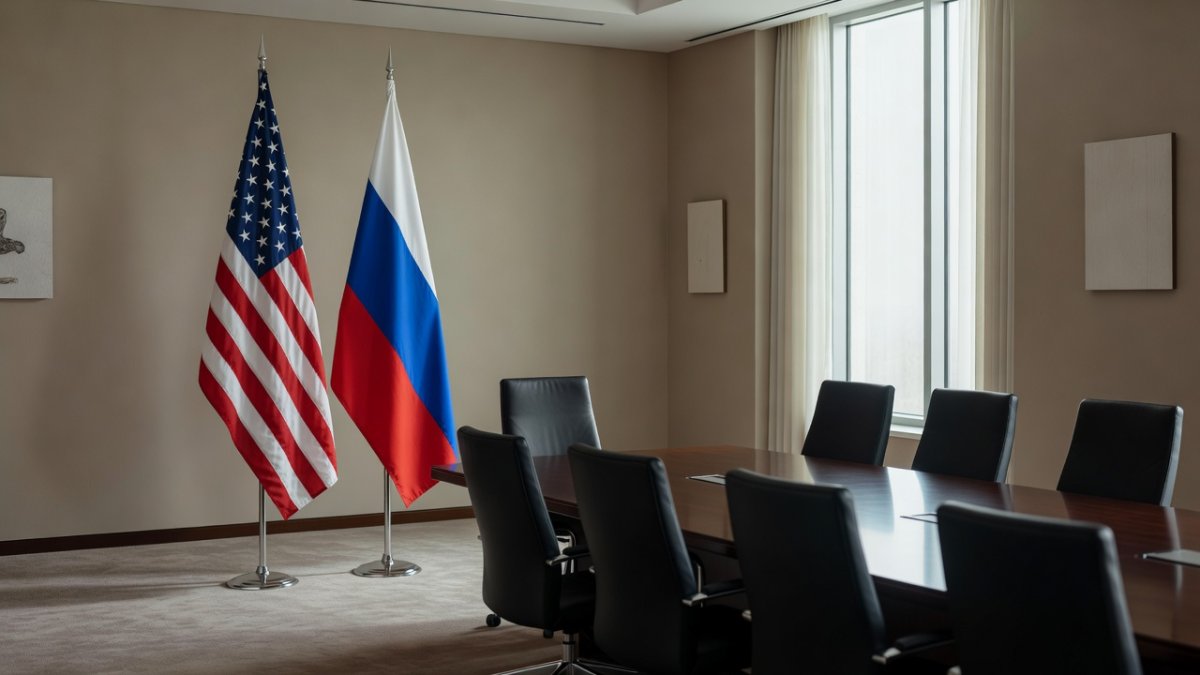
Lead U.S. President Donald Trump spoke by telephone with Russian leader Vladimir Putin for nearly 90 minutes on Saturday, offering to help find a solution to the war in Ukraine, Kremlin aide Yuri Ushakov stated in comments released early Sunday. The conversation occurred on the 250th anniversary of U.S. Independence Day and came days before Trump’s scheduled participation in th
Lead
U.S. President Donald Trump spoke by telephone with Russian leader Vladimir Putin for nearly 90 minutes on Saturday, offering to help find a solution to the war in Ukraine, Kremlin aide Yuri Ushakov stated in comments released early Sunday. The conversation occurred on the 250th anniversary of U.S. Independence Day and came days before Trump’s scheduled participation in the NATO summit in Turkey. Ukrainian President Volodymyr Zelenskiy separately confirmed he had also spoken with Trump. Ushakov described the Trump-Putin exchange as business-like and constructive, noting that Russia continues to seek a political-diplomatic resolution while insisting on its fundamental positions. Russian forces, according to statements from Moscow’s Defense Ministry, claim recent advances including the capture of Kostiantynivka in Donetsk and five additional villages in eastern Ukraine. Ukraine’s General Staff has rejected the Kostiantynivka claim. Ukrainian long-range drone strikes on Russian oil infrastructure have triggered fuel shortages across several Russian regions, prompting Moscow to begin importing gasoline from India. These developments unfold against the backdrop of stalled U.S. diplomatic efforts, as Washington directs attention toward the conflict with Iran.
The Call Itself
Kremlin aide Yuri Ushakov reported that President Trump explicitly offered assistance in resolving the Ukraine conflict during the nearly 90-minute telephone conversation with Vladimir Putin on Saturday. Ushakov stated that Trump made the offer in the context of his upcoming attendance at the NATO summit in Turkey. The Russian side described the tone as business-like and quite constructive. Ushakov quoted Trump as confirming Washington’s readiness to work toward a rapid end to the fighting and to identify solutions to overcome the crisis. Putin, according to Ushakov, outlined the battlefield situation in which Russian armed forces are advancing and liberating localities one after another. The Russian leader also expressed hope that U.S. diplomatic efforts regarding Iran would produce mutually acceptable long-term solutions on key settlement issues. Ushakov noted that Putin reminded Trump of an open invitation to visit Moscow. Washington’s envoys Steve Witkoff and Jared Kushner were mentioned as continuing efforts to broker a settlement and prepared to make another visit to the Russian capital.
Battlefield Reality
Russian commanders informed President Putin on Friday that Moscow’s troops had captured Kostiantynivka in Donetsk region, according to statements from the Russian Defense Ministry. The ministry separately announced on Saturday that five additional villages in eastern Ukraine had been taken. Ushakov conveyed Putin’s account of Russian forces confidently advancing across the front. Ukraine’s General Staff and President Zelenskiy have dismissed the Kostiantynivka claim as unfounded. Russia maintains that any political solution must include Moscow assuming full control over Ukraine’s Donbas region, a condition Ukraine continues to reject. Zelenskiy last month urged Putin to hold a one-on-one meeting, an invitation the Kremlin leader declined. These conflicting territorial assertions occur along the 1,200-kilometer front line that Zelenskiy discussed in his own conversation with Trump. NATO and EU officials have repeatedly stated that Ukrainian territorial integrity remains a core principle in any negotiated outcome.
Zelensky's Call With Trump
President Zelenskiy described his conversation with President Trump as very good and said the two leaders discussed the full length of the 1,200-kilometer front line. Zelenskiy stated there is a real prospect to end the war and that American resolve will have crucial meaning. He and Trump agreed to continue their discussions at the NATO summit scheduled in Turkey for the coming week. Ukrainian officials have emphasized that any settlement must respect Ukraine’s sovereignty and territorial integrity, positions supported by statements from EU and NATO capitals. Zelenskiy has consistently rejected Russian demands for control over the Donbas. The Ukrainian president’s account aligns with earlier Ukrainian positions that direct talks between Kyiv and Moscow require clear preconditions, including the withdrawal of Russian forces from occupied areas.
Energy War Context
Ushakov accused Kyiv and its European allies of counting on extending and escalating the conflict through terrorism against civilians, specifically referencing Ukraine’s long-range strikes on Russian oil infrastructure. These strikes have caused fuel shortages in several Russian regions. In response, Russia has begun importing gasoline from India to alleviate domestic supply pressures. Ukrainian drone operations targeting energy facilities represent a sustained campaign that has disrupted refining capacity inside Russia. EU member states have provided various forms of support to Ukraine’s defense capabilities, including systems that enable longer-range strikes. Russian officials have framed these attacks as escalatory acts that undermine prospects for negotiations.
Iran Distraction
Ushakov noted that U.S. diplomatic efforts on Ukraine have virtually stalled because Washington is focused on the war with Iran. Trump’s envoys Witkoff and Kushner remain tasked with Ukraine-related contacts, yet the shift in American priorities has limited momentum. Putin expressed hope that progress on Iran would eventually allow renewed attention to Ukraine settlement issues. European diplomats have observed that sustained U.S. engagement remains essential for any breakthrough, while NATO members continue to coordinate military assistance to Ukraine independently of Washington’s Iran focus. The timing of the Trump-Putin call on U.S. Independence Day underscores the contrast between American domestic commemorations and the competing foreign-policy demands.
Kremlin Decision-Making
Within Russian power structures, President Putin retains final authority on major decisions regarding the Ukraine conflict, with input from the Defense Ministry and senior aides such as Yuri Ushakov. Ushakov’s public comments reflect the Kremlin’s consistent line that any resolution must account for Russia’s fundamental approaches, including security guarantees and territorial claims in the Donbas. The refusal to accept Zelenskiy’s proposed one-on-one meeting illustrates the centralized nature of Russian diplomacy. Energy policy responses, including gasoline imports from India, are coordinated through government channels to mitigate the effects of Ukrainian strikes on domestic fuel supplies. NATO and EU assessments have long noted that Russian negotiating positions are formulated at the highest levels of the Kremlin hierarchy.
NATO Summit and What Comes Next
The NATO summit in Turkey next week provides the next scheduled opportunity for direct discussions between Trump and Zelenskiy on the war. Both leaders have indicated they will continue their dialogue at the gathering. EU and NATO members are expected to reaffirm support for Ukraine while monitoring any signals from the Trump-Putin channel. Russian officials have stated they seek a political-diplomatic resolution, yet they continue to link progress to acceptance of Moscow’s core demands. Ukrainian representatives will press for sustained Western military aid and clear security guarantees. The presence of multiple heads of state in Turkey offers a venue for parallel bilateral meetings that could shape the immediate diplomatic trajectory.
Analysis
The sequence of calls and battlefield claims illustrates the gap between Russian assertions of steady advances and Ukrainian insistence on rejecting territorial concessions. The involvement of Witkoff and Kushner signals an attempt to maintain a U.S. mediation track even as attention shifts toward Iran. Fuel shortages inside Russia resulting from Ukrainian strikes add economic pressure that Moscow attributes to Western-backed escalation. European and NATO perspectives emphasize that any viable settlement must preserve Ukraine’s sovereignty, a position that directly conflicts with Russian requirements for Donbas control. The open invitation for Trump to visit Moscow remains on the table but has not produced concrete follow-up steps. These elements together suggest that diplomatic movement will depend on whether Washington can balance its Iran priorities with renewed Ukraine engagement at the Turkey summit.
Conclusion
The telephone exchanges between Trump and both Putin and Zelenskiy, combined with ongoing battlefield developments and energy disruptions, set the immediate context for the NATO summit in Turkey. Russian officials continue to present advances and conditions for talks, while Ukrainian leaders stress the necessity of American resolve and respect for territorial integrity. European and NATO partners maintain coordinated support for Kyiv. The coming week will reveal whether these parallel channels produce any narrowing of positions or simply restate existing differences. By Irina Volkov, Staff Writer
This article was produced with AI-assisted research and editorial support. Reporting is based on sources cited in the article.
What's Your Reaction?
 Like
0
Like
0
 Dislike
0
Dislike
0
 Love
0
Love
0
 Funny
0
Funny
0
 Wow
0
Wow
0
 Sad
0
Sad
0
 Angry
0
Angry
0
Russia/Eastern Europe Correspondent at Global1.News. Covering Russian politics, energy, security, and the shifting dynamics of the post-Soviet space. Provides clear-eyed analysis on one of the world's most opaque regions.










Comments (0)