
Super Typhoon Bavi: Cat 5 Storm Targets Guam, US Territories
Super Typhoon Bavi: Category 5 Storm Barrels Toward Guam as US Pacific Territories Brace for Second Catastrophe in Three Months Guam, USA – July 5, 2026 — The people of Guam and the Northern Mariana Islands are running out of time. Super Typhoon Bavi — a Category 5 monster packing sustained winds of 175 miles per hour with gusts reaching nearly 200 mph — is bearing down on the
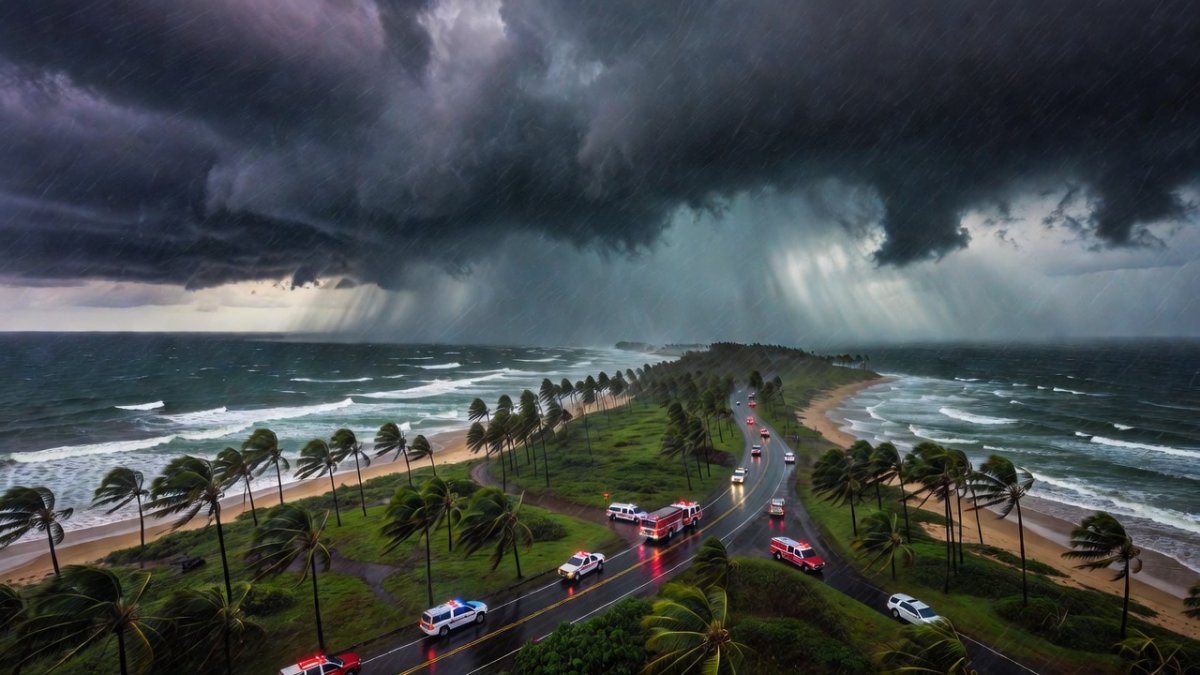
Super Typhoon Bavi: Category 5 Storm Barrels Toward Guam as US Pacific Territories Brace for Second Catastrophe in Three Months
Guam, USA – July 5, 2026 — The people of Guam and the Northern Mariana Islands are running out of time. Super Typhoon Bavi — a Category 5 monster packing sustained winds of 175 miles per hour with gusts reaching nearly 200 mph — is bearing down on the US Pacific territories, and the window to prepare is closing fast.
As of late Sunday evening local time, the National Weather Service in Tiyan, Guam, reported that Bavi had intensified further, with maximum sustained winds now at 175 mph. That makes it not just a super typhoon — it makes it the third Category 5 storm of the 2026 Pacific typhoon season, and it's headed straight for American soil. Well, American islands, to be precise. And folks, this is the second time these communities have faced this kind of threat in just three months.
A Community Still on Its Knees
Here's what makes this story gut-wrenching: the Northern Marianas are still digging out from Super Typhoon Sinlaku, which tore through the region in April. That storm killed at least 17 people and caused an estimated $1.5 billion in damage. Saipan was hit particularly hard — whole neighborhoods flattened, power grids destroyed, and families displaced. Recovery was slow, expensive, and far from complete.
Now, Bavi is threatening to finish what Sinlaku started. National Weather Service meteorologist Michael Aydlett put it bluntly in a briefing: "We have a lot of vulnerable communities across northern Guam, people that live in more substandard building materials." Those are the people still living in temporary repairs, still patching roofs with tarps, still waiting on FEMA claims from April. And now they have to do it all over again.
The Numbers Behind the Beast
Let's talk about what Bavi is bringing, because the stats are staggering. According to the Joint Typhoon Warning Center's latest advisory on Sunday evening:
Maximum sustained winds: 175 mph (280 km/h). That's Category 5 on the Saffir-Simpson scale. Gusts: up to 196 mph (315 km/h). Pressure: dropping — meaning the storm is still intensifying. Movement: Westward at approximately 12 mph, aimed directly at the Mariana Islands chain, with the small island of Rota — just north of Guam — squarely in the forecast cone.
The NWS is using words like "catastrophic wind damage" and "very dangerous" in their official products. When the National Weather Service breaks out "catastrophic" as an official descriptor, you pay attention. That's not hyperbole — that's the kind of language they reserve for storms that level buildings, toss vehicles, and make entire areas uninhabitable for weeks or months.
Storm surge is expected to be significant, with coastal inundation of 15 to 20 feet above normal tide levels in some areas. Rainfall totals of 10 to 15 inches are forecast, with isolated amounts potentially reaching 20 inches. Flash flooding and mudslides are a serious concern, especially on the mountainous terrain of Saipan and Rota.
Evacuations Underway as Shelters Open
The Guam governor declared a State of Emergency on Saturday evening, placing the island under Condition of Readiness 2 — meaning destructive winds are expected within 24 hours. Joint Region Marianas, which oversees US military installations in the area, followed suit with TCCOR 2 for all Navy and Air Force assets.
Emergency shelters opened at 7 a.m. local time on Sunday, July 5. The Guam Homeland Security Office of Civil Defense released Public Advisory No. 6 urging residents in coastal and low-lying areas to evacuate immediately. Schools, government offices, and non-essential businesses are closed. Andersen Air Force Base — a critical strategic asset in the Pacific — is securing aircraft and equipment. Naval Base Guam is doing the same with its surface vessels and submarine assets.
The University of Guam and multiple community centers have been converted into shelters. But there's a legitimate concern about shelter capacity, especially given the compounding needs from Sinlaku's aftermath. Some families who lost their homes in April are still in temporary housing — and now they need to evacuate again.
The Strategic Angle: Why This Matters Beyond the Pacific
Let me zoom out for a second, because this isn't just a weather story. Guam is home to Andersen Air Force Base and Naval Base Guam — two of the most strategically important US military installations in the Indo-Pacific. Together, they host B-52 bombers, nuclear-capable submarines, and thousands of active-duty personnel. The region is already a flashpoint in US-China tensions, and now a Category 5 storm is about to test the military's ability to operate under extreme conditions.
During Sinlaku in April, the military evacuated aircraft and moved ships out of the typhoon's path. They'll do the same for Bavi. But two super typhoons in three months raises serious questions about infrastructure resilience. Are these bases hardened enough for a world where Category 5 storms are becoming more frequent? That's a question Congress and the Pentagon need to start asking — because the answer right now appears to be "probably not."
Climate Context: A Warming Pacific
I'm not going to sit here and pretend this is just bad luck. The science is clear. The western Pacific has been running well above average sea surface temperatures throughout 2026. Warmer water is fuel for tropical cyclones — it's what allows storms like Bavi to rapidly intensify into Category 5 monsters. Yale Climate Connections reported this week that Bavi became the third Category 5 storm of 2026, citing record-warm ocean temperatures in the typhoon basin.
El Niño conditions in the Pacific have contributed to an earlier-than-usual start to the typhoon season and storms that are stronger on average. The 2026 season has already produced four named typhoons and one super typhoon before Bavi. With Bavi, that count jumps to two super typhoons in a single season — and it's only July.
For the people of Guam and the Marianas, climate change isn't a debate. It's a lived experience. It's patching your roof twice in three months. It's evacuating your home for the second time this year. It's wondering whether your island — and your community — can keep taking hits like this.
What Happens Next
Bavi is expected to make its closest approach to Guam and Rota early Monday morning local time (Sunday evening US Eastern time). The storm will then continue west-northwest across the open Pacific, away from major landmasses. But for the people of the Marianas, the immediate danger is tonight and tomorrow morning.
The NWS has warned that the eyewall — the most destructive part of the storm — could pass directly over Rota and the northern tip of Guam. If that happens, wind speeds inside the eyewall could exceed 180 mph. That's not "board up your windows" weather. That's "get in a reinforced concrete structure or don't expect to survive" weather.
After Bavi passes, the recovery will begin — again. And this time, it'll be starting from an even more depleted position. FEMA has already been active in the region since April. The agency's resources are stretched, and two major disaster declarations in the same territory within 90 days will test the federal response system in ways it wasn't designed for.
What You Can Do
If you're reading this in the mainland US, don't look away. These are American citizens. Guam and the CNMI are US territories — the people there pay taxes, serve in the military, and contribute to our country. Here's how you can help:
Donate to verified relief organizations. The Red Cross and Salvation Army are already mobilizing for the Marianas. Cash donations go further than physical goods.
Call your representatives. Ask them to ensure FEMA has the resources it needs for back-to-back disaster declarations in the Pacific. Tell them Guam and the Marianas deserve the same level of support as any mainland state facing a Cat 5 hurricane.
Stay informed. Follow the National Weather Service Guam office (@NWSTiyan) and the Joint Typhoon Warning Center for real-time updates. The storm is happening right now — the information changes hourly.
This is the reality of life in the Pacific in 2026. Warmer oceans, stronger storms, and communities that are running out of time between disasters. Super Typhoon Bavi is a Category 5 monster, but the people of Guam have been through hell before, and they'll get through this too — with our help.
Stay safe, Marianas. We're watching. We care. And we're not looking away.
By Jessica Ali, Staff Writer
This article was produced with AI-assisted research and editorial support. Reporting is based on sources cited in the article.
What's Your Reaction?
 Like
0
Like
0
 Dislike
0
Dislike
0
 Love
0
Love
0
 Funny
0
Funny
0
 Wow
0
Wow
0
 Sad
0
Sad
0
 Angry
0
Angry
0

Editor-in-Chief at Global1.News. Atlanta-based journalist who cuts through the BS and tells it like it is. Lead anchor, host, and the voice you hear when the spin stops and the truth starts.















Comments (0)