
Squabble Deepens Between People Power Party's Current and Former Leaders
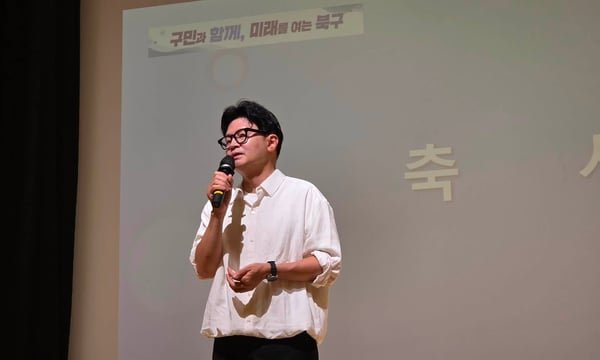
A Conservative Party at War With Itself South Korea's main opposition party is once again consumed by an internal struggle that reveals deeper structural weaknesses in the country's conservative movement. The People Power Party (PPP), now the principal opposition force under President Lee Jae-myung of the Democratic Party, finds itself locked in a deepening feud between its current leader, Jang Dong-hyuk, and its former leader, Han Dong-hoon.
A Conservative Party at War With Itself
South Korea's main opposition party is once again consumed by an internal struggle that reveals deeper structural weaknesses in the country's conservative movement. The People Power Party (PPP), now the principal opposition force under President Lee Jae-myung of the Democratic Party, finds itself locked in a deepening feud between its current leader, Jang Dong-hyuk, and its former leader, Han Dong-hoon. What began as a contest over party direction after the traumatic collapse of the Yoon Suk Yeol presidency has hardened into a personal and factional confrontation with direct consequences for opposition effectiveness. The dispute is not merely a matter of personalities. It reflects long-standing patterns of factionalism within Korean conservatism, the unresolved legacy of the martial law crisis of December 2024, and the strategic dilemma facing any opposition that must rebuild while a progressive administration consolidates power for a full five-year term lasting until approximately 2029 or 2030.
The immediate trigger is straightforward. On January 29, 2026, the PPP Supreme Council, under Jang Dong-hyuk's leadership, voted to expel Han Dong-hoon from the party. According to party sources familiar with the proceedings, the expulsion was executed through formal Supreme Council mechanisms rather than a broader national committee vote, a procedural choice that intensified accusations of factional capture. Han, a former prosecutor born in 1973 who had risen rapidly to the party leadership, subsequently won a by-election in Busan Buk-gap as an independent in early 2026, demonstrating residual electoral appeal. By late June 2026 he had joined a PPP-linked research forum led by Yun Jae-ok, a move widely interpreted as a preparatory step toward eventual readmission. In July 2026 the feud has sharpened further, with Jang's allies reportedly maneuvering to secure him a second term as chairman precisely in order to block Han's return.
From Martial Law to Snap Election: The Political Context
Any analysis of the current PPP crisis must begin with the extraordinary sequence of events that brought Lee Jae-myung to the presidency. On December 3, 2024, then-President Yoon Suk Yeol declared martial law in a late-night address that stunned the nation and triggered immediate parliamentary resistance. The Constitutional Court removed Yoon from office on April 4, 2025. A snap presidential election followed on June 3, 2025, which Lee Jae-myung of the Democratic Party won, inaugurating a new progressive administration. Lee is the current president and, under the single five-year term stipulated by the Constitution, will remain in office until the next presidential election scheduled for approximately 2029–2030. There is no presidential contest in 2027; that date belongs to an earlier and incorrect timeline that has no basis in the post-impeachment calendar.
The PPP, which had been the ruling party under Yoon, was thrust into opposition overnight. Its subsequent identity crisis has been severe. In March 2026 the party formally cut ties with Yoon through a resolution opposing any political comeback by the former president, an attempt to quarantine the martial-law stigma. Yet the quarantine itself became a new source of division. Hardline conservatives who still viewed Yoon's downfall as an injustice clashed with moderates who regarded distance from Yoon as an electoral necessity. Jang Dong-hyuk emerged as party leader precisely in this environment: he assumed the chairmanship after Han Dong-hoon's resignation and subsequent expulsion in the wake of Yoon's impeachment and removal. That succession is central to understanding the present antagonism. Jang's leadership was born of crisis management and factional realignment rather than a broad consensual mandate.
Historical Factionalism in Korean Conservatism
South Korea's conservative movement has rarely enjoyed prolonged internal peace. From the Democratic Republican Party of the Park Chung-hee era through the Democratic Justice Party, the Grand National Party, the Saenuri Party, the Liberty Korea Party, and finally the People Power Party, organizational continuity has been repeatedly interrupted by purges, renamings, and leadership coups. Factional lines have typically formed around regional bases (especially the Yeongnam strongholds), generational cohorts, and proximity to sitting or former presidents. The pattern is familiar: a leader rises, consolidates patronage networks, alienates rivals, and eventually faces a counter-mobilization that either topples him or splits the party.
Han Dong-hoon represented an attempt to modernize this tradition. As a prosecutor with a reputation for investigating powerful figures, he projected an image of legalistic integrity and generational change. His brief tenure as party leader was marked by efforts to broaden the PPP's appeal beyond its core older, conservative base. Jang Dong-hyuk's ascent, by contrast, has been characterized by a return to harder-edged conservative messaging. According to reporting by Aju Press on July 9, 2026, Jang has been turning increasingly to hardline conservative constituencies in an effort to stabilize his support within the party's right wing. This strategic choice has alienated moderates and younger lawmakers who fear permanent minority status in the metropolitan areas that now decide national elections.
The Mechanics of Expulsion and the Struggle Over Readmission
The January 29, 2026 expulsion of Han remains the pivotal institutional event. Party sources indicate that the Supreme Council vote was tightly managed by Jang's allies and left little room for extended floor debate. Critics within the party argued that the procedure prioritized speed over legitimacy and set a precedent for using disciplinary instruments against internal rivals. Han's subsequent victory as an independent in the Busan Buk-gap by-election underscored the limits of formal expulsion: voters in a conservative stronghold were prepared to separate the man from the party label. His later decision to join the research forum led by Yun Jae-ok in late June 2026 kept him inside the broader conservative ecosystem while remaining technically outside the party's formal hierarchy.
In response, Jang's camp has moved to consolidate control. A push is underway within PPP leadership circles for Jang to serve a second term as chairman. According to party sources, one explicit objective of this effort is to maintain the procedural barriers that would complicate or delay Han's readmission. The logic is straightforward: as long as Jang controls the party apparatus, the terms of any potential reconciliation can be dictated by the incumbent leadership. This calculation, however, carries risks. Prolonged exclusion of a figure with demonstrated by-election strength may simply drive further fragmentation or encourage the formation of a rival conservative vehicle ahead of the next national contests.
Local Election Defeat and the Eruption of Dissent
The nationwide local elections of June 3, 2026 delivered a severe midterm verdict on the PPP's post-Yoon trajectory. The party lost heavily in metropolitan areas, precisely the regions where demographic change and younger voters have eroded traditional conservative advantages. In the aftermath, pro-Han lawmakers became more vocal. Ahn Sang-hoon publicly called for Jang to "consider his position," language that in Korean political idiom constitutes a demand for resignation. Yoo Eui-dong, who won in Gyeonggi Pyeongtaek-B under the PPP banner, raised parallel concerns about the party's overall direction. These interventions signaled that dissatisfaction was no longer confined to Han's personal circle but had spread to elected officials who faced voters directly.
The local election results matter because they function as a leading indicator for the National Assembly elections and, ultimately, the presidential contest of 2029–2030. An opposition party that cannot compete in Seoul, Incheon, and the Gyeonggi basin condemns itself to structural disadvantage. Jang's critics argue that his reliance on hardline conservatives, while useful for internal votes, is electorally self-limiting. His defenders counter that ideological clarity is a prerequisite for rebuilding a coherent base after the trauma of impeachment and that premature moderation would simply blur the distinction with the ruling Democratic Party.
Oh Se-hoon and the Search for an Alternative Center
Into this vacuum has stepped Seoul Mayor Oh Se-hoon, now in his fifth term and one of the few conservative politicians with a proven record of winning in the capital. Oh has carefully avoided direct entanglement in the Jang–Han feud, yet his name circulates with increasing frequency as a potential alternative leader capable of transcending the current binary. His appeal rests on administrative competence and relative distance from the Yoon-era controversies. For party pragmatists, Oh represents a possible third path: neither the prosecutorial reformism associated with Han nor the hardline consolidation associated with Jang.
Whether Oh would accept a party leadership role remains uncertain. Mayoral success does not automatically translate into national party management, and Oh has historically preferred executive office to the factional trench warfare of party headquarters. Nevertheless, the mere existence of a credible alternative alters the bargaining dynamics. Both Jang and Han must now calculate that prolonged stalemate could open space for a candidate who owes neither of them loyalty. In the history of Korean conservative politics, such dark-horse figures have occasionally broken deadlocks—though more often they have simply added another layer to the existing factional map.
Opposition Capacity Under the Lee Jae-myung Presidency
The strategic context is unforgiving. President Lee Jae-myung and the Democratic Party control the executive branch and enjoy the legitimacy of a clear snap-election mandate. The PPP is the main opposition party, yet its capacity to perform the classic opposition functions—scrutiny, agenda-setting, and preparation for government—is severely degraded by internal warfare. Effective opposition requires coherent messaging, disciplined floor tactics, and the ability to present voters with a plausible alternative government. None of these is possible while the party's current and former leaders are engaged in mutual attrition.
Moreover, the next presidential election lies roughly three to four years away. That horizon is long enough for the ruling party to implement substantial portions of its program and short enough that the opposition cannot afford a multi-year reconstruction delay. If the PPP remains trapped in a cycle of expulsion, readmission battles, and leadership referendums, it risks arriving at the 2029–2030 contest with a depleted bench, an unclear platform, and a reputation for serial disunity. Historical precedent is cautionary: Korean opposition parties that squander midterms on internal purges have rarely recovered in time for the subsequent presidential race.
Implications for Democratic Governance
Beyond partisan fortunes, the PPP's dysfunction carries systemic implications. Healthy democratic governance depends on the presence of a credible opposition capable of constraining executive power and offering voters a genuine choice. When the principal opposition party is preoccupied with its own succession struggles, parliamentary oversight weakens, public debate narrows, and the ruling party faces fewer incentives to moderate. The martial-law crisis of 2024–2025 already tested institutional resilience; a prolonged opposition vacuum would test it again from a different direction.
Factionalism is not unique to the Korean right, nor is it inherently fatal. What distinguishes destructive factionalism is the substitution of loyalty tests for policy competition and the use of disciplinary machinery to settle personal scores. The reported mechanics of Han's expulsion, the subsequent blocking maneuvers against his readmission, and the turn toward hardline constituencies all suggest that the PPP has not yet escaped this trap. Until it does, the party will struggle to perform its constitutional role, and Korean democracy will operate with one of its two major pillars partially disabled.
Outlook: Reconciliation, Split, or Slow Decline
Three broad trajectories remain possible. The first is managed reconciliation: Jang secures a second term but under pressure agrees to a phased readmission of Han and a broader leadership coalition that includes figures such as Oh Se-hoon. The second is formal or de facto split, with Han's supporters eventually gravitating toward a new conservative formation or an independent parliamentary group. The third is prolonged attrition, in which neither side prevails decisively and the party simply loses relevance through successive electoral disappointments. As of July 2026, the third path appears the most probable default, precisely because it requires the least immediate courage from the principal actors.
The deeper question is whether South Korea's conservative movement can finally institutionalize leadership selection and conflict resolution in ways that outlast individual ambitions. Decades of personalization have left the PPP without robust norms for succession or dissent. The Jang–Han conflict is therefore both a symptom and a test. How it is resolved—or not resolved—will shape not only the opposition's fortunes under President Lee Jae-myung but the quality of democratic competition for the remainder of the decade.
By Prof. David Park, Staff WriterThis article was produced with AI-assisted research and editorial support. Reporting is based on sources cited in the article.
What's Your Reaction?
 Like
0
Like
0
 Dislike
0
Dislike
0
 Love
0
Love
0
 Funny
0
Funny
0
 Wow
0
Wow
0
 Sad
0
Sad
0
 Angry
0
Angry
0

East Asia/Technology Correspondent at Global1.News. Seoul-based voice covering Korean politics, technology, business, and culture. Analyzes how technology and geopolitics intersect across East Asia.










Comments (0)