
The People Power Party's Leadership Crisis: Han Dong-hoon, Jang Dong-hyuk, and the Struggle for Conservative Survival
The People Power Party (PPP), South Korea's principal conservative political force, is confronting an internal rupture whose consequences extend well beyond ordinary factional jockeying. The deepening conflict between current party Chairman Jang Dong-hyuk and former leader Han Dong-hoon has acquired structural significance following the party's heavy defeat in the June 3, 2026 nationwide local elections.
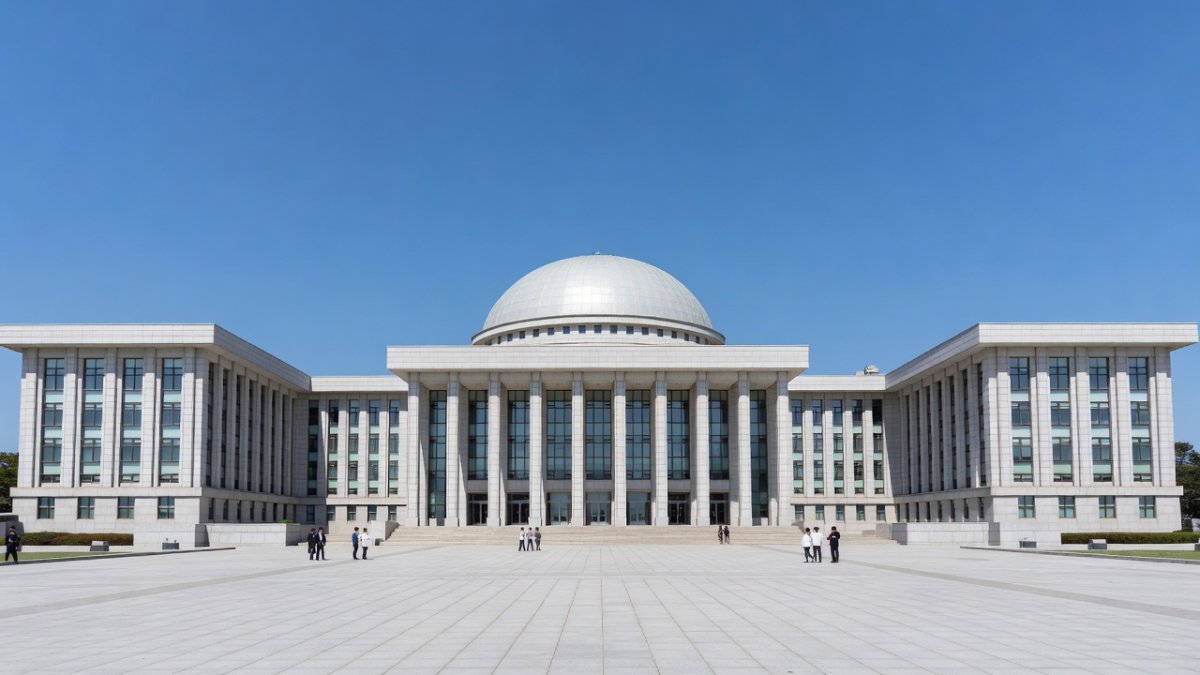
The People Power Party (PPP), South Korea's principal conservative political force, is confronting an internal rupture whose consequences extend well beyond ordinary factional jockeying. The deepening conflict between current party Chairman Jang Dong-hyuk and former leader Han Dong-hoon has acquired structural significance following the party's heavy defeat in the June 3, 2026 nationwide local elections. Whether the two men can repair their relationship—or whether one will decisively eclipse the other—will shape not only the PPP's organizational coherence but also the broader architecture of conservative politics in the Republic of Korea. For a party that has historically drawn strength from disciplined hierarchy and regional loyalty, the present disorder represents a genuine strategic vulnerability.
The June 3 local elections delivered a verdict that party elites could not easily dismiss. The PPP lost ground across much of the country, including in areas long regarded as relatively favorable terrain, and retained clear victories principally in Daegu and North Gyeongsang Province—the traditional conservative heartland of Yeongnam. Losses and weakened performances in and around Seoul underscored a failure to consolidate urban and swing voters. In the aftermath, accountability demands directed at Chairman Jang Dong-hyuk spread among lawmakers, while Han Dong-hoon's political return through a by-election victory in Busan Buk-A supplied a rival center of gravity inside the National Assembly. The result is a dual-leadership problem in all but name: a sitting chairman weakened by electoral repudiation, and a former leader re-empowered by a personal mandate.
Electoral Defeat and the Collapse of Central Authority
Local elections in South Korea function as more than administrative contests. They serve as mid-cycle referenda on national parties, tests of organizational penetration into provinces and metropolitan governments, and barometers of nomination discipline. The June 3, 2026 results exposed multiple layers of PPP weakness simultaneously. The concentration of relatively secure wins in Daegu and North Gyeongsang, while symbolically important, also highlighted the party's narrowed geographic base. When a conservative party struggles outside Yeongnam and falters in the capital region, it signals difficulty in assembling the cross-regional coalition required for national majorities.
Equally revealing were reports of friction between the central party and local organizations during the nomination and campaign phases. In some regions, candidates rejected central party support and established independent election committees. Such behavior is not merely logistical inconvenience; it indicates that local elites calculated that association with the central leadership brand carried electoral costs. When provincial and municipal actors distance themselves from party headquarters, the formal hierarchy of a catch-all party begins to hollow out. The PPP's post-election internal report on the results was publicly criticized by floor leader Jeong Jeom-sik as insufficient—an unusual rebuke that suggested even senior parliamentary managers found the leadership's accounting inadequate to the scale of the defeat.
From a comparative party-politics perspective, heavy subnational losses often trigger leadership challenges when three conditions coincide: a clearly identifiable leader who can be held responsible, an alternative elite with independent visibility, and a legislative caucus anxious about the next general election cycle. All three conditions are present. Jang Dong-hyuk, as chairman during the campaign, occupies the accountability seat. Han Dong-hoon, restored to the National Assembly, offers an alternative pole. And PPP lawmakers facing future contests have begun to articulate public demands for reflection on public sentiment, including figures such as Ahn Sang-hoon, associated with the pro-Han current, and Yoo Eui-dong, elected in Gyeonggi Pyeongtaek-B.
Han Dong-hoon's Return and the Reconstruction of a Rival Network
Han Dong-hoon's path back to relevance is central to the present crisis. Having been expelled from the PPP under Jang Dong-hyuk's leadership, Han might have been expected to remain a peripheral critic. Instead, he won a dramatic by-election for the Busan Buk-A National Assembly seat, converting personal notoriety and residual conservative support in a major southeastern city into institutional power. A National Assembly seat supplies staff, agenda-setting opportunities, media access, and—crucially—the ability to legislate and to convene colleagues on neutral parliamentary ground.
Han has used that platform with evident strategic intent. On June 23, he attended a debate on the "Suffrage Damage Incident and Electoral System Reform" co-hosted by PPP lawmaker Lee Seong-gwon, signaling engagement with electoral-system controversies that resonate among conservatives dissatisfied with the June results. More telling still, senior PPP lawmakers including Kim Gi-hyeon, Yoon Sang-hyun, Yoon Jae-ok, and Yoo Ui-dong joined as co-sponsors of Han's first bill—an amendment to the Board of Audit and Inspection Act. Co-sponsorship by established names is a classic indicator of network reconstruction: it demonstrates that Han can attract colleagues who are not merely junior loyalists but figures with their own standing inside the caucus.
This pattern matters because Korean party factions often revolve less around formal membership lists than around sponsorship chains, joint appearances, and bill collaboration. By expanding points of contact with lawmakers and embedding himself in legislative work, Han is converting a personal comeback into a factional infrastructure. For Jang, the danger is obvious. A chairman who has just overseen a local-election rout cannot easily discipline a rival who is simultaneously a sitting lawmaker and a magnet for discontented seniors.
Jang Dong-hyuk's Counter-Strategy: Protest Politics and Institutional Contestation
Chairman Jang Dong-hyuk has not remained passive. His response has combined high-visibility protest with efforts to reframe the election narrative around alleged procedural irregularities. Jang undertook an eight-day hunger strike demanding a "double special prosecution" directed at the Democratic Party of Korea, and was hospitalized on June 18. Hunger strikes occupy a distinctive place in South Korean political repertoire; they are instruments of moral theater intended to seize media agendas and to portray the striker as a figure of sacrifice rather than of managerial failure. By shifting attention toward confrontation with the Democratic Party and toward prosecutorial politics, Jang has sought to redefine the post-election conversation away from internal accountability and toward external enmity.
In parallel, Jang has emphasized the ballot shortage incident that occurred in some areas during the local elections. He visited the National Election Commission and signaled the possibility of an election invalidation lawsuit. This approach attempts to convert administrative controversy into a legitimacy claim: if the electoral process can be cast as compromised, then the PPP's losses appear less as a verdict on leadership and more as a contaminated outcome requiring institutional redress. Whether such a strategy can persuade skeptical voters or restless lawmakers is uncertain. What it does reveal is Jang's preference for externalizing blame and for mobilizing conservative base energy around anti-Democratic Party themes and election-integrity narratives.
The risk for Jang is that protest and litigation cues may consolidate a core of loyalists while alienating legislators who believe the party must "embrace the center," in the language used by floor leader Jeong Jeom-sik. Jeong's increasing distance from Jang—his calls for conservative unity and his criticism of the party's election report—suggests that parliamentary management is drifting toward a unity-and-moderation frame rather than a pure confrontation frame. When a floor leader and a party chairman pull in different rhetorical directions, caucus discipline erodes.
Factional Triangulation: Pro-Han, Pro-Jang, and Residual Pro-Yoon Currents
The PPP's internal map cannot be reduced to a simple Han-versus-Jang binary. The party remains divided among pro-Han, pro-Jang, and pro-Yoon currents, the last of these reflecting lingering alignments associated with former President Yoon Suk-yeol's political family. Triangular factionalism complicates settlement. In a two-faction system, bargaining can produce a clear winner or a formal power-sharing pact. In a three-current system, the pivotal bloc can extract concessions from both sides, prolonging instability and encouraging continuous side-switching among lawmakers who calculate career advantage.
Historical precedent inside Korean conservative politics reinforces this caution. Conservative parties on the Korean right have repeatedly experienced cycles of personalization, purge, and rebranding—from the Grand National Party era through the Saenuri Party collapse and the subsequent reconstitution that eventually produced the PPP. Leadership conflicts that fuse personnel rivalry with nomination control tend to be especially destructive, because nominations determine political survival for individual legislators. The contested nomination process ahead of the 2026 local elections, and the willingness of some local candidates to reject central support, illustrate how nomination grievances feed factional identity.
For inter-Korean and foreign-policy signaling, prolonged conservative disarray carries secondary effects. Although local elections are domestically focused, foreign governments and markets read Korean party stability as a component of policy predictability—particularly on security cooperation, fiscal posture, and chaebol regulatory climate. A PPP mired in leadership conflict is less able to present a coherent opposition program or, should it return to national power, a unified governing project. Domestic observers in education, small business, and regional administration also watch these fights closely, because local-election outcomes shape provincial education offices, welfare delivery, and development budgets that structure daily life.
Institutional Stakes: Party Reform, Electoral Rules, and Public Trust
Beneath personalities lie institutional questions. Han's engagement with debates on suffrage-related controversy and electoral system reform, and Jang's focus on ballot shortages and potential invalidation litigation, place the electoral rulebook at the center of conservative discourse. South Korea's mixed electoral arrangements and the administration of balloting are perennial subjects of partisan suspicion. When a major party invests heavily in challenging the integrity or design of the system after a loss, it may mobilize supporters—but it also risks reinforcing public cynicism if claims outrun demonstrable evidence.
The Board of Audit and Inspection Act amendment co-sponsored around Han's return is likewise institutionally suggestive. The Board of Audit and Inspection is a constitutional agency charged with audit and inspection functions vis-à-vis public administration. Amendments touching its authority typically intersect with debates over executive accountability, independence, and the boundary between audit oversight and political weaponization. Without overstating the content of a single bill, the fact that Han chose this domain for his first legislative initiative, and that senior colleagues signed on, indicates an effort to occupy the terrain of clean-government and oversight politics—ground on which Korean conservatives have often sought to compete.
Party reform more broadly remains unresolved. Calls for leadership reflection, for embracing centrist voters, and for mending ties between central and local organizations all point to a recognition that the PPP's brand has narrowed. Yet reform rhetoric in Korean parties frequently stalls on the question of who controls the reform process. If Jang retains the chairmanship while Han builds a parliamentary network, reform proposals become instruments of factional advantage rather than collective renewal. If Han's camp gains the upper hand, Jang's supporters may resist as a bloc, reproducing the very fragmentation reform is supposed to cure.
Strategic Outlook: Scenarios for the Conservative Mainstay
Several scenarios now present themselves, each with distinct implications for South Korean politics. In a reconciliation scenario, Han and Jang would negotiate a visible truce—perhaps through a joint committee on election review, shared influence over future nominations, and a redistribution of party offices. Such an outcome would require both men to accept diminished maximal claims: Jang would have to admit managerial failure beyond external blame, and Han would have to forgo immediate retribution for his earlier expulsion. Reconciliation would stabilize the PPP as an opposition force and improve its capacity to contest the next national elections, but the personal trust deficit makes this path demanding.
In a prolonged dual-power scenario, neither side yields. Han continues to expand legislative sponsorship networks; Jang continues protest mobilization and institutional challenges related to the local elections; floor leader Jeong Jeom-sik and other managers attempt to hold the caucus together through appeals to unity. This equilibrium is fragile. It tends to produce mixed messaging, contested nominations, and donor hesitation. It also invites intervention by pro-Yoon actors as brokers or spoilers, depending on their interests.
In a decisive replacement scenario, accountability pressure forces Jang from the chairmanship, or a party contest reorders formal leadership around Han or a compromise figure acceptable to multiple factions. Replacement can clarify authority, but if conducted as a purge it may drive losers toward passive resistance or local defection—echoing the independent election-committee phenomenon already observed. Given the PPP's reliance on Yeongnam organizational depth and on recovering support in the capital region, a replacement that further alienates either regional elites or moderate urban conservatives would be self-defeating.
Across all scenarios, the demographic and geographic arithmetic remains unforgiving. Conservatives cannot build durable national majorities on Daegu and North Gyeongsang alone. Recovery in Seoul and in parts of Gyeonggi is essential, and that recovery depends on a brand less defined by internal vengeance and more defined by governing competence, generational openness, and credible economic messaging. Chaebol relations, labor-market policy, and housing costs—perennial issues in Korean daily life—will not wait for the PPP to conclude its leadership quarrel. Nor will the Democratic Party of Korea pause its own agenda-setting while conservatives feud.
Conclusion: A Defining Test of Conservative Adaptability
The squabble between Jang Dong-hyuk and Han Dong-hoon is therefore best understood not as a transient personality clash but as a stress test of the People Power Party's adaptive capacity after a clarifying local-election defeat. Han's expulsion and subsequent Busan Buk-A victory, Jang's hunger strike and hospitalization on June 18, the co-sponsorship networks forming around Han's legislation, Jeong Jeom-sik's public criticism of the party's election report, and the geographic concentration of PPP wins in Daegu and North Gyeongsang together compose a coherent picture: a party whose central authority has been weakened, whose factions are triangulated, and whose path back to national competitiveness runs through organizational repair.
Whether Han and Jang mend ties will, as the present moment suggests, heavily influence the future of South Korea's main conservative party. Yet mending ties is a necessary rather than sufficient condition. Even a truce would leave unresolved the deeper tasks of reconnecting central and local organizations, broadening appeal beyond core strongholds, and translating oversight and electoral-reform rhetoric into publicly credible positions. Korean conservative politics has survived prior ruptures by reconstituting parties and elevating new leadership formulas. It has also, at times, failed to do so quickly enough to avoid extended periods in the wilderness. The months ahead will indicate which tradition the PPP is prepared to follow.
For observers of Korean democracy, the episode underscores a recurring institutional lesson. Personalization of party leadership can mobilize voters in the short run, but when electoral setbacks arrive, personalized structures offer few mechanisms for loyal opposition inside the party. The emergence of accountability calls from lawmakers such as Ahn Sang-hoon and Yoo Eui-dong, and the visible realignment of senior figures around legislative collaboration with Han, show that the caucus still possesses agency. How that agency is used—toward negotiated renewal or toward reciprocal destruction—will determine whether the conservative camp enters the next national contest as a disciplined alternative or as a coalition of grievances.
By Prof. David Park, Staff WriterThis article was produced with AI-assisted research and editorial support. Reporting is based on sources cited in the article.
What's Your Reaction?
 Like
0
Like
0
 Dislike
0
Dislike
0
 Love
0
Love
0
 Funny
0
Funny
0
 Wow
0
Wow
0
 Sad
0
Sad
0
 Angry
0
Angry
0

East Asia/Technology Correspondent at Global1.News. Seoul-based voice covering Korean politics, technology, business, and culture. Analyzes how technology and geopolitics intersect across East Asia.












Comments (0)