
The Day Sinjar Fell Silent: A Yazidi Doctor's Fight to Restore Dignity After Genocide
The Day Sinjar Fell Silent On 3 August 2014, Islamic State militants swept into the northern Iraqi town of Sinjar. Shireen, then 19, was at home preparing for a high school examination when armed men broke through the door and took her from her family. Within hours she was transported to Tal Afar and sold as a sex slave to an Islamic State fighter. Three months later she was so
The Day Sinjar Fell Silent
On 3 August 2014, Islamic State militants swept into the northern Iraqi town of Sinjar. Shireen, then 19, was at home preparing for a high school examination when armed men broke through the door and took her from her family. Within hours she was transported to Tal Afar and sold as a sex slave to an Islamic State fighter. Three months later she was sold again, this time to a man named Abu Omar in Mosul who already had two Iraqi wives.
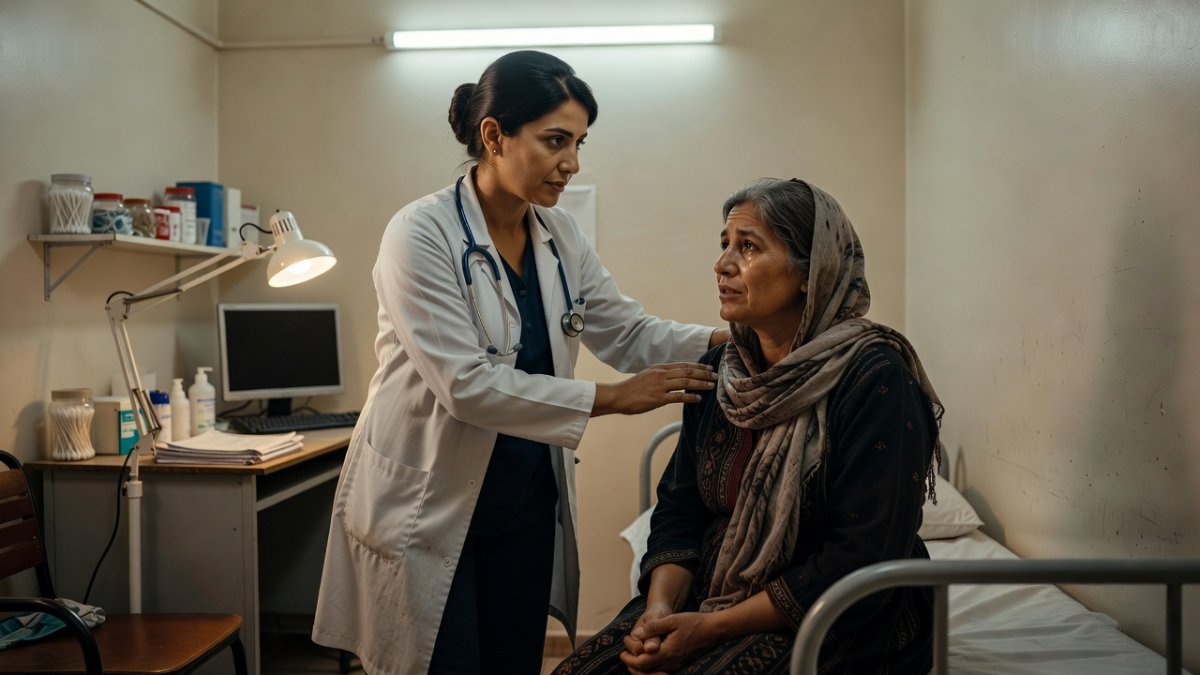
Dr Nagham Nawzat in her Duhok clinic (Global 1 News)
Shireen later told interviewers that Abu Omar claimed to love her, yet subjected her to repeated rape. The other wives beat her during family gatherings. These details form part of the documented record of systematic sexual violence carried out against Yazidi women and girls after the Islamic State assault on Sinjar.
Thousands of Similar Accounts
Shireen’s experience is one among thousands recorded by Yazidi survivors. The Islamic State attack on the Yazidi community in August 2014 has been recognised by the United Nations as genocide. Fighters targeted Yazidi villages across Sinjar, killing men and older boys while abducting women and girls for forced conversion, marriage and sexual slavery. Prices for captives reportedly ranged from several hundred to several thousand dollars.
Yazidis revere Melek Tawwus, the Peacock Angel, as the foremost of seven angels emanating from their god Yasdan. Captives were told this figure was the devil and pressured to convert to Islam. Those who refused faced further punishment. Many women were moved repeatedly between fighters, each transfer bringing new violence and uncertainty.
Dr Nagham Nawzat’s Lifelong Vow
Dr Nagham Nawzat, a Yazidi physician, was working in Sinjar when the attack began. She escaped with some relatives but lost 19 family members to the Islamic State. Since 2014 she has provided medical and psychological care to more than 1,000 women who survived captivity. In Duhok, in the Kurdistan Region of Iraq, she established a clinic dedicated to treating the physical injuries and severe psychological trauma resulting from prolonged sexual slavery, torture and forced marriage.
Despite repeated threats, including assassination attempts and gunfire directed at her, Dr Nawzat has continued her work. She has been nominated for several human rights awards, including the Nobel Peace Prize. Her determination stems from a clear commitment: she has stated she will not stop until every remaining Yazidi woman held by Islamic State is freed and receives necessary care.
Restoring Dignity After Systematic Violation
The clinic in Duhok offers both medical treatment and psychological support. Dr Nawzat emphasises that the first priority is to help survivors regain a sense of personal worth. Many women arrive suffering from severe post-traumatic stress disorder, depression and suicidal thoughts. Some have been rejected by their own families and communities because of the stigma attached to sexual violence.
Rejection compounds the original harm. Survivors who return often find themselves isolated, unable to marry within traditional expectations or to speak openly about what happened. The clinic works to counter this isolation by providing confidential spaces where women can begin to reconstruct their lives without immediate judgment.
Displacement and Daily Realities in Iraqi Kurdistan
Most survivors now live in displacement camps or rented housing around Duhok and other towns in the Kurdistan Region. Daily life involves navigating limited resources, uncertain legal status and the absence of many missing relatives. Economic pressures are acute; few families have recovered property or livelihoods lost in 2014.
Local organisations and international agencies have documented that thousands of Yazidis remain missing. The fate of many women and children taken by Islamic State fighters is still unknown. Community leaders continue to press for coordinated efforts to locate the missing and to ensure that any future returns are accompanied by adequate protection and support services.
The Broader Pattern of Impunity
Human rights documentation shows that sexual violence was used deliberately as a weapon during the Islamic State campaign against the Yazidis. Survivors’ testimonies describe organised markets where captives were bought and sold, as well as repeated transfers that prevented any stable relationships or escape opportunities. These practices fit a wider pattern of targeted destruction of the Yazidi community.
Dr Nawzat’s clinic records illustrate the long-term health consequences: chronic pain from untreated injuries, complications from forced pregnancies, and enduring mental health conditions that require sustained professional attention. Without continued funding and political will, many survivors risk being left without the care they need.
Continuing the Work of Witness and Care
Dr Nawzat has made clear that her efforts will persist as long as any Yazidi woman remains in captivity or without adequate support. Her clinic stands as one concrete response to the scale of suffering inflicted in 2014 and afterwards. Survivors who speak publicly, including Shireen, contribute to a growing record that insists these crimes be neither forgotten nor minimised.
The Yazidi community’s recovery remains incomplete. Full accountability, location of the missing, and sustained medical and social services are still required. Dr Nawzat and the women she treats continue to demonstrate that survival after genocide demands both remembrance and practical, daily commitment to healing.
By Fatima Al-Rashid, Staff WriterThis article was produced with AI-assisted research and editorial support. Reporting is based on sources cited in the article.
What's Your Reaction?
 Like
0
Like
0
 Dislike
0
Dislike
0
 Love
0
Love
0
 Funny
0
Funny
0
 Wow
0
Wow
0
 Sad
0
Sad
0
 Angry
0
Angry
0
Gulf/MENA Correspondent at Global1.News. Based in Doha, covering Gulf politics, energy markets, diplomacy, and development across the Middle East and North Africa. Tracks the economic transformation of the Gulf states.










Comments (0)