
Trilateral Manila Meeting: Seoul, Washington, Tokyo on NK
In a pivotal move for Northeast Asian stability, South Korea, the United States, and Japan held high-level talks in Manila to counter North Korea’s tightening bonds with Russia and China while advancing cooperation on nuclear energy and maritime security. The July 22 gathering on the margins of the ASEAN Regional Forum underscores Seoul’s drive to embed its defense within a resilient democratic network amid mounting regional pressures.
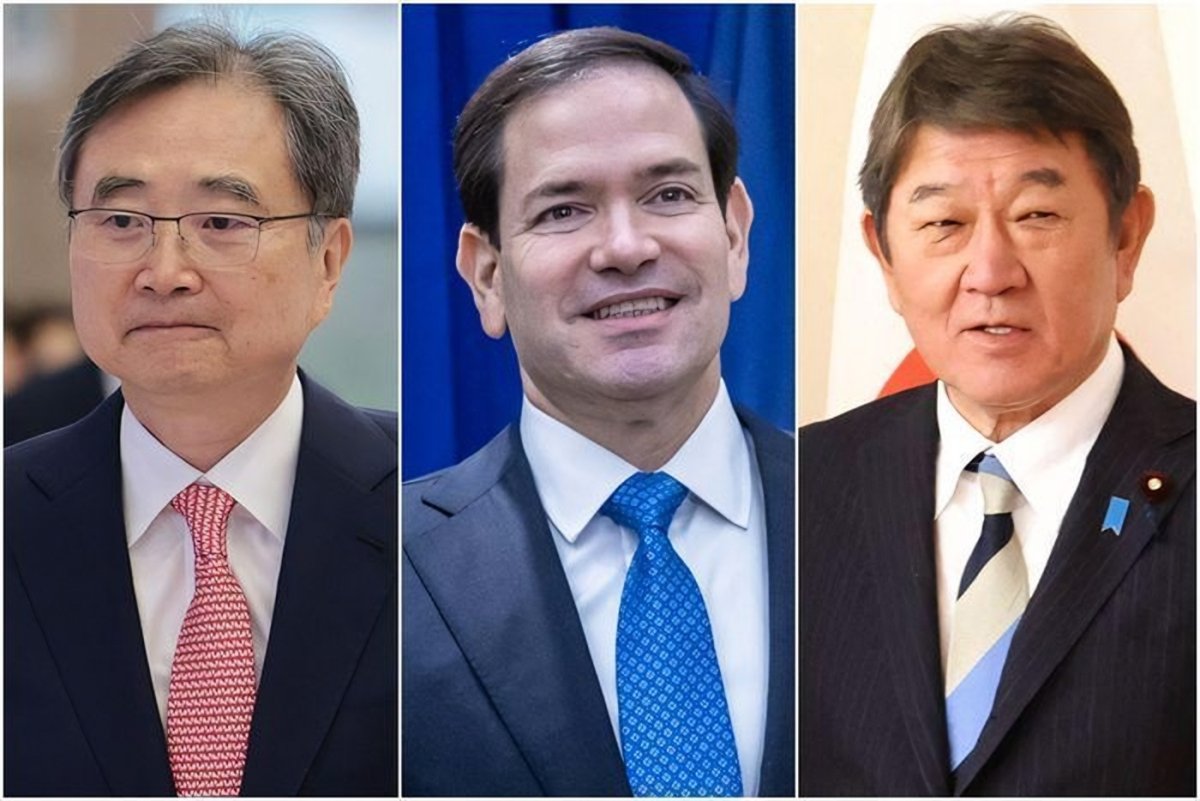
In a pivotal move for Northeast Asian stability, South Korea, the United States, and Japan held high-level talks in Manila to counter North Korea’s tightening bonds with Russia and China while advancing cooperation on nuclear energy and maritime security. The July 22 gathering on the margins of the ASEAN Regional Forum underscores Seoul’s drive to embed its defense within a resilient democratic network amid mounting regional pressures. Outcomes from this session could redefine alliance coordination and influence power balances across the Indo-Pacific for years to come.
Manila Trilateral Bolsters Korea's Northeast Asia Strategy
Manila, Philippines — July 22, 2026 — Article continues...
The Context of Trilateral Engagement in Manila
The trilateral meeting of South Korean Foreign Minister Cho Hyun, U.S. Secretary of State Marco Rubio, and Japanese Foreign Minister Toshimitsu Motegi convened on July 22, 2026, in Manila on the sidelines of the ASEAN Regional Forum and East Asia Summit foreign ministers’ meetings. This encounter built directly on the July 7 gathering held during the NATO summit, establishing a pattern of regular high-level coordination among the three capitals.
Such meetings reflect Seoul’s longstanding strategy of embedding its security within a network of democratic partnerships while navigating the persistent threat from Pyongyang. The timing, immediately following intensified North Korean outreach to Moscow and Beijing, underscores the urgency felt across Northeast Asia. Regular trilateral rhythm allows rapid information sharing and joint policy calibration on issues ranging from sanctions enforcement to technology standards.
North Korea’s Deepening Alignment with Russia and China
Ministry spokesperson Park Il stated on July 21 that the ministers would share assessments of recent developments in North Korea’s relations with Russia and China and exchange views on effective responses. North Korea appears likely to skip the ARF for the second consecutive year, signaling its continued diplomatic isolation from regional multilateral forums.
North Korea’s alignment with Russia has accelerated through concrete military cooperation, including reported shipments of artillery shells and ballistic missiles to support Moscow’s campaign in Ukraine, alongside joint training exercises that enhance Pyongyang’s conventional capabilities. Economic ties with China remain the dominant lifeline, with bilateral trade volumes exceeding $2 billion annually despite sanctions, centered on coal exports, food imports, and cross-border labor arrangements that sustain the regime’s fiscal base. These linkages directly challenge the durability of the sanctions regime established under UN Security Council resolutions since 2006, as enforcement gaps in third-country ports and financial networks erode the intended isolation.
Historical precedents illuminate this pattern. Following the 1953 Korean War armistice, Pyongyang leveraged Soviet and Chinese patronage to rebuild its military-industrial complex while rejecting southern unification overtures. During the 1990s famine diplomacy, North Korea extracted food aid and energy concessions from Beijing and Moscow by threatening nuclear escalation, a tactic that prefigures today’s calibrated provocations. The current trajectory therefore raises fundamental questions about whether renewed denuclearization talks can succeed without addressing the structural incentives that bind Pyongyang to its external patrons.
Middle East Tensions and the Strait of Hormuz Challenge
The U.S.-Iran conflict has continued for nearly two weeks after a preliminary peace agreement collapsed. President Trump’s call for allies, including South Korea, to contribute naval assets to keep the Strait of Hormuz open directly implicates Korean energy security interests.
Korea imports between 70 and 80 percent of its crude oil from Middle Eastern suppliers, rendering any prolonged closure of the Strait an existential threat to industrial production and household energy costs. Past deployments underscore Seoul’s willingness to act: the Cheonghae Unit, established in 2009, has conducted anti-piracy operations in the Gulf of Aden and Arabian Sea, while ROK naval vessels participated in multinational efforts to secure the Strait during the 1980s tanker war. These precedents illustrate a recurring strategic dilemma—alliance expectations versus domestic economic vulnerabilities—now sharpened by simultaneous demands from Washington for Hormuz patrols and the need to maintain stable energy flows amid global price volatility.
Memorandum on Small Modular Reactors and Indo-Pacific Energy Security
At their July 7 meeting the three countries signed a memorandum of cooperation to accelerate deployment of small modular reactors in third countries. This agreement extends trilateral collaboration beyond traditional security into the domain of advanced nuclear technology and supply-chain resilience.
Korea’s nuclear export track record provides a solid foundation. The Barakah project in the United Arab Emirates, executed by a consortium led by KEPCO and KHNP with major components supplied by Doosan Enerbility, demonstrated Korea’s capacity to deliver four APR-1400 reactors on schedule and within budget. The new SMR memorandum positions these same firms to compete directly against Chinese and Russian vendors in emerging markets across Southeast Asia and Eastern Europe, where financing packages and fuel-cycle services often determine contract awards. By pooling regulatory harmonization and joint R&D under the trilateral framework, Seoul gains leverage to diversify away from adversarial suppliers while reinforcing Indo-Pacific energy security architectures.
Cooperation Against Transnational Online Crime
The ministers addressed responses to transnational online crimes, an area of growing concern for all three societies. Cyber-enabled fraud, ransomware, and state-linked information operations increasingly intersect with traditional security challenges.
Korea’s experience with North Korean cyber units provides a concrete basis for sharing operational insights. The Lazarus Group, widely attributed by Western intelligence agencies to North Korea’s Reconnaissance General Bureau, has conducted high-profile operations including the 2014 Sony Pictures hack, the 2017 WannaCry ransomware attack that crippled hospitals and businesses worldwide, and repeated thefts of cryptocurrency from exchanges totaling hundreds of millions of dollars. These activities fund Pyongyang’s weapons programs while testing allied cyber defenses. Joint approaches developed in this trilateral format may later influence wider ASEAN mechanisms, enabling coordinated attribution statements, sanctions on digital wallets, and capacity-building programs for regional partners.
Economic Security and Semiconductor Supply-Chain Resilience
Semiconductor supply-chain resilience has emerged as a parallel priority within the trilateral framework. Samsung Electronics and SK hynix, both major beneficiaries of the U.S. CHIPS and Science Act, now coordinate investment strategies with Japanese and American partners to secure advanced-node production against potential Chinese export controls. The ministers discussed joint measures to diversify critical material sourcing, harmonize export controls, and accelerate research into next-generation chip architectures.
This economic-security dimension links traditional alliance coordination with industrial policy tools. By aligning investment screening, technology transfer safeguards, and workforce development initiatives, the three countries aim to reduce single-point vulnerabilities that adversaries could exploit. The Manila discussions therefore treat semiconductors not merely as commercial assets but as strategic infrastructure essential to both economic competitiveness and national defense.

Historical Parallels in Korean Alliance Strategy
Korea’s participation in these trilateral discussions recalls earlier efforts to multilateralize its security posture, from the 1950s armistice framework through post-Cold War engagement with ASEAN institutions. Each phase has sought to offset the asymmetry of power on the peninsula by anchoring Seoul within wider coalitions.
The 1953 ROK-U.S. Mutual Defense Treaty established the foundational bilateral anchor, yet successive administrations recognized its limitations in addressing regional contingencies. The 1990s Sunshine Policy attempted engagement with Pyongyang while simultaneously deepening ties with ASEAN and the United States, seeking to create diplomatic space for economic integration. The present trilateral framework represents an evolution of this logic, adapting alliance tools to technological and economic domains where traditional defense treaties alone prove insufficient.
Geopolitical Implications for Northeast Asia
The Manila meeting illustrates the continued centrality of the U.S. hub-and-spokes system even as minilateral formats proliferate. Japan and Korea’s willingness to coordinate despite lingering historical disputes demonstrates the overriding priority assigned to managing the North Korean challenge and its external backers. Comfort women memorials and territorial claims over Dokdo remain sensitive, yet both governments have subordinated these frictions to shared threat assessments and technology collaboration.
China’s reaction has been predictably critical, with state media portraying the trilateral format as an attempt to contain Beijing’s regional influence. Such rhetoric may accelerate Beijing’s own outreach to Pyongyang and Moscow, yet it also highlights the limits of Chinese leverage when sanctions enforcement and technology standards are coordinated among the three largest democratic economies in the Indo-Pacific. Should trilateral habits solidify, they could provide a platform for managing future contingencies ranging from nuclear tests to maritime crises in the East Sea.
Outlook for Sustained Coordination
With the ARF and EAS foreign ministers’ meetings providing regular venues, further trilateral encounters appear probable before year’s end. The combination of immediate security concerns and longer-term economic initiatives suggests that the July 22 discussions will serve as a foundation rather than an isolated event.
Korea’s foreign policy establishment will continue to weigh the benefits of deeper integration with Washington and Tokyo against the risks of heightened polarization on the peninsula and beyond. The trilateral framework thereby links traditional alliance coordination with economic-security instruments, offering Seoul a mechanism to mitigate supply disruptions while advancing collective technological competitiveness.
By Prof. David Park, Staff Writer
This article was produced with AI-assisted research and editorial support. Reporting is based on sources cited in the article.
What's Your Reaction?
 Like
0
Like
0
 Dislike
0
Dislike
0
 Love
0
Love
0
 Funny
0
Funny
0
 Wow
0
Wow
0
 Sad
0
Sad
0
 Angry
0
Angry
0

East Asia/Technology Correspondent at Global1.News. Seoul-based voice covering Korean politics, technology, business, and culture. Analyzes how technology and geopolitics intersect across East Asia.











Comments (0)