
Are the US and Iran in a Forever War? Strait of Hormuz Conflict Escalates
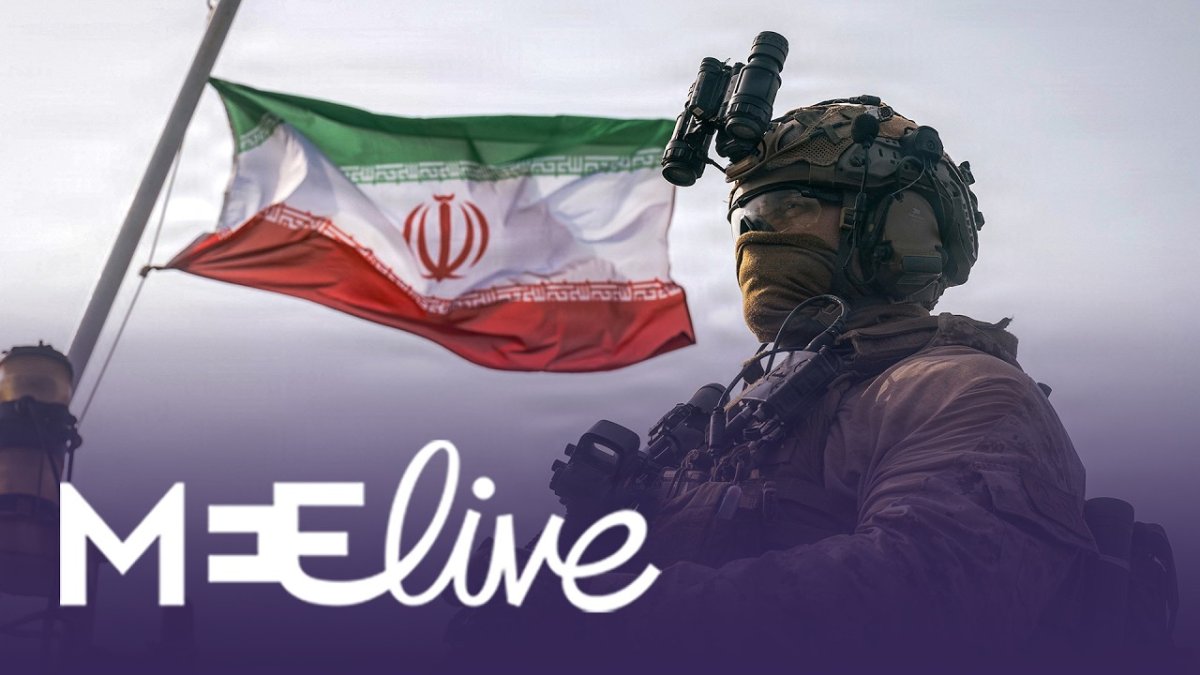
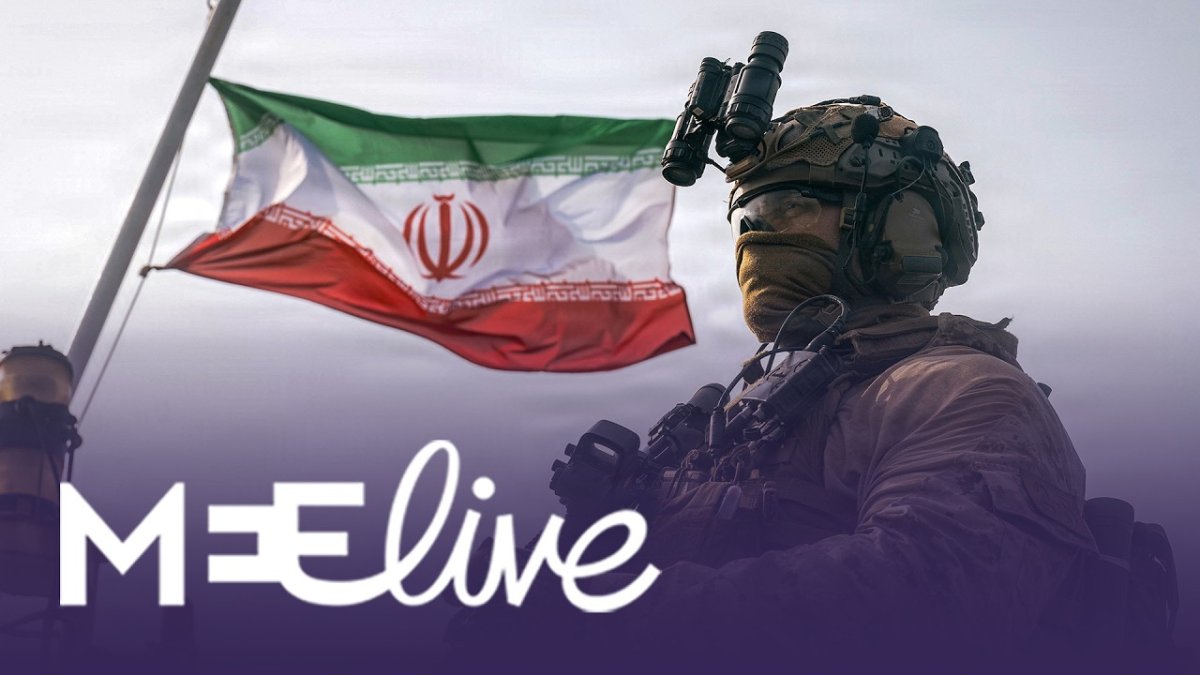
In the wake of deadly attacks on US forces and Iranian strikes disrupting global oil shipments, the specter of a prolonged US-Iran confrontation looms larger than ever. A recent Middle East Eye video report titled "Are the US and Iran in a forever war? | MEE Live" examines the rising death toll and maritime escalation in the Strait of Hormuz, providing critical context for how a collapsed ceasefire has reignited open conflict.
In the wake of deadly attacks on US forces and Iranian strikes disrupting global oil shipments, the specter of a prolonged US-Iran confrontation looms larger than ever. A recent Middle East Eye video report titled "Are the US and Iran in a forever war? | MEE Live" examines the rising death toll and maritime escalation in the Strait of Hormuz, providing critical context for how a collapsed ceasefire has reignited open conflict.
US-Iran Conflict Escalates Over Strait of Hormuz Control
Middle East — Article continues...
How the ceasefire collapsed
The ceasefire that had held for several weeks ended on July 8, 2026, after Iran struck commercial ships in the Strait of Hormuz. Washington described the strikes as violations of the agreement. Iranian officials maintained that the vessels lacked required approval to transit the waterway. The breakdown came amid ongoing disputes over navigation rights and security guarantees.
The April 2025 negotiations in Muscat, Oman, initially offered a narrow path to de-escalation when U.S. and Iranian diplomats discussed limited sanctions relief in exchange for Iranian restrictions on missile development and maritime harassment. Those talks produced a June 2026 preliminary ceasefire that froze naval movements in the Strait of Hormuz for 60 days while both sides monitored compliance through Qatari observers. Washington sought verifiable limits on Iranian proxy activity and freedom of navigation guarantees, whereas Tehran demanded the phased lifting of secondary sanctions on oil exports and an end to U.S. overflights near its coast. Following the collapse, the United States initiated 10 consecutive rounds of strikes aimed at reopening the strait. These operations targeted Iranian positions and infrastructure linked to maritime control. Iranian President Masoud Pezeshkian characterized the situation as a full-scale war, noting that Iranian forces were responding to direct threats against national sovereignty.
The agreement unraveled on July 6–7, 2026, when Iranian Revolutionary Guard speedboats struck two Greek-flagged tankers and a Singaporean container vessel transiting without prior Iranian clearance, killing 14 crew members and spilling 180,000 barrels of crude. U.S. Central Command released drone footage showing the coordinated attacks, prompting Washington to declare the ceasefire void. Iranian officials countered that the vessels had ignored repeated radio warnings and were suspected of carrying dual-use cargo, illustrating how quickly disputed navigation rules could erase months of fragile diplomacy.
The Strait of Hormuz — Iran's maritime weapon
Iran has deployed maritime warfare as a central element of its strategy by asserting control over the Strait of Hormuz. Ships attempting passage without Iranian approval have faced attacks, prompting the United States to label these actions as ceasefire violations. The question of who ultimately controls access to this critical chokepoint remains unresolved and central to the current fighting.
US Secretary of State Marco Rubio warned that Iranian dominance over the strait would establish a dangerous precedent for other waterways. Iranian Islamic Revolutionary Guard Corps units have claimed responsibility for coordinated operations, including a surprise attack on an enemy command center in al-Tanf, Syria. These moves underscore Iran's determination to maintain leverage through the narrow passage that carries a significant share of global oil shipments.
Human and economic cost of the war
The human toll continues to mount on both sides. Seventeen US service members have been killed and more than 500 US troops wounded since the war began. On the Iranian side, officials report 50 people killed and more than 500 injured in the current phase of fighting. These figures reflect the direct impact on military personnel and civilians caught in the crossfire.
The Pentagon’s $67.1 billion supplemental request, submitted in late July 2026, covers munitions replenishment, carrier strike group deployments, and expanded medical evacuations, pushing the cumulative U.S. outlay past $100 billion when combined with earlier supplemental packages. Oil prices have remained above $90 per barrel for six consecutive weeks, adding roughly $0.45 to the average U.S. gallon of gasoline and triggering inflation spikes in import-dependent economies across South Asia and East Africa. Palestinian households in the West Bank and Gaza now face bread prices 38 percent higher than pre-conflict levels, while Gaza’s already fragile aid corridors have been further constricted by insurance surcharges that have doubled the cost of shipping humanitarian cargo through the Red Sea. US Secretary of War Pete Hegseth has estimated the financial cost of the conflict at $37.5 billion so far. Oil prices have passed $90 per barrel, contributing to a developing global energy crisis that affects households and industries far beyond the immediate region. The economic strain compounds the suffering of families who have lost relatives or seen their livelihoods disrupted by rising fuel and commodity costs.
Sanctions enforcement has compounded these pressures. The re-imposition of secondary sanctions on Iranian oil buyers has slashed Tehran’s daily exports by an estimated 600,000 barrels, depriving the government of roughly $1.2 billion in monthly revenue and forcing cuts to domestic fuel subsidies. Lebanese and Syrian traders report that letters of credit for food and medicine now carry 12–15 percent premiums, pushing small businesses toward bankruptcy and accelerating emigration among working-age professionals. These overlapping shocks illustrate how maritime escalation quickly translates into household-level hardship far beyond the battlefield.
Diplomacy and mediation efforts
Despite the escalation, mediators including Qatar and Pakistan have continued efforts to revive ceasefire talks. These initiatives seek to address core disagreements over the Strait of Hormuz and mutual security assurances. US President Trump has stated that the United States has no interest in direct talks with Iran at this stage.
The persistence of back-channel diplomacy indicates that some regional actors still see value in preventing further deterioration. However, the repeated rounds of US strikes and Iranian maritime responses have narrowed the space for immediate agreement. Both sides continue to frame their positions in terms of defensive necessity rather than negotiation.
Regional ripple effects (Houthis, Syria, Lebanon)
The conflict has produced wider effects across the Middle East. Houthis in Yemen have announced a blockade of Saudi ports, adding pressure on already strained supply lines. In Syria, the IRGC-claimed attack on the al-Tanf command center has drawn additional attention to cross-border operations. Lebanon faces indirect consequences through disrupted trade and heightened security alerts along its borders.
In the occupied Palestinian territories, the surge in global fuel and shipping costs has driven a 27 percent increase in consumer prices since June, while the World Food Programme reports that 40 percent of planned aid convoys have been delayed by insurance cancellations and port congestion. Families already coping with electricity shortages now allocate larger portions of limited income to cooking fuel, deepening food insecurity at a time when humanitarian funding appeals remain under-subscribed. These developments illustrate how the US-Iran confrontation reverberates through neighboring states. Communities already dealing with displacement and economic hardship experience further instability as shipping routes close and military activity increases. The interconnected nature of the region means that actions in the Strait of Hormuz quickly influence daily life in multiple countries.
Gulf states have responded with a mixture of public caution and private hedging. Saudi Arabia has kept its oil production steady but quietly increased security escorts for tankers leaving Ras Tanura, signaling a desire to avoid direct entanglement while protecting export revenues. The Houthi blockade of Jeddah and other Saudi ports, announced in mid-July, has halted roughly 15 percent of the kingdom’s container traffic and forced rerouting through longer, costlier lanes around Africa. These moves have raised insurance rates for all Red Sea traffic and prompted Jordan and Egypt to seek emergency fuel swaps, demonstrating how quickly a single chokepoint confrontation can cascade into regional supply-chain paralysis.
Analysis: Are we in a forever war?
The pattern of strikes, maritime interdictions, and failed ceasefires raises the possibility of prolonged confrontation. Each round of escalation appears to reinforce the other side's resolve rather than produce decisive advantage. With oil prices elevated and casualties accumulating, the incentives for de-escalation remain limited on both sides.
The current stalemate echoes the trajectory of U.S. involvement in Afghanistan and Iraq, where initial objectives of degrading specific threats gradually expanded into open-ended commitments without clear victory conditions. In both prior conflicts, domestic political incentives—midterm elections in the United States and hard-line consolidation inside Iran—rewarded displays of resolve over negotiated compromise. Proxy forces further complicate any exit: Hezbollah’s rocket posture along the Lebanese border and Houthi attacks on Red Sea shipping allow Tehran to impose costs without direct attribution, mirroring the deniability tactics that prolonged earlier wars. From a human rights perspective, the continuation of hostilities exacts a steady price on ordinary people across the region. Families in Iran, the United States, and neighboring countries bear the consequences of decisions made in distant capitals. The absence of active diplomatic engagement at the highest levels suggests that the current trajectory could extend well into the future without a fundamental shift in approach.
President Trump’s public assertion that the United States has “no interest in talks” at this stage has removed a critical off-ramp, while Iranian Supreme Leader Khamenei faces domestic pressure not to appear weak after repeated strikes on IRGC facilities. Military objectives centered on reopening the Strait of Hormuz remain technically achievable through sustained naval operations, yet they do not address the underlying political contest over regional influence. Without a diplomatic framework that accommodates both sides’ core security concerns, the pattern of tit-for-tat escalation risks settling into a durable, low-intensity confrontation that drains resources and lives for years.
Closing paragraph looking ahead
Prospects for ending the fighting depend on whether mediators can secure commitments that address control of the Strait of Hormuz and mutual restraint. Until then, the cycle of attacks and counterattacks continues to claim lives and disrupt economies. The coming weeks will test whether regional actors can prevent the conflict from settling into a more permanent state of confrontation.
By Fatima Al-Rashid, Staff WriterThis article was produced with AI-assisted research and editorial support. Reporting is based on sources cited in the article.
What's Your Reaction?
 Like
0
Like
0
 Dislike
0
Dislike
0
 Love
0
Love
0
 Funny
0
Funny
0
 Wow
0
Wow
0
 Sad
0
Sad
0
 Angry
0
Angry
0

Gulf/MENA Correspondent at Global1.News. Based in Doha, covering Gulf politics, energy markets, diplomacy, and development across the Middle East and North Africa. Tracks the economic transformation of the Gulf states.











Comments (0)