
Regional Defence Pact to Counter Israel Gaza Expansion
In a recent Middle East Eye report on The David Hearst Podcast, editor-in-chief David Hearst outlines how a coordinated regional defence pact among Middle Eastern states could halt Israel's pattern of territorial expansion and repeated violations of ceasefires. The discussion draws on the latest developments in Gaza, Lebanon, and the West Bank, where military actions have displ
In a recent Middle East Eye report on The David Hearst Podcast, editor-in-chief David Hearst outlines how a coordinated regional defence pact among Middle Eastern states could halt Israel's pattern of territorial expansion and repeated violations of ceasefires. The discussion draws on the latest developments in Gaza, Lebanon, and the West Bank, where military actions have displaced over 1.5 million Palestinians and destroyed critical infrastructure. Hearst emphasizes that the refusal of groups like Hamas, Hezbollah, and Iran to disarm remains the primary barrier preventing large-scale ethnic cleansing. This analysis arrives at a moment when Israeli officials openly discuss further territorial gains and population transfers.
Regional Defence Pact Proposed to Counter Israeli Expansion Across Gaza, Lebanon, and West Bank
Ramallah — June 12, 2026 — As Israeli forces consolidate control over increasing portions of Gaza following the collapse of the latest ceasefire, analysts and regional observers are examining whether coordinated defence arrangements among neighbouring states could restrain further military advances. The breakdown occurred after hostages were returned, yet Israeli operations resumed with intensity, resulting in more than 900 Palestinian deaths and 2,900 injuries according to local health authorities. Netanyahu's government has set its sights on occupying 70 percent of the territory, up from the current 60 percent, while advancing plans for what officials term voluntary migration of the remaining population. These developments have prompted renewed calls for a collective security framework involving Turkey, Jordan, Egypt, Saudi Arabia, and additional states to protect shared borders and populations.
Ceasefire Collapse and Escalation in Gaza
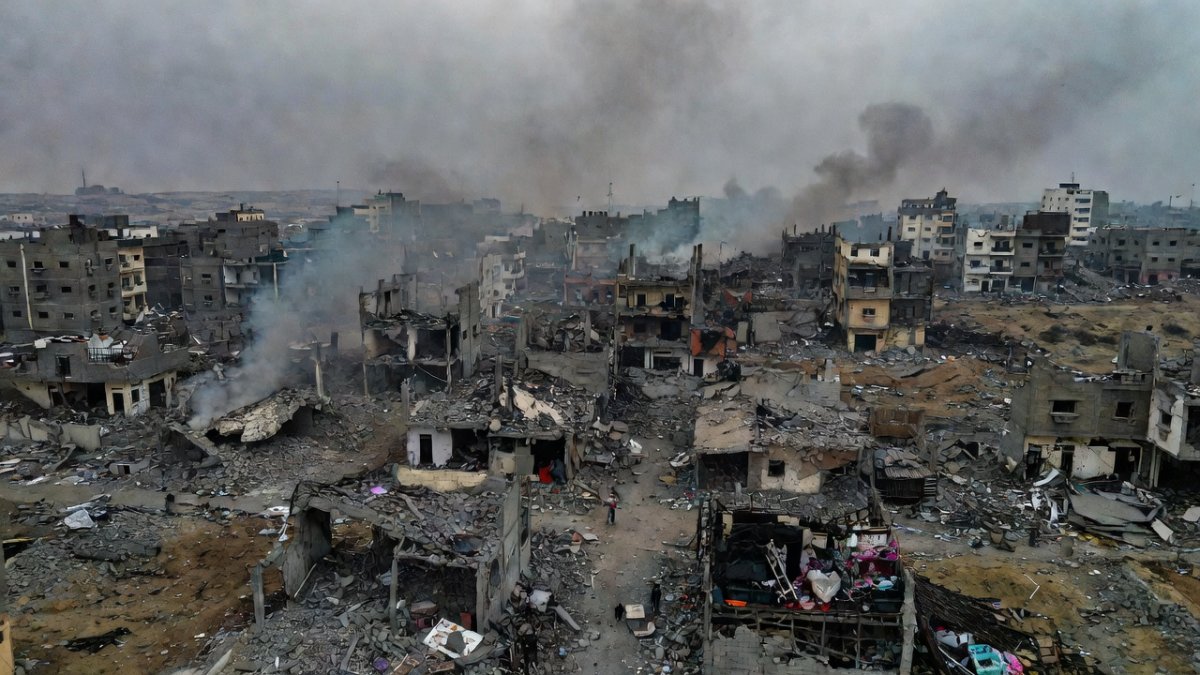
The ceasefire that briefly held in Gaza ended abruptly once the return of hostages was completed, allowing Israeli forces to resume operations without the previous constraints. Palestinian medical facilities recorded over 900 fatalities and 2,900 wounded in the immediate aftermath, with many victims being civilians in areas already strained by prior rounds of conflict. Infrastructure across the strip, including hospitals, water systems, and residential neighbourhoods, sustained further damage that has left basic services largely unavailable to the surviving population. Local residents describe daily life as a continuous struggle for survival amid the expanding military presence that now covers 60 percent of Gaza.
Israeli Prime Minister Benjamin Netanyahu and Defense Minister Israel Katz have publicly discussed options for the transfer of Palestinians out of the territory under the label of voluntary migration. This language echoes earlier proposals that human rights monitors have characterized as efforts to achieve demographic change through pressure and destruction of living conditions. With more than 1.5 million people already displaced and unable to return to their homes, the prospect of additional movement raises concerns about permanent loss of land and identity. Community leaders in Gaza have stated that such policies ignore the deep historical ties Palestinians maintain to the land despite repeated displacements.
Netanyahu's stated target of reaching 70 percent territorial control would require further advances into remaining populated zones. Military briefings indicate that operations are calibrated to secure strategic corridors and high ground while limiting international scrutiny. Families who have already lost multiple homes in previous conflicts now face the possibility of being pushed into even smaller enclaves. Aid organizations operating in the area report that access routes are increasingly restricted, complicating efforts to deliver food, medicine, and shelter materials to those most affected.
A Pattern of Expansion Across Borders
Israeli military activity extends beyond Gaza into southern Lebanon and the West Bank, where forces have established new positions and conducted operations that local populations view as incremental annexation. In southern Lebanon, renewed strikes on the Dahiyeh district of Beirut prompted Iranian responses targeting Israeli sites, demonstrating Tehran's willingness to intervene when Lebanese territory faces direct threats. These cross-border actions follow a consistent logic of securing buffer zones and resource-rich areas under the banner of security requirements. Palestinian and Lebanese communities along these frontiers report increased restrictions on movement and access to farmland that has sustained them for generations.
West Bank settlements continue to expand with official support, fragmenting Palestinian contiguity and complicating any future territorial arrangements. Israeli authorities have approved new housing units and infrastructure projects that connect isolated outposts to larger blocs. Local Palestinian farmers describe losing access to olive groves and grazing lands that have been central to their economy and culture for decades. International observers note that these changes on the ground create facts that are difficult to reverse without coordinated diplomatic or defensive measures from neighbouring states.
The cumulative effect across multiple fronts is a gradual redrawing of control that leaves Palestinian communities increasingly isolated. Hearst's analysis highlights that this expansion succeeds in part because no unified regional mechanism exists to impose costs on further advances. Each incremental gain in one area emboldens actions in others, creating a feedback loop that neighbouring capitals have so far been unable to interrupt. Residents in affected villages express frustration that diplomatic statements alone have not altered the trajectory of land loss and displacement.
The Regional Balance and Iran's Role
Iran's decision to strike Israeli targets following the bombing of Dahiyeh signalled a shift toward more direct protection of Lebanese territory and populations. This response came after Israeli operations intensified in areas where Hezbollah maintains influence, raising the risk of wider confrontation. Regional analysts observe that Iran's posture serves as a deterrent against unlimited Israeli advances, yet it also complicates efforts by Arab states to maintain distance from the conflict. The involvement of multiple actors creates a complex web where actions in Gaza influence calculations in Beirut and Tehran.
Statements from Washington have added another layer, with former President Trump asserting direct oversight over Israeli military decisions during his interactions with Netanyahu. A non-binding vote in the US House to withdraw American forces from any hostilities involving Iran passed with support from four Republicans, indicating fractures in traditional alignments. These developments suggest that external backing for Israeli operations may face domestic constraints in the United States. Palestinian officials in Ramallah have noted that such signals could influence the pace of Israeli planning if regional states coordinate their responses.
The refusal of Hamas, Hezbollah, and Iranian-aligned forces to disarm is presented by Hearst as the remaining obstacle to large-scale population transfers. Without this armed resistance, the argument goes, Israeli authorities would face fewer barriers to implementing demographic changes across the territories under discussion. This dynamic places Palestinian and Lebanese communities in a difficult position where their security is tied to the continued presence of non-state actors. Local voices emphasize that disarmament discussions cannot proceed without guarantees against further territorial losses and forced movement.
A Regional Defence Pact as a Strategic Alternative
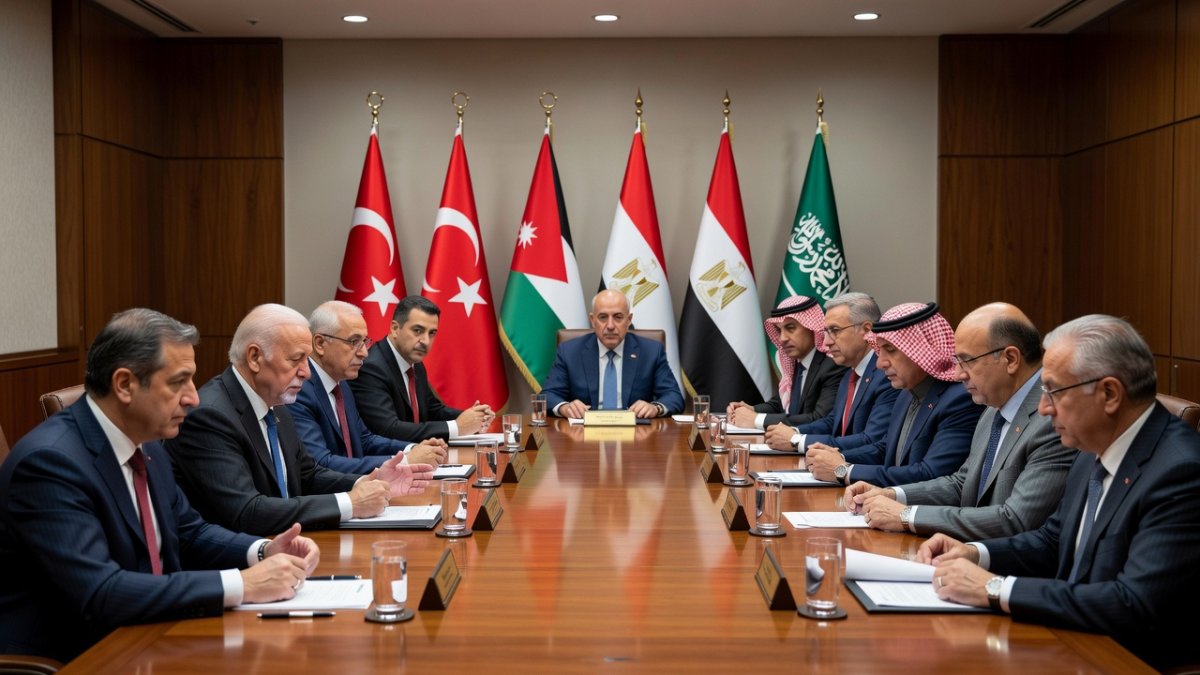
A proposed defence arrangement involving Turkey, Jordan, Egypt, Saudi Arabia, and other states would establish collective commitments to respond to violations of borders and international norms. Such a pact could include shared intelligence, coordinated air and ground defences, and diplomatic mechanisms to impose economic or political costs on expansionist moves. Proponents argue that unified action would alter the cost-benefit calculation currently favouring incremental territorial gains. Discussions in regional capitals have touched on the need for formal agreements that go beyond existing bilateral ties.
Every Middle Eastern nation would confront consequences if Israeli expansion continues unchecked, including shifts in refugee flows, resource pressures, and security alignments. Jordan and Egypt, which already host large Palestinian populations, would face additional strains on their social services and political stability. Turkey and Saudi Arabia have expressed concerns about the precedent set by unilateral border changes and the erosion of state sovereignty. A pact could provide a framework for joint statements and actions that individual governments have hesitated to take alone.
Implementation would require careful calibration to avoid escalation while still deterring further advances into Gaza, southern Lebanon, and the West Bank. Military planners in participating states would need to define triggers for collective response and rules of engagement that respect international law. Hearst suggests that the existence of such a structure might encourage diplomatic off-ramps before conflicts reach the point of mass displacement. Palestinian civil society groups have called for any pact to include explicit protections for civilian populations and recognition of their rights to remain on their land.
Analysis — What Comes Next for Palestine and the Region
The trajectory of events points toward continued pressure on Palestinian communities unless a credible counterbalance emerges through regional coordination. Daily realities in Gaza and the West Bank show families adapting to shrinking spaces while maintaining cultural and economic ties that predate current conflicts. The human cost accumulates in lost lives, destroyed homes, and interrupted education for a generation of children. Without mechanisms to enforce limits, the pattern of expansion risks becoming permanent features on the map.
Regional states weighing participation in a defence pact must balance domestic priorities with the broader implications of unchecked Israeli actions. Economic interdependence and security concerns create incentives for cooperation that have not yet been fully activated. Palestinian representatives have urged neighbouring governments to view the situation not only through a security lens but also through the lens of shared history and future stability. The involvement of Iran adds complexity that requires careful management to prevent wider confrontation.
Future developments will depend on whether diplomatic channels can produce enforceable agreements or whether military facts on the ground continue to dictate outcomes. Hearst's podcast contribution underscores that the current balance rests on the deterrent effect of armed resistance, a fragile foundation that leaves civilians exposed. Sustainable solutions would need to address root causes of displacement and territorial disputes rather than managing symptoms through repeated ceasefires. Palestinian communities continue to advocate for recognition of their presence and rights as essential to any lasting regional arrangement.
By Fatima Al-Rashid, Staff Writer
This article was produced with AI-assisted research and editorial support. Reporting is based on sources cited in the article.
What's Your Reaction?
 Like
0
Like
0
 Dislike
0
Dislike
0
 Love
0
Love
0
 Funny
0
Funny
0
 Wow
0
Wow
0
 Sad
0
Sad
0
 Angry
0
Angry
0

Gulf/MENA Correspondent at Global1.News. Based in Doha, covering Gulf politics, energy markets, diplomacy, and development across the Middle East and North Africa. Tracks the economic transformation of the Gulf states.














Comments (0)