
US Strikes Iran 11th Night as Trump Threatens Nuclear Site
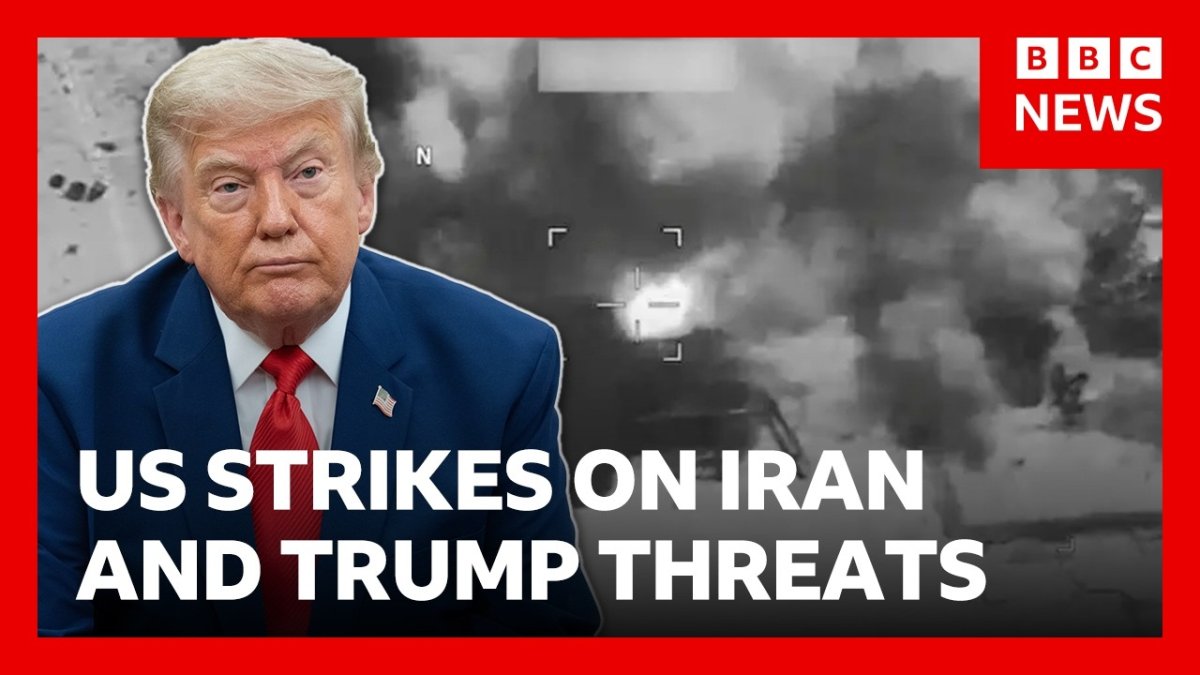
In a recent broadcast, BBC News reported on the escalating crisis between the United States and Iran, as Washington launched its 11th consecutive night of airstrikes against Iranian military positions and President Donald Trump threatened to strike an underground nuclear facility known as "Pickaxe Mountain." The air campaign, now in its second week, has drawn Iranian retaliatory strikes across the Middle East and raised fears of a broader regiona
In a recent broadcast, BBC News reported on the escalating crisis between the United States and Iran, as Washington launched its 11th consecutive night of airstrikes against Iranian military positions and President Donald Trump threatened to strike an underground nuclear facility known as "Pickaxe Mountain." The air campaign, now in its second week, has drawn Iranian retaliatory strikes across the Middle East and raised fears of a broader regional conflict that could reshape global energy markets and test the resilience of international shipping lanes.
US Launches 11th Night of Iran Strikes as Trump Threatens Underground Nuclear Facility
Washington, D.C. — 22 July 2026 — The United States has carried out its eleventh consecutive night of airstrikes against Iran, as President Donald Trump explicitly threatened to attack an underground nuclear enrichment site known as Pickaxe Mountain, dramatically escalating the rhetoric and military posture of America's most significant Middle Eastern war in decades. The strikes, described by US Central Command (CENTCOM) as aimed at degrading Iran's capacity to threaten commercial shipping in the strategically vital Strait of Hormuz, have drawn Iranian retaliation across multiple fronts and prompted urgent diplomatic consultations in capitals from Moscow to Beijing.
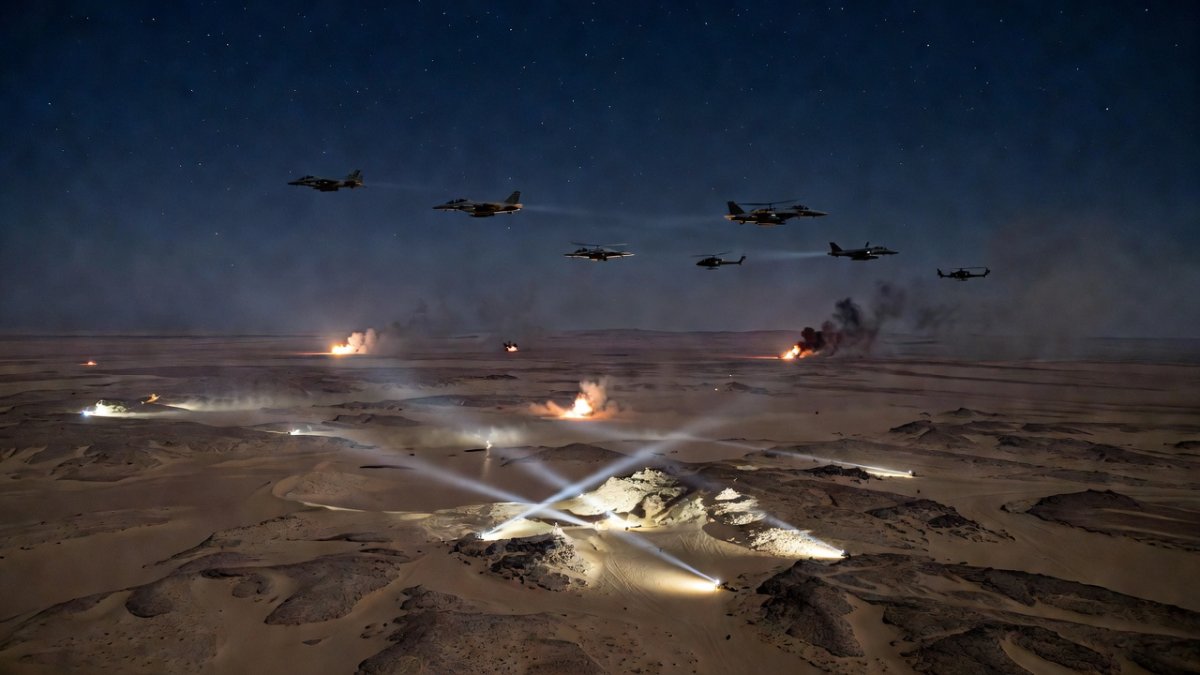
The 11th Night of Strikes and Tehran's Response
US Central Command confirmed that American forces struck Iranian military operations centres, maritime capabilities, aircraft hangars, drone storage facilities, and military logistics infrastructure across multiple locations in a coordinated operation late on Tuesday. The Pentagon described the strikes as "designed to continue degrading Iran's ability to threaten commercial shipping" in the Strait of Hormuz, through which approximately one-fifth of the world's oil passes daily.
Iranian state media reported that air defence systems were activated in the capital Tehran, with explosions heard in several districts. Similar blasts were reported in the north-western city of Tabriz, the south-eastern ports of Chabahar and Konarak, and in the southern city of Bushehr — home to Iran's only operational nuclear power plant. The broad geographic spread of the reported strikes suggests that the United States is systematically targeting Iran's military infrastructure from the Caspian Sea region to the Gulf of Oman.
Iran's Khatam Al-Anbiya military command — the strategic headquarters responsible for Iran's long-range military planning — warned that an attack on the country's nuclear facilities would be treated "as an expansion of war in the region," threatening retaliatory strikes on "all the interests of America, the allies and supporters," according to state-run broadcaster IRIB.
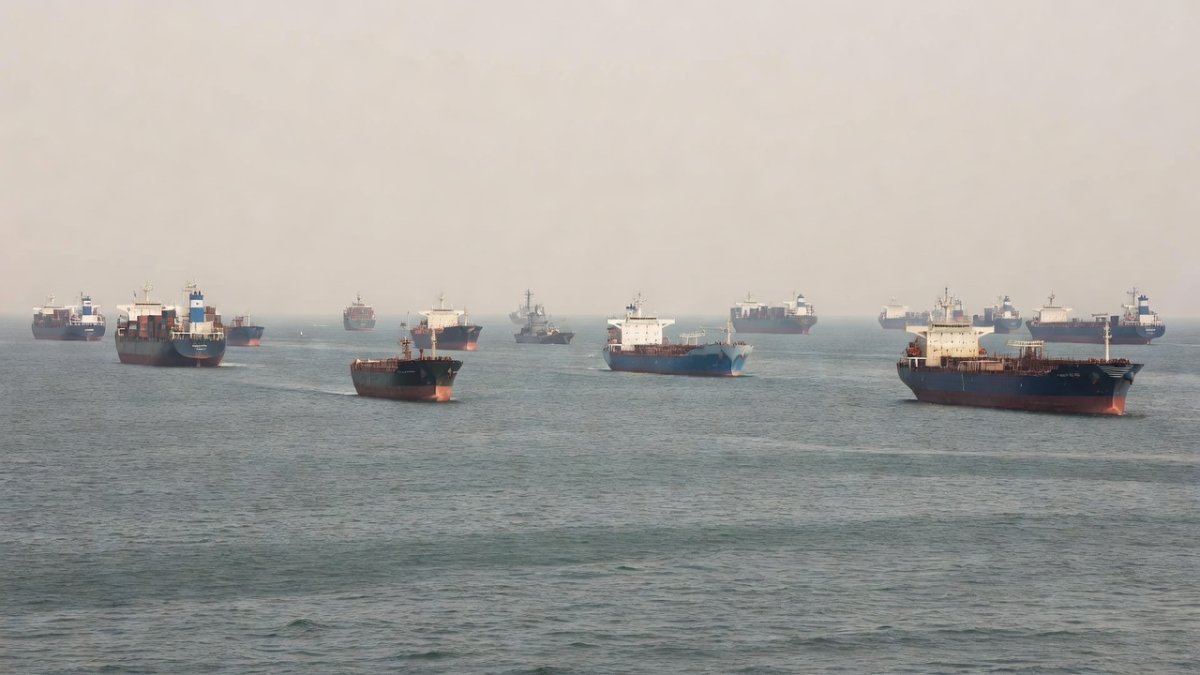
Pickaxe Mountain — Trump's Nuclear Target
During a White House meeting with Lebanese President Joseph Aoun, Donald Trump declared that the next military target could be a complex known as Pickaxe Mountain — an underground site near Natanz, approximately 220 kilometres south of Tehran, where intelligence agencies suspect Iran is constructing an undeclared uranium enrichment facility. "We'll be hitting that area pretty soon, and very heavily," Trump told reporters. He added that he would not normally announce military targets in advance, but "there's not a thing they can do about it."
Pickaxe Mountain sits roughly one mile from the Natanz nuclear complex, which houses two of Iran's principal enrichment plants — both of which were bombed during the opening days of the US-Israeli campaign in February 2026 and again during the 12-day war of June 2025. Satellite imagery has documented tunnel entrances being carved into the mountainside, and analysts believe Iran has transferred thousands of centrifuges underground to protect them from aerial bombardment.
The strategic significance of threatening an underground nuclear site lies in its direct challenge to Iran's long-standing calculation that deep burial would render enrichment capacity immune to conventional bunker-busting munitions. Intelligence assessments reaching Washington, drawn from satellite reconnaissance and defector reporting, indicate that Iran began expanding the Pickaxe Mountain tunnels after the June 2025 conflict, moving advanced IR-6 centrifuges below the surface to evade detection. This development has altered the non-proliferation landscape by undermining the transparency provisions once monitored by the International Atomic Energy Agency at Natanz. IAEA inspectors had previously documented undeclared activities at the site, yet access was curtailed following the suspension of the June Memorandum of Understanding. Iranian leadership appears to have concluded that placing enrichment halls more than 100 metres underground would neutralise even the most advanced US munitions, a calculation now tested by Trump's explicit warning. The move risks accelerating a regional nuclear arms race, as Gulf states reassess their own security guarantees while Russia and China observe the erosion of established inspection regimes.
The Collapse of the Ceasefire and the Strait of Hormuz Crisis
The April ceasefire agreement between Iran and the United States was intended to de-escalate tensions after months of maritime incidents. A June Memorandum of Understanding signed in Vienna committed both sides to halting military operations and reopening the Strait of Hormuz over a 60-day period, with phased reductions in naval presence. Trump declared the ceasefire "over" after only three weeks when Iran attacked ships in Hormuz, citing repeated violations. CENTCOM has accused Iran of attacking more than 30 commercial vessels over three months, including tankers and container ships transiting the narrow waterway. The humanitarian impact on crews has been severe, with seafarers held for weeks in Iranian ports and families left without information. Under international maritime law, such attacks constitute threats to freedom of navigation, prompting calls for stronger convoy protections. Secretary of State Marco Rubio stated that Washington remains open to diplomacy but does not believe Tehran is serious about returning to the June framework. Iranian officials counter that US strikes on coastal radar stations forced them to respond in self-defence, illustrating how quickly the fragile truce unravelled into sustained confrontation.
Regional Fallout — Kuwait, Bahrain, Jordan, and the Houthi Threat
Kuwait's army confirmed early Wednesday that its air defences were engaging Iranian drone attacks aimed at military installations near the capital. Bahrain and Jordan also intercepted drone and missile strikes, underscoring how the conflict has drawn in multiple Gulf states. The Houthi announcement of closing the Bab al-Mandab Strait to Saudi vessels has compounded the crisis, forcing Riyadh to reroute oil shipments. Trump threatened to "take care of" the Houthis if attacks continued. Two Saudi oil tankers made U-turns from Yanbu port, heading instead toward the Suez Canal, according to British maritime risk management group Vanguard. The Red Sea has gained renewed importance for Saudi oil shipments as the Strait of Hormuz becomes effectively closed to large tankers. Oil prices reached $94 per barrel amid fears of prolonged disruption. These developments test the resilience of international shipping lanes and expose the vulnerability of energy supply chains that pass through both chokepoints simultaneously.
The Cost of War — $37.5 Billion and Counting
US Defence Secretary Pete Hegseth testified before the Senate Appropriations Committee that the war has cost $37.5 billion so far, a rise of nearly $8 billion since May. Hegseth warned that military training would have to be curtailed unless lawmakers approve urgent funding. Trump attended a transfer ceremony in Dover, Delaware, for the bodies of US service members killed in the Middle East. The Pentagon named Sgt Angel S Rampersad as the fourth soldier killed in the campaign. The broader political debate in Washington centres on the cost and sustainability of the Iran war, with some lawmakers questioning whether allies should contribute more to the air and naval campaign. European partners have been asked to increase their share of maritime security operations, while domestic pressure grows over the diversion of resources from other global commitments.
Analysis — Oil Markets, Great Power Dynamics, and the Road Ahead
Oil prices reaching $94 reflect the combined pressure of dual chokepoint threats at Hormuz and Bab al-Mandab. Analysts suggest this signals sustained upward pressure on global energy costs that could persist for months. Russia's strategic position as an energy beneficiary allows Moscow to increase exports to willing buyers while maintaining diplomatic distance from direct involvement. China's dependence on Gulf oil limits its leverage to protect shipping lanes, leaving Beijing to issue cautious calls for restraint without concrete enforcement mechanisms. The broader implications for the global economy include higher inflation risks and supply-chain delays that affect ordinary consumers far from the Gulf. Diplomacy appears to have limited realistic chance given Trump's stated determination and Iran's hardened position after repeated strikes. The next phase of the conflict could take the form of a grinding air campaign, a ground escalation, or a frozen conflict with periodic strikes. For the Kremlin, the situation offers both distraction for Washington and revenue from higher energy prices, yet carries the risk of drawing Russian security commitments if fighting spreads northward.
The escalation between Washington and Tehran has entered what analysts describe as its most dangerous phase since the war began in February, with both sides seemingly locked into a cycle of retaliation that no single diplomatic initiative appears capable of breaking. For the Kremlin, watching from Moscow, the conflict represents both a strategic distraction for the United States and a source of energy revenue that strengthens Russia's hand — but also a potential flashpoint that could draw in Russian security commitments if the conflict spreads further north.
By Irina Volkov, Staff Writer
This article was produced with AI-assisted research and editorial support. Reporting is based on sources cited in the article.
What's Your Reaction?
 Like
0
Like
0
 Dislike
0
Dislike
0
 Love
0
Love
0
 Funny
0
Funny
0
 Wow
0
Wow
0
 Sad
0
Sad
0
 Angry
0
Angry
0

Russia/Eastern Europe Correspondent at Global1.News. Covering Russian politics, energy, security, and the shifting dynamics of the post-Soviet space. Provides clear-eyed analysis on one of the world's most opaque regions.













Comments (0)