
Syria Resets Lebanon Ties in Historic Beirut Visit
In the wake of the Assad regime's collapse, the Middle East is witnessing a profound realignment where former adversaries seek pragmatic resets amid waning Iranian influence and renewed American diplomatic maneuvering. Lebanon's fragile state institutions now find themselves at the center of this flux, as Damascus extends cautious overtures that could reshape security architect
In the wake of the Assad regime's collapse, the Middle East is witnessing a profound realignment where former adversaries seek pragmatic resets amid waning Iranian influence and renewed American diplomatic maneuvering. Lebanon's fragile state institutions now find themselves at the center of this flux, as Damascus extends cautious overtures that could reshape security architectures from the Mediterranean to the Gulf. Such developments underscore how local calculations in Beirut and Damascus intersect with wider regional contests involving Tehran, Riyadh, and Washington.
Syria Resets Lebanon Ties as Top Diplomat Visits Beirut Signaling New Era
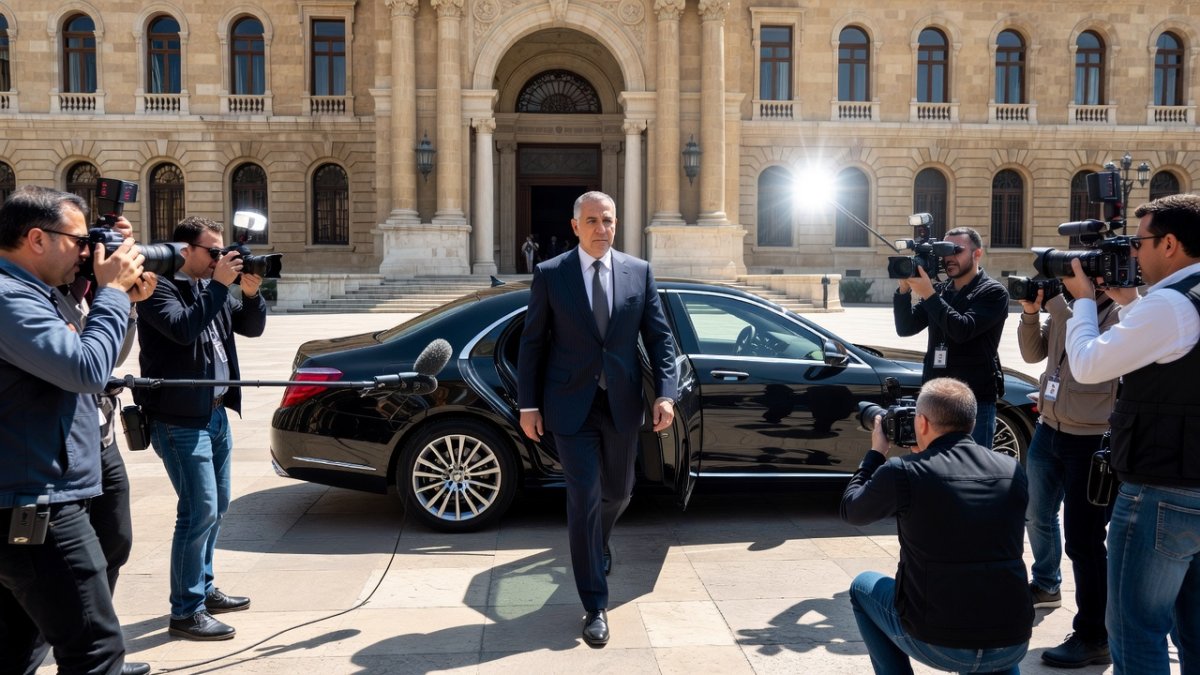
Beirut, Lebanon - July 3, 2026 --- Syrian Foreign Minister Asaad Al Shibani's arrival in Beirut on July 2, 2026, marked a pivotal moment in bilateral relations, as he held talks with President Joseph Aoun, Prime Minister Nawaf Salam, Speaker Nabih Berri, and Druze leader Walid Jumblatt, culminating in an agreement to establish a high-level joint committee focused on political, economic, and security cooperation.
Diplomatic Visit and Joint Committee
The visit unfolded against a backdrop of cautious optimism in Lebanese political circles, where officials viewed the formation of the joint committee as a mechanism to address longstanding border issues, trade facilitation, and intelligence sharing without immediate entanglement in militia politics. President Aoun received explicit reassurance from the Syrian side that Damascus's future role would diverge sharply from its historically dominant posture, emphasizing mutual respect for sovereignty. This committee is expected to convene at ministerial levels within months, potentially unlocking stalled economic projects such as electricity grid interconnections and agricultural exports that could alleviate Lebanon's chronic shortages. Analysts note that the inclusion of security cooperation reflects Syria's interest in stabilizing its western flank, particularly as reconstruction efforts gain momentum in Damascus.
Conditional Engagement with Hezbollah
Al Shibani articulated a nuanced position during the visit, stating that if national interests necessitated dialogue with Hezbollah, Syria remained open to such engagement, yet any interaction would be strictly conditioned on advancing Syrian priorities rather than ideological alignment. This conditional stance signals Damascus's determination to avoid repeating the mistakes of the past, where entanglement with Lebanese factions prolonged conflicts and invited external interventions. Lebanese officials interpreted the remarks as an invitation for Hezbollah to recalibrate its regional posture, especially given Syria's new leadership includes factions that clashed directly with the group during the Syrian civil war. The approach allows Damascus to maintain leverage while testing whether pragmatic economic incentives might gradually moderate Hezbollah's behavior.
Trump's Suggestion and Syrian Rejection
Former President Donald Trump's recent comments on Fox News, suggesting he was close to transferring responsibility for Hezbollah to Syria, drew swift condemnation from President Al Shara, who labeled such reports completely unfounded and reiterated that Syria seeks economic channels with Lebanon rather than military ones. US envoy Tom Barrack had already dismissed an earlier Reuters report from March 2026 as false, underscoring Washington's preference for Lebanese-led solutions under international oversight. Prime Minister Salam notably declined to comment on any potential Syrian security role when pressed by journalists, reflecting sensitivity to domestic and American concerns. These exchanges highlight the limits of external proposals that overlook Syria's post-war priorities centered on internal stabilization and economic recovery.
Historical Context: From Occupation to Reset
Syrian forces maintained a presence in Lebanon from 1976 until their withdrawal in 2005 following the assassination of former Prime Minister Rafik Hariri, a period marked by arbitrary detentions, enforced disappearances, and systematic repression that left deep scars on Lebanese society. The 2005 exit created a vacuum that Hezbollah gradually filled, while Damascus itself descended into civil war after 2011, during which Hezbollah provided critical support to the Assad regime. The fall of Assad in December 2024 elevated Al Shara to the presidency, bringing to power a coalition that includes elements previously opposed to Hezbollah on the battlefield. Walid Jumblatt's early visit to Al Shara symbolized a personal and political bridge-building effort rooted in Druze community interests across both countries.
Regional Implications: Iran, Hezbollah, and Gulf Dynamics
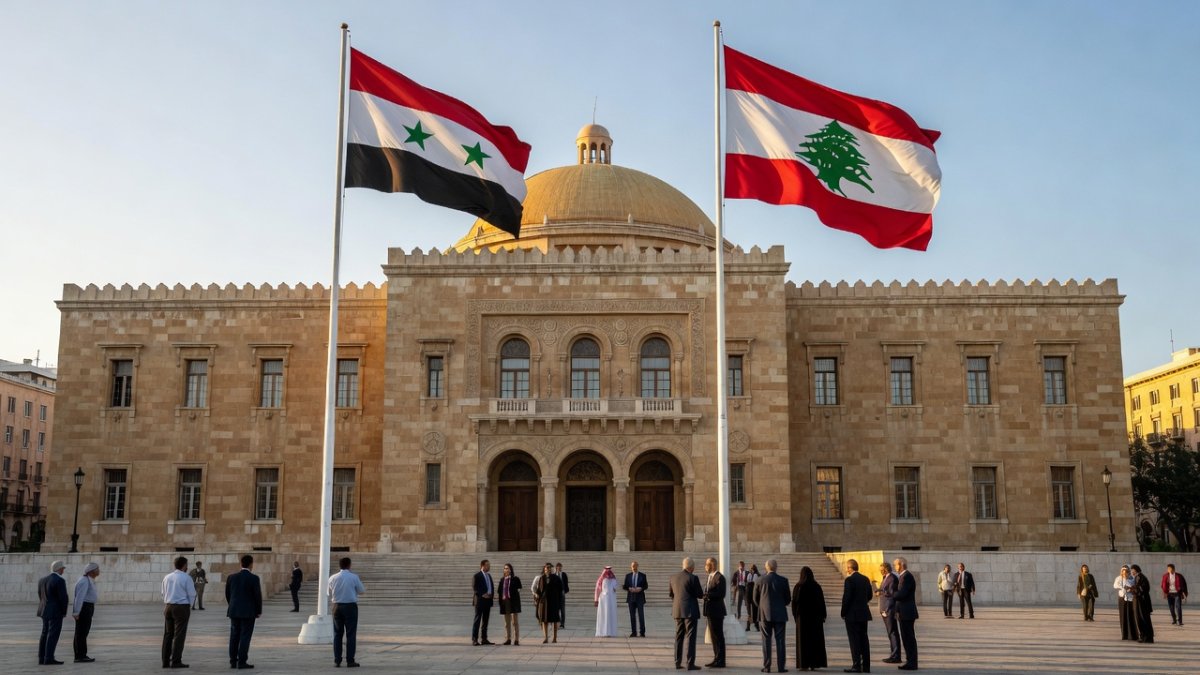
The diplomatic thaw carries significant implications for Iran's axis of influence, as a more autonomous Syria could diminish Tehran's ability to project power through Lebanon and complicate Hezbollah's logistical networks. Gulf states, particularly Saudi Arabia and the UAE, are watching closely for signs that economic incentives might encourage Damascus to distance itself further from Iranian proxies. This reset also intersects with broader US efforts to contain militia influence without direct military entanglement, potentially opening avenues for coordinated reconstruction aid that bypasses traditional Iranian funding routes. Regional powers recognize that stable Lebanon-Syria ties could reduce refugee pressures and cross-border smuggling that have fueled instability for over a decade.
Strategic Calculus for All Sides
For Syria, engagement offers access to Lebanese ports and financial systems essential for reconstruction, while allowing Damascus to project a moderate image attractive to Western and Arab donors. Lebanon gains potential leverage in managing border security and economic recovery, though domestic divisions over Hezbollah's role remain a constraint. Hezbollah itself faces a dilemma: continued resistance to Syrian overtures risks isolation, whereas selective cooperation might preserve influence but at the cost of ideological consistency. The United States and its allies see an opportunity to encourage de-escalation, provided Syrian commitments remain verifiable and do not empower militia structures. Each actor must weigh short-term political costs against longer-term gains in a region where alliances have proven fluid since 2024.
Outlook and Challenges Ahead
While the joint committee represents a promising framework, implementation will confront entrenched mistrust, competing factional interests, and external pressures from Iran and its allies. Success hinges on whether economic incentives can outweigh security concerns and whether Damascus can maintain its stated commitment to non-interference. Observers anticipate incremental progress on trade and border management before tackling more contentious political files. Ultimately, the trajectory of Lebanon-Syria relations will test the durability of post-Assad Syria's pragmatic turn and its capacity to reshape the Levant beyond cycles of conflict and occupation.
By Malik Hassan, Staff Writer
This article was produced with AI-assisted research and editorial support. Reporting is based on sources cited in the article.
What's Your Reaction?
 Like
0
Like
0
 Dislike
0
Dislike
0
 Love
0
Love
0
 Funny
0
Funny
0
 Wow
0
Wow
0
 Sad
0
Sad
0
 Angry
0
Angry
0

Middle East Correspondent at Global1.News. Based in Beirut, covering politics, conflict, energy, and society across the Middle East. Brings context and depth to a region often reduced to headlines.















Comments (0)