
Swiss Voters Face Historic Decision on Population Limits This Weekend
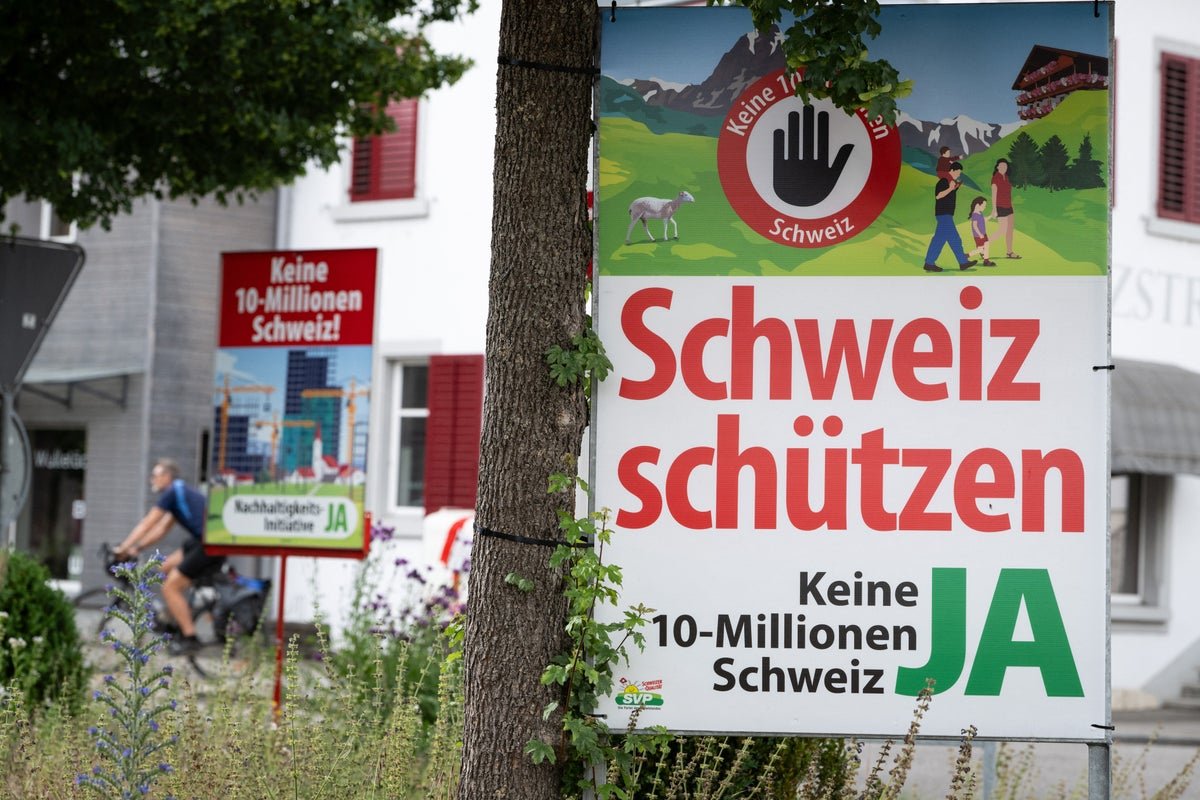
Swiss Voters Face Historic Decision on Population Limits This Weekend Switzerland prepares for a national referendum this weekend that would mark the first time any country has asked its citizens to impose a hard numerical cap on its total population. The proposal, advanced by the Swiss People's Party, seeks to limit residents to 10 million by 2050. Current figures place the po
Swiss Voters Face Historic Decision on Population Limits This Weekend
Switzerland prepares for a national referendum this weekend that would mark the first time any country has asked its citizens to impose a hard numerical cap on its total population. The proposal, advanced by the Swiss People's Party, seeks to limit residents to 10 million by 2050. Current figures place the population at 9.1 million, a rise from 7.3 million recorded in 2002. Should the measure pass, ministers would be required to introduce immediate restrictions once the figure reaches 9.5 million.
The vote arrives amid ongoing European debates over migration controls, with parallels drawn in Westminster to post-Brexit adjustments in the United Kingdom's own immigration framework. Swiss authorities have already signalled that approval would force a reassessment of bilateral accords with the European Union.
(The Independent)
Precise Triggers Built Into the SVP Initiative
The text of the initiative sets out a clear sequence of measures. If the population hits 9.5 million before 2050, the government must tighten rules on family reunification, residency permits and asylum claims. Should the total nevertheless reach 10 million, Switzerland would be obliged to withdraw from its free movement agreement with the EU and forfeit access to the single market. These provisions represent a direct challenge to the series of bilateral treaties that have governed Swiss-EU relations since 1999.
Unlike the United Kingdom's post-Brexit points-based system, which retains selective labour mobility, the Swiss proposal would sever an entire category of treaty-based movement. Officials in Bern have noted that such a step would require renegotiation of multiple sector-specific accords covering research, agriculture and transport.
Demographic Pressures and Foreign Resident Share
Foreign residents currently account for 27 per cent of the Swiss population. This proportion has grown steadily since the introduction of free movement provisions. Government data show that the overall population has increased by 23 per cent during the same period in which economic output rose by approximately 24 per cent. These figures are cited by both supporters and opponents of the initiative, though they interpret the relationship between growth and prosperity differently.
Campaign materials from the Swiss People's Party emphasise strains on housing, schools and hospitals. Trade unions, however, have labelled the measure the "chaos initiative", arguing that abrupt limits would disrupt labour supply in key sectors without addressing underlying infrastructure shortfalls. Local cantonal authorities in Zurich and Geneva have already begun modelling the administrative consequences should the cap be enacted.
Collective Government Opposition and Institutional Warnings
Switzerland's seven-member Federal Council, which includes representatives from the four largest parties including the SVP itself, has issued a collective recommendation to reject the proposal. Ministers have warned that implementation would damage export industries and research collaborations that rely on EU market access. The Swiss Bankers Association and several university rectors have echoed these concerns in separate statements released in recent days.
Experts consulted by parliamentary committees have stated that the measure would not resolve traffic congestion or housing shortages, as these issues stem from domestic planning decisions rather than immigration volumes alone. The Federal Statistical Office continues to publish quarterly updates on population trends, providing the factual baseline against which any future restrictions would be measured.
Opinion Polls and the Narrow Margin Ahead of the Vote
Latest surveys indicate 52 per cent of voters intend to oppose the initiative, with 45 per cent in favour. The remaining share remains undecided. Switzerland's system of popular initiatives requires 100,000 signatures collected within 18 months to trigger a nationwide ballot, a threshold the SVP met last year. Referendums of this type are typically scheduled four times annually, allowing citizens direct input on constitutional changes.
Turnout patterns in previous migration-related votes suggest that participation this weekend could exceed average levels, particularly in urban cantons where labour market effects are most visible. Campaigning has intensified in the final week, with both sides focusing on the long-term economic modelling rather than short-term rhetoric.
EU Relations, the Swiss Model and UK Comparisons
Switzerland's bilateral approach has long been studied in London as an alternative to full EU membership. The current free movement provisions form part of a package that also grants Swiss firms access to EU financial and research programmes. Withdrawal from these arrangements, as required by the initiative if the cap is breached, would place Switzerland in a position comparable to the United Kingdom's post-Brexit trading relationship, though without the same regulatory autonomy.
Whitehall officials have monitored the campaign closely, noting that any Swiss decision to restrict movement could influence future UK-EU mobility talks. The European Commission has already indicated that renegotiation of Swiss accords would be complex and time-consuming, a point reinforced by recent statements from Brussels trade officials.
Economic Output Data and Sectoral Dependencies
Official statistics demonstrate that Swiss GDP growth has tracked population increases since free movement began. Pharmaceutical exports, precision engineering and financial services all rely on cross-border talent pipelines. Trade unions representing health and construction workers have highlighted potential staffing shortfalls if residency rules tighten abruptly.
Regional chambers of commerce in Basel and Zug have published sector-specific assessments showing that restrictions on family reunification would affect retention rates among skilled employees. These analyses feed into the broader national discussion without altering the binary choice presented to voters this weekend.
By Erica Thornton, Staff Writer
This article was produced with AI-assisted research and editorial support. Reporting is based on sources cited in the article.
What's Your Reaction?
 Like
0
Like
0
 Dislike
0
Dislike
0
 Love
0
Love
0
 Funny
0
Funny
0
 Wow
0
Wow
0
 Sad
0
Sad
0
 Angry
0
Angry
0

US Politics and Policy Correspondent at Global1.News. Based in Washington DC, covering American politics, policy, elections, and the courts. Knows how the system works and tells you what it actually means.














Comments (0)