
China's Firm Opposition to British Steel Nationalisation Signals Deeper Strains in UK Investment Climate
The MOFCOM Statement and China's Legal Case Under the 1986 Bilateral Investment Treaty China's Ministry of Commerce issued a pointed response on 17 July 2026, declaring firm opposition to the British government's decision to nationalise British Steel operations in Scunthorpe. The ministry described the move as a serious infringement on Jingye Group's legitimate rights and interests, while underscoring that it severely undermines the confidence of Chinese companies investing i
The MOFCOM Statement and China's Legal Case Under the 1986 Bilateral Investment Treaty
China's Ministry of Commerce issued a pointed response on 17 July 2026, declaring firm opposition to the British government's decision to nationalise British Steel operations in Scunthorpe. The ministry described the move as a serious infringement on Jingye Group's legitimate rights and interests, while underscoring that it severely undermines the confidence of Chinese companies investing in the United Kingdom. Central to Beijing's position is the China–UK Bilateral Investment Treaty of 1986, which MOFCOM urged Britain to faithfully fulfil. The statement emphasised that the UK had disregarded Jingye's contributions to the British economy and society by forcibly assuming control under the banner of national security. Beijing indicated it would monitor developments closely and support Chinese firms in protecting their rights, though no specific retaliatory measures were outlined at this stage.
The Strategic Importance of British Steel to UK National Capability
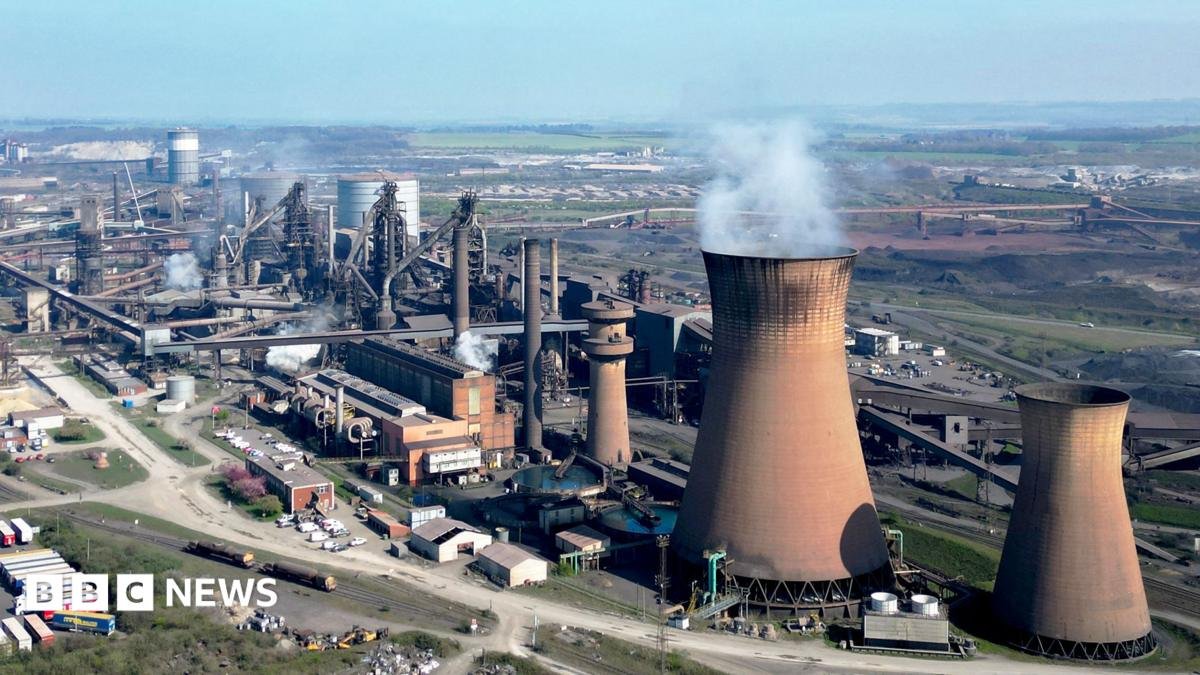
The UK government's decision to bring British Steel into public ownership reflects its assessment that the Scunthorpe plant represents a vital national capability. With the facility now under state control, authorities gain the power to determine its future direction, including decisions on continued production of virgin steel. The plant directly employs around 2,700 people and supports thousands more jobs in the supply chain. Should operations cease, the United Kingdom would become the only G7 member without domestic capacity to produce virgin steel, relying instead on electric arc furnaces that recycle scrap metal. Business Secretary Peter Kyle noted that the government would need to cover running costs for the immediate future, with the National Audit Office having previously estimated daily costs at approximately £1.3 million.
The Impact on China-UK Relations as Burnham Prepares to Take Office
The nationalisation arrives at a sensitive moment, with incoming Prime Minister Andy Burnham scheduled to enter Downing Street on 20 July 2026. The episode threatens to complicate the early phase of his administration's engagement with Beijing. While the UK has expressed a desire to maintain open channels for Chinese investment, the forced transfer of control over a major industrial asset owned by Jingye Group introduces friction. MOFCOM's criticism highlights how the action may erode trust among Chinese investors more broadly. Burnham's team will need to balance domestic political priorities around industrial policy with the economic advantages that continued engagement with the world's second-largest economy can deliver.
China's Outbound Investment Strategy and the Message This Sends to Other Chinese Firms
China's outbound investment strategy has long sought stable, rules-based environments where bilateral treaties provide predictable protections. The British Steel case risks conveying a signal that even long-standing investments can face sudden state intervention when political conditions shift. MOFCOM's reference to supporting Chinese firms in defending their rights suggests Beijing may encourage legal recourse through international mechanisms. Other Chinese enterprises considering or holding assets in the UK could interpret the episode as a cautionary example, potentially prompting greater scrutiny of political risk assessments before committing capital. This dynamic aligns with China's broader emphasis on safeguarding overseas economic interests while advancing technological self-sufficiency and diversified supply chains.
Historical Context: Thatcher's 1988 Privatisation Versus Today's Renationalisation
British Steel last operated under state ownership until its privatisation in 1988 under Margaret Thatcher's government. That earlier transition reflected a policy preference for market-driven restructuring and reduced public sector involvement in heavy industry. The current renationalisation reverses that trajectory, driven by concerns over job preservation and strategic industrial capacity. The contrast illustrates how successive UK administrations have adjusted their approach to steel production in response to changing economic realities and national security considerations. Jingye's acquisition had been positioned as a commercial rescue, yet sustained losses of £700,000 per day ultimately led to the breakdown of negotiations with the UK government.
The Broader Global Steel Trade Dynamics and G7 Implications
Global steel markets remain characterised by overcapacity, intense competition, and shifting trade patterns. The United Kingdom's loss of virgin steel-making capability would place it in a distinct position among G7 peers, all of which retain some domestic primary steel production. Electric arc furnace technology offers an alternative route focused on recycling, yet it cannot fully replicate the output profile of blast furnaces. For China, which maintains significant steel-making capacity, the episode underscores tensions between domestic industrial policy and overseas investment outcomes. Second-order effects could influence how other G7 members evaluate Chinese stakes in critical materials sectors, potentially accelerating discussions on investment screening frameworks across the European Union and North America.
Compensation Dispute and the Legal Path Ahead
Jingye Group is pursuing compensation following the nationalisation. Small Business Minister Blair McDougall informed Parliament that an independent valuer would be appointed in the autumn to determine any amount due, which could range down to nil. The UK government indicated that negotiations with Jingye had not yielded an agreement representing value to the taxpayer. Under the 1986 Bilateral Investment Treaty, disputes may proceed through established arbitration channels if bilateral talks fail to resolve the matter. The process is expected to unfold over an extended period, with both sides likely to present detailed financial and operational evidence regarding the plant's viability and the justification for state intervention.
What This Means for the Incoming Burnham Government's China Policy
The nationalisation places early pressure on Andy Burnham's administration to articulate a coherent China strategy. While the UK spokesperson reiterated that the country highly values its relationship with China and remains open to Chinese investment, the concrete outcome in Scunthorpe demonstrates limits to that openness when national interest tests are invoked. Burnham will need to weigh the benefits of deeper economic ties against domestic expectations for safeguarding strategic industries. The episode may encourage the new government to refine investment screening criteria and clarify the circumstances under which public ownership becomes the preferred option. Over time, constructive engagement on trade, technology, and multilateral issues could help mitigate the immediate diplomatic fallout, yet the precedent set by this case will shape Beijing's calculations regarding future UK-bound capital flows.
By Prof. Marcus Chen, Staff Writer
This article was produced with AI-assisted research and editorial support. Reporting is based on sources cited in the article.
What's Your Reaction?
 Like
0
Like
0
 Dislike
0
Dislike
0
 Love
0
Love
0
 Funny
0
Funny
0
 Wow
0
Wow
0
 Sad
0
Sad
0
 Angry
0
Angry
0

World Politics Analyst at Global1.News. Based in Beijing, covering US-China relations, global trade, and geopolitical strategy. Brings deep analytical perspective to the power dynamics shaping international affairs.















Comments (0)