
Security Shadows Loom Over Mexico's World Cup as Tijuana Body Discovery and Nationwide Protests Test Sheinbaum
The DW News video titled "World Cup kicks off in Mexico" captures the opening match where Mexico defeated South Africa 2-0 on June 11 at Estadio Azteca, with performances by Shakira, J Balvin, Mana, and Lila Downs drawing crowds from across the capital. Yet for families in colonias near the stadium and in border cities like Tijuana, the tournament's arrival brings immediate sec
The DW News video titled "World Cup kicks off in Mexico" captures the opening match where Mexico defeated South Africa 2-0 on June 11 at Estadio Azteca, with performances by Shakira, J Balvin, Mana, and Lila Downs drawing crowds from across the capital. Yet for families in colonias near the stadium and in border cities like Tijuana, the tournament's arrival brings immediate security concerns that touch daily life. Mexico co-hosts the 2026 event with Canada and the United States, fielding 48 teams across 104 matches, but the visible presence of National Guard units around fan zones already signals the tensions beneath the surface.
Security Shadows Loom Over Mexico's World Cup as Tijuana Body Discovery and Nationwide Protests Test Sheinbaum
Tijuana and Mexico City – Mexico, this week — While the tournament showcases Mexican hospitality and football culture, a decomposing body found outside Iran's training camp in Tijuana, ongoing CNTE teacher blockades at Estadio Azteca, and searching mothers demanding justice for 130,000 disappeared reveal a nation grappling with violence and impunity beneath the World Cup spotlight.
Decomposing Body Found Near Iran's Training Camp in Tijuana
A decomposing body showing clear signs of violence was discovered in the trunk of an abandoned SUV parked outside Iran's World Cup training center in Tijuana. The vehicle sat in a supermarket parking lot directly across from the Caliente Stadium facility since Wednesday until the odor alerted police. Tijuana authorities lead the ongoing investigation, with no victim's identity released so far. Iran's team relocated its base from Tucson, Arizona, after the US government denied visas to several federation officials and staff members. Iran's ambassador to Mexico, Albolfazl Pasandideh, has spoken about preparations while the National Guard provides heightened security for the squad. Iran faces New Zealand on June 15 in Los Angeles, Belgium on June 21 in Los Angeles, and Egypt on June 26 in Seattle in Group G.
This discovery lands in a city where maquiladora workers and small business owners already navigate daily risks from organized crime. The incident forces local communities to confront how international events can spotlight existing violence without resolving it for residents who live blocks from the training site.
CNTE Teachers Block Azteca Stadium and Other Key Sites
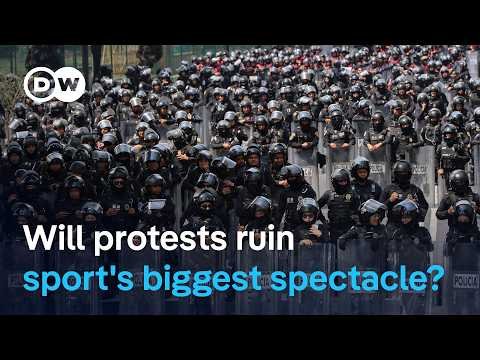
Members of the CNTE teachers' union blocked the main entrance to Mexico City's Azteca Stadium, demanding better working conditions, repeal of pension reform, and higher salaries. Protesters used ropes to pull down giant statues of footballers and set some on fire. President Claudia Sheinbaum has opposed harsh crackdowns while criticizing the actions as provocation. The same union blocked the airport in Chiapas and obstructed the border crossing in Tijuana. Police established a security zone around Azteca and the Zócalo fan zone, allowing only those with valid World Cup tickets into restricted areas.
Teachers in rural communities and urban colonias see these protests as essential to protect public education funding that affects their own children. The disruptions highlight how labor disputes intersect with the tournament's logistics, leaving families uncertain about access to public spaces during the event.
Searching Mothers Bring Images of the Disappeared to Fan Zones
Relatives of missing persons, including many mothers, use World Cup fan zones to demand swifter justice. More than 130,000 people are considered missing in Mexico, with a large number believed to be victims of organized crime. Activists carry photographs of missing women into areas near Estadio Azteca and other venues. These families, often from indigenous communities in Oaxaca or migrant networks in Ciudad Juárez, have waited years for answers from institutions including the Fiscalía General de la República and state prosecutors.
Their presence at tournament sites reminds visitors and locals alike that unresolved disappearances affect entire extended families who lose breadwinners and caregivers. The World Cup spotlight offers a rare platform, yet it also underscores how little progress has occurred despite repeated promises from successive administrations.
Femicide Rates and Women's Safety Concerns Persist
Between 10 and 11 women are murdered every day in Mexico, with thousands vanishing without trace. Ninety percent of femicides remain unsolved, leaving the justice system overwhelmed and marked by widespread impunity. Women's groups in Guadalajara, Monterrey, and Mérida report that ordinary routines such as traveling to work or school carry constant risk. Human rights organizations note that the same corruption and incompetence that stall investigations into the disappeared also block accountability for gender-based violence.
For mothers and daughters in working-class neighborhoods, these statistics translate into changed behavior: avoiding certain streets after dark or traveling in groups. The tournament's international audience brings attention, but local women question whether temporary security measures around venues will extend to their daily commutes once the matches end.
President Sheinbaum Balances Security Needs With International Image
President Claudia Sheinbaum faces the task of presenting Mexico as safe and modern while addressing protests and violence that contradict official messaging. Her administration has deployed additional National Guard and Guardia Nacional resources around key sites, yet critics from human rights groups point to the gap between polished tournament promotion and conditions on the ground. Sheinbaum's approach draws from the AMLO legacy of avoiding heavy-handed responses, even as Morena allies in the Congreso de la Unión debate further security funding.
This balancing act affects how Mexico appears to visitors from Canada and the United States, but it also shapes domestic trust. Communities in Cancún and Puebla watch whether federal resources prioritize event protection over long-term investigations into organized crime networks that operate across state lines.
Impact on Ordinary Mexican Families and Communities
Families in Tijuana colonias near the Iranian training site now weigh the economic boost from tournament visitors against the fresh reminder of violence in their streets. Teachers' children in Chiapas and Mexico City face interrupted schooling when protests close roads and airports. Searching mothers from across the country carry their grief into fan zones, hoping international cameras will pressure authorities. Women in every region adjust routines to avoid becoming additional statistics.
The 2026 World Cup will bring global attention to Estadio Azteca and other venues, yet the underlying challenges of impunity, missing persons, and labor unrest remain rooted in daily life for campesinos, maquiladora workers, and small business owners. How the Sheinbaum administration manages these tensions will determine whether the event strengthens or strains community confidence in Mexican institutions long after the final match.
By Rosa Martinez, Staff Writer
This article was produced with AI-assisted research and editorial support. Reporting is based on sources cited in the article.
What's Your Reaction?
 Like
0
Like
0
 Dislike
0
Dislike
0
 Love
0
Love
0
 Funny
0
Funny
0
 Wow
0
Wow
0
 Sad
0
Sad
0
 Angry
0
Angry
0
Latin America/Andes Correspondent at Global1.News. Based in Bogota, covering politics, environment, energy, and social movements across the Andean region. Passionate about environmental journalism and communities protecting their land.












Comments (0)