
South Korea's Students Demand Accountability After Historic Ballot Shortage
The National Election Commission's Historical Role in Korean Democracy The National Election Commission was established in 1960 under the oversight of the Supreme Court to administer elections independently from executive influence. Its mandate expanded after the 1987 constitutional revisions, which strengthened provisions for fair electoral processes following decades of autho
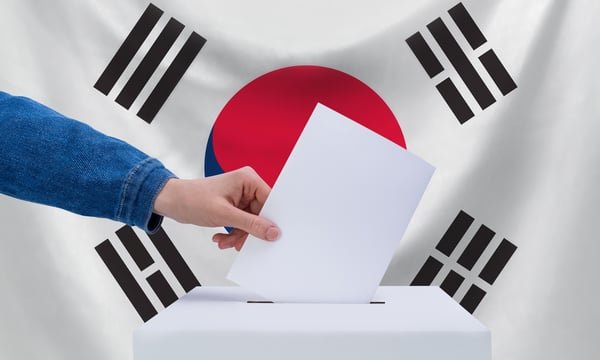
The National Election Commission's Historical Role in Korean Democracy
The National Election Commission was established in 1960 under the oversight of the Supreme Court to administer elections independently from executive influence. Its mandate expanded after the 1987 constitutional revisions, which strengthened provisions for fair electoral processes following decades of authoritarian interference. The Commission manages voter registration, ballot production, and polling operations across national and local contests, drawing on a network of regional offices.
Throughout its history, the NEC has operated with a reputation for technical competence, overseeing transitions from military rule to competitive multiparty democracy. Legal frameworks such as the Public Official Election Act assign it primary responsibility for ensuring ballot integrity and timely distribution. Institutional autonomy is preserved through commissioner appointments involving judicial and legislative branches, though critics have periodically questioned resource allocation during high-turnout events.
In the June 3 local election, the Commission encountered an unprecedented shortfall that suspended voting at 91 polling stations. This incident exposed vulnerabilities in logistical planning despite prior successful management of presidential and legislative polls. Public scrutiny has since focused on internal procurement procedures and contingency protocols that failed to prevent the disruption.
The scale of the June 3 disruption highlighted how even established institutions can face sudden operational strains when underlying supply chains encounter unforeseen bottlenecks. Analysts note that the NEC's centralized model, while efficient in routine circumstances, may require layered contingency planning to match the demands of simultaneous nationwide voting. Such reflections draw attention to the delicate balance between administrative efficiency and robust fail-safes.
Public discourse following the shortage has therefore turned toward whether existing statutory mandates sufficiently anticipate variability in voter turnout and material requirements. The episode serves as a reminder that institutional reputation rests not only on past performance but also on the capacity to adapt swiftly when anomalies arise. These considerations frame ongoing debates about the NEC's operational resilience.
Continuities with the June Democratic Struggle of 1987
The June Democratic Struggle of 1987 arose after the deaths of student activists Park Jong-chul and Lee Han-yeol, galvanizing nationwide protests that forced constitutional amendments and direct presidential elections. University students played a central organizational role, coordinating demonstrations that linked campus networks with broader civil society coalitions. This episode established a precedent for student-led interventions in defense of electoral and constitutional rights.
On June 10, marking the 39th anniversary of those events, student councils from 18 universities including Seoul National University, Yonsei University, and Korea University issued a joint declaration. The statement invoked the constitutional guarantee of voting rights and demanded accountability without endorsing partisan positions. Organizers explicitly referenced the 1987 precedent to frame current concerns as extensions of ongoing democratic vigilance.
Contemporary student activism differs from its 1987 counterpart in generational experience, yet retains institutional memory through university governance structures. The recent declaration avoided direct confrontation with political parties, emphasizing procedural remedies instead. This measured approach reflects adaptation of historical tactics to a consolidated democratic setting where institutional reform rather than regime change is the objective.
The deaths of Park Jong-chul and Lee Han-yeol became rallying points that fused campus outrage with wider minjung movements advocating people's democracy. These tragedies crystallized long-standing grievances against authoritarian control over civic participation and underscored students' willingness to confront state power directly. The resulting protests not only accelerated constitutional change but also embedded a lasting ethos of vigilance within Korean civil society.
Today's student councils consciously situate their June 10 declaration within this lineage, invoking the sacrifices of 1987 to legitimize calls for electoral safeguards. Although participants lack personal recollection of the authoritarian period, transmitted narratives through campus organizations sustain awareness of how institutional lapses can erode hard-won rights. This intergenerational thread reinforces the declaration's emphasis on preventive reform.
The National Election Commission Under Scrutiny
The National Election Commission occupies a constitutionally designated position as the primary body responsible for overseeing all aspects of electoral administration in South Korea. Its design aims to insulate election management from direct executive interference, thereby preserving public confidence in the integrity of voting procedures. Historical practice has positioned the NEC as a cornerstone of the Sixth Republic's democratic architecture.
Despite this established independence, the June 3 ballot shortage prompted immediate questions about internal accountability mechanisms within the Commission. Searches conducted at the NEC headquarters and six regional offices on June 11 generated documentation now under review by investigative authorities. These actions reflect broader concerns that structural autonomy alone does not automatically guarantee operational infallibility.
Discussions regarding structural reform have centered on potential adjustments to oversight frameworks and resource allocation protocols. The student declaration specifically advocated for an independent monitoring body that would incorporate civil society representatives, including youth and university students. Such proposals seek to supplement existing institutional safeguards without undermining the Commission's core mandate.
Parliamentary consideration of a formal inquiry further illustrates how the incident has elevated the NEC's performance to a matter of national legislative priority. Lawmakers are examining whether additional statutory requirements could enhance transparency in ballot production and distribution processes. These deliberations underscore the tension between preserving institutional independence and introducing external checks.
Ultimately, scrutiny of the NEC highlights the evolving expectations placed on electoral bodies in mature democracies. Reform efforts must balance respect for constitutional autonomy with mechanisms that allow timely identification and correction of administrative shortcomings. The outcome of current investigations will likely shape the contours of any future legislative adjustments.
Comparative Perspectives on Election Administration in Asia
South Korea's election management system is frequently contrasted with those of neighboring states that similarly employ centralized commissions to insulate operations from partisan control. The June 3 shortfall invites examination of whether procurement centralization requires supplementary regional redundancies. Such comparisons underscore that administrative excellence remains contingent on continuous adaptation rather than institutional legacy alone.
International assessments have rated South Korea's processes highly on transparency metrics prior to this event. The current shortfall therefore prompts reflection on how other systems incorporate reserve mechanisms to address unexpected supply disruptions. Observers note that Korea's unitary structure has historically supported consistency, yet recent experience suggests scale alone does not guarantee resilience against logistical anomalies.
Broader regional patterns indicate that even advanced electoral administrations periodically confront challenges related to material distribution during high-volume voting periods. South Korea's experience aligns with the recognition that proactive contingency planning constitutes an essential component of sustained public trust. Lessons drawn from comparable contexts emphasize the value of redundant protocols calibrated to historical turnout variations.
Authorities in various democracies have responded to administrative shortfalls by instituting mandatory reserve stocks and enhanced tracking systems for critical electoral materials. These adaptations aim to minimize voter disenfranchisement while maintaining the independence of election management bodies. South Korea's ongoing discussions mirror such approaches without departing from established legal frameworks.
The comparative lens ultimately reveals that no electoral system is immune to operational disruptions, regardless of prior reputation. Continuous evaluation and incremental reform therefore emerge as shared imperatives across jurisdictions committed to safeguarding voting rights. South Korea's response to the June 3 incident contributes to this wider dialogue on institutional adaptability.
Implications for President Lee Jae-myung and South Korea's Political Landscape
President Lee Jae-myung responded to the student declaration by acknowledging electoral integrity as a matter of democratic sovereignty during a subsequent press conference. His administration directed a formal investigation and supported the establishment of a joint prosecutorial and police headquarters. These steps align with prior commitments to institutional accountability following the December 2024 martial law crisis.
The episode intersects with ongoing legislative discussions in the National Assembly concerning potential parliamentary inquiry procedures. Searches conducted at the National Election Commission and six regional offices on June 11 have generated additional documentation for review. Political analysts observe that the President's measured engagement with student demands may reinforce his administration's emphasis on procedural legitimacy across polarized constituencies.
Broader landscape effects include renewed attention to youth participation in oversight mechanisms. The five measures outlined in the student declaration—encompassing investigation, remedies, safeguards, structural reform, and independent monitoring—provide a concrete agenda that transcends immediate electoral cycles. Parties across the spectrum face pressure to address these points before upcoming national contests.
President Lee's prompt ordering of a joint investigation headquarters signals recognition that administrative failures can quickly acquire political salience. By aligning executive action with the nonpartisan tone of the student statement, the administration positions itself as responsive to concerns about democratic sovereignty rather than defensive of institutional inertia.
The interplay between presidential initiative and legislative scrutiny illustrates how the ballot shortage has catalyzed cross-branch coordination. This dynamic may influence the pace at which reform proposals advance through the National Assembly in the coming months.
The Generational Evolution of Democratic Consciousness in Korea
University students today lack direct experience of authoritarian rule yet articulate claims rooted in constitutional protections established in 1987. Their joint declaration on June 10 demonstrates continuity in viewing democratic institutions as active achievements rather than settled background conditions. This perspective emerges from civic education curricula and campus organizations that transmit historical narratives across generations.
The current mobilization marks the first collective student council statement on a major institutional issue since the December 2024 martial law period, when 38 councils issued a collective declaration. Participants have deliberately maintained nonpartisan framing, focusing on administrative failures rather than attributing motives to specific political actors. Such restraint distinguishes recent activism from earlier periods characterized by explicit ideological confrontation.
Survey data from Korean universities indicate rising interest among younger cohorts in electoral mechanics and institutional design. This generational orientation favors evidence-based critique over mass mobilization, aligning with the declaration's call for an independent monitoring body that incorporates youth representatives. The pattern suggests an evolving democratic consciousness oriented toward preventive reform.
The December 2024 martial law crisis provided an immediate precedent for coordinated student council action that the June 10 declaration consciously extends. By linking contemporary concerns over ballot access to that earlier episode, students underscore a consistent commitment to defending procedural integrity during moments of institutional stress.
This continuity reveals how campus networks function as enduring repositories of democratic memory, adapting historical repertoires to address novel administrative challenges. The measured language of the current declaration reflects strategic evolution rather than diminished resolve.
Implications for Korean Democracy in 2026
The June 3 ballot shortage and subsequent student mobilization occur against a political landscape still adjusting to the aftermath of the December 2024 martial law crisis. Institutional trust, already tested by that episode, now faces additional pressure from questions surrounding electoral logistics. How authorities address these concerns will shape public perceptions heading into future national contests.
Generational attitudes toward democracy appear increasingly focused on the practical functioning of institutions rather than abstract regime type. University students' emphasis on structural reform and independent monitoring suggests a cohort prepared to engage with detailed policy questions. This orientation may encourage political actors to prioritize administrative transparency in their platforms.
The establishment of an independent monitoring body involving civil society, including youth representatives, could serve as a mechanism for sustaining long-term accountability. Such an entity would complement existing constitutional arrangements while providing avenues for younger voices to participate directly in oversight. Its design will likely influence the depth of institutional trust cultivated among emerging demographics.
Broader implications extend to the resilience of Korea's democratic consolidation. Recurrent attention to electoral mechanics signals that citizens view voting rights as continually negotiated rather than permanently secured. This vigilance aligns with the legacy of 1987 while adapting to contemporary challenges of administrative capacity.
Ultimately, the trajectory of reform efforts through 2026 will test whether South Korea can convert the current episode into durable enhancements of electoral governance. Success in this regard would reinforce the narrative of democratic progress rooted in citizen engagement.
Prospects for Reforming the National Election Commission
Discussions in the National Assembly have begun examining legislative options for strengthening the NEC's operational redundancies. Proposals under consideration include mandatory reserve ballot stocks calibrated to historical turnout variances and enhanced digital tracking of printing and distribution chains. These measures draw on existing statutory authority while addressing gaps revealed by the June 3 shortfall.
Structural reform possibilities encompass adjustments to commissioner selection processes and expanded civil society participation in oversight committees. The student declaration specifically advocated inclusion of youth and university representatives in any new monitoring entity. Implementation would require amendments to the National Election Commission Act and related regulations governing local election commissions.
Authorities have initiated parallel investigations by prosecutors and police, with potential administrative sanctions pending findings. International technical assistance from bodies experienced in Asian electoral administration could inform best-practice adaptations. Sustained reform momentum will depend on translating investigative outcomes into durable institutional changes before subsequent electoral cycles.
The five demands articulated by student councils provide a structured roadmap that links immediate accountability measures with longer-term institutional redesign. By insisting on both punishment of responsible parties and preventive safeguards, the declaration bridges retrospective and prospective dimensions of reform.
Successful implementation hinges on maintaining the nonpartisan character that has characterized student interventions thus far. This approach may facilitate broader consensus within the National Assembly and among civil society stakeholders.
By Prof. David Park, Staff WriterThis article was produced with AI-assisted research and editorial support. Reporting is based on sources cited in the article.
What's Your Reaction?
 Like
0
Like
0
 Dislike
0
Dislike
0
 Love
0
Love
0
 Funny
0
Funny
0
 Wow
0
Wow
0
 Sad
0
Sad
0
 Angry
0
Angry
0

East Asia/Technology Correspondent at Global1.News. Seoul-based voice covering Korean politics, technology, business, and culture. Analyzes how technology and geopolitics intersect across East Asia.















Comments (0)