
Shufersal Raises Delivery Fees by 20%: How Much Will Israelis Pay From Now On?
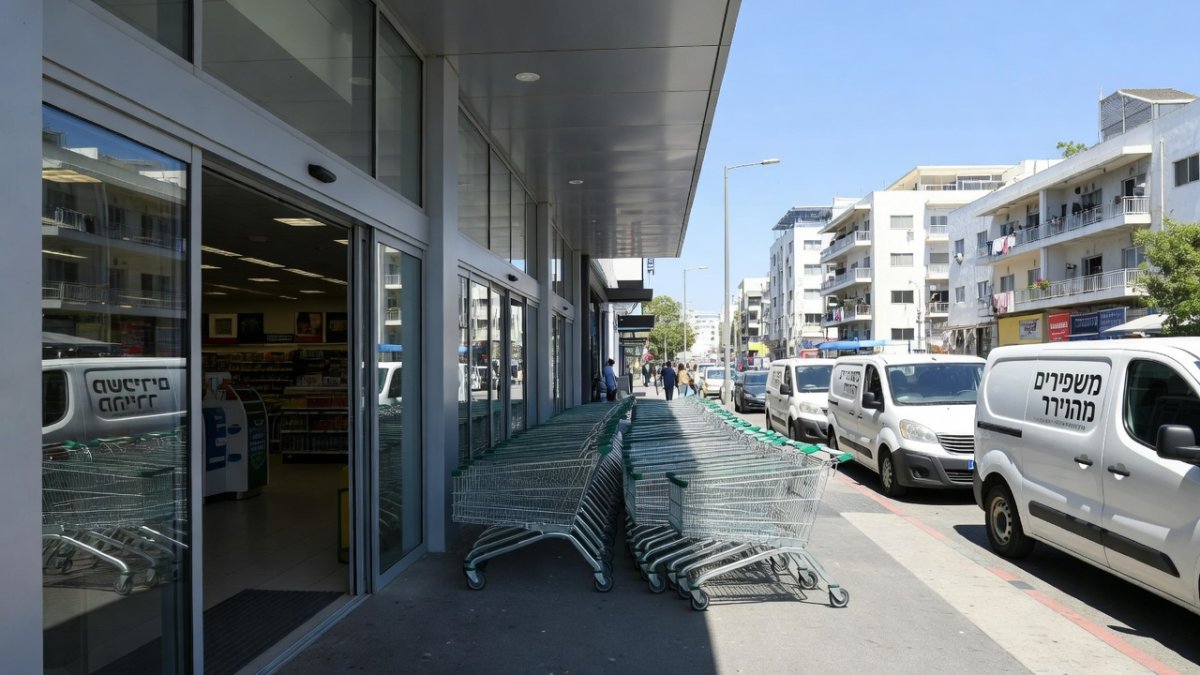
<img src="https://global1.news/uploads/images/202607/image_1200x_f0a2faa6dd9f56bf56ae2ffa4390cc28.jpg" alt="Shufersal supermarket in Israel with delivery vans" class="img-fluid"> <p></p> <p><strong>Shufersal Raises Delivery Fees by 20%: How Much Will Israelis Pay From Now On?</strong></p> <p><strong>Tel Aviv, Israel – This Week</strong> — The largest supermarket chain in Israel has increased its online delivery fee by 20 percent, adding another expense for households already managing rising food

Shufersal Raises Delivery Fees by 20%: How Much Will Israelis Pay From Now On?
Tel Aviv, Israel – This Week — The largest supermarket chain in Israel has increased its online delivery fee by 20 percent, adding another expense for households already managing rising food prices.
Shufersal Joins Other Chains in Raising Delivery Fees Amid Ongoing Cost Pressures
In recent days Shufersal has increased its online delivery fee from NIS 29.90 to NIS 35.90, a 20 percent jump that brings the largest marketing chain in Israel in line with Rami Levy, Victory, Machsanei HaShuk and Hatzi Hinam. Families across Tel Aviv, Jerusalem and other cities who rely on weekly deliveries now face an immediate addition of NIS 6 per order. For households placing several orders each month the extra cost quickly adds up to tens of shekels without any extra products entering the shopping cart. This change arrives at a time when food prices, beverage prices and household item prices have already climbed repeatedly, making the delivery fee increase another layer of the cost-of-living burden felt by Israeli consumers.
The move affects anyone who orders through the Shufersal Online website and expects the groceries to arrive at the doorstep. Previously the NIS 29.90 rate applied across the board, but the new NIS 35.90 rate now applies uniformly. Shoppers who previously budgeted around the lower fee must adjust their monthly household expenses accordingly. The increase mirrors similar adjustments made by other chains in recent months, showing that delivery pricing has become a shared pressure point across the sector rather than an isolated decision by one company.
Comparison of Delivery Fees Across Major Israeli Chains
After the Shufersal update, only three chains continue to hold delivery fees at NIS 29.90: Carrefour, Tiv Taam and Keshet Teamim. Carrefour maintains its rate at NIS 29.90 with no announced change. Tiv Taam keeps delivery at NIS 29.90 and continues to offer free delivery on orders over NIS 750 as part of a promotion valid until December 31, 2027. Keshet Teamim charges NIS 29.90 on orders up to NIS 750 and reduces the fee to NIS 14.90 once the order exceeds that threshold. These differences mean Israeli families can still compare options when planning where to shop online, though the window for lower-cost delivery is narrowing.
Victory and Machsanei HaShuk have not raised their base rates in the same way yet continue to provide free delivery on Sundays along with occasional promotions that grant free or discounted delivery. In contrast, the chains that have already moved to higher fees, including the new Shufersal rate of NIS 35.90, leave fewer low-cost choices for consumers who need deliveries on other days of the week. Minimum order requirements remain in place at most sites and typically range between NIS 250 and NIS 350, adding another consideration for smaller households that may not reach those thresholds easily.

Shufersal delivery drivers decorated vehicles with flowers (Image: Social media, used under Section 27A)
Self-Pickup Fees and Minimum Order Rules at Shufersal
Self-pickup at Shufersal carries its own charges that also affect total spending. Orders up to NIS 750 incur a NIS 15 service fee while orders above NIS 750 drop to NIS 10. These fees apply even when customers choose to collect their groceries themselves rather than pay for home delivery. Combined with the new NIS 35.90 delivery rate, the overall cost of receiving goods from Shufersal has risen whether the shopper selects delivery or pickup. Many families in Jerusalem or Tel Aviv who previously viewed pickup as a cheaper alternative now see that option carrying its own added expense.
Most marketing chain websites, including Shufersal, enforce minimum order amounts between NIS 250 and NIS 350 before any delivery or pickup service becomes available. This rule limits flexibility for smaller purchases and pushes consumers toward larger baskets to avoid extra fees or outright rejection of the order. The combination of higher delivery fees, pickup charges and minimum order thresholds means the path from website to kitchen table now carries more built-in costs for Israeli households managing tight budgets.
Operational Challenges Driving the Fee Increases
Marketing chains cite several operational factors behind the delivery price adjustments. Distribution companies have raised the rates they charge the chains, while the sector faces a shortage of delivery drivers. Companies are waiting for approval to bring additional drivers from India to ease the shortfall. Chains state that the delivery activity itself is not profitable and that they had no choice but to pass at least part of the increased costs to consumers. These explanations apply across Shufersal, Rami Levy, Victory, Machsanei HaShuk and Hatzi Hinam, all of which have updated rates in recent months.
The driver shortage directly influences service reliability and pricing decisions. With fewer available drivers, chains must either absorb higher contractor fees or adjust consumer prices to maintain operations. The planned import of drivers from India represents one potential long-term solution still awaiting approval, leaving current delivery services under continued cost pressure. Israeli families therefore experience the effects of these labor and logistics challenges every time they place an online order and see the updated fee at checkout.
Shufersal Coupon Program and Its Detailed Conditions
Alongside the delivery fee increase, Shufersal introduced a new coupon program available only for online orders. The program offers a 50 percent discount on selected leading products including a six-pack of Coca-Cola cans, Mateo olive oil, a pack of Huggies wipes, a Starkist tuna four-pack and Fitness crackers. Shufersal states that total savings can reach about NIS 130 per purchase when multiple coupons are used. The coupons are presented as an effort to offset some of the higher costs for customers who continue to order delivery.
However, the program includes several restrictions that limit its usefulness. Coupons are limited to two redemptions only, must be loaded before payment, and are valid solely for deliveries on Sundays through Tuesdays. They apply only between July 4 and 7 and require orders of at least NIS 399 from the supermarket category. The order amount does not include delivery fees or the value of the coupons themselves. Changing the delivery date after the order is placed cancels the benefit entirely. These conditions mean the 50 percent discounts on the Coca-Cola six-pack, Mateo olive oil, Huggies wipes, Starkist tuna four-pack and Fitness crackers are available only under narrow circumstances and may not help every household that needs groceries on other days or with smaller baskets.
What the Changes Mean for Israeli Families and Daily Life
For families in Tel Aviv, Jerusalem and throughout Israel who place multiple online orders each month, the shift from NIS 29.90 to NIS 35.90 adds a recurring expense that does not bring any additional items into the home. When combined with existing price increases on food products, beverages, cleaning supplies and toiletries, the delivery fee adjustment contributes to a broader rise in the cost of putting meals on the table. Households that once relied on convenient home delivery now weigh whether to absorb the higher fee, switch to self-pickup with its own NIS 15 or NIS 10 charges, or seek out the remaining chains that still charge NIS 29.90.
Victory and Machsanei HaShuk continue to offer free delivery on Sundays and occasional promotions, providing one avenue for cost-conscious shoppers. Tiv Taam maintains free delivery over NIS 750 until December 31, 2027, while Keshet Teamim reduces its fee to NIS 14.90 on larger orders. Carrefour holds steady at NIS 29.90. These options allow some comparison shopping, yet the overall trend shows delivery becoming a more expensive component of Israeli daily life. Shufersal noted in its response that it continues to subsidize service fees out of commitment to customers even while updating rates due to higher operational and delivery costs.
The cumulative effect touches every stage of the shopping process. Minimum order requirements between NIS 250 and NIS 350, pickup fees at Shufersal, the new NIS 35.90 delivery rate, and the fine print on the 50 percent coupon program for the Coca-Cola six-pack, Mateo olive oil, Huggies wipes, Starkist tuna four-pack and Fitness crackers all shape how families plan their weekly routines. As chains wait for approval to bring drivers from India and continue to face contractor price increases, the pressure on delivery pricing shows no immediate sign of easing. Israeli consumers therefore navigate a marketplace where both the contents of the shopping basket and the cost of bringing that basket home have grown more expensive in recent months.
By Hannah Berg, Staff WriterWhat's Your Reaction?
 Like
0
Like
0
 Dislike
0
Dislike
0
 Love
0
Love
0
 Funny
0
Funny
0
 Wow
0
Wow
0
 Sad
0
Sad
0
 Angry
0
Angry
0















Comments (0)