
Amazon Wildfires and the Tipping Point: Rainforest at Risk of Savannization
The Amazon is no longer whispering warnings—it is screaming them. Across the vast basin that spans nine South American nations, the world’s largest rainforest stands at the edge of a precipice where decades of chainsaws, flames, and rising heat could transform lush canopy into dry savanna within a single human lifetime. For the millions of Indigenous peoples, riverside communit
The Amazon is no longer whispering warnings—it is screaming them. Across the vast basin that spans nine South American nations, the world’s largest rainforest stands at the edge of a precipice where decades of chainsaws, flames, and rising heat could transform lush canopy into dry savanna within a single human lifetime. For the millions of Indigenous peoples, riverside communities, and city dwellers whose lives are woven into its rhythms, this is not an abstract climate model but an unfolding catastrophe already reshaping rainfall, agriculture, and survival itself.
Brasília, Brazil — July 2026
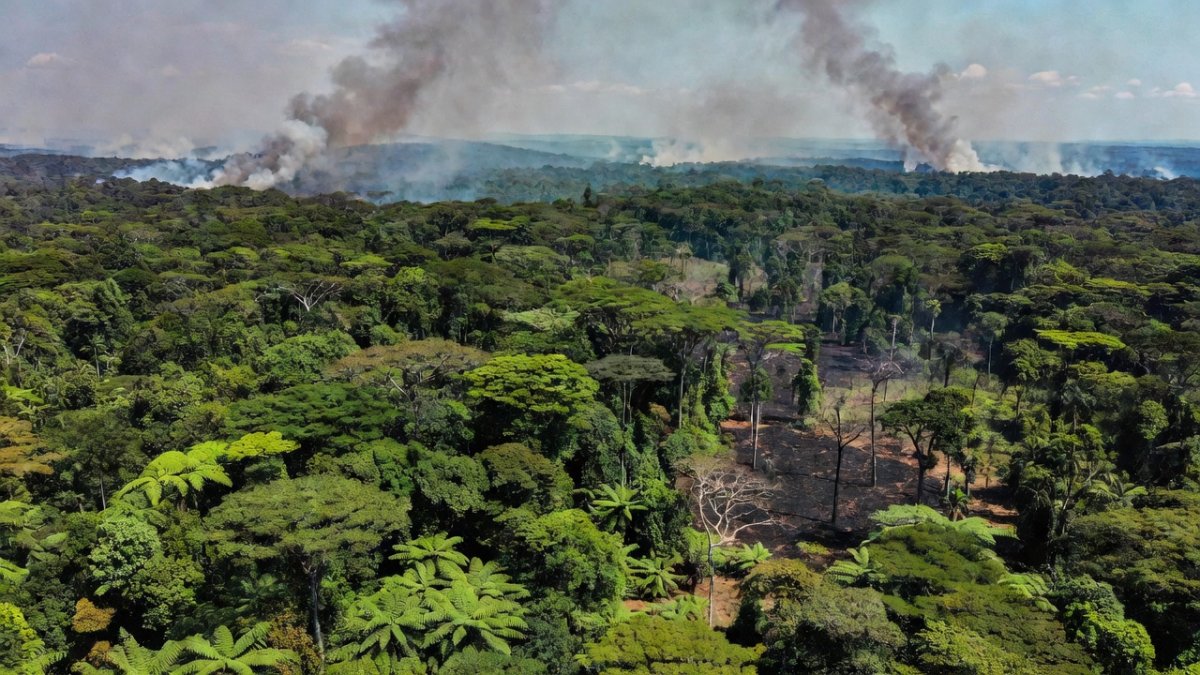
The Tipping Point: What Science Says
The May 2026 Nature study led by Nico Wunderling at the Potsdam Institute for Climate Impact Research (PIK) delivered a chilling recalibration: the Amazon basin could cross into irreversible savannization once deforestation reaches just 22-28 percent of its original extent. Current losses already hover at 17-18 percent, placing the forest alarmingly close to the danger zone. Earlier 2016 estimates by Brazilian scientist Carlos Nobre had placed the threshold at 20-25 percent; the new PIK analysis lowers that bar, underscoring how rapidly the window for action is closing. At global warming levels of 1.5-1.9°C above pre-industrial temperatures, the risk accelerates sharply, with models projecting that up to 70 percent or more of the Amazon could shift into degraded forest or open savanna. Tipping processes could begin as early as the 2040s under continued high-deforestation scenarios. The eastern and southern “arc of deforestation” already shows forest loss exceeding 14 percent in multiple 2024 hotspots monitored by Brazil’s National Institute for Space Research (INPE). The Amazon has ceased functioning as the planet’s strongest land carbon sink and now risks becoming a net emitter, releasing billions of tons of CO₂ once the threshold is crossed. More than 40 percent of Amazon rainfall originates from forest evapotranspiration, and up to 75 percent of recent rainfall declines across the basin have been directly linked to tree loss. These figures, drawn from PIK and INPE data, paint a portrait of a living system whose self-sustaining moisture cycle is fracturing under the combined assault of logging, agriculture, and climate change. For Brazil, Peru, Colombia, and the other seven Amazonian nations, the science is no longer theoretical—it is a countdown measured in remaining hectares and rising temperatures.
Deforestation Reverses Course — But Progress Is Fragile
Under President Lula and Environment Minister Marina Silva, Brazil has recorded a 35.4 percent overall drop in deforestation since the administration took office, with the Amazon Fund now expanded to cover the Cerrado and Pantanal biomes as well. May 2026 brought the largest monthly reduction in the historical series maintained by INPE since 2016: deforestation alerts fell 61.4 percent compared with May 2025, dropping from roughly 960 km² to 370 km². The ten-month cumulative total from August 2025 through May 2026 showed a 37.5 percent decline—the lowest figure in the entire series. Lula highlighted these numbers at the June 2026 meeting of the Observatório Regional Amazônico, reiterating the national goal of zero illegal deforestation by 2030. The Brazilian Institute of Environment and Renewable Natural Resources (IBAMA) and the Chico Mendes Institute for Biodiversity Conservation (ICMBio) have intensified enforcement across federal protected areas, while the Ministry of the Environment (MMA) coordinates inter-agency operations that have curbed illegal mining and cattle ranching incursions. Yet the Cerrado, Brazil’s biodiverse savanna frontier, still recorded a 12.2 percent reduction in alerts in May 2026, reminding observers that gains remain uneven. Indigenous territories continue to face pressure from cattle conflicts, illegal logging, and balsa tree extraction destined for wind-turbine blades. While the downward trend offers genuine hope, the 22-28 percent tipping threshold identified by PIK scientists means that even modest reversals in enforcement could push the basin past the point of no return. The data from INPE and IBAMA demonstrate that policy works when sustained, but the margin for error has narrowed to a razor’s edge.
Wildfire Season 2026: A Story of Two Trends
INPE’s assessment of the 2026 fire season reveals a striking split between progress and peril. In Amazonas state, fire hotspots dropped by as much as 93 percent compared with previous years, while nationally the count reached 19,462 foci between January and June 2026—a modest 0.96 percent increase over 2025. The Cerrado remained the hardest-hit region with approximately 7,580 foci, yet the Amazon biome itself ranked lower thanks to integrated fire management that reduced burned area by 32 percent against the ten-year average. June 2026 recorded a 14 percent year-over-year decline in hotspots. The government deployed a record 4,385 brigadistas—an increase of 26 percent—and added seven new helicopters, boosting aerial firefighting capacity by 133 percent. IBAMA and ICMBio coordinated these efforts across federal lands, while the expanded Amazon Fund now finances prevention in the Cerrado and Pantanal. Nevertheless, the National Institute of Meteorology (INMET) warned of above-average heat and elevated fire risk for Amazonas throughout July. Rio Solimões water levels near Tabatinga fell rapidly, and smoke once again blanketed Manaus, signaling the early arrival of the dry season. These contradictory signals—sharp reductions in some states alongside renewed meteorological threats—illustrate how fragile recent gains remain. Without continued investment in Indigenous-led monitoring and cross-border cooperation with Peru, Colombia, and Bolivia, the 2026 improvements could evaporate under a single intense drought year, pushing the basin closer to the savannization threshold identified by PIK researchers.
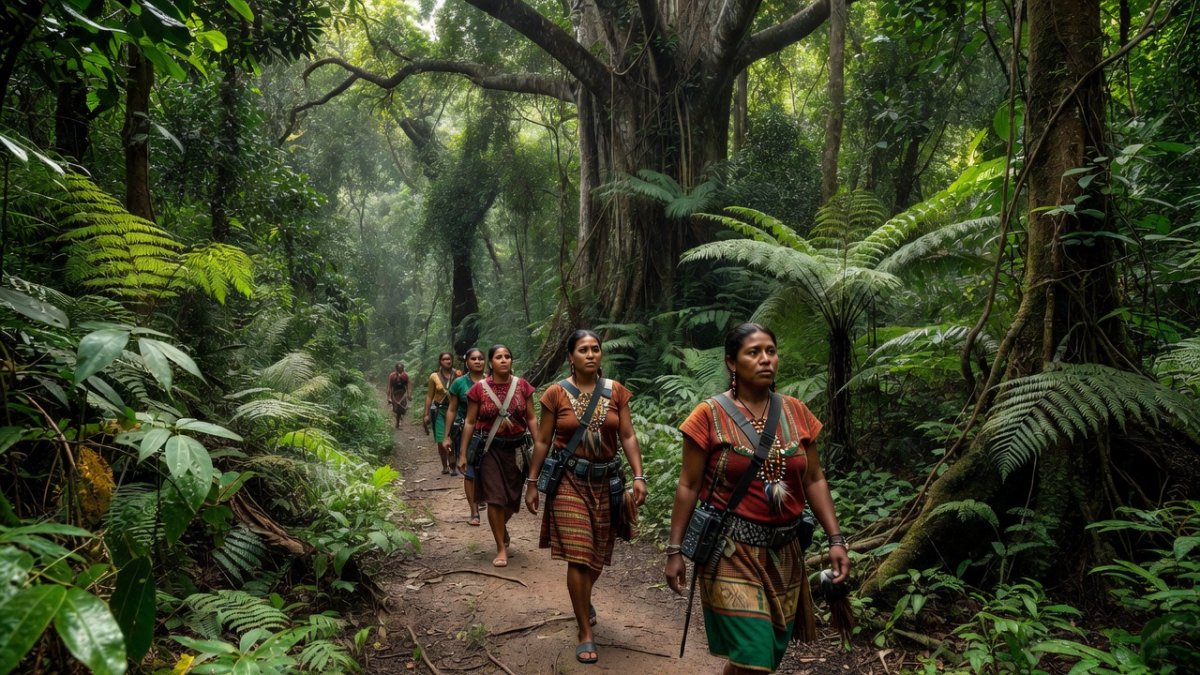
Indigenous Communities on the Front Line
Indigenous territories across the Brazilian Amazon and neighboring countries have become the most effective bulwarks against both deforestation and wildfire. The UNDP “Forest Warriors” initiative supports Indigenous women patrolling 170,000 hectares in Brazil and Peru, blending ancestral knowledge of firebreaks with satellite alerts and drone surveillance. In June 2026, leaders from Brazil and Peru exchanged fire-management techniques during a binational gathering that strengthened coordination along the shared border. These communities guard the remaining intact forests that still generate up to 40 percent of regional rainfall through evapotranspiration. Yet their lands face relentless encroachment from cattle ranching, illegal logging, and balsa extraction for export. In the arc of deforestation, several territories have already lost more than 14 percent of their canopy, placing them at the vanguard of the tipping-point risk mapped by the Potsdam Institute. The Brazilian government’s commitment to zero illegal deforestation by 2030 depends heavily on recognizing and expanding Indigenous territorial rights, a policy priority championed by Marina Silva at the MMA. Across the nine Amazon basin countries, Indigenous guardia indígena patrols operate from the Colombian Cauca region to the Peruvian Amazon, demonstrating that cultural stewardship remains the most reliable defense against the transition to savanna. Their success or failure will determine whether the 22-28 percent deforestation threshold is crossed.
Violence Against Defenders in a Changing Amazon
The human cost of protecting the forest continues to mount. On July 2, 2026, Front Line Defenders reported that armed invaders attacked Brazilian environmental defenders Alcione Figueiredo Correa and Marcos Fantini, holding them hostage and setting their home ablaze. Such violence is not random; fires are deliberately deployed to displace traditional communities, as seen in January 2026 when the Bacuri protected area in Chapadinha, Maranhão, was destroyed. Cattle conflicts, illegal logging, and balsa tree extraction for wind turbines increasingly target Indigenous lands, creating flashpoints where economic interests clash with territorial rights. IBAMA and ICMBio agents operate under constant threat while enforcing the Lula administration’s zero-deforestation target. The 35.4 percent reduction in clearing achieved since 2023 has provoked backlash from powerful agribusiness and mining lobbies. Across the basin, from the Brazilian states of Pará and Mato Grosso to the Peruvian and Colombian Amazon, defenders face intimidation that undermines the very enforcement successes celebrated at the Observatório Regional Amazônico. Without stronger protection for these frontline guardians, the scientific warnings issued by PIK researchers risk becoming self-fulfilling prophecies as forests fall to flames and axes.
The Global Stakes of a Savanna Amazon
Should the Amazon cross the 22-28 percent deforestation threshold identified in the May 2026 PIK study, the consequences would reverberate far beyond South America. Billions of tons of stored CO₂ would be released, accelerating global warming and potentially locking the region into a new stable state of degraded forest and savanna. Rainfall patterns across the continent would shift dramatically, threatening agriculture from Argentina’s soy fields to Colombia’s coffee highlands. The nine Amazonian nations—Brazil holding 60 percent of the basin, followed by Peru at 13 percent and smaller shares in Colombia, Venezuela, Ecuador, Bolivia, Guyana, Suriname, and French Guiana—would face cascading economic and humanitarian crises. The Amazon has already ceased acting as a reliable carbon sink; further losses could transform it into a net source, undermining global climate targets. For Latin America, the stakes are existential: altered monsoon cycles, intensified droughts, and the collapse of fisheries and hydropower that millions depend upon. The 2040s tipping timeline projected under high-deforestation scenarios leaves little room for complacency. International support through mechanisms such as the expanded Amazon Fund must match the urgency documented by INPE and PIK data.
The Bottom Line — What Comes Next
The 2026 reductions in deforestation and fire activity under Lula and Marina Silva prove that political will can bend the curve. Yet the lowered 22-28 percent threshold from the PIK study, combined with INMET’s July heat warnings and ongoing violence against defenders, shows that the margin for reversal is vanishing. Brazil’s IBAMA, ICMBio, and MMA must sustain enforcement while empowering Indigenous patrols that already safeguard 170,000 hectares. Cross-border cooperation with Peru and Colombia on fire management offers a model for the entire basin. The choice is stark: accelerate the 35.4 percent decline toward zero illegal deforestation by 2030, or watch the Amazon transform from the world’s greatest rainforest into a net carbon source and regional rainfall disruptor. The data from INPE and the Potsdam Institute are unambiguous. The forest, and the communities who call it home, cannot afford further delay.
By Elena Vasquez, Staff WriterThis article was produced with AI-assisted research and editorial support. Reporting is based on sources cited in the article.
What's Your Reaction?
 Like
0
Like
0
 Dislike
0
Dislike
0
 Love
0
Love
0
 Funny
0
Funny
0
 Wow
0
Wow
0
 Sad
0
Sad
0
 Angry
0
Angry
0

Latin America Correspondent at Global1.News. Based in Mexico City, covering politics, economics, energy, and culture across the region. Brings an on-the-ground perspective to stories spanning from the Rio Grande to Patagonia.















Comments (0)