
Israel's Occupation of Southern Lebanon Blocks Army Deployment, President Aoun Warns
President Aoun's Monday Video Call President Joseph Aoun stated during a video call on Monday that Israel must be pressured to withdraw from the areas it occupies in Lebanon. He addressed the American Task Force on Lebanon, emphasizing that the ongoing occupation directly prevents the Lebanese army from deploying in southern regions. Aoun described the situation as a barrier to
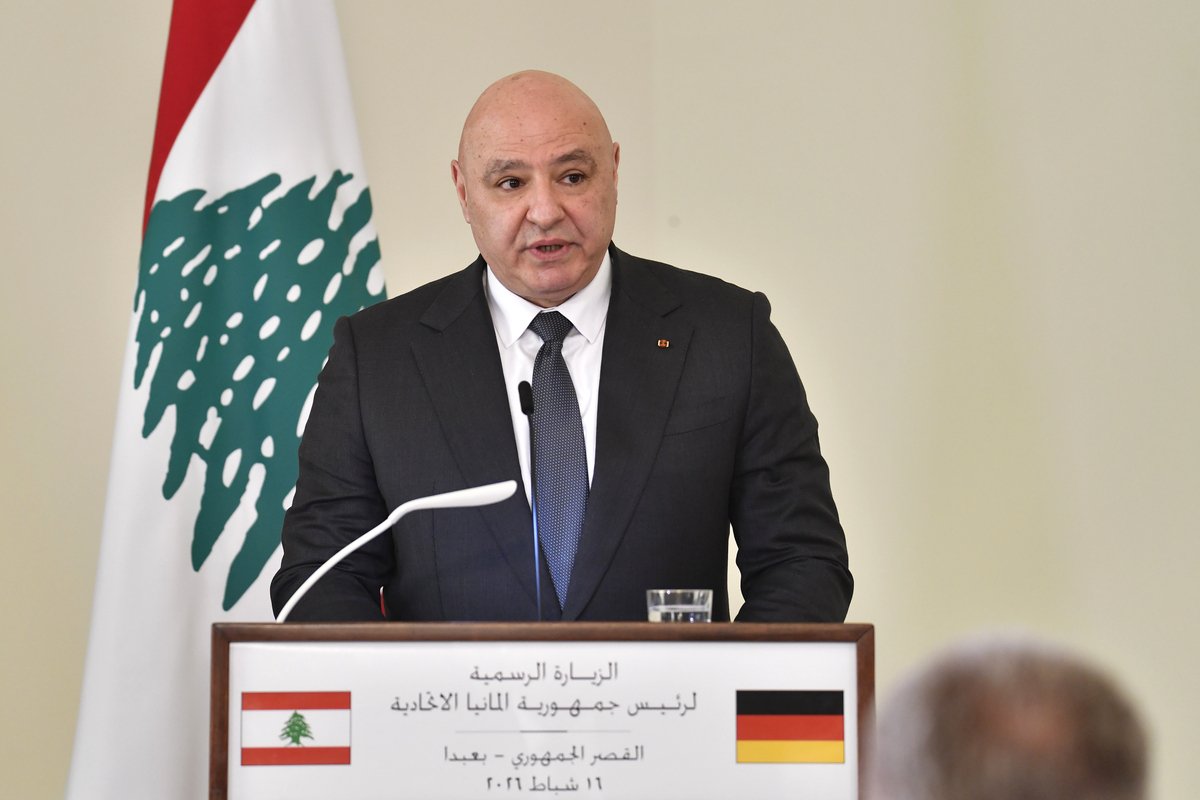
President Aoun's Monday Video Call
President Joseph Aoun stated during a video call on Monday that Israel must be pressured to withdraw from the areas it occupies in Lebanon. He addressed the American Task Force on Lebanon, emphasizing that the ongoing occupation directly prevents the Lebanese army from deploying in southern regions. Aoun described the situation as a barrier to restoring full state control, according to his remarks in the call.
The American Task Force on Lebanon served as the audience for Aoun's statements, which focused on the need for external pressure to achieve withdrawal. He highlighted that the Lebanese army and security forces remain the cornerstone of stability and security in the south. Without their deployment, residents cannot return to their towns and homes, Aoun stressed in the video conference.
Aoun explained that negotiation is the only option left after the war failed to achieve its declared objectives. He noted that the suspension of lawsuits between Israel and Lebanon applies only during the negotiation period and does not mean abandoning these claims entirely. This limited suspension ties directly to efforts to enable displaced families to return once occupation ends.
The president connected the occupation to the displacement crisis, stating that families remain blocked from returning to their homes. He warned that unless Israel withdraws from Lebanese territory, the situation will not serve the goals set by Washington and Beirut regarding the restoration of Lebanon's sovereignty, independence, and strong institutions. Aoun's comments underscored the human impact on those unable to resume normal lives.
June 26 Framework Agreement Analysis
The United States played a central mediation role in the framework agreement signed on June 26 between Lebanon and Israel. American diplomats facilitated discussions that outlined a phased Israeli withdrawal from Lebanese territory. The agreement emerged from talks aimed at de-escalation, with the US providing the structure for phased steps, according to details released by Lebanese officials.
The agreement contains no timetable for a full withdrawal, leaving the pace dependent on other conditions. Lebanese officials described this absence as a point of concern, noting that it allows occupation to continue without a fixed deadline. The document focuses instead on sequential actions rather than a calendar-based process.
Further pullbacks remain linked to the Lebanese army assuming security responsibilities and the disarmament of non-state armed groups, including Hezbollah. This conditionality ties each stage of withdrawal to specific security changes on the ground. Officials said the arrangement requires the army to fill any vacuum left by withdrawals before additional territory is returned.
Lebanese officials described the agreement as a first step toward restoring state sovereignty over all its territory and allowing displaced people to return to their towns. They stressed that practical implementation begins with initial limited pullbacks, followed by army deployment in those areas. The first step involves verification mechanisms to confirm compliance before proceeding to subsequent phases.
History of Occupation (1967 to Present)
Israeli forces seized the Shebaa Farms area in 1967, establishing the initial occupied zone in what Lebanon considers its territory. This seizure marked the start of a prolonged presence that has persisted through multiple conflicts. Official Lebanese records trace the occupation's origins to this period, with no resolution achieved in subsequent decades.
The 1978 invasion added further territory to the occupied zones, expanding Israeli control beyond the initial farms. This operation incorporated additional villages and land into areas under direct military administration. Lebanese government statements have consistently described these expansions as violations of sovereignty that remain unresolved.
The 2006 war created more occupied zones along the border, with Israeli positions established in several locations after the conflict. These zones added to the areas held since earlier periods. UN Security Council resolutions calling for withdrawal from all Lebanese territory have remained unfulfilled, according to repeated statements from Lebanese authorities.
During the 2023-2024 advance, Israeli forces pushed more than 10 kilometers into Lebanese territory, according to official figures. This latest expansion built on previous holdings, with some areas occupied for decades and others seized recently. Multiple generations of Lebanese residents have grown up under occupation in these southern regions, as noted in statements from displaced communities.
Human Toll Since March 2
Israeli attacks in Lebanon since March 2 have killed more than 4,300 people and injured over 12,000 others, according to official figures from Lebanese health authorities. These numbers reflect the scale of casualties reported across affected regions. The figures continue to rise as assessments of the conflict's impact proceed.
The displacement crisis has forced families into temporary shelters, with many unable to return due to ongoing occupation. Official reports document thousands of households relocated to schools, community centers, and makeshift camps. This movement has strained resources in host areas and left original homes inaccessible.
Destroyed infrastructure includes roads, schools, and hospitals that sustained damage during the period of attacks. Lebanese government assessments list extensive repairs needed before normal operations can resume in southern areas. The loss of these facilities has compounded difficulties for residents attempting to maintain daily routines.
Economic impact has included abandoned agricultural land and destroyed businesses, according to ministry reports. The medical system faces strain from mass casualties, with hospitals reporting shortages of supplies and capacity. These conditions have limited treatment options for the wounded and displaced populations.
Hezbollah's Rejection and Domestic Fallout
Hezbollah called the June 26 agreement null and void, stating that linking Israeli withdrawal to its disarmament crossed all red lines. The group's position centers on the disarmament clause as an unacceptable condition. This rejection has created immediate obstacles to implementing the framework's phased steps.
The disarmament clause remains the central flashpoint in discussions about the agreement. Hezbollah's stance has prompted debates within Lebanon about how to proceed with army deployment plans. Officials have noted that this clause affects the sequence of withdrawal and security handovers.
Domestic political divisions in Lebanon have widened following the agreement's announcement. Different factions have expressed varying levels of support or opposition, complicating unified responses. These divisions influence parliamentary and governmental discussions on next steps for southern Lebanon.
Internal disagreements affect army deployment prospects by delaying decisions on resource allocation and operational planning. Aoun has called for national unity despite opposition, urging all parties to prioritize state institutions. His statements emphasize that army deployment requires broad domestic consensus to succeed.
Civil War Warning and Path Forward
Aoun stated that there is no place for civil war in Lebanon and that its return is not on the table, despite attempts by some parties to rekindle sectarian strife. He stressed the importance of maintaining national cohesion during negotiations. This position aims to prevent internal conflict from undermining external diplomatic efforts.
Negotiation is the only option left after the war failed to achieve its declared objectives, Aoun said. He called for sustained international pressure on Israel to complete withdrawals. Without such pressure, the phased agreement risks stalling at early stages.
The role of US diplomacy remains essential in maintaining momentum toward full implementation. American mediators continue to facilitate talks between the parties. Aoun noted that coordinated international involvement can help address gaps in the current framework.
Army deployment serves as the prerequisite for returns and reconstruction in occupied areas. Aoun linked this step to enabling residents to rebuild their lives once sovereignty is restored. Progress on deployment would allow displaced families to begin the process of returning to their towns and homes.
By Fatima Al-Rashid, Staff WriterThis article was produced with AI-assisted research and editorial support. Reporting is based on sources cited in the article.
What's Your Reaction?
 Like
0
Like
0
 Dislike
0
Dislike
0
 Love
0
Love
0
 Funny
0
Funny
0
 Wow
0
Wow
0
 Sad
0
Sad
0
 Angry
0
Angry
0

Gulf/MENA Correspondent at Global1.News. Based in Doha, covering Gulf politics, energy markets, diplomacy, and development across the Middle East and North Africa. Tracks the economic transformation of the Gulf states.














Comments (0)