
Amani Festival 2026: Driven From Goma, Carrying Peace to Lubumbashi
For years, the Amani Festival has been the cultural heartbeat of Goma, a city in eastern Democratic Republic of Congo that has known far more than its share of conflict. But this year, the iconic event made an extraordinary journey — relocating more than 1,600 kilometres south to Lubumbashi, turning displacement into a powerful statement about the resilience of Congolese cultur
For years, the Amani Festival has been the cultural heartbeat of Goma, a city in eastern Democratic Republic of Congo that has known far more than its share of conflict. But this year, the iconic event made an extraordinary journey — relocating more than 1,600 kilometres south to Lubumbashi, turning displacement into a powerful statement about the resilience of Congolese culture and its unwavering message of peace.
Amani Festival 2026: Driven From Goma, Carrying Peace to Lubumbashi
Dakar, Senegal — In April 2026, the Amani Festival — whose name means "peace" in Swahili — proved that culture cannot be silenced by war. Forced to leave its home city of Goma due to the escalating M23 conflict in eastern DRC, the 11th edition found new ground in Lubumbashi, the mining capital of Haut-Katanga province. What emerged was not a diminished event, but a transformed one — a testament to the festival's founding belief that where weapons divide, culture unites.
From Goma to Lubumbashi: A Festival Displaced
The decision to relocate came after M23 forces occupied Goma since January 2025, creating an environment too insecure for large public gatherings. Founded in 2014 in Goma, North Kivu, the festival that means "peace" in Swahili could no longer guarantee safety for artists or the thousands who once flocked to its stages.
Over 1,600 km south, Lubumbashi offered an unexpected home. The 11th edition, described as the "10+1," landed at Complexe Kiwele in Haut-Katanga province for three days of music, dance, visual arts, children's village activities, and peacebuilding from April 10-12, 2026.
Director Augustin Mosange spoke plainly about the constraints: "artists cannot travel to an area outside Kinshasa's control." Several international names cancelled, forcing the team to rebuild the program under tight deadlines and a sharply reduced budget of roughly $200,000, half the usual $400,000-500,000.
The festival had already shown its resilience. The 10th edition took place in Bukavu in 2024 amid uncertainty, and organizers skipped 2025 entirely because of security concerns. This move to Lubumbashi was therefore not entirely new territory, but it still demanded extraordinary improvisation.
RFI captured the spirit perfectly when it called the event "délocalisé, bousculé, mais jamais affaibli." Displaced and shaken, yes, but never weakened. That phrase echoed through every conversation in Lubumbashi as crews worked around the clock to erect stages and welcome artists from across the Great Lakes region.
Previous editions had drawn over 30,000 attendees, a number the team hoped to approach again despite the shorter preparation time and smaller budget. The determination to keep the doors open spoke louder than any obstacle.
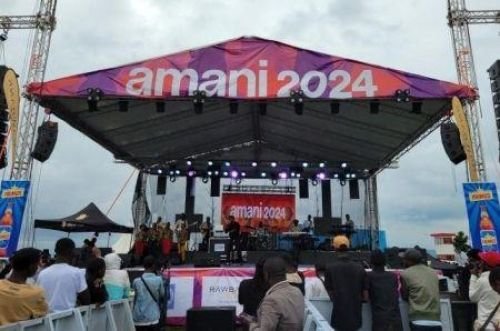
A Lineup Built for Unity: Youssoupha, Ferre Gola and the Heart of Congolese Music
The artistic program remained unmistakably Congolese. Headliners Youssoupha, Ferre Gola, and Innoss'B anchored three unforgettable nights that blended diaspora energy with homegrown rhythms. Youssoupha's Franco-Congolese perspective bridged continents, reminding young people that identity travels with them wherever they go.
Ferre Gola delivered his signature rumba with an electric crowd response that turned Complexe Kiwele into a single moving body. His performance carried the warmth of Kinshasa nights and the quiet defiance of artists who refuse to let conflict steal their joy.
Innoss'B closed the festival with a human message that left many in tears. His contemporary sound carried explicit calls for peace, proving that the newest generation understands both the power of melody and the weight of responsibility.
Supporting acts RJ Kanierra, Jean Goubald Kalala, Boodhy Satva, Pson, and M-Joe filled the program with rumba classics and fresh compositions. Artists from the Great Lakes region wove peace messages into every set, turning the stage into a living conversation about unity.
The ambiance électrique at Complexe Kiwele came alive each evening under brilliant lights and the roar of energetic crowds. Even with a reduced budget, the production team created moments of pure magic that made the long journey from Goma feel worthwhile.
These performances reaffirmed that Congolese music remains one of Africa's most powerful cultural exports, capable of healing wounds that politics alone cannot reach.
Re-Devenir: The Theme of Rebirth and Resilience
The official theme "Re-Devenir" captured the essence of rebirth and resilience. After being forced from its birthplace, the festival itself was becoming again, proving that displacement can spark new growth rather than permanent loss.
Since its founding in 2014, Amani has carried the slogan "Là où les armes divisent, la culture rassemble." In Lubumbashi that promise felt more urgent than ever. The three days of music, dance, visual arts, children's village, and peacebuilding activities gave concrete form to those words.
Children participated in workshops that taught conflict resolution through play and storytelling. Their laughter reminded everyone present that peace is not an abstract idea but a daily practice passed from one generation to the next.
The relocation itself became an act of cultural resistance. By refusing to cancel, organizers sent a clear signal that Congolese creativity will not be held hostage by armed groups or shifting front lines.
Community engagement extended beyond the venue gates. Local markets saw increased activity, and young volunteers gained skills in event management and cultural production that will serve them long after the stages are dismantled.
Re-Devenir was therefore more than a slogan; it was a lived experience shared by every artist, volunteer, and spectator who made the journey south.
Leadership and Vision: Prime Minister Suminwa Opens the Festival
DRC Prime Minister Judith Suminwa inaugurated the festival with a speech that framed culture as essential infrastructure for peace. Her presence signaled that the government recognizes the sector's role in national unity and social cohesion.
She spoke directly about job creation and tourism, noting that well-supported festivals can generate seasonal employment and attract visitors from across the continent. The message resonated in a city whose economy has long centered on mining.
Minister of Culture Yolande Elebe Ma Ndembo attended alongside the Prime Minister. She highlighted the need for sustainable cultural ecosystems that provide reliable income rather than one-off events.
Panels during the festival addressed public policy for the cultural sector and the revitalization of the Fonds de Promotion Culturelle. Artists and administrators sat together to discuss concrete steps toward long-term institutional support.
Government backing transformed the event from a purely civil-society initiative into a strategic investment in social transformation. The partnership demonstrated that when authorities and artists work together, culture becomes a tool for development rather than mere entertainment.
This official engagement gave the displaced festival a new kind of legitimacy and opened doors for future editions in other provinces.
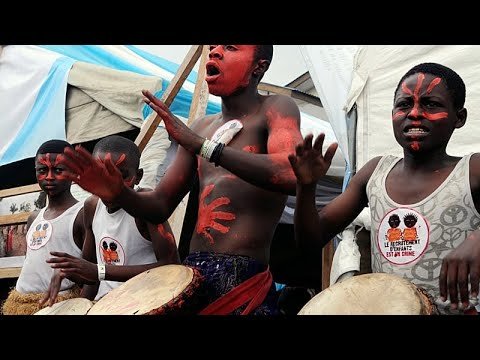
Peace Through Partnership: UNICEF, Youth, and Community Impact
UNICEF and UNFPA maintained a visible presence with interactive stands that engaged thousands of young festival-goers. Their teams registered over 100 youth for U-Report, the digital platform that allows young people to voice concerns and participate in community change.
Focus Droits et Accès, in partnership with UNDP, ran dedicated peacebuilding and resilience activities throughout the three days. These workshops created safe spaces for dialogue on issues that often remain unspoken in conflict-affected regions.
Musician Pinochet Kasay reminded audiences that music itself is an act of resistance. His words echoed the festival's founding belief that rhythm and melody can reach places where weapons cannot.
The event served as a platform for open conversation about peace and social cohesion in eastern DRC. Panelists and performers alike addressed the root causes of instability while celebrating the everyday heroism of communities that choose dialogue over division.
Each evening closed with an explicit call to peace and social cohesion. The final night ended with artists and audience members standing together, voices raised in a collective pledge that the message of Amani would travel back to every corner of the country.
These partnerships showed that culture and humanitarian work can reinforce each other, creating lasting networks that extend far beyond any single festival weekend.
Looking Ahead: From Lubumbashi to Luanda and Beyond
The successful adaptation in Lubumbashi proved culture's unmatched power to foster unity and generate economic impact even under difficult circumstances. Organizers left the city with renewed confidence that major events can be mounted anywhere peace allows.
Discussions began about institutionalizing such festivals as instruments of DRC's soft power. The idea that culture can project a positive national image abroad gained traction among both artists and policymakers.
Links were strengthened with the Biennale de Luanda in Angola, scheduled for October 2026. The connection promises cross-border exchanges that could expand the reach of Congolese artists and ideas across Southern Africa.
The Amani Festival now joins a broader push for cultural tourism that includes Kolwezi Fashion Week and other emerging initiatives. Together these events position the DRC as a destination where creativity and hospitality flourish alongside its mineral wealth.
Questions remain about future editions. Will Amani return to Goma when peace allows? Organizers say the answer depends on security, yet the spirit that carried the festival 1,600 km south suggests it will continue wherever Congolese people gather to celebrate life.
What is certain is that the resilient spirit of Congolese culture has found new expression in Lubumbashi. From this southern city, the message of peace travels onward, carried by voices that refuse to be silenced.
By Amara Diop, Staff Writer
This article was produced with AI-assisted research and editorial support. Reporting is based on sources cited in the article.
What's Your Reaction?
 Like
0
Like
0
 Dislike
0
Dislike
0
 Love
0
Love
0
 Funny
0
Funny
0
 Wow
0
Wow
0
 Sad
0
Sad
0
 Angry
0
Angry
0

West Africa/Sahel Correspondent at Global1.News. Dakar-based journalist covering politics, security, climate, and development across Francophone and Anglophone West Africa. Tells the stories of a region undergoing profound transformation.













Comments (0)