
China's Humanoid Robots Surge Pressures Japan's Robotics
China's robotics sector is moving humanoid machines out of research facilities and into active commercial roles at an accelerated pace. Domestic manufacturers are scaling production while lowering prices, creating new deployment opportunities in manufacturing, retail, and household settings. This expansion carries direct implications for Japan's long-standing position in indust
China's robotics sector is moving humanoid machines out of research facilities and into active commercial roles at an accelerated pace. Domestic manufacturers are scaling production while lowering prices, creating new deployment opportunities in manufacturing, retail, and household settings. This expansion carries direct implications for Japan's long-standing position in industrial automation.
China's Humanoid Robotics Expansion Tests Japan's Automation Strategy
Tokyo, Japan — June 2026
China's Humanoid Robot Production Scales Up
Chinese firms have increased output of humanoid platforms significantly. TrendForce forecasts a 94 percent rise in domestic humanoid robot production for 2026. Unitree Robotics and AgiBot are expected to account for nearly 80 percent of that volume. China already supplied the large majority of the roughly 16,000 humanoid units shipped worldwide in 2025.
Unitree's G1 model is offered at retail prices between $13,500 and $16,000. The company recently received clearance for an initial public offering. AgiBot reported production of 10,000 units and leads projected shipments for 2025. These figures reflect concrete manufacturing capacity rather than laboratory prototypes.
From Factory Floors to Retail Stores
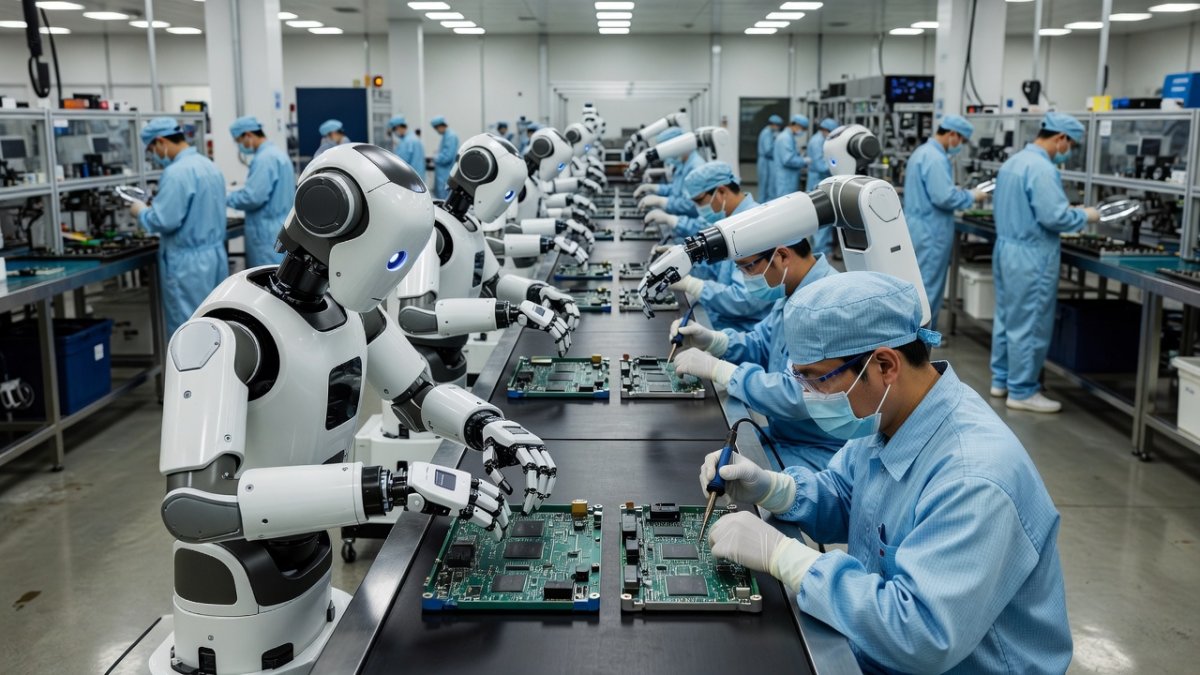
Deployment examples now extend beyond research settings. UBTech's Walker S robots operate on assembly lines at Dongfeng Motor. Other platforms demonstrate tasks such as folding laundry, serving beverages, and performing precision component placement. A humanoid robot participated in the Beijing half-marathon, illustrating mobility progress.
Unitree G1 units are available for direct purchase at E-Mart stores in South Korea. These retail channels indicate movement toward broader commercial accessibility. Production volumes and price points together support faster adoption across multiple sectors.
Japan's Robotics Landscape Under Pressure
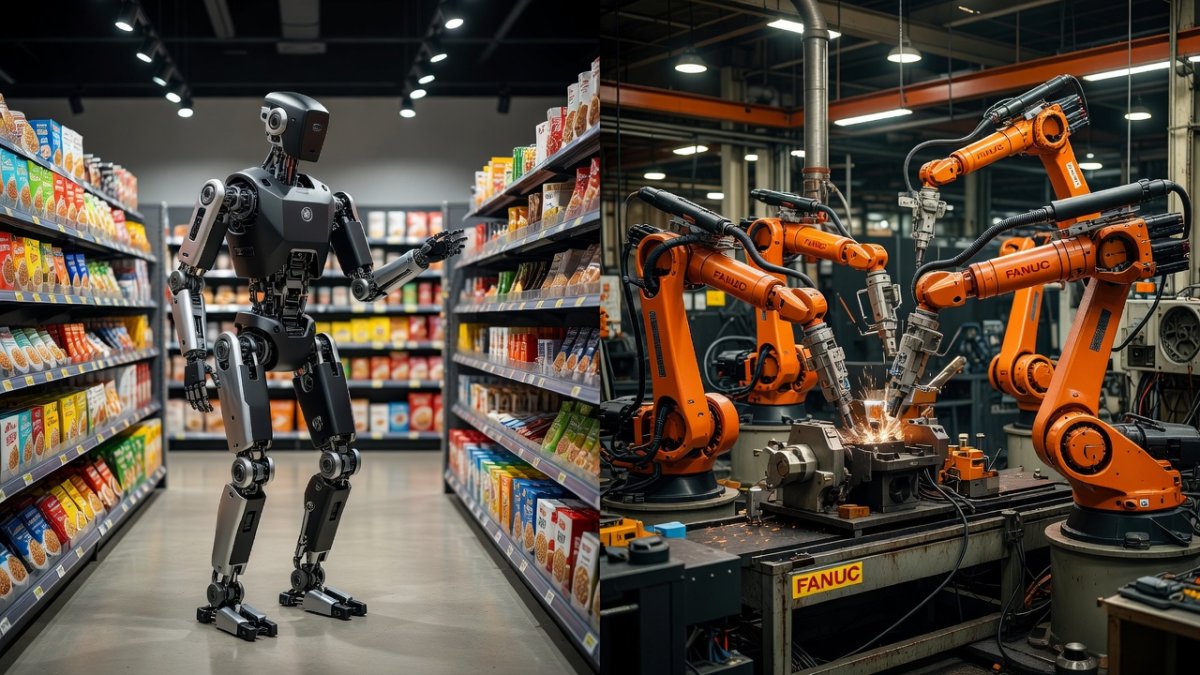
Japan maintains established strengths through companies such as FANUC, Yaskawa, and Kawasaki in industrial robotics. Government initiatives under METI continue to promote robotics integration as part of the Society 5.0 vision. Demographic decline and labor shortages provide strong domestic incentives for automation adoption.
Japanese humanoid programs, including earlier Pepper models from SoftBank, HRP-series platforms developed by AIST, and Toyota's Partner Robot efforts, have focused on research and selective applications. China's combination of volume manufacturing and lower unit costs introduces new competitive variables for Japanese suppliers seeking to retain market position.
Implications for Asia Pacific Competition
Price competition from Chinese platforms may influence procurement decisions across manufacturing supply chains in the region. Japanese firms could respond by emphasizing reliability, integration services, and specialized software rather than competing solely on hardware cost. METI policy documents continue to stress the need for domestic technology advancement alongside international collaboration.
Supply chain considerations also arise. Japanese robot makers source certain components regionally; expanded Chinese production capacity could affect pricing dynamics for shared parts. Both countries face similar labor-force constraints, yet their approaches to scaling humanoid applications differ in speed and target segments.
Expert Perspectives on the Robotics Race
Industry analysts note that China's rapid iteration cycles allow quicker feedback from real-world deployments. Japanese observers highlight the importance of safety certification, long-term maintenance networks, and compatibility with existing factory systems. These factors remain differentiators even as hardware costs decline elsewhere.
Policy discussions in Tokyo continue to weigh support for next-generation platforms against the immediate needs of small and medium manufacturers. METI programs have historically backed both incremental improvements to industrial arms and longer-term humanoid research.
What to Watch For
Further clarity on Unitree's IPO timeline and subsequent capacity investments will indicate the durability of current growth rates. Additional deployments at major Chinese automotive and electronics plants could accelerate technology validation. Japanese companies' responses in product roadmaps and partnership announcements will reveal strategic adjustments.
Regulatory developments around robot safety standards in both countries may also shape cross-border market access. Continued monitoring of actual shipment data versus projections will help distinguish sustained trends from short-term surges.
China's production momentum in humanoid robotics is altering competitive conditions for Japan’s automation sector. Japanese policymakers and manufacturers are evaluating how to leverage existing industrial expertise while addressing cost and scale challenges presented by newer entrants.
By Kenji Tanaka, Staff Writer
This article was produced with AI-assisted research and editorial support. Reporting is based on sources cited in the article.
What's Your Reaction?
 Like
0
Like
0
 Dislike
0
Dislike
0
 Love
0
Love
0
 Funny
0
Funny
0
 Wow
0
Wow
0
 Sad
0
Sad
0
 Angry
0
Angry
0

Japan Correspondent at Global1.News. Tokyo-based voice covering Japanese politics, technology, economy, and culture. Tracks the intersection of tradition and innovation in one of the world's most dynamic societies.















Comments (0)