
Gaza Life Flickers as Power Cuts Shatter Livelihoods
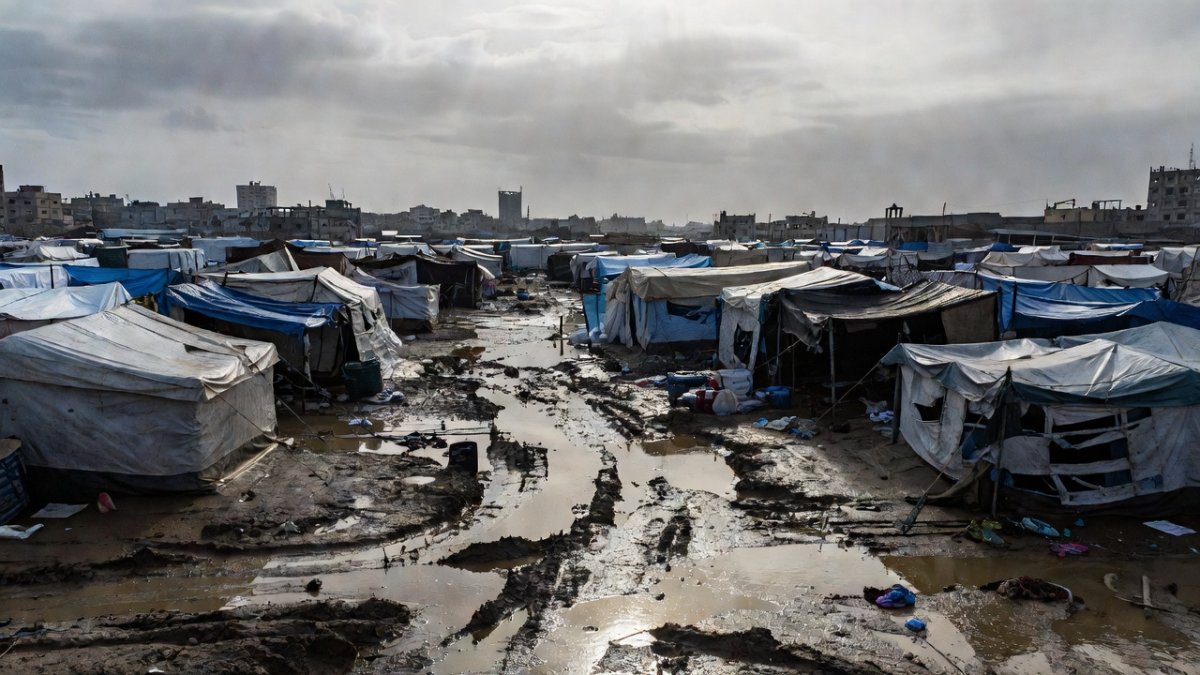
In a recent Middle East Eye report documenting how winter rain kills and injures Palestinians amid Gaza's shattered infrastructure, families in tents and flooded displacement camps face lethal conditions because the territory's electricity grid has been systematically dismantled. The footage captures children dying from cold and water rising around makeshift shelters — direct c
In a recent Middle East Eye report documenting how winter rain kills and injures Palestinians amid Gaza's shattered infrastructure, families in tents and flooded displacement camps face lethal conditions because the territory's electricity grid has been systematically dismantled. The footage captures children dying from cold and water rising around makeshift shelters — direct consequences of a power system destroyed at the outset of Israel's military campaign in October 2023.
Israel severed all power lines into Gaza at the start of that campaign. The territory's sole power plant exhausted its fuel reserves and shut down on 11 October 2023. Since then, residents have endured near-total darkness, relying on scarce solar panels or expensive private generators whose fuel supplies remain tightly restricted even after the ceasefire signed in October 2025.
Gaza Life Flickers as Power Cuts Shatter Livelihoods
Gaza City, Occupied Palestinian Territory – July 7, 2026 — Nearly three years into Israel's blockade and military campaign, Gaza's 2.2 million residents face a compounding energy catastrophe that predates the current war and has no end in sight.
Roots of the Crisis Before October 2023
Gaza's electricity shortages began long before the current war. In 2006, Israeli forces bombed the main transformers supplying the strip, reducing available power to roughly six hours per day for most residents. Successive blockades prevented the entry of spare parts, fuel imports and infrastructure repairs, leaving the grid fragile and dependent on external supply lines that Israel controlled.
These pre-existing conditions meant hospitals, water pumps and bakeries already operated on intermittent schedules. When the final cutoff occurred in 2023, the collapse was total rather than gradual, amplifying every existing vulnerability across Gaza City, Khan Younis and Rafah.
Businesses Destroyed by Sudden Blackouts
Abrar Abdu, 34, operated a small cake business in Gaza City before displacement forced its suspension. One generator failure destroyed 27 cakes she had prepared for paying customers. She refunded every order and absorbed the full loss — an outcome repeated across countless small enterprises that once sustained families across the enclave.
"I have incurred devastating financial losses due to the chronic instability of the electricity generators," Abdu told Middle East Eye. "This leaves us in a constant struggle against financial ruin, the loss of our clientele, and the burden of paying workers who support their families amid extreme poverty."
Solar installations remain out of reach for most households. Units capable of basic household needs cost up to 5,000 shekels, roughly 1,400 dollars — an amount far beyond the means of families already displaced multiple times. Without reliable power, refrigeration, lighting and small-scale production have ceased for entire neighbourhoods.
Hospitals Operating on Failing Equipment
At Al-Shifa Medical Complex, director Mohammed Abu Salmiya reports that critical generator components have worn beyond repair. Intensive care units, neonatal incubators and dialysis centres now function under constant threat of sudden failure. Hundreds of patients wait indefinitely for surgeries that cannot proceed without stable electricity.
"These departments cannot afford even a minute of downtime. Consequently, we have been forced to shut down non-critical wards to keep life-saving sections operational," Abu Salmiya told Middle East Eye. He added that fluctuating power supplies have damaged vital medical equipment, particularly in the absence of backup uninterruptible power supply units.
These conditions compound the earlier destruction of medical infrastructure. Even when ceasefire terms took effect, the absence of spare parts and fuel continues to shorten the operational life of every remaining machine, placing newborns and chronic patients at immediate risk.
The Generator Economy and Rising Costs
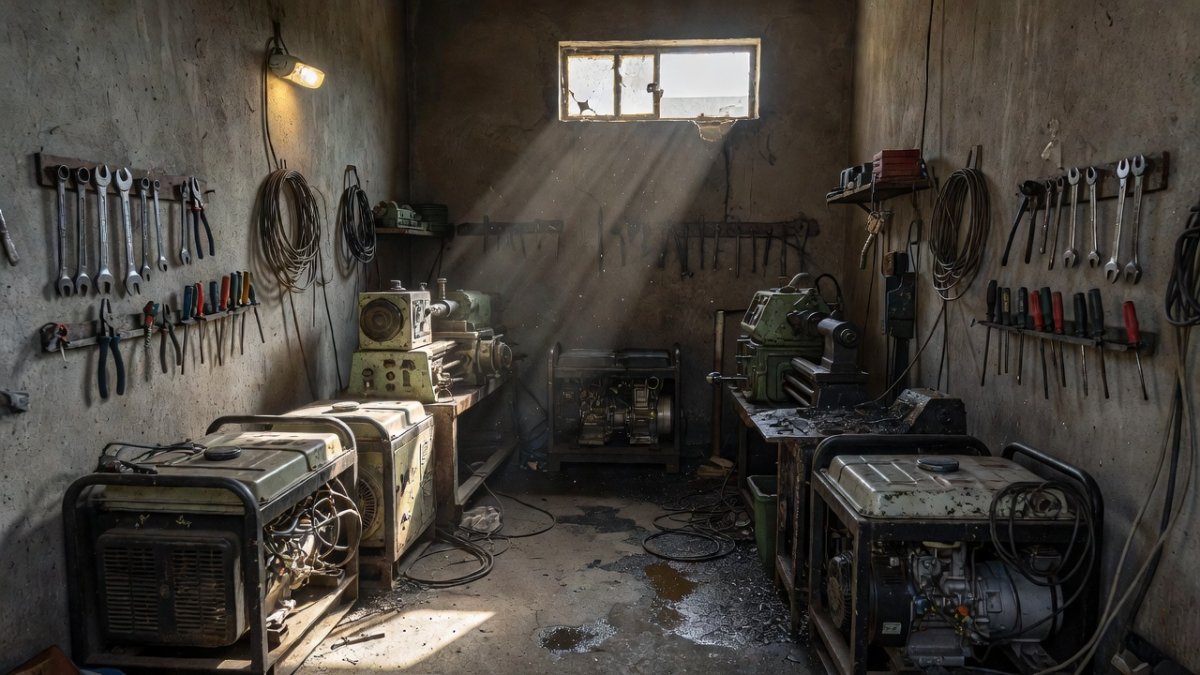
Mustafa Abu Hassira of the Association of Generator and Alternative Energy Owners stated that 60 of the 150 generators once serving basic community needs have stopped completely. Mineral oil prices have risen from 14 shekels to 1,500 shekels per litre, forcing operators to experiment with industrial diesel and cooking oil as makeshift substitutes that accelerate engine damage.
"If the current situation persists, Gaza will sink into total darkness," Abu Hassira warned. "If these generators continue to fail without the necessary oils and parts for maintenance, people will have neither water nor light in their homes. This will paralyse what remains of commercial and industrial activity."
The economics of survival now include daily calculations of how many litres of fuel can be purchased before another generator falls silent, further isolating communities already cut off from regular supply lines.
Transportation Collapse Compounds Isolation
Anas Arafat, spokesperson for the Ministry of Transport and Communications, noted that approximately 70 percent of Gaza's vehicles were destroyed during the war. The remaining fleet struggles with the same fuel shortages affecting generators, leaving ambulances, water tankers and aid trucks unable to move reliably between cities.
"These materials are not luxuries; they are the backbone of life," Arafat told Middle East Eye. "Without them, ambulances cannot transport the wounded, water trucks cannot distribute supplies, and the generators powering hospitals and bakeries will fail. The wheels of life in Gaza may stop at any moment."
Persistent Restrictions After the Ceasefire
Although a ceasefire was signed in October 2025, Israeli controls on fuel entry remain in place. This policy keeps the pre-war pattern of engineered scarcity intact, preventing the power plant from restarting and blocking the large-scale solar projects that could provide longer-term relief.
The human impact extends beyond statistics. Children study by candlelight, patients wait in darkened hospital wards, and small traders like Abrar Abdu weigh each new investment against the certainty that another power cutoff will arrive. The infrastructure failures documented in the Middle East Eye footage are not isolated weather events — they are the predictable result of sustained restrictions on energy access that have now lasted nearly three years.
"We have endured a technical blockade for 15 years," Abu Hassira said, "during which we were prevented from importing new generators. But the real collapse began when this war started. Most of the vital generators in the strip have been destroyed, and operational infrastructure has been targeted, leaving us with a stark reality: no spare parts, no mineral oils, and no prospect of repair."
By Fatima Al-Rashid, Staff Writer
This article was produced with AI-assisted research and editorial support. Reporting is based on sources cited in the article.
What's Your Reaction?
 Like
0
Like
0
 Dislike
0
Dislike
0
 Love
0
Love
0
 Funny
0
Funny
0
 Wow
0
Wow
0
 Sad
0
Sad
0
 Angry
0
Angry
0

Gulf/MENA Correspondent at Global1.News. Based in Doha, covering Gulf politics, energy markets, diplomacy, and development across the Middle East and North Africa. Tracks the economic transformation of the Gulf states.














Comments (0)