
B.C. Nurses Escalate Job Action with Picket Line at Vancouver General Hospital
B.C. nurses took to the picket lines at Vancouver General Hospital in the early hours of Tuesday morning, marking the first such action by the profession in the province since 1989. The move follows months of stalled negotiations and a decisive rejection of a tentative agreement by members of the BC Nurses' Union, which represents roughly 60,000 nurses across British Columbia.
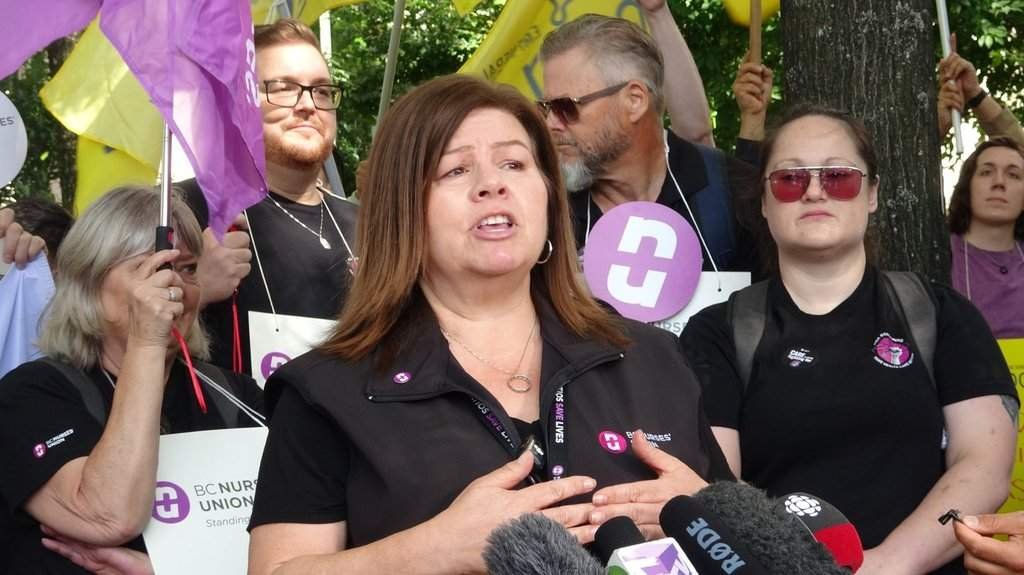
B.C. nurses took to the picket lines at Vancouver General Hospital in the early hours of Tuesday morning, marking the first such action by the profession in the province since 1989. The move follows months of stalled negotiations and a decisive rejection of a tentative agreement by members of the BC Nurses' Union, which represents roughly 60,000 nurses across British Columbia. Union president Adrienne Gear addressed supporters at a rally outside the hospital, describing the day as both inspiring and solemn. Nurses expressed frustration that years of advocacy on staffing shortages and workplace safety had gone unheeded, forcing them into a position they had long sought to avoid. The action underscores deepening tensions within the province's public healthcare system, where recruitment and retention challenges continue to strain services in major centres such as Vancouver and Victoria.
Historical picket at VGH
The sight of nurses walking a picket line at Vancouver General Hospital on Tuesday morning carried significant weight for British Columbia's labour movement. No nurses' picket line had appeared in the province since 1989, a span of more than three decades during which successive governments and health authorities had managed to reach agreements without visible job action. Union members gathered shortly after dawn, their presence drawing immediate attention from hospital staff, patients' families and passing motorists along West Broadway. Adrienne Gear, president of the BC Nurses' Union, spoke of the mixed emotions on display. She noted the jubilation that came from widespread public support, yet she also emphasised the gravity of nurses leaving bedside duties to stand outside. The location itself held symbolic value, as Vancouver General Hospital serves as one of the province's largest acute-care facilities and a frequent barometer of broader health-system pressures. Observers described the mood as determined rather than celebratory, with many participants carrying signs highlighting chronic understaffing and the erosion of working conditions that have persisted through multiple contract cycles.
The rejected deal and what it contained
Last Thursday the BC Nurses' Union initiated job action after roughly two-thirds of participating members voted to reject a tentative agreement reached with the B.C. Health Employers Association. The proposed four-year package included a 12-per-cent wage increase, modest improvements to benefits, dedicated funding intended to support minimum nurse-to-patient ratios, and strengthened language around violence prevention in the workplace. Despite these elements, the majority of nurses concluded that the offer fell short of what was required to address long-standing recruitment and retention difficulties. The 98-per-cent strike mandate secured earlier in the process had been one of the strongest showings in recent British Columbia labour history, signalling deep dissatisfaction across the membership. Union leaders argued that the wage component, while above recent public-sector patterns, would not close the gap with inflation or competing jurisdictions. Health Employers Association representatives maintained that the offer represented a serious attempt to stabilise the workforce, yet the rejection made clear that nurses sought more concrete commitments on daily working conditions rather than incremental financial adjustments.
Union strategy and next steps (Surrey Memorial)
Following the initial picket at Vancouver General Hospital, the BC Nurses' Union announced plans to expand job action to Surrey Memorial Hospital on Thursday. The decision stems from reports that some employers have responded to the lawful job action with what the union describes as intimidation tactics. Nurses have reported being warned of possible discipline, cautioned that their professional licences could be placed at risk, and pressured to perform non-nursing duties or unauthorised overtime. The union's Tuesday morning release detailed these concerns and framed the expansion as a necessary defence of members' rights. The Hospital Employers Association has rejected the allegations, stating that no directives have been issued requiring staff to work outside their scope, qualifications or collective-agreement obligations. Both sides continue to stress the importance of safe patient care, yet the disagreement over employer conduct has added another layer of complexity to an already tense round of bargaining. The choice of Surrey Memorial Hospital, a major facility serving one of the province's fastest-growing regions, is expected to increase public visibility of the dispute.
Government fiscal constraints and public sector bargaining patterns
Political science professor Hamish Telford of the University of the Fraser Valley has pointed to the provincial government's difficult position in these negotiations. While officials may wish to offer nurses a stronger settlement, any improvement on wages would likely trigger similar demands from other public-sector unions, creating fiscal pressure that current revenues cannot easily accommodate. This constraint reflects broader Canadian patterns in which provincial governments must balance healthcare spending against competing priorities such as education and social services. In British Columbia, as in Ontario and Quebec, wage increases for one large bargaining unit often set precedents that ripple across the public service. The current dispute therefore tests not only the immediate relationship between the BC Nurses' Union and the Health Employers Association but also the province's approach to managing multiple collective agreements within a constrained budget. Federal-provincial funding discussions around medicare add another dimension, as Ottawa's contributions are tied to national standards yet leave most operational decisions, including labour relations, firmly in provincial hands.
Impact on patient care and hospital operations
Both the union and employers have repeatedly stated that protecting patient safety remains their highest priority during the job action. Essential services continue to be maintained under the terms of the labour code, meaning that critical care areas at Vancouver General Hospital and other affected sites are still staffed. Nevertheless, the withdrawal of routine nursing functions has begun to affect elective procedures, discharge planning and certain outpatient services. Hospital administrators report increased reliance on managers and reassigned staff to fill gaps, measures that unions argue cannot substitute for experienced bedside nurses. Patients and families have expressed understanding of the nurses' position while voicing concern about longer wait times and reduced access to familiar care providers. The situation illustrates the delicate balance that characterises Canadian public healthcare, where labour disruptions, however limited, quickly surface underlying capacity issues that have accumulated over years of health human resources strain.
BC healthcare context - nurse shortages, burnout, and the broader Canadian crisis
British Columbia's current nursing shortage forms part of a nationwide health human resources crisis that has intensified since the pandemic. Chronic understaffing, high rates of burnout and an aging workforce have left many hospitals operating with vacancy rates that compromise both care quality and staff well-being. Provincial health authorities have introduced recruitment incentives and internationally educated nurse pathways, yet retention remains difficult when workloads exceed safe thresholds. The BC Nurses' Union has long advocated for enforceable nurse-to-patient ratios, arguing that such standards exist in other jurisdictions and would improve outcomes while reducing overtime costs. The present job action brings these concerns into sharper public focus, reminding British Columbians that medicare's promise of timely, high-quality care depends on a stable and supported nursing workforce. Similar pressures are visible in Ontario and Quebec, where parallel disputes over wages and working conditions have surfaced in recent years, underscoring that the challenges are structural rather than unique to any single province.
What happens next - resumed talks and possible outcomes
Contract talks between the BC Nurses' Union and the Hospital Employers Association have already resumed following the start of job action. Both parties have signalled willingness to return to the table, though significant gaps remain on wages, staffing guarantees and protections against perceived employer overreach. Mediators may be called upon if direct discussions stall, a common step in British Columbia public-sector disputes. Possible outcomes range from a revised offer that addresses more of the union's core demands to a prolonged period of rotating job action that gradually escalates pressure on hospital operations. The government will be watching closely, aware that any settlement must be defensible across the broader public service while still demonstrating respect for nurses' contributions. Historical precedent suggests that most disputes of this nature eventually produce negotiated settlements rather than full-scale strikes, yet the depth of member dissatisfaction indicates that a quick resolution is far from guaranteed.
National implications for healthcare labour relations
The developments in British Columbia carry implications that extend beyond provincial borders. Other Canadian jurisdictions facing similar nursing shortages and bargaining pressures are monitoring the outcome for lessons on wage patterns, ratio language and the management of essential-services disputes. A settlement that meaningfully advances nurse-to-patient ratios could encourage parallel demands elsewhere, while a more modest agreement might reinforce existing fiscal ceilings. The episode also highlights ongoing federal-provincial tensions over healthcare funding, as provinces argue that Ottawa's share of medicare costs has not kept pace with rising labour expenses. Canadian values of fairness and collective responsibility are being tested as governments weigh nurses' legitimate claims against the need to maintain sustainable public finances. Whatever the immediate result, the current round of bargaining is likely to shape labour relations in healthcare for years to come, influencing how provinces attract and retain the workforce required to deliver on medicare's promise.
Tags: BC Nurses' Union, Vancouver General Hospital, nurse picket line, public sector bargaining, healthcare staffing, British Columbia, medicare, wage negotiations, patient ratios, labour relations, health human resources, provincial funding
By Alex Thompson, Staff Writer
This article was produced with AI-assisted research and editorial support. Reporting is based on sources cited in the article.
What's Your Reaction?
 Like
0
Like
0
 Dislike
0
Dislike
0
 Love
0
Love
0
 Funny
0
Funny
0
 Wow
0
Wow
0
 Sad
0
Sad
0
 Angry
0
Angry
0

Canada Correspondent at Global1.News. Based in Toronto, covering Canadian politics, energy, trade, and US-Canada relations. Provides the Canadian perspective on North American and global affairs.















Comments (0)