
The Fall of Sinjar and the Onset of Systematic Abduction
The Fall of Sinjar and the Onset of Systematic Abduction On 3 August 2014, Islamic State militants launched a coordinated assault on the Yazidi community in Sinjar, northern Iraq. Families who had lived in the area for generations found their homes invaded without warning. Young women preparing for ordinary milestones, such as school examinations, were suddenly torn from their
The Fall of Sinjar and the Onset of Systematic Abduction
On 3 August 2014, Islamic State militants launched a coordinated assault on the Yazidi community in Sinjar, northern Iraq. Families who had lived in the area for generations found their homes invaded without warning. Young women preparing for ordinary milestones, such as school examinations, were suddenly torn from their families and communities.
The attack formed part of a broader campaign that the United Nations has described as an ongoing genocide against the Yazidi people. Thousands were killed or taken captive in the initial days. Those who survived the immediate violence faced separation, forced displacement, and the destruction of their social fabric in a region already marked by years of instability.
Local accounts describe how militants moved quickly through villages, targeting homes and rounding up residents. The speed of the operation left little time for escape. Many families were split apart within hours, with women and girls singled out for particular forms of captivity that would last months or years.
Shireen’s Experience of Captivity and Survival
Shireen was nineteen years old and studying for a high school examination when militants entered her home in Sinjar. She was taken first to Tal Afar, where she was sold into sexual slavery, and later transferred to Mosul. There she remained under the control of a fighter identified as Abu Omar for more than two years.
During her captivity she was confined to domestic labour and subjected to repeated sexual violence. Statements she later gave describe how her captor claimed affection while engaging in acts of rape, a contradiction that compounded the psychological harm. Daily routines of cooking and cleaning occurred under constant threat and surveillance.
Shireen was freed in 2016 during operations by Iraqi forces. Upon release she sought medical and emotional support in Duhok. Her account highlights both the brutality of the period in captivity and the difficult process of beginning to rebuild a life afterward.
Dr Nagham Nawzat’s Role in Caring for Survivors
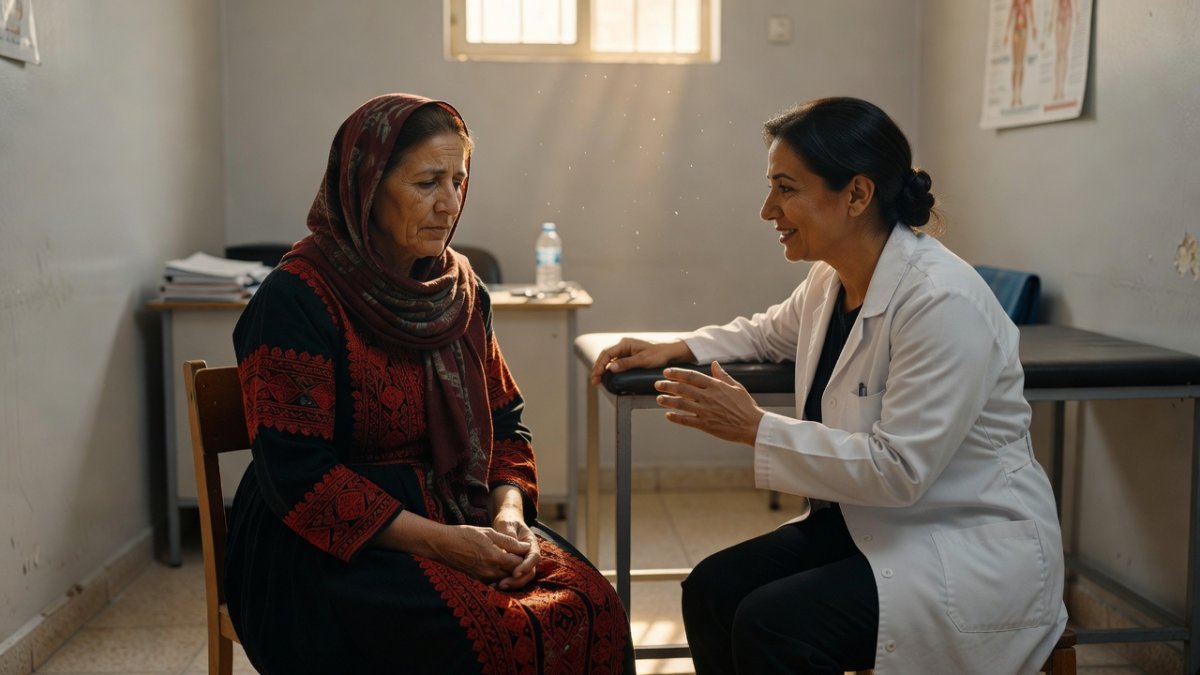
Dr Nagham Nawzat, a Yazidi gynaecologist based in Duhok, has provided medical examinations and emotional support to hundreds of women released from Islamic State captivity. Survivors describe her clinic as a place where they could speak openly about their experiences without immediate judgment.
Shireen credits Dr Nawzat with helping her navigate the aftermath of captivity. The doctor’s approach combined clinical care with attentive listening, offering practical assistance alongside recognition of the trauma endured. Many women have stated that such support proved essential to their ability to continue living after release.
By July 2018, official figures recorded that 2,023 Yazidi women had been liberated. Dr Nawzat is estimated to have assisted around 1,200 of them. Her work has focused on addressing both physical health needs and the longer-term psychological effects of sexual violence and enslavement.
Background and Professional Path of Dr Nagham Nawzat
Dr Nagham Nawzat was born in Mosul in 1976 and graduated from Mosul Medical College in 2002. Her training equipped her to practice gynaecology at a time when the Yazidi community already faced marginalisation within Iraq’s health system.
When Islamic State seized large parts of northern Iraq in 2014, Dr Nawzat responded by directing her skills toward the specific needs of released Yazidi women. She established regular consultations that addressed injuries and infections resulting from prolonged captivity while also creating space for survivors to discuss their experiences.
Her commitment has been recognised internationally. In March 2016 she received the International Women of Courage Award, presented by then US Secretary of State John Kerry. The award highlighted the importance of specialised medical care in post-conflict recovery for communities targeted by systematic sexual violence.
The Broader Context of Yazidi Persecution
The events of August 2014 formed part of Islamic State’s rapid territorial expansion, during which the group seized nearly a third of Iraq. At least 12,000 Yazidis were killed or kidnapped in the space of a few weeks. The United Nations Commission of Inquiry later documented these acts as crimes against humanity and genocide.
Systematic sexual violence, enslavement, and forced conversion were central elements of the campaign against the Yazidi population. Women and girls were treated as commodities to be bought and sold, while men and boys faced execution or forced recruitment. Entire villages were emptied, and cultural sites were destroyed.
These actions occurred against a backdrop of long-standing vulnerabilities for religious minorities in Iraq. Displacement, loss of livelihoods, and the breakdown of community structures have continued to affect survivors and their families long after military operations reduced Islamic State territorial control.
The Duhok Survivors’ Centre and Specialised Support
The Duhok Survivors’ Centre, supported by the United Nations Population Fund, operates as the only facility in Iraq dedicated specifically to survivors of gender-based violence from the Yazidi community. It provides medical, psychological, and social services tailored to the needs of women released from captivity.
Staff at the centre work with individuals who have experienced prolonged sexual enslavement and domestic servitude. Services include confidential counselling, treatment for physical trauma, and assistance with reintegration into family and community life where possible.
Funding from international partners has allowed the centre to maintain operations despite limited resources elsewhere in the Iraqi health system. Its specialised focus distinguishes it from general hospitals and underscores the particular forms of harm inflicted on Yazidi women during the conflict.
Ongoing Challenges and the Question of the Missing
Despite the liberation of more than two thousand women by mid-2018, at least two thousand Yazidi women remain missing. Families continue to search for information about relatives taken in 2014, often with little official capacity to trace those still held or whose fate is unknown.
Reintegration presents further difficulties. Survivors frequently face stigma within their own communities, economic hardship, and the absence of long-term mental health support. Many must navigate these challenges while also coping with the physical consequences of years in captivity.
Advocates emphasise that accountability for the documented crimes remains incomplete. The United Nations Commission of Inquiry has called for recognition of the acts as genocide, yet prosecutions have been limited and many survivors still await justice or formal acknowledgment of their suffering.
Looking Ahead for Yazidi Women and Their Communities
Recovery for survivors extends beyond immediate medical care. Sustainable support requires investment in education, vocational training, and community-level programmes that address both individual trauma and collective loss. Dr Nawzat’s clinic represents one model of such sustained engagement.
International attention has fluctuated since 2014, yet the needs of released women and the families of those still missing persist. Continued funding for specialised centres and cooperation between Iraqi authorities and international organisations remain necessary to prevent further marginalisation.
The experiences of women like Shireen illustrate both the depth of harm inflicted and the resilience shown in seeking care and rebuilding lives. Their testimonies continue to inform efforts to prevent similar atrocities and to support communities living under the long shadow of conflict and displacement.
By Fatima Al-Rashid, Staff WriterThis article was produced with AI-assisted research and editorial support. Reporting is based on sources cited in the article.
What's Your Reaction?
 Like
0
Like
0
 Dislike
0
Dislike
0
 Love
0
Love
0
 Funny
0
Funny
0
 Wow
0
Wow
0
 Sad
0
Sad
0
 Angry
0
Angry
0
Middle East Correspondent at Global1.News. Based in Beirut, covering politics, conflict, energy, and society across the Middle East. Brings context and depth to a region often reduced to headlines.









Comments (0)