
Wayanad Tunnel Disaster: 4 Dead After Man-Made Landslide in Kerala
A catastrophic landslide struck a tunnel construction site in Kerala's Wayanad district on July 7, 2026, killing 4 workers, leaving 6 missing and injuring 9 others. The incident at the Anakkampoyil-Kalladi-Meppadi twin-tunnel project has been declared a 'man-made disaster' by Kerala ministers, who cited unscientific dumping of thousands of cubic metres of excavated earth on the
A catastrophic landslide struck a tunnel construction site in Kerala's Wayanad district on July 7, 2026, killing 4 workers, leaving 6 missing and injuring 9 others. The incident at the Anakkampoyil-Kalladi-Meppadi twin-tunnel project has been declared a 'man-made disaster' by Kerala ministers, who cited unscientific dumping of thousands of cubic metres of excavated earth on the fragile slopes of the Western Ghats as the primary cause.
Wayanad Tunnel Disaster: 4 Dead, 6 Missing as Kerala Officials Blame Unscientific Excavation Debris Dumping
Kalladi, Wayanad, Kerala — July 8, 2026 — Rescue operations continued into Wednesday morning as teams from the National Disaster Response Force (NDRF), Kerala Police, and fire brigade searched for six missing construction workers buried under debris at the Kalladi tunnel project site near Meppady. The landslide struck late Tuesday after heavy monsoon rainfall caused an estimated 15,000 to 20,000 cubic metres of excavated earth — piled on an unprotected slope — to collapse onto the worksite below.
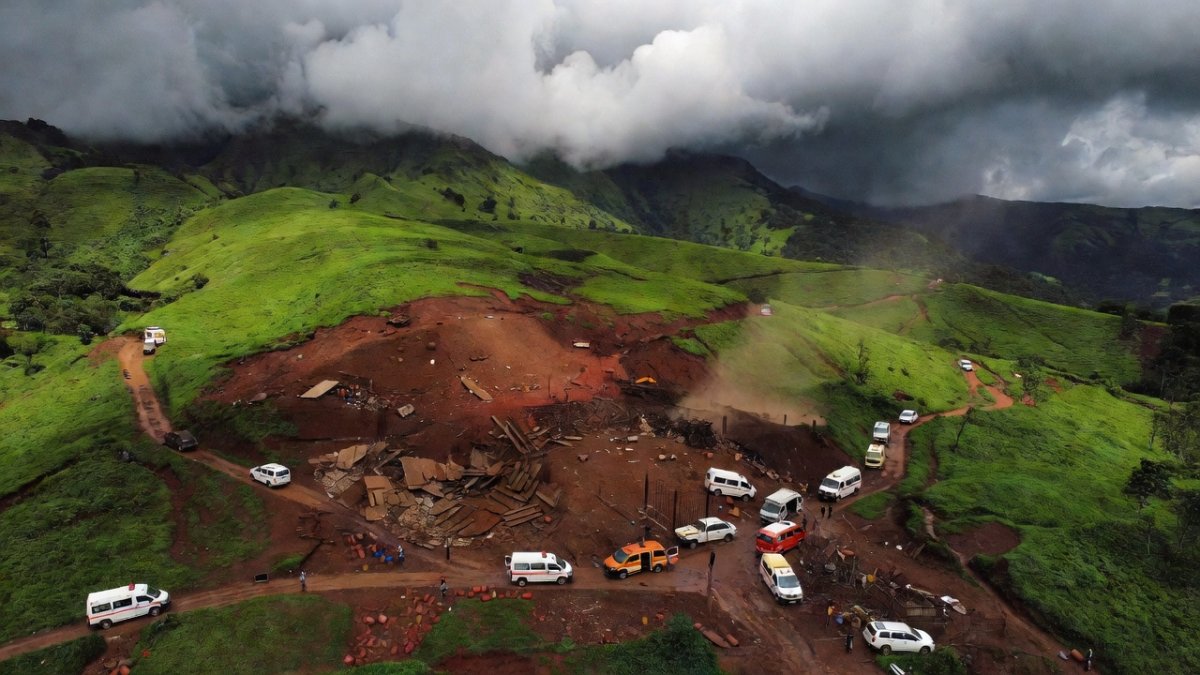
What Triggered the Kalladi Landslide
The India Meteorological Department (IMD) had issued a red alert for Wayanad district warning of extremely heavy rainfall on July 7. Between 6 a.m. and 6 p.m. that day, the region received 128 mm of rain — nearly half the monthly average for July falling in a single 12-hour window. This intense precipitation saturated the loosely piled tunnel excavation material, which had been dumped directly on the natural slope without retaining walls, compaction, or drainage channels.
Geotechnical experts note that the Western Ghats, classified as an ecologically sensitive zone (ESZ) by the Ministry of Environment, Forest and Climate Change, naturally receive 3,000-4,000 mm of annual rainfall. The decision to store massive quantities of unconsolidated excavation debris on steep terrain during the monsoon season violated basic slope stability principles. Each cubic metre of saturated soil exerts approximately 1.8 tonnes of lateral pressure — against slopes that were engineered for natural vegetation cover, not construction waste.
Migrant Worker Health Crisis Beneath the Debris
The victims and missing workers were predominantly migrant labourers from Bihar, Odisha, Uttar Pradesh, and West Bengal employed by the tunnel project's construction contractor. Of the 9 injured admitted to Meppady Government Hospital, 3 remain in intensive care with crush injuries and multiple fractures. Two survivors underwent emergency surgery for internal bleeding and spinal trauma.
Occupational health data from India's Ministry of Labour and Employment indicates that approximately 4.5 crore migrant workers are employed in the construction sector nationwide, with fewer than 12 percent covered by any form of health insurance beyond the mandatory Employee State Insurance Corporation (ESIC) scheme. The Wayanad disaster exposes a critical gap: when infrastructure projects operate without adequate onsite medical infrastructure, the first hour after a trauma event is frequently lost to travel times from remote construction sites to district hospitals.
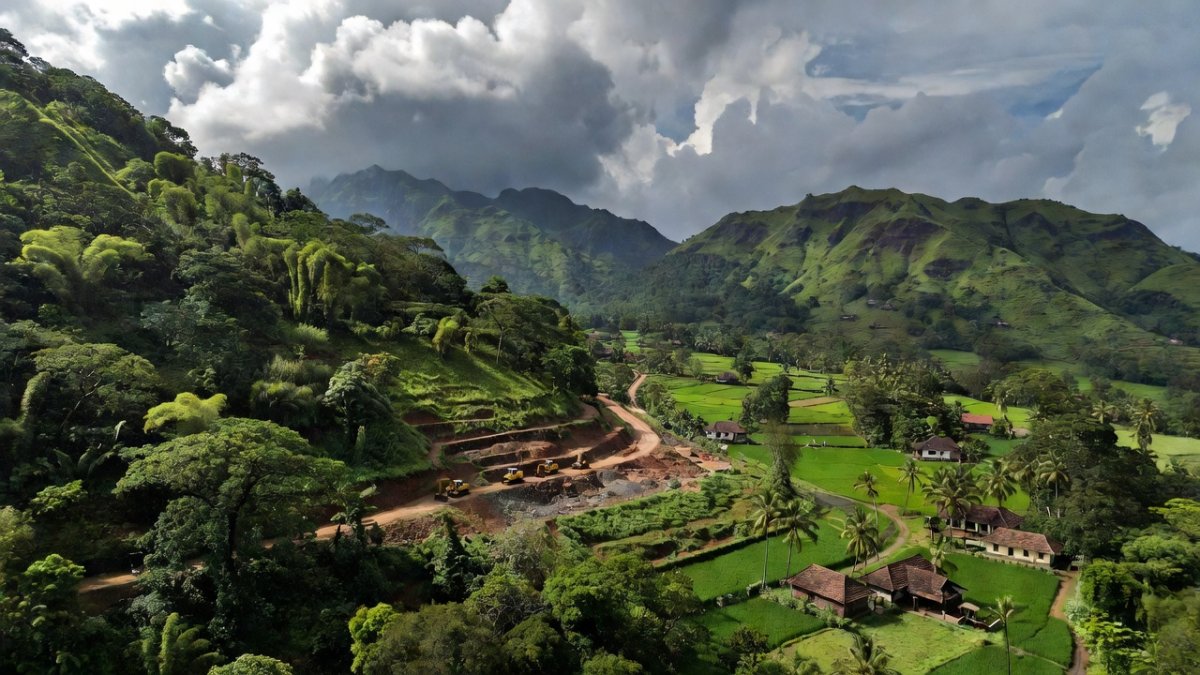
Western Ghats: A Fragile Ecosystem Under Pressure
The Anakkampoyil-Kalladi-Meppadi twin-tunnel project, planned as Kerala's longest road tunnel at 8.9 kilometres, was designed to connect Malappuram and Wayanad districts by cutting travel time across the Western Ghats from 3 hours to 45 minutes. Environmental clearance for the project was granted despite objections from the Western Ghats Ecology Expert Panel (WGEEP), which had recommended a moratorium on major construction within 10 km of the crestline in the most sensitive zones.
The 2026 Kalladi site lies just 3.2 km from Mundakkai, where a catastrophic landslide in July 2024 killed over 200 people — one of India's worst landslide disasters. Both events share a grim commonality: heavy monsoon rainfall acting on destabilised terrain. However, the 2026 incident is distinct in its direct causation by construction debris. Research from the National Institute of Technology, Calicut, published in 2025 showed that 67 percent of landslide events in Wayanad between 2018 and 2024 occurred within 500 metres of construction zones or road cuttings.
Regulatory Failure: Warnings Ignored, Safety Guidelines Bypassed
Kerala Public Works Department (PWD) Minister confirmed that the district administration had issued at least three written notices to the contractor between April and June 2026 regarding unsafe debris accumulation. The warnings specified that excavated material should be removed to designated disposal sites rather than piled on the hillside. Section 194 of the Bharatiya Nyaya Sanhita (BNS), which addresses culpable homicide, has been invoked against the contractor and project management.
Kerala Agriculture Minister T Siddique, who visited the site on July 7, stated unequivocally that the event was a 'man-made disaster' arising from 'unscientific accumulation of soil during tunnel construction.' The National Green Tribunal (NGT) has taken suo motu cognisance of the incident and issued notices to the Kerala government, the contractor, and the Ministry of Environment, Forest and Climate Change. The NGT directed that all excavated material from the tunnel project be immediately geo-tagged and its disposal audited by the Kerala State Pollution Control Board (KSPCB).
Public Health Risks for Downstream Communities
Beyond the immediate casualty toll, the Kalladi landslide poses secondary health risks to communities in the Chaliyar river basin downstream. The debris flow has deposited an estimated 50,000 cubic metres of silt, rock, and construction chemicals into local streams that feed into the Chaliyar — a primary drinking water source for over 5 lakh residents in Malappuram and Kozhikode districts. Preliminary water quality tests conducted by the Kerala Water Authority show elevated turbidity levels of 1,200 NTU, far exceeding the Bureau of Indian Standards limit of 5 NTU for drinking water.
The district health officer has advised residents of 12 downstream panchayats to boil water before consumption. Mobile health units have been deployed to assess acute respiratory infections and waterborne illnesses, with 38 cases of acute diarrhoeal disease already reported in the affected catchment area since July 7.
India's Infrastructure Safety Framework Under Review
The Wayanad tunnel disaster raises fundamental questions about India's project safety regulatory architecture. The Central Building Research Institute (CBRI) and the National Institute of Disaster Management (NIDM) have jointly recommended mandatory geotechnical audits at 6-month intervals for all tunnel and highway projects in ESZ areas — a recommendation that has not been adopted by the Ministry of Road Transport and Highways as of July 2026.
The Ministry of Health and Family Welfare lacks a formal occupational health surveillance protocol for infrastructure project workers. Unlike the Factories Act 1948, which mandates medical examination of factory workers, construction labourers in remote tunnel and highway sites operate without systematic health monitoring. The Kerala Building and Other Construction Workers' Welfare Board estimates that of the 1,200 workers employed at the Kalladi tunnel site, fewer than 300 were registered under the board's welfare scheme.
The Bottom Line
The Kalladi tunnel landslide was entirely preventable. Four workers are dead, six remain missing, and nine injured — not because of an unforeseeable natural event, but because excavated earth was piled unscientifically on a monsoon-prone slope. India's infrastructure ambitions, from the Bharatmala Pariyojana highway programme to state-level tunnel projects, must incorporate enforceable environmental and occupational health standards that match the pace of construction. The Western Ghats — a UNESCO World Heritage site — cannot absorb repeated preventable disasters without fundamental regulatory reform.
— By Dr. Raj Patel, Staff Writer
This article was produced with AI-assisted research and editorial support. Reporting is based on sources cited in the article.
What's Your Reaction?
 Like
0
Like
0
 Dislike
0
Dislike
0
 Love
0
Love
0
 Funny
0
Funny
0
 Wow
0
Wow
0
 Sad
0
Sad
0
 Angry
0
Angry
0

India/South Asia Correspondent at Global1.News. Analytical voice with a background in science and health journalism. Based in New Delhi, covering Indian politics, education, healthcare, technology, and policy. Breaks down complex data into clear, actionable reporting.













Comments (0)