
Junior Springboks Wallop Wales 52-33, Reach JWC Semis
**Meta Description:** Junior Springboks beat Wales 52-33 in Tbilisi to reach JWC semi-finals, keeping their title defence alive before Monday's England clash in Georgia. **Keywords:** junior springboks, junior world championship, south africa u20, wales rugby, england semi final, hendre schoeman, siphosethu mnebelele, liam van wyk, yaqeen ahmed, risima khosa, saru rugby, spring
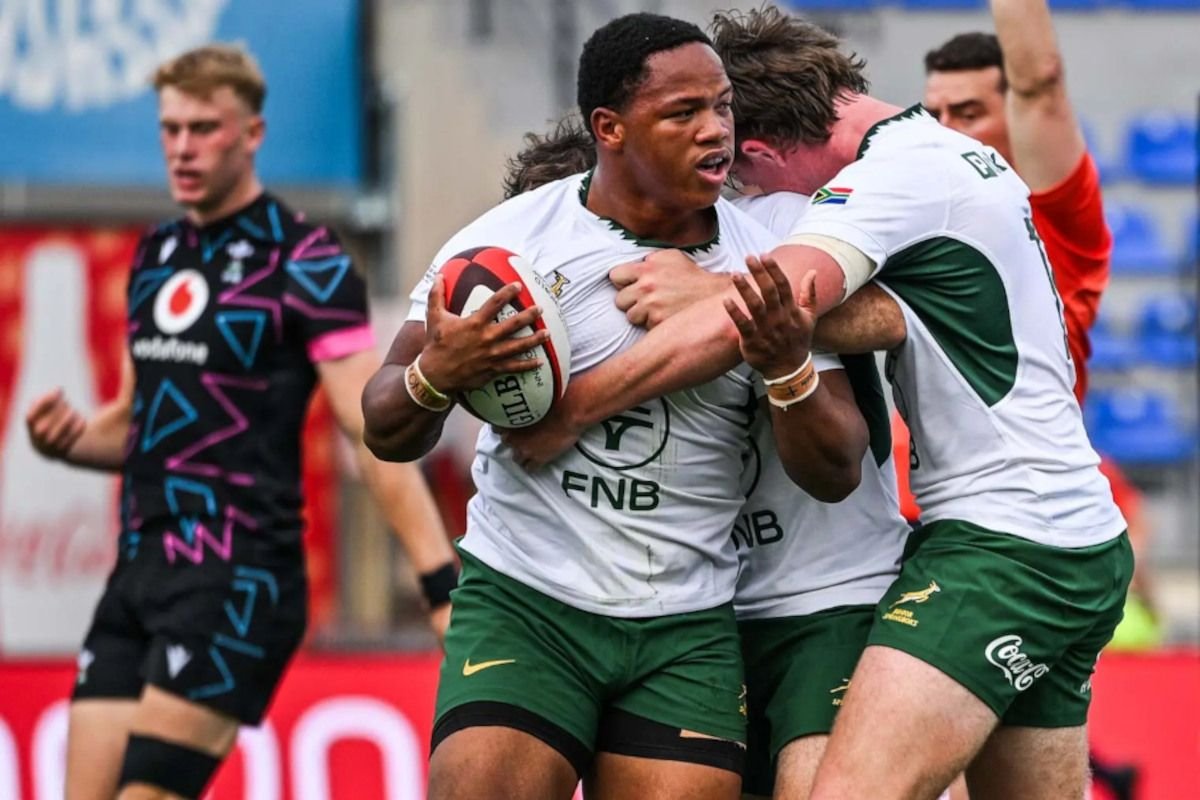
Junior Springboks Wallop Wales 52-33, Reach JWC Semis
The Junior Springboks kept their Junior World Championship title defence firmly on track with a commanding 52-33 victory over Wales in Tbilisi on Tuesday, but make no mistake — there is plenty of work still to be done before Monday's semi-final showdown with England.
Tags: junior springboks, junior world championship, south africa u20, wales, england, saru, springboks pathway, tbilisi, craven week
A Slow Start That Nearly Cost Them Dear
For the opening ten minutes in the Georgian capital, it looked as though the wheels might come off entirely. Wales shot out of the blocks with two converted tries in the first ten minutes, catching the South African defence flat-footed and silencing the pockets of green-and-gold support in the stands at the Avchala Stadium.
The Junior Springboks looked tentative, unsure of themselves. The kind of start that makes coaches reach for the antacids and leaves supporters back home in South Africa pacing the living room floor at an hour when most of them should have been asleep. Against a side like Wales — disciplined, structured, and well-drilled by their age-group coaches — a ten-point deficit inside the opening quarter was the last thing Bafana Nhleko's men needed.
But then, almost as if a switch had been flicked, the Junior Springboks remembered who they were. And what followed was a reminder of why this group of players are the defending champions.
The fightback began in the 12th minute when a dominant scrum from the SA U20 pack gave them front-foot ball deep in Welsh territory, and Hendre Schoeman powered over the whitewash with the kind of direct running that has become a trademark of South African age-group rugby. Yaqeen Ahmed added the conversion and suddenly the scoreboard read 7-14. The momentum was shifting.
Set-Piece Dominance Turns the Tide
Five minutes later, the Junior Springboks struck again. Big centre Ethan Adams chipped intelligently into space, Yaqeen Ahmed collected the bouncing ball at full stride and delivered a perfectly timed pass back to Adams, who raced clear to score. Ahmed's second conversion levelled the scores at 14-14, and the South African bench erupted.
The set-piece dominance that followed was the story of the first half. When Siphosethu Mnebelele was driven over from a lineout in the 26th minute, South Africa had the lead for the first time. The maul — that most South African of attacking weapons — had done its job.
Wales then lost tighthead prop Jac Pritchard to the sin bin just after the half-hour mark, and the Junior Springboks made them pay immediately. Heinrich Theron crashed over from another driving maul to stretch the lead to 26-14 at the break. It was a 26-point turnaround in the space of 25 minutes — a testament to the composure and belief in this squad.
But here is the thing that will concern the coaching staff heading into the England match: the Junior Springboks left points out there. Over-eagerness in the Welsh red zone cost them at least one more try before half-time, and those missed opportunities could prove costly against a more clinical opponent.
Second-Half Fireworks and Defensive Lapses
Risima Khosa announced his arrival on the biggest stage of his young career with a superb individual try out on the right wing early in the second half. The finish pushed the Junior Springboks past the 30-point mark and seemed to settle any lingering nerves. At 33-14, the match looked to be put to bed.
But rugby, especially at this level, has a habit of reminding you that the game is never over until the final whistle. When Cheswill Jooste was yellow-carded for a deliberate knock-down, Wales sensed an opportunity. Will Evans thought he had scored but the TMO intervened, sparing the Junior Boks one moment of defensive embarrassment. Osian Lewis was not so forgiving minutes later, crossing when the South African defence was stretched and disorganised.
This pattern — a strong period of play followed by a defensive lapse — repeated itself throughout the second half. Liam van Wyk was mauled over for his first try to restore order at 38-26, but Tom Bowen hit back almost immediately for Wales, though the conversion was missed. At 38-26 with a quarter of the match remaining, the contest was far from settled.
Van Wyk then produced a carbon copy of his first try to steady things, with Ahmed's conversion giving South Africa a 45-26 lead with 18 minutes to play. Mnebelele, who had returned to the field for Van Wyk, scored his second try of the match in the 67th minute from another clinical lineout drive. Ahmed converted to make it 52-26, and the Junior Springboks could finally breathe.
Player Spotlights: The Men Who Stood Up
Siphosethu Mnebelele was the story of the day — two tries from driving mauls, a physical presence in the tight exchanges, and then a yellow card for contact at a ruck that threatened to undo all his good work. The balance between aggressive physicality and discipline will be a key conversation ahead of the England match. Mnebelele has the talent to be a difference-maker. He just needs to stay on the field.
Liam van Wyk's brace from close range highlighted the Junior Springboks' forward depth. The hooker's ability to finish at the back of the maul is a skill that translates directly to senior rugby — just ask Bongi Mbonambi or Malcolm Marx. This is how the Springbok production line works: you learn it at U20 level, you perfect it in Super Rugby, you execute it in the green and gold.
Risima Khosa's finish on the right wing was the kind of moment that makes scouts reach for their notebooks. The speed, the footwork, the composure to finish under pressure — South Africa's back-three depth continues to produce at every level.
Yaqeen Ahmed's influence went beyond his five successful conversions. The flyhalf controlled the tempo, distributed smartly, and added a running threat that kept the Welsh defence honest. His chip for Adams's try showed the kind of footballing intelligence that separates good junior players from future Springboks.
What the Result Means for SA Rugby's Development Pathway
The Junior Springboks are more than just a team chasing a trophy. They are the clearest window into the future of South African rugby. SARU's investment in the U20 programme has paid dividends at the senior level time and again. Siya Kolisi, Eben Etzebeth, Cheslin Kolbe, Lukhanyo Am — all of them came through this system, honed their craft in age-group rugby before graduating to Super Rugby and ultimately the Springboks.
The under-20 pathway is particularly important in the South African context because it bridges the gap between schoolboy rugby — where the Craven Week remains the premier talent identification event — and the professional game. Players who impress at this level find doors opening at the Vodacom Bulls, DHL Stormers, Cell C Sharks, and Emirates Lions.
This year's Craven Week is currently delivering its own drama at Grey High School in Gqeberha, where the Golden Lions edged the Blue Bulls 43-32 in the Jukskei Derby on Day 2. The connection between schoolboy rugby and the Junior Springboks is direct and tangible. The players running out in Georgia this week were playing in the Craven Week last year and the year before. That is the pipeline. That is how South Africa keeps producing world-class rugby talent.
For the townships and rural communities where rugby means opportunity, every Junior Springbok victory sends a message: the pathway is open, the dream is real, and the system works when it is properly resourced. SARU and the provincial unions understand this, which is why the U20 programme receives the attention and funding it does.
The Junior World Championship: A Championship Worth Defending
South Africa arrived in Georgia as defending champions, having lifted the trophy in 2025. The Junior World Championship has historically been dominated by New Zealand — the Baby Blacks have won the tournament more times than any other nation — but South Africa has established itself as a consistent contender, reaching the final on multiple occasions and now aiming for back-to-back titles.
The tournament itself has grown in stature since its inception in 2008. It has become the premier stage for identifying the next generation of Test-match talent, with scouts from every major rugby nation tracking performances closely. A strong showing here accelerates a player's career trajectory.
France and New Zealand will contest the other semi-final, also on Monday 13 July. Both nations bring formidable age-group programmes, and the prospect of a South Africa versus New Zealand final — a repeat of so many senior-level classics — will have fans dreaming. But first, England stand in the way.
England Semi-Final Preview: The Challenge Ahead
England's age-group sides have traditionally matched South Africa's physicality, and the semi-final in Tbilisi next Monday will test whether the Junior Springboks have addressed their defensive vulnerabilities. The slow start against Wales cannot be repeated. England will punish a sluggish opening with clinical finishing of their own.
The discipline question is equally pressing. Two yellow cards against Wales — Mnebelele and Jooste both spending time in the bin — is the kind of statistic that loses semi-finals. Against a well-coached English side adept at building scoreboard pressure through penalties and territory, the Junior Springboks cannot afford to play with 14 men for extended periods.
The set-piece advantage South Africa enjoyed against Wales will face a sterner examination. England's scrum and lineout at U20 level are traditionally strong, meaning the Junior Boks cannot rely on forward dominance alone to carry them through. They will need to find width, create space, and execute their backline movements with precision.
Defensively, the rush system that worked in patches against Wales needs to be consistent for the full 80 minutes. The English backline will test the South African edge defence with varied attacking shapes, and the communication between the forwards and backs — so crucial in the modern game — must be sharp.
One positive is the experience in this South African squad. Several of these players were part of last year's victorious campaign and know what it takes to win knockout matches at this level. That composure showed in the way they turned around a 14-0 deficit against Wales. It will be needed again on Monday.
What South African Fans Are Feeling
Back home, the rugby community is watching closely. The SuperSport cameras capture every moment, the social media debates are in full swing, and the conversations at braais across the country are focused on one question: can these Junior Springboks go all the way?
There is pride in the performance — eight tries against a Welsh side that fought hard for 80 minutes is nothing to dismiss. But there is also the familiar edge of South African sporting anxiety. The defensive lapses, the yellow cards, the slow starts — these are patterns that need correcting before Monday.
The path to the final is clear. Beat England, and a date with either France or New Zealand awaits. The defending champions are still alive, still dangerous, and still growing into this tournament. But the margins at this stage are razor-thin. One poor half, one defensive collapse, one disciplinary moment — and the title defence is over.
For now, though, the Junior Springboks are exactly where they want to be: in the semi-finals, with a shot at glory, and the weight of South African rugby's future on their shoulders.
Come Monday, the Tbilisi heat will be intense — and so will the English challenge. But if this group showed anything against Wales, it is that they have the character to fight back from the brink. That is the South African way, after all. We never make it easy. But we never give up.
By Dante Williams, Staff Writer
This article was produced with AI-assisted research and editorial support. Reporting is based on sources cited in the article.
What's Your Reaction?
 Like
0
Like
0
 Dislike
0
Dislike
0
 Love
0
Love
0
 Funny
0
Funny
0
 Wow
0
Wow
0
 Sad
0
Sad
0
 Angry
0
Angry
0

Breaking News and Investigations Correspondent at Global1.News. Based in London, covering global breaking news, security, and investigative stories. Known for digging deeper and connecting the dots across continents.














Comments (0)