
Zelensky Heads to Ankara NATO Summit With Urgent Plea for Air Defence as Russian Ballistic Missiles Batter Kyiv
In a recent BBC News report, Volodymyr Zelensky prepares to press NATO allies for air defence systems at the Ankara summit, warning that Russia's escalating ballistic missile strikes on Kyiv are leaving civilians unprotected. Zelensky Heads to Ankara NATO Summit With Urgent Plea for Air Defence as Russian Ballistic Missiles Batter Kyiv Ankara, Turkey – 7 July 2026 — Ukrainian P
In a recent BBC News report, Volodymyr Zelensky prepares to press NATO allies for air defence systems at the Ankara summit, warning that Russia's escalating ballistic missile strikes on Kyiv are leaving civilians unprotected.
Zelensky Heads to Ankara NATO Summit With Urgent Plea for Air Defence as Russian Ballistic Missiles Batter Kyiv
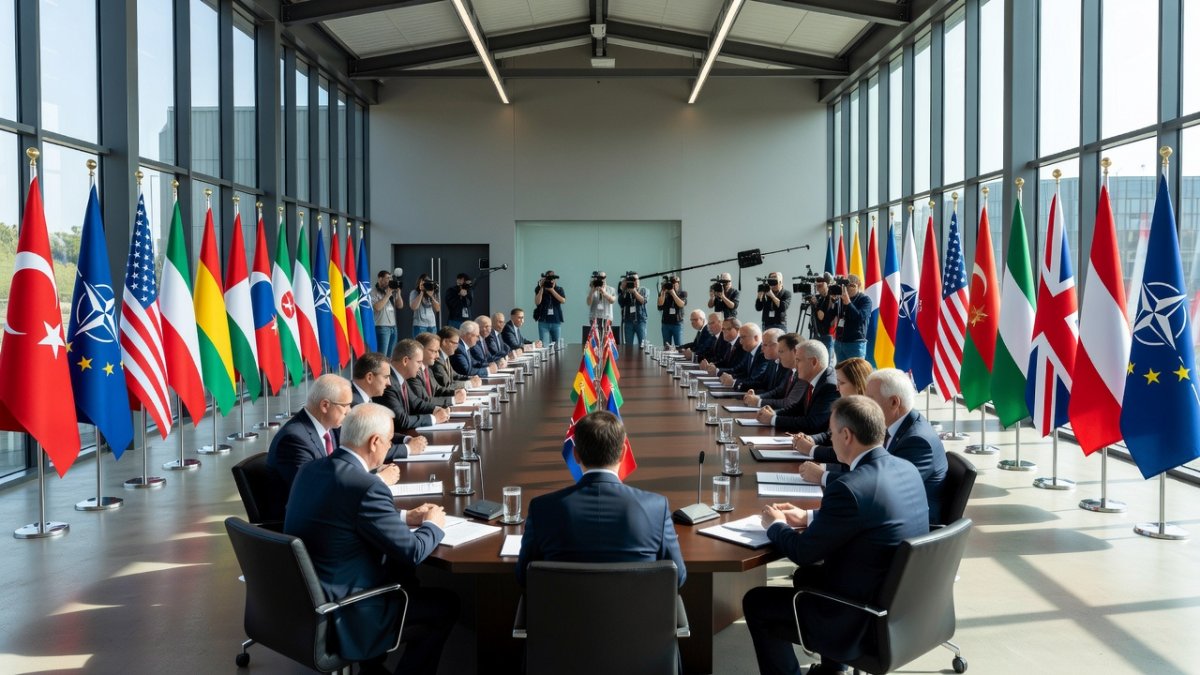
Ankara, Turkey – 7 July 2026 — Ukrainian President Volodymyr Zelensky arrived in the Turkish capital on Tuesday for what may be the most consequential NATO summit of the war, carrying an urgent appeal: deliver Patriot air defence systems now, or watch Russian ballistic missiles continue to obliterate residential blocks in Kyiv with impunity. The meeting, hosted by President Recep Tayyip Erdogan at the Presidential Complex in Ankara, comes as Russia's air campaign against Ukraine has reached a fresh level of intensity — and as Kyiv's own long-range drone strikes inside Russian territory are beginning to exact a serious toll.
A Capital Under Siege — Ballistic Missiles and Civilian Casualties
In the span of less than one week, Russian forces launched two devastating missile barrages against the Ukrainian capital, using a combination of Iskander ballistic missiles and Zircon hypersonic weapons that fly at several thousand kilometres per hour. The attacks struck residential buildings in the Darnytskyi district and other neighbourhoods, killing more than 50 civilians and wounding scores more. According to Ukraine's air force command, not a single ballistic missile was intercepted in the latest attack — a failure rate that underscores the acute shortage of US-made Patriot air defence systems in Ukraine's arsenal.
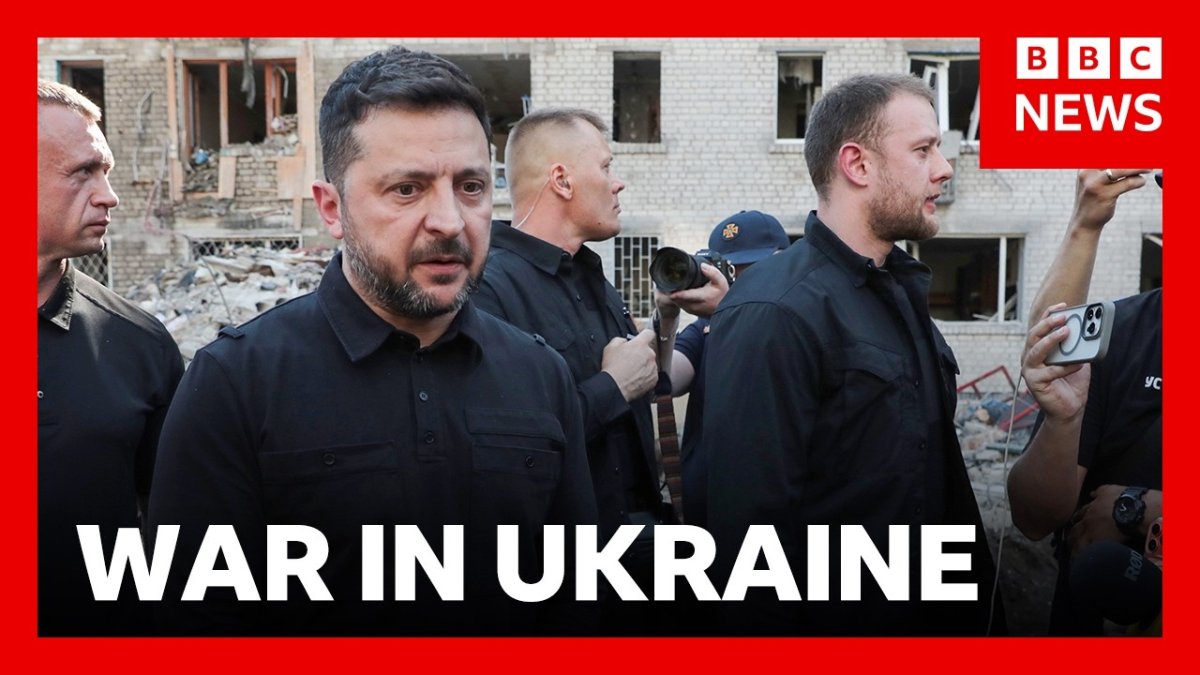
Zelensky, visibly frustrated, described the situation in stark terms during a video address delivered on the eve of the summit. "It is simply absurd that, in today's world, production has still not been scaled up to the level actually required to protect people from ballistic terror," he said. The Ukrainian leader has been pressing European allies to hand over their existing stockpiles of Patriot interceptor missiles, arguing that stored munitions serve no purpose while civilians are dying in their homes. Ukrainian officials have repeatedly highlighted how the lack of interceptors leaves entire districts exposed during night-time raids.
Russia's Ballistic Missile Campaign
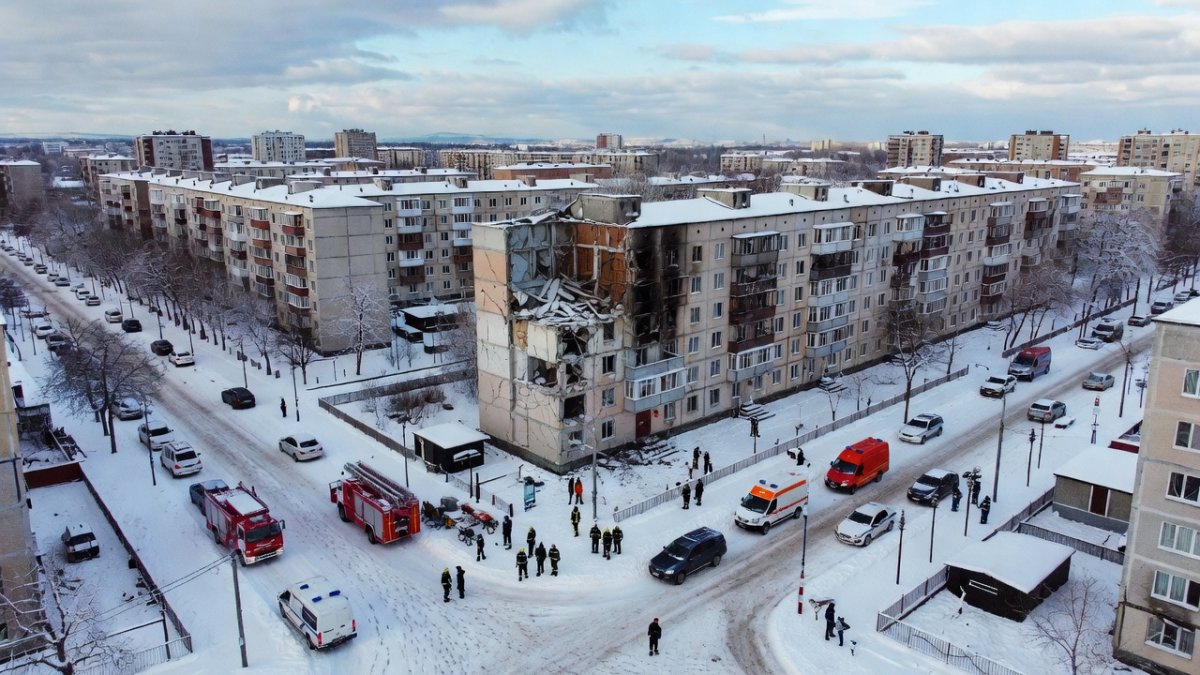
The Kremlin's intensified use of ballistic missiles represents a calculated tactical shift, according to military analysts. Unlike cruise missiles or drones, which can be engaged by a wider range of air defence systems, ballistic missiles follow a high-arcing trajectory and descend at extreme speed — making them far more difficult to intercept without advanced systems like the Patriot. In Monday's attack alone, Russia launched 24 Iskander ballistic missiles and four Zircon hypersonic missiles against Kyiv. All of them struck their targets.
Ukraine's air force publishes a daily tally of incoming Russian munitions and interception rates. While almost all drones were successfully blocked in the latest assaults, the failure rate against ballistic missiles was glaringly obvious: zero per cent. The discrepancy has become a central argument in Zelensky's pitch to NATO allies. "Russia is placing its bets on ballistic weapons," he said, "and those who want peace must place their bets on protection against ballistic attacks." Russian state media, however, frames these strikes as precise responses to Ukrainian provocations rather than indiscriminate attacks on civilians.
Ukraine's Long-Range Drone Offensive — Striking Back at Russian Energy
While Kyiv struggles to defend its skies, Ukraine has been waging an increasingly effective long-range drone campaign against targets deep inside Russian territory. On Monday night alone, Ukrainian forces launched some 430 unmanned aerial drones towards Moscow. The city's mayor, Sergei Sobyanin, confirmed that air defence systems intercepted "most" of them, though the extent of damage on the ground was not immediately clear.
Beyond Moscow, Ukrainian drones have been hitting oil refineries and military infrastructure across western and central Russia with growing regularity. Russian social media accounts have been flooded with videos of long queues at petrol stations and reports of fuel shortages in several regions. The disruption to Russia's domestic energy supply represents a strategic success for Kyiv. Zelensky describes the campaign as an "influence campaign" designed to pressure the Kremlin into meaningful peace negotiations. Russian officials counter that such strikes constitute terrorism and have vowed retaliatory measures against Ukrainian energy facilities.
NATO's Decision Point — Rutte's Call and the Question of Production
NATO Secretary General Mark Rutte, speaking ahead of the summit, urged member states to "pull their weight" and ensure that Ukraine receives what it needs "to defend its sovereignty." Rutte acknowledged that Ukraine's deep strikes inside Russia were "changing the dynamic on the battlefield" and that the alliance needed to respond accordingly. European NATO members have expressed varying levels of willingness to release additional Patriot batteries, with some citing their own national security requirements.
But the fundamental problem remains one of production capacity. Patriot systems are in short supply worldwide, and it remains unclear how many would ever be sufficient if Russia were to escalate its ballistic attacks further. European allies, many of whom have already sent significant military aid to Ukraine, face their own defence requirements. Zelensky has suggested that Ukraine could begin producing its own equivalent of the Patriot system with NATO technical assistance — a medium-term solution that does nothing to address the immediate crisis. Analysts note that scaling up manufacturing across the alliance would require coordinated industrial policy decisions that have yet to materialise.
Trump, Zelensky and the Battle for American Resolve
One of the most closely watched elements of the Ankara summit is the bilateral meeting scheduled between Zelensky and US President Donald Trump. The two leaders last met face-to-face at the G7 summit in France in late June, where they discussed intensifying pressure on Russia. Both Zelensky and Russian President Vladimir Putin spoke with Trump ahead of the Ankara gathering, setting the stage for a delicate diplomatic dance on the summit sidelines.
Trump has been publicly sceptical of continued large-scale US aid to Ukraine, and his administration has pushed European allies to take greater responsibility for Kyiv's defence. Zelensky's task in Ankara is to convince Trump that supporting Ukraine remains in America's strategic interest — particularly as Russia's ballistic missile campaign shows no sign of abating and as Kyiv's drone strikes open a new front in the war of attrition. Turkish President Erdogan is also scheduled to hold separate talks with Trump and Syria's leader during the summit, adding another layer of regional diplomacy.
Perspectives from Moscow and the Kremlin Power Structure
The Kremlin has consistently accused Kyiv of terrorism for targeting Russian oil refineries with drones, framing these operations as illegitimate escalation rather than legitimate self-defence. Russian officials maintain that any peace agreement must include Ukrainian withdrawal from the entire Donbas region, a demand Kyiv has rejected outright. This position reflects longstanding Russian strategic priorities tied to energy politics and buffer zones along its western borders.
Ordinary Russians are beginning to feel the effects of fuel shortages in affected regions, with queues at petrol stations becoming a visible reminder of how the conflict is extending beyond the battlefield. The Kremlin's centralised decision-making apparatus allows rapid shifts in military tactics, yet domestic economic pressures could influence the sustainability of prolonged operations. Moscow continues to portray its actions as defensive responses to NATO expansion.
Analysis — A Window of Opportunity and a Fragile Diplomatic Track
The phrase echoing through Kyiv's political and military circles this week is "window of opportunity." Ukrainian strategists believe that the combined effect of the drone campaign against Russian energy infrastructure and the mounting pressure from the NATO summit could force the Kremlin toward serious negotiations. But the window is narrow: if Patriot systems do not arrive soon, Russia's ballistic missile advantage could reverse Ukraine's recent gains on the battlefield.
Moscow, for its part, continues to demand that Ukraine surrender the entire eastern Donbas region as a precondition for talks — a condition Kyiv has repeatedly and categorically rejected. Zelensky's position, articulated consistently in his public remarks and private diplomacy, is that only a "dignified" peace is acceptable, one that does not reward Russian aggression with territorial concessions. NATO allies remain divided on the pace and scale of additional commitments, with some prioritising de-escalation while others emphasise deterrence.
As the NATO summit opens in Ankara, the alliance faces a stark test of its credibility. The decisions made — or not made — over the next two days will reverberate far beyond the conference hall. For the residents of Kyiv's damaged apartment blocks, and for the families queuing for fuel in Russian cities, the stakes could not be higher. The interplay between battlefield developments and diplomatic manoeuvring will determine whether this moment leads to renewed talks or further intensification.
By Irina Volkov, Staff WriterThis article was produced with AI-assisted research and editorial support. Reporting is based on sources cited in the article.
What's Your Reaction?
 Like
0
Like
0
 Dislike
0
Dislike
0
 Love
0
Love
0
 Funny
0
Funny
0
 Wow
0
Wow
0
 Sad
0
Sad
0
 Angry
0
Angry
0
Russia/Eastern Europe Correspondent at Global1.News. Covering Russian politics, energy, security, and the shifting dynamics of the post-Soviet space. Provides clear-eyed analysis on one of the world's most opaque regions.














Comments (0)