
Australia Sovereignty Risks in US AUKUS Alliance Dilemma
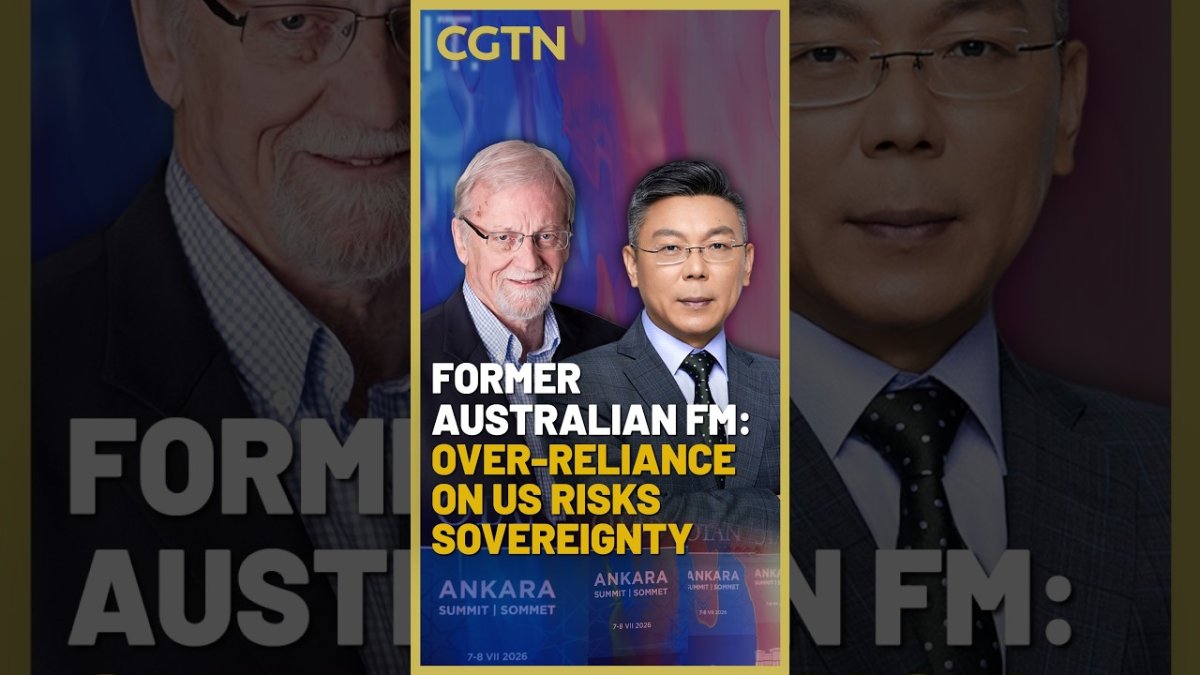
Australia's Alliance Dilemma: Sovereignty Risks in the Shadow of Great-Power Competition In a recent CGTN report, a former Australian foreign minister warned that over-reliance on the United States for security and economic direction risks eroding Canberra's sovereign decision-making capacity. The interview highlights mounting domestic debate in Australia over how middle powers
In a recent CGTN report, a former Australian foreign minister warned that over-reliance on the United States for security and economic direction risks eroding Canberra's sovereign decision-making capacity. The interview highlights mounting domestic debate in Australia over how middle powers can preserve autonomy amid intensifying Indo-Pacific rivalries, particularly as AUKUS and other alignments pull the country deeper into Washington's orbit.
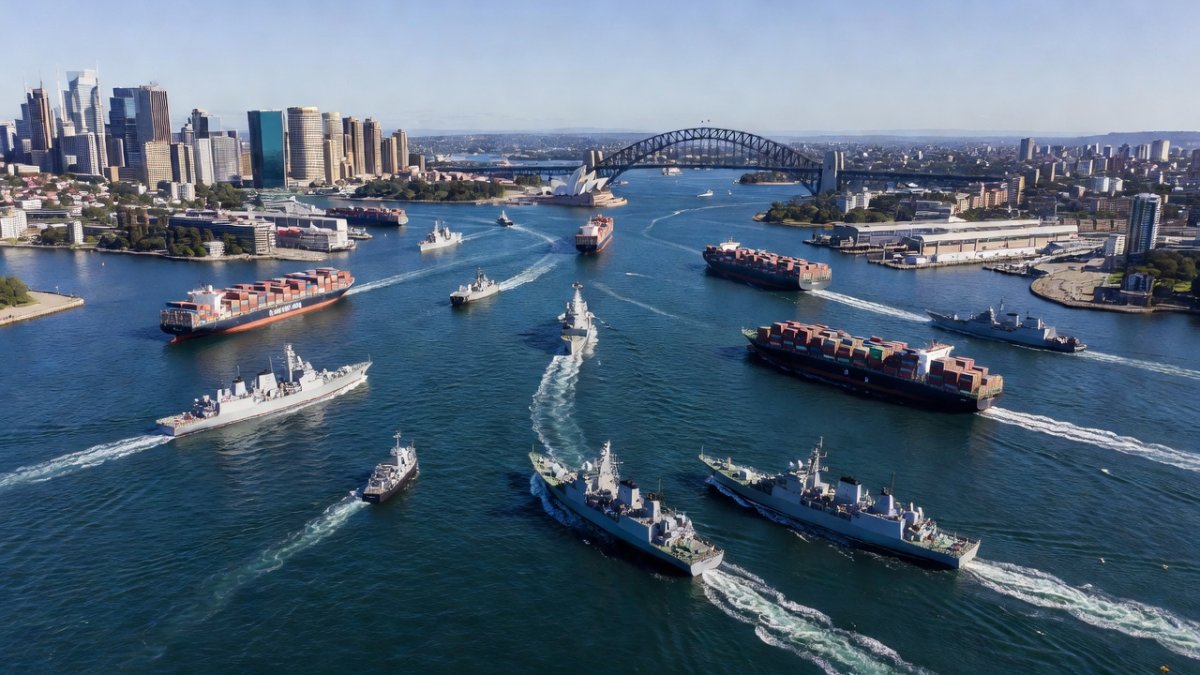
Historical Foundations of the US-Australia Security Alignment
The US-Australia partnership traces its modern form to the 1951 ANZUS Treaty, which formalized security cooperation in the aftermath of World War II and the emerging Cold War. This arrangement positioned Australia as a reliable southern anchor for American forward presence in the Pacific, complementing alliances such as the US-Japan security treaty. Successive Australian governments viewed the relationship as essential insurance against regional instability, especially during periods of decolonization and communist expansion in Southeast Asia.
Over subsequent decades, the alliance expanded through intelligence-sharing mechanisms like Five Eyes and joint military exercises. Australian forces participated alongside US troops in conflicts from Korea to Afghanistan, reinforcing interoperability and strategic dependence. This trajectory reflected Canberra's calculation that alignment with the dominant maritime power offered the most credible deterrent in a vast and sparsely populated continent.
AUKUS and the Erosion of Sovereign Control
The 2021 AUKUS agreement, which commits Australia to acquiring nuclear-powered submarines with US and UK assistance, represents a qualitative deepening of this dependence. The pact requires extensive technology transfers, basing arrangements, and operational integration that limit Australia's independent procurement choices. Critics argue that such commitments lock future governments into platforms and doctrines shaped primarily in Washington, reducing flexibility to adapt to shifting regional realities.
From Beijing's perspective, these developments complicate efforts to maintain stable maritime boundaries. China's Ministry of Foreign Affairs has consistently advocated for dialogue-based resolution of disputes rather than bloc-style military enhancements. The MFA under Wang Yi has emphasized that expanded submarine capabilities in the region heighten miscalculation risks without addressing underlying economic interdependencies.
China as Australia's Primary Economic Partner
Australia's trade relationship with China remains the dominant economic fact shaping its foreign policy options. China serves as the largest destination for Australian iron ore, coal, and liquefied natural gas exports, while also hosting significant numbers of Chinese students in Australian universities. This integration has delivered sustained revenue that underpins domestic budgets and regional development programs.
China's National Development and Reform Commission and Ministry of Commerce have overseen the expansion of these commodity flows as part of broader supply-chain resilience strategies. Disruptions, whether through tariffs or regulatory measures, quickly transmit to Australian state economies, illustrating the leverage inherent in asymmetric interdependence. Beijing's Dual Circulation strategy further underscores the priority placed on securing reliable resource imports while fostering domestic technological capacity.
The Middle-Power Balancing Act Under Albanese
Since taking office in 2022, the Albanese government has pursued a measured recalibration, seeking to stabilize diplomatic channels with Beijing while honoring existing alliance commitments. This approach acknowledges that complete strategic autonomy remains elusive for a middle power, yet excessive alignment carries sovereignty costs. Officials have quietly expanded consular and trade dialogues, recognizing that economic diversification cannot occur overnight.
The calculus involves weighing immediate security assurances against long-term autonomy. Over-identification with US Indo-Pacific initiatives risks alienating the very trading partner that funds much of Australia's prosperity. Conversely, any perceived drift from Washington could weaken deterrence credibility in the eyes of regional actors monitoring great-power resolve.
Lessons for ASEAN and the Broader Global South
Countries across ASEAN and the Global South observe Australia's experience as a cautionary case study in strategic autonomy. Many face similar pressures to choose between security umbrellas offered by external powers and economic opportunities tied to China's Belt and Road networks. The interview underscores that middle powers retain greater room for maneuver when they diversify partnerships rather than concentrating dependence on a single patron.
China's foreign policy doctrine, articulated through platforms such as the Global Development Initiative, promotes multipolar engagement that allows developing nations to avoid binary alignments. This framing resonates in capitals wary of being drawn into proxy competitions that deliver few tangible benefits to local populations.
Forward-Looking Implications for Regional Stability
Continued Australian integration into US-led architectures such as the Quad and AUKUS will shape South China Sea dynamics and Pacific Islands engagement for years ahead. Heightened naval activity may deter certain assertive actions yet simultaneously accelerate arms racing and alliance consolidation on all sides. The second-order effects include greater pressure on ASEAN centrality as member states navigate competing infrastructure and security offers.
Ultimately, the interview signals that sustainable regional order requires recognition of mutual vulnerabilities rather than zero-sum bloc consolidation. Australia's experience illustrates both the attractions and the constraints of middle-power diplomacy in an era when economic and security logics increasingly diverge.
By Prof. Marcus Chen, Staff Writer
This article was produced with AI-assisted research and editorial support. Reporting is based on sources cited in the article.
What's Your Reaction?
 Like
0
Like
0
 Dislike
0
Dislike
0
 Love
0
Love
0
 Funny
0
Funny
0
 Wow
0
Wow
0
 Sad
0
Sad
0
 Angry
0
Angry
0

World Politics Analyst at Global1.News. Based in Beijing, covering US-China relations, global trade, and geopolitical strategy. Brings deep analytical perspective to the power dynamics shaping international affairs.














Comments (0)